Connect with us

%

Spain Unveils Unusual Shipping Container Gyms To Help Save Rural Villages

Published

on

spain-unveils-unusual-shipping-container-gyms-to-help-save-rural-villages

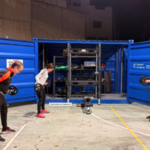
The container is fitted with machines and equipment for strength training and general fitness. Photo credit: Diputación de Valencia

Living in a small Spanish village shouldn’t mean having to travel miles just to find a gym. In Ademuz, in Valencia province, residents can now book a workout inside a converted shipping container, complete with fitness equipment and an instructor on hand to help.

The unusual facility is part of a pilot project designed to bring sports facilities to rural communities at risk of losing residents. Rather than expecting people to travel elsewhere to keep fit, the idea is to take the gym to them. And the early response suggests there is plenty of interest.

A gym residents can book by the hour

The container has been adapted into a compact fitness centre, fitted with machines and equipment for strength training and general exercise. It is located on Avenida de Valencia, beside Ademuz’s covered sports court. Unlike a conventional gym, users cannot simply turn up whenever they fancy a workout. Sessions must be booked in advance using a mobile phone, with limited places available in each time slot. An instructor is also available to advise users on the equipment and their exercises.

There is a competitive element too. Participants can collect medals and appear in participation rankings, giving them an extra incentive to return regularly. The initial response has been encouraging. Ademuz mayor Ángel Andrés said 79 people had registered within just a few days of the facility opening. He described it as a service the village had not previously been able to offer residents.

From military origins 

The container gym is the Box Cube Gym, developed by Valencian company Grupo Contact. The concept was originally designed for the Armed Forces, allowing soldiers to maintain their physical training at bases and during deployments overseas. 

The gyms are now installed at military facilities in Spain and have also been deployed abroad. Their container format allows them to be transported with other equipment and opened up to provide training space wherever troops are stationed.

Could the container visit other villages?

The project is a joint initiative between the Diputació de València and the Valencian Federation of Municipalities and Provinces (FVMP). Its aim is to provide sports facilities in smaller communities where building and maintaining a permanent gym may not be practical. The container is due to remain in Ademuz until the end of December. Authorities will use the trial to assess how well it works and whether residents continue to use it.

If successful, they will consider taking the facility to other municipalities in the province during 2027. That could allow several communities to share the same equipment rather than each having to find the money and space for a permanent gym. For villages with relatively small populations, a portable facility may be a more realistic way of providing access to exercise.

Giving young people a reason to stay

The idea is about more than somewhere to lift weights. Rural towns competing with cities for younger residents need to offer leisure facilities, sporting opportunities and places to meet friends if they want the next generation to see a future there. Andrés said the gym was designed particularly with younger residents in mind. He argued that villages need to offer opportunities comparable with those available in larger towns if they want young people to stay.

A shipping container will not solve rural depopulation, but the trial offers a practical way of bringing a service to places where a permanent facility may be difficult to justify. If the project proves successful, residents in other villages could soon find that getting to a workout no longer means driving to the nearest town.

%

Spain’s Railway Chaos Deepens As Minimum Services Ignored And Fresh Strike Threatens

Published

on

spain’s-railway-chaos-deepens-as-minimum-services-ignored-and-fresh-strike-threatens

Workers are demanding stronger safety measures. Photo credit:Ekaterina Chuyko/Shutterstock

Spain’s railway passengers have spent Tuesday, November 17, facing cancelled trains, lengthy delays and packed stations, with some commuters finding that the services they were legally supposed to have simply never arrived. Madrid’s Cercanías network was almost brought to a standstill during the morning rush hour, while disruption spread to Barcelona and long-distance routes across the country.

The 24-hour strike, called by railway unions demanding stronger safety measures, has caused serious problems despite compulsory minimum services being ordered. Although some services began recovering during the afternoon, the disruption has already affected hundreds of thousands of journeys.

Madrid Cercanías almost brought to a halt

The worst disruption was in Madrid, where Renfe reported that 97.64 per cent of scheduled minimum services had been cancelled by 10.30am. The Ministry of Transport had ordered 75 per cent of normal Cercanías services to operate during peak hours, making the scale of the cancellations particularly serious for people relying on trains to get to work. By late afternoon, the situation had improved, but the network was still struggling. Renfe reported that 44 per cent of minimum services had been cancelled in Madrid after 05:00pm.

Barcelona’s Rodalies network was also badly affected, with around 41 per cent of scheduled minimum services cancelled by 6pm. The impact extended beyond the two biggest commuter networks. Renfe reported that 22.27 per cent of scheduled services across Cercanías, Rodalies, Avant and Media Distancia had been cancelled, affecting an estimated 666,275 passengers. High-speed and long-distance passengers were not spared either. Cancellations affected services operated by Renfe, Iryo and Ouigo, leaving travellers facing changes to their journeys and limited opportunities to find alternative trains.

Renfe and unions disagree over minimum services

One of the biggest disputes of the day has been over why so many trains failed to operate despite the minimum-service requirements. Renfe accused workers of failing to comply with the compulsory services ordered by the ministry. The company put overall strike participation among its eligible workforce at 16.75 per cent across the night, morning and afternoon shifts. SEMAF, the train drivers’ union, disputed Renfe’s explanation. It argued that the disruption was caused by poor management of minimum-service notifications, claiming that drivers had not been properly informed of their assigned duties.

The disagreement has left passengers caught between the two sides, with little reassurance about when their journeys would return to normal. Renfe advised customers to avoid unnecessary travel where possible and look for alternative transport. It also offered free changes and cancellations for affected tickets.

Safety concerns behind the walkout

The strike was called by several railway unions, including SEMAF, CCOO, UGT and CGT, following the fatal railway accidents at Adamuz in Córdoba and Urda in Toledo, which together claimed 115 lives. Workers are demanding stronger safety measures, better maintenance and additional staffing across the railway network. They also want commitments made during previous discussions to be fully implemented. SEMAF confirmed before the strike that industrial action would continue because important safety issues had not been definitively agreed or resolved, despite technical progress in talks with the Transport Ministry, Renfe and Adif.

That means Tuesday’s disruption may not be the end of the problem. With the safety dispute still unresolved, passengers could face further industrial action while railway workers continue pressing for changes. For the hundreds of thousands affected today, the immediate result has been a miserable day of disrupted travel. For the railway industry, the argument over how to make Spain’s trains safer is still very much on the tracks.

Continue Reading

%

Dogs On Loose: 2 AP-7 Incidents Raise Alarms

Published

on

dogs-on-loose:-2-ap-7-incidents-raise-alarms

AP-7 tunnel on motorway between Marbella and Estepona. Credit: JCFB

Another dog was spotted running through a motorway tunnel near Marbella, just days after two dogs were rescued from the AP-7 near Manilva.

Drivers on the Costa del Sol are being reminded of the dangers posed by animals wandering onto busy roads after a dog was spotted running along the AP-7 near Marbella on Tuesday, November 17.

At around 1.30pm, driver Jamie Clark encountered a small to medium-sized, light brown dog entering a tunnel near Real Club de Golf Las Brisas, between Marbella and Estepona, heading towards Marbella Centro. Clark described the animal as having a slightly Galgo-like (whippet) face, although its breed was uncertain.

He said he had to brake sharply to avoid hitting it before getting out of his vehicle and attempting to catch it. His girlfriend and another motorist who had stopped to help followed in their cars as he pursued the dog through the tunnel.

Unfortunately, the animal ran off to the right at the other end and disappeared from sight. It was still alive and running when last seen. It is not yet known whether the dog has been found or whether the authorities were alerted.

Second AP-7 dog incident in five days

The sighting comes just days after two potentially dangerous dogs were rescued from the AP-7 near Manilva on November 12. The animals reportedly had no microchips, prompting the council to investigate their origins and whether they had been abandoned.

Two separate incidents on the same motorway in such a short period raise questions about how animals are reaching these dangerous roads. The latest findings on dangerous roads in Malaga Province provide further context about the safety challenges facing motorists.

Who is responsible for rescuing stray dogs?

Spain’s Animal Welfare Law (Law 7/2023) requires local councils to provide a 24-hour emergency collection and veterinary care service for lost and abandoned animals. Marbella also works with Triple A, the local animal rescue association, which cares for abandoned dogs and cats.

Drivers who encounter an animal on a motorway should not attempt to catch it or stop in a live traffic lane. Instead, they should contact 112, giving the operator the motorway location, direction of travel and any nearby junction or tunnel. The DGT’s road safety advice warns that animals can behave unpredictably and advises drivers to slow down and maintain a safe distance.

More information is being sought about the Marbella sighting and the response arrangements for animals found on the region’s busiest roads. Mind your driving.

Continue Reading

%

Costa Del Jive Brings Swing Fun To Benalmadena

Published

on

costa-del-jive-brings-swing-fun-to-benalmadena

Growing older disgracefully. Some of the chicas from Costa del Jive. Credit: SK

Scores of dancers celebrate another hilarious week on the Costa del Sol as organisers announce their next event for April 2027

Dancing, fancy dress and plenty of laughter were on the menu in Benalmadena as Costa del Jive returned for another hugely successful week, bringing together over 100 people for a celebration of music, friendship and fun.

The November 2026 gathering at the Sunset Beach Club in Benalmadena proved another big hit, with participants enjoying several days of dancing, themed entertainment and socialising. Now, with the latest celebration over, attention is already turning to the next event, scheduled for April 2027.

No dancing experience needed

Costa del Jive, organised by Sheila and Alan Kearns, has been bringing dance enthusiasts to Benalmadena for more than a decade. The November gathering continued a tradition that has attracted a loyal following, with some participants returning year after year. The event follows a tradition previously covered by Euro Weekly News in its report on Costa del Jive’s 11th year in Benalmadena.

One of the attractions is that nobody needs to be an experienced dancer to join in. Teachers are on hand to help newcomers learn the basics, while more experienced participants can enjoy developing their moves.

The style is Modern Jive, which is less demanding on the knees than traditional ballroom jive and particularly popular with mature dancers. Previous events have attracted people aged between 50 and 80.

However, dancing is only part of the appeal. Fancy-dress evenings, themed entertainment, meals out and the chance to make new friends all help create the lively atmosphere that keeps people coming back.

April 2027 dates announced

The next advertised Costa del Jive dance holiday will run from Sunday, April 18 to Sunday, April 25, 2027, at the Sunset Beach Club in Benalmadena.

The promotional poster promises a week of sun, sea, dancing and laughter, welcoming singles, couples and groups. Kat and John are handling bookings, with organisers warning that only a few places are left.

Anyone interested in joining the April event can find out more through the official Costa del Jive website or enquire by emailing jivecosta@hotmail.com. Another Costa del Jive week is also scheduled for November 7 to 14, 2027.

Whether a seasoned dancer or someone who has never tried a jive step, the message is simple: come along, have a laugh and make some memories on the Costa del Sol. This will sell out, so book early.

Continue Reading

Trending

Copyright © 2017 Spanish Property & News