Connect with us

%

Has Spain Just Witnessed The Same Disturbing Pattern The UK Has Been Warning About For Years?

Published

on

has-spain-just-witnessed-the-same-disturbing-pattern-the-uk-has-been-warning-about-for-years?

Spain’s World Cup triumph will remain a historic sporting achievement remembered by millions. Photo credit: AI Generated image

Four days after Spain celebrated one of the biggest sporting moments in its history, a disturbing question has emerged: has the country just witnessed the same pattern that the UK has been warning about for years? While millions of fans took to the streets on July 19 to celebrate Spain’s World Cup victory, a very different picture was emerging away from the celebrations.

Calls to Spain’s 016 domestic violence helpline shockingly increased by 120.8% in the hours following the victory, according to figures from the Ministry of Equality. The rise, recorded between 11pm on Sunday and 7am on Monday compared with the same period the previous week, has triggered fresh concerns over whether major sporting events can coincide with increased risks for victims of domestic abuse.

A warning sign Spain cannot ignore

The figures have placed Spain at the centre of a debate that the United Kingdom has been examining for years. The issue is not that football creates violence, nor that supporters are responsible for the actions of individuals who abuse others.

However, researchers and support organisations have repeatedly warned that major football events can become flash points in households where abusive behaviour already exists, particularly when combined with factors such as alcohol consumption, heightened emotions and tension.

The question facing Spain now is whether this sudden rise follows the same pattern already identified in Britain, where domestic abuse reports have been shown to increase around major football tournaments.

The UK figures reveal a disturbing pattern

Research from Lancaster University examining domestic abuse reports during three World Cups found that incidents increased by 26% when England won or drew, but rose even further, by 38% when England lost. The findings highlighted that the result itself was not the cause of abuse.

Instead, researchers suggested that the intense emotions surrounding major football matches could contribute to situations escalating in homes where violence or controlling behaviour was already present. That pattern has led British police forces, charities and support organisations to launch campaigns before major tournaments, warning that victims may face increased risks during periods when the nation’s attention is focused on football.

Why victories and defeats can become dangerous moments

The concern is not about millions of fans celebrating safely. The vast majority of supporters watch matches without any problems, and a football result does not create an abusive person. The responsibility always lies with the individual choosing to use violence, intimidation or control against another person. However, experts warn that major events can expose problems that remain hidden behind closed doors.

Large celebrations, disrupted routines, alcohol consumption and emotional intensity can all contribute to already unsafe situations becoming more volatile. This is why authorities in several countries treat major sporting events as moments when awareness and support services are especially important.

Behind the statistics are women asking for help

The 120.8% rise in calls to Spain’s 016 service represents far more than a number. Behind every contact is an individual situation involving someone seeking protection, support or a way out. For many victims, reaching out for help can be one of the hardest decisions they make.

Fear of their partner’s reaction, concerns about children, financial dependence or years of isolation can prevent people from seeking support sooner. A phone call may come after months or even years of living with threats, intimidation or controlling behaviour.

A hidden crisis that often goes unseen

Domestic violence frequently takes place away from public view, meaning friends, relatives and neighbours may not realise what is happening until a situation becomes severe. Warning signs can include someone becoming isolated from their support network, appearing afraid of their partner, experiencing excessive control over their movements or constantly changing their behaviour to avoid conflict. Support organisations stress that people do not need to have all the answers to make a difference. Listening, believing someone who reaches out and helping them access professional advice can be a vital first step.

Spain’s response and where victims can turn

Spain’s 016 service provides confidential information and support for women experiencing gender violence, as well as advice for anyone concerned about someone else. The service offers different ways to seek help, including telephone and online support, allowing victims to choose the method they feel safest using.

Authorities continue to encourage people to seek help before situations become emergencies. Anyone affected by gender violence in Spain, or anyone worried about someone else, can contact 016 for guidance. In an immediate emergency, the number to call is 112.

A World Cup victory with another story behind it

Spain’s World Cup triumph will remain a historic sporting achievement remembered by millions. The celebrations, the crowds and the scenes of national pride will be remembered for years. But the figures that emerged afterwards have revealed another side to the story, one that took place away from the streets and behind closed doors.

The surge in calls to 016 has raised a difficult question: has Spain now seen the same warning signs that the UK has been highlighting for years? Because while millions celebrated a victory, some women were fighting a very different battle, one where the most important call was not about football, but about finding help.

%

Spain State Of Emergency Over Madrid Wildfires

Published

on

spain-state-of-emergency-over-madrid-wildfires

Spain declares state of emergency as Madrid wildfires force 10,000 to flee

By Lottie Verrier • Published: 24 Jul 2026 • 9:20 • 2 minutes read
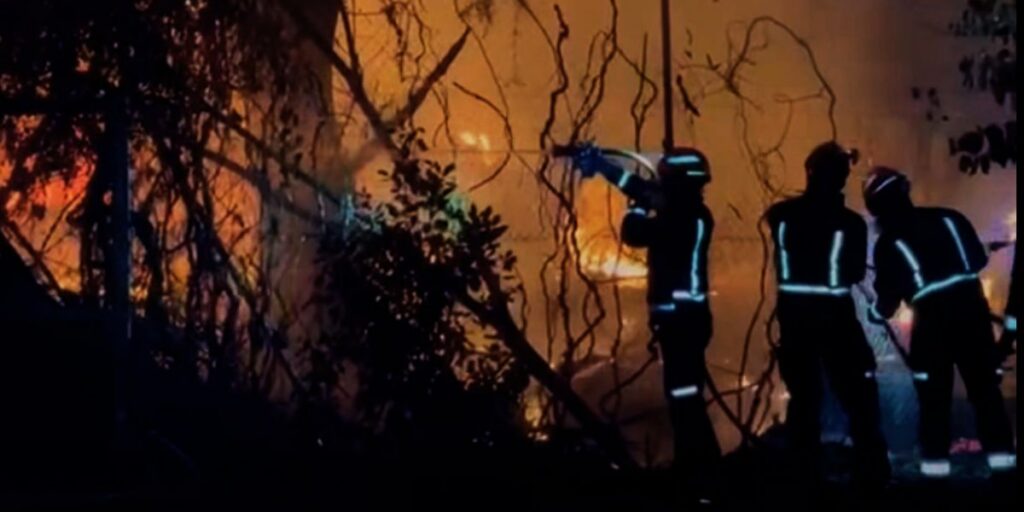
More than 10,000 evacuated as Spain declares state of emergency

Pedro Sanchez declares state of emergency Credit: Facebook/AgenciadeSeguridadyEmergenciasMadrid112

The numbers are shocking, but the human cost is impossible to measure. Behind every evacuation is a family forced to leave home with little warning, uncertain if they will ever see it again. Treasured possessions, cherished memories and entire communities are left behind as flames close in. For thousands of people near Madrid, ordinary life was shattered on Thursday as fast-moving wildfires tore through their communities.

More than 10,000 people have now been evacuated from the Community of Madrid, while a further 1,500 residents were forced from their homes in neighbouring Ávila as several major fires burned simultaneously.

As the crisis escalated, Spain declared a national emergency in the affected areas.

National emergency declared

Google News

Follow Euro Weekly News on Google News

Get breaking news from Spain, travel updates, and expat stories directly on your Google News feed.

Follow on Google News

Sign up for personalised news

Subscribe to our Euro Weekly News alerts to get the latest stories into your inbox!

By signing up, you will create a Euro Weekly News account if you don’t already have one. Review our Privacy Policy for more information about our privacy practices.

Continue Reading


Continue Reading

%

Santa Pola Castle Fortress Reopens

Published

on

santa-pola-castle-fortress-reopens

Temporary scaffolding installed at Santa Pola Castle. Credit: Ayuntamiento de Santa Pola.

Visitors can once again enter Santa Pola’s historic Castle Fortress through its main gateway after a temporary protective structure was installed to allow safe access. The reopening marks an important step in preserving one of the town’s best-known landmarks while preparations continue for restoration work on the historic clock tower.

Main entrance welcomes visitors once again

Visitors can once again use the main entrance to Santa Pola’s Castle Fortress after a temporary protective structure was installed to allow it to reopen safely.

The entrance has been closed since January after cracks were discovered in the clock tower, known locally as “La Peineta”. During that time, anyone visiting the Chapel of Our Lady of Loreto, the Sea Museum or the Tourist Office had to enter through the rear entrance.

The temporary scaffolding has now been installed while the Town Hall waits for approval from the Regional Heritage Department to begin restoration work on the historic tower.

The protective structure allows the main gateway to reopen safely until a permanent solution is put in place.

Restoration plans move forward

Reopening the entrance also means cultural events can once again be held in the castle’s central courtyard. Civic and religious events linked to Santa Pola’s patron saint celebrations in September can now go ahead, having previously been affected because emergency evacuation requirements could not be met while the entrance remained closed.

Over the coming days, the scaffolding will be covered with a printed canvas designed to match the section of the castle hidden behind the structure, helping to preserve the appearance of the historic building while restoration work is prepared.

The Castle Fortress remains one of Santa Pola’s most important historic attractions, welcoming residents and visitors throughout the year. The temporary measures ensure that public access can continue safely while work progresses towards the long-term conservation of this landmark building.

Continue Reading

%

Woman Nearly Hit On Puerto De Mazarrón Crossing Residents Say Has Been Ignored For Six Years

Published

on

woman-nearly-hit-on-puerto-de-mazarron-crossing-residents-say-has-been-ignored-for-six-years

The crossing sits outside one of the busiest supermarkets in Puerto de Mazarrón. Photo credit: rootstock/SHutterstock

A routine trip to the supermarket almost ended in tragedy, after a woman was nearly knocked down while using the pedestrian crossing outside the Consum supermarket on Avenida Doctor Meca in Puerto de Mazarrón, reigniting residents’ anger over what they say is a dangerous problem that has been ignored for years.

According to neighbours, the zebra crossing has not been repainted for around six years. The once-bright white markings have faded so badly that, from behind the wheel, they are now barely distinguishable from the road surface. For those living nearby, the latest near miss came as no surprise. Their concern is no longer that drivers are refusing to stop. They say many motorists simply don’t realise they are approaching a pedestrian crossing until the last moment.

‘You can barely see it from a car’

The crossing sits outside one of the busiest supermarkets in Puerto de Mazarrón, used every day by families carrying shopping, elderly residents, children and visitors unfamiliar with the area. Residents say they have watched the markings disappear year after year, leaving what should be one of the road’s most visible safety features almost invisible.

With thousands more vehicles arriving during the summer holidays, they fear the danger only increases. What should be one of the safest places to cross the road has, they say, become one of the most worrying.

Six years of complaints

The latest incident has reignited calls for the crossing to be repainted without further delay. Residents argue that restoring the road markings is neither a complex nor expensive job, yet they claim the crossing has continued to deteriorate despite years of concern.

Their frustration is fuelled by the belief that the problem is entirely preventable. A few hours of maintenance, they say, could dramatically improve visibility for approaching drivers and reduce the risk of a serious collision. Instead, another pedestrian has narrowly escaped injury.

Summer traffic leaves little room for error

Puerto de Mazarrón changes dramatically during the summer months. Its streets become busier, supermarkets fill with holidaymakers and traffic along Avenida Doctor Meca increases throughout the day.

That also means more people crossing the road. Locals say many visitors are unfamiliar with the area, while drivers are often concentrating on traffic, parked cars and finding directions. If a pedestrian crossing cannot be clearly seen until the last second, they argue, the margin for error disappears, near misses become more likely.

A legal duty, not a cosmetic one

Under Spain’s road traffic regulations, local councils are responsible for maintaining municipal roads, including ensuring that road markings, pedestrian crossings and traffic signs remain clearly visible and properly maintained. These markings are not simply painted lines on the road.

They are legal traffic signals designed to warn motorists, protect pedestrians and reduce the risk of collisions. When they become worn to the point that drivers struggle to recognise them, residents argue the protection they are meant to provide is weakened.

‘Don’t wait until someone is killed’

For neighbours, this is no longer just a complaint about faded paint, it is a plea for action before a preventable accident changes lives forever. The latest woman walked away unharmed, next time, residents fear, someone else may not.

As Puerto de Mazarrón enters its busiest weeks of the year, locals are calling on Mazarrón Town Council to repaint the crossing outside Consum before another near miss becomes the tragedy they say has been waiting to happen for far too long.

Continue Reading

Trending

Copyright © 2017 Spanish Property & News