Connect with us

%

Santa Pola Castle Fortress Reopens

Published

on

santa-pola-castle-fortress-reopens

Temporary scaffolding installed at Santa Pola Castle. Credit: Ayuntamiento de Santa Pola.

Visitors can once again enter Santa Pola’s historic Castle Fortress through its main gateway after a temporary protective structure was installed to allow safe access. The reopening marks an important step in preserving one of the town’s best-known landmarks while preparations continue for restoration work on the historic clock tower.

Main entrance welcomes visitors once again

Visitors can once again use the main entrance to Santa Pola’s Castle Fortress after a temporary protective structure was installed to allow it to reopen safely.

The entrance has been closed since January after cracks were discovered in the clock tower, known locally as “La Peineta”. During that time, anyone visiting the Chapel of Our Lady of Loreto, the Sea Museum or the Tourist Office had to enter through the rear entrance.

The temporary scaffolding has now been installed while the Town Hall waits for approval from the Regional Heritage Department to begin restoration work on the historic tower.

The protective structure allows the main gateway to reopen safely until a permanent solution is put in place.

Restoration plans move forward

Reopening the entrance also means cultural events can once again be held in the castle’s central courtyard. Civic and religious events linked to Santa Pola’s patron saint celebrations in September can now go ahead, having previously been affected because emergency evacuation requirements could not be met while the entrance remained closed.

Over the coming days, the scaffolding will be covered with a printed canvas designed to match the section of the castle hidden behind the structure, helping to preserve the appearance of the historic building while restoration work is prepared.

The Castle Fortress remains one of Santa Pola’s most important historic attractions, welcoming residents and visitors throughout the year. The temporary measures ensure that public access can continue safely while work progresses towards the long-term conservation of this landmark building.

%

Drunk Lorry Driver Caught Weaving Through Murcia With 25,000 Litres Of Corrosive Chemicals

Published

on

drunk-lorry-driver-caught-weaving-through-murcia-with-25,000-litres-of-corrosive-chemicals

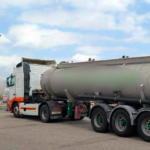
officers intervened before the journey ended in tragedy. Photo credit: Guardia Civil/MInistro del Interior

It could have ended in catastrophe, a lorry carrying 25,000 litres of caustic soda was intercepted on a motorway in Murcia after traffic officers spotted it weaving unpredictably across lanes, with the driver later found to have an alcohol level more than six times the legal limit for professional drivers. 

The articulated lorry was travelling along the A-7 near Alhama de Murcia, transporting the hazardous chemical from Sevilla to Murcia when a Guardia Civil traffic patrol noticed something was seriously wrong. Instead of holding a steady course, the heavy goods vehicle repeatedly drifted between lanes and even veered onto the hard shoulder, creating what officers described as a serious danger for everyone sharing the motorway. 

A dangerous load and an even more dangerous driver

Its cargo consisted of 25,000 litres of caustic soda, also known as sodium hydroxide, a highly corrosive chemical widely used in industrial processes. While it can be transported safely under strict regulations, any collision involving such a load has the potential to create a major emergency for motorists and emergency services alike. Recognising the immediate risk, officers from the Guardia Civil’s Lorca Traffic Unit moved quickly to stop the vehicle before anyone was injured.

Once the lorry had been brought safely to a halt, officers carried out a breathalyser test on the driver. The results were startling. The man recorded readings of 1.04 and 1.03 milligrams of alcohol per litre of exhaled air. Professional drivers in Spain are limited to 0.15 mg/l, meaning he was driving at more than six times the maximum legal limit. 

Disaster avoided on one of Murcia’s busiest motorways

The A-7 is one of Spain’s busiest transport corridors, carrying thousands of cars and heavy goods vehicles every day. A fully loaded articulated lorry already requires greater stopping distances and careful handling. Add alcohol to the equation, together with a tanker transporting dangerous chemicals, and the consequences could have been devastating.

Fortunately, officers intervened before the journey ended in tragedy. The Guardia Civil has now opened an investigation into the driver for an alleged offence against road safety after his exceptionally high alcohol reading. 

Why caustic soda demands extreme care

Caustic soda is an essential industrial product used in the manufacture of paper, cleaning products, textiles and water treatment. Despite its everyday uses, it is classified as a dangerous substance because it can cause severe chemical burns if released and comes into contact with skin or eyes.

For that reason, vehicles transporting the chemical are subject to strict safety rules, while drivers must meet additional professional standards. Those standards include the much lower legal alcohol limit that applies to professional drivers compared with private motorists.

A reminder of the risks on Spain’s roads

Drink-driving remains one of the leading causes of serious road collisions across Spain, despite years of awareness campaigns and tougher enforcement. When large commercial vehicles are involved, the risks become even greater because of their size, weight and the type of cargo they often carry. The Guardia Civil regularly carries out roadside checks targeting alcohol, drugs and dangerous driving, particularly on routes used by heavy goods vehicles.

In this case, officers believe their intervention prevented a potentially serious incident before it had the chance to unfold. For motorists travelling along the A-7 that day, the weaving lorry may have looked like just another reckless driver. What they could not have known was that it was carrying 25,000 litres of a hazardous chemical, and that the man behind the wheel had allegedly been driving while heavily over the legal alcohol limit. 

Continue Reading

%

Too Hot To Wait: Murcia Cuts Traffic Light Times As Temperatures Soar To 44C

Published

on

too-hot-to-wait:-murcia-cuts-traffic-light-times-as-temperatures-soar-to-44c

recent summers have brought increasingly intense and prolonged heatwaves. Photo credit: connel/Shutterstock

Standing at a red light in the middle of a Murcian summer can feel like an endurance test. With the sun beating down on exposed pavements and little shade in sight, even waiting a few extra seconds to cross the road can be exhausting. Now, as another intense heatwave grips south-east Spain, Murcia City Council has decided those seconds matter.

In a move designed to protect residents from extreme temperatures, the city has reduced waiting times at around 50 pedestrian crossings, allowing people to cross the road up to 24 seconds sooner than before. The measure is aimed at limiting the amount of time pedestrians are forced to stand in direct sunlight as temperatures climb towards 44C under red weather alerts. For anyone who has found themselves trapped at a crossing while the pavement radiates heat beneath their feet, the change could make a noticeable difference.

A city adapting to extreme heat

Murcia is no stranger to high temperatures, but recent summers have brought increasingly intense and prolonged heatwaves, forcing local authorities to rethink how the city functions during extreme weather. Rather than waiting for conditions to become dangerous, officials have introduced a series of measures designed to reduce heat exposure in everyday situations.

Adjusting traffic light timings may sound like a small change, but when hundreds of people use the same crossings throughout the day, cutting waiting times could spare thousands from unnecessary exposure to the midday sun. The crossings selected are located in some of the city’s busiest pedestrian areas, where long waits can quickly become uncomfortable, and, for vulnerable people, potentially dangerous.

More than just shorter waits

The traffic light changes form part of a heat response plan unveiled by Murcia City Council. Alongside the new crossing times, the city has expanded its network of climate shelters, providing air-conditioned public buildings where residents can escape the worst of the heat. Officials are also using the Tu Murcia app to issue warnings and advice when temperatures reach dangerous levels.

The measures are particularly important for older residents, young children, pregnant women and people with underlying health conditions, all of whom are more vulnerable during periods of extreme heat. Health authorities continue to urge people to avoid unnecessary journeys during the hottest hours of the day, stay hydrated and seek shade wherever possible.

Heat changing everyday life

Across southern Spain, soaring temperatures are increasingly influencing the way cities operate. Local councils have already introduced measures ranging from expanded shaded areas and cooling spaces to changes in working hours for outdoor employees.

Murcia’s decision to reduce pedestrian waiting times reflects a growing recognition that adapting to extreme heat is no longer simply about responding to emergencies. It also means making everyday activities safer and more manageable for residents. Crossing the road may seem routine, but during a severe heatwave, even a short delay can leave people exposed to intense sunshine and high surface temperatures.

Small change, big difference

For many residents, the shorter waits may pass almost unnoticed. Others, particularly those walking to work, taking children to school or simply trying to get around the city without a car, are likely to welcome every second spent out of the blazing sun.

As Spain continues to experience increasingly frequent and intense heatwaves, measures once considered unusual are rapidly becoming part of everyday life. This summer, in Murcia, relief may arrive not with a cooling breeze, but with a green pedestrian light appearing just a little sooner.

Continue Reading

%

Torrevieja Approves €10.7 Million Urban Park

Published

on

torrevieja-approves-e10.7-million-urban-park

Design of the new Alto de la Casilla Urban Park in Torrevieja. Credit: Ayuntamiento de Torrevieja.

Torrevieja is set to create its biggest children’s play area after approving funding for the new Alto de la Casilla Urban Park. The €10.7 million project will transform a large area of the city into a modern green space, providing landscaped gardens, family facilities and panoramic views while creating another major attraction for residents and visitors.

Funding approved for new urban park

Torrevieja has approved the funding needed to begin work on the new Alto de la Casilla Urban Park, a €10.7 million project that will include the city’s largest children’s play area.

An extraordinary council meeting has approved the multi-year budget for both the construction work and the technical supervision of the project, clearing the way for work to begin later this year.

The new park will cover around 30,000 square metres and will feature landscaped gardens, green spaces, seating areas and a viewpoint overlooking the La Mata and Torrevieja Natural Park.

Its main attraction will be a themed children’s playground designed to accommodate up to 400 children at the same time, making it the largest of its kind in the city.

Major investment in family facilities

The total investment amounts to €10.67 million, with €1 million allocated this year to complete the tender process and begin construction. The remaining €9.67 million has been earmarked for 2027, when the majority of the work will be carried out.

The project is expected to take eight months from the official start of construction.

Sala said the new park builds on the success of Parque de La Siesta, which has become one of the city’s most popular green spaces, and will offer an even greater focus on families and young children.

Once completed, Alto de la Casilla Urban Park will provide another significant recreational space for Torrevieja, complementing the city’s existing parks and helping to meet the growing demand for outdoor leisure facilities. The development forms part of the council’s wider investment in public spaces designed to improve quality of life for residents while enhancing the city’s appeal as a family-friendly destination.

Continue Reading

Trending

Copyright © 2017 Spanish Property & News