Connect with us

%

Benalmadena Appeal Raises Hard Questions About Euthanasia

Published

on

benalmadena-appeal-raises-hard-questions-about-euthanasia

Seaside motorhome life. Belén’s only hope. Credit: AAcFB

A homeless woman living in a car in Benalmadena has reportedly requested euthanasia, prompting a local association to launch an urgent appeal for money to help her access medical and psychological care and find somewhere safe to live.

Belén says spinal surgery has left her unable to work and in severe pain. With no regular income, she struggles to afford some of her treatment and sleeps curled up inside a small car.

Now El Vuelo de las Libélulas, a Benalmadena association supporting her, is asking the public to help raise €13,000 towards an adapted old van or motorhome that could give her a place to call home. The group is also seeking support to fund the medical and psychological care it believes could help improve her situation.

The appeal raises a difficult question: when someone wants to end their life while facing pain, poverty and homelessness, what responsibility does society have to make sure they have other options?

‘Nobody should decide not to live because they are suffering’

María, president of El Vuelo de las Libélulas, contacted Euro Weekly News on October 15 to ask for publicity to help prevent Belén from deciding to die. “Today she requested euthanasia,” María wrote, explaining that Belén had nowhere to live.

In a subsequent social media post, the association said a national television programme presented by Jorge Javier Vázquez had also contacted the group. The post did not confirm whether Belén would appear on the programme or when any broadcast might take place.

Despite the growing attention, donations remain limited. The association reported receiving just €10 through Bizum in one update, while another post thanked supporters for bringing the total to €130 towards the €13,000 target.

Its campaign uses the hashtag #ElPuebloAyudaABelén, meaning “The people help Belén”. “Nobody should decide not to live because they are suffering,” the association wrote, adding that it hoped to find someone willing to donate an old vehicle that could be adapted into a home. Readers can follow the appeal through the official Facebook page of El Vuelo de las Libélulas.

Living in a car with severe pain

Belén previously described her circumstances in an interview with Área Costa del Sol. She said her life changed after an operation on her spine and that, before her health problems, she had managed to hold down three jobs.

She now says her physical limitations prevent her from returning to work. She describes sleeping curled up in a small car and needing to lie flat to ease her pain. Treatment has also become difficult to afford. Belén told the local outlet that pain-relief patches cost €33 for around 20 days, a sum she cannot currently pay.

Her application for Spain’s Minimum Living Income was rejected after a reported nine-month wait, according to her account. She says she was told that her place of residence could not be established, despite being registered through social services because she had no home. She has also started the process of seeking official recognition of her disability.

El Vuelo de las Libélulas has been helping with food and practical support. Belén has described the association’s members as the people who have stood by her during her most difficult moments.

Should someone be helped to die when help to live is missing?

Spain legalised euthanasia in 2021 under Organic Law 3/2021, published in the Official State Gazette. The legislation sets medical eligibility requirements and safeguards, including the need for a qualifying serious, incurable illness or serious, chronic and disabling condition that causes intolerable suffering.

A request is not the same as formal approval, and homelessness or poverty alone does not qualify someone for assisted dying. Belén’s eligibility and the status of any application have not been established by the information available for this article.

The debate is not confined to Spain. Canada’s assisted-dying system has attracted huge controversy over cases in which patients have cited social isolation, housing insecurity or inadequate support. An Associated Press investigation into Canada’s MAiD system examined concerns raised by medical professionals about vulnerable people seeking assisted death while facing serious social difficulties.

Supporters of assisted dying argue that people experiencing intolerable suffering should retain autonomy over decisions about their own lives. Critics worry that people who cannot obtain adequate treatment, housing or disability support may feel that death is their only realistic option. Readers can also find background in Euro Weekly News’ with its coverage of Spain’s euthanasia debate following Noelia Castillo Ramos’s case.

Belén’s circumstances raise a difficult question: how can society respect a person’s choices while ensuring that a lack of basic support does not leave them feeling they have no alternative?

How to help Belén

El Vuelo de las Libélulas is appealing for €13,000 towards an adapted old van or motorhome that could provide Belén with somewhere to live. The association has also described a wider need for medical and psychological support.

Anyone wishing to help can contact the group through its official Facebook page to request the current donation details and clarify how contributions will be used.

The campaign’s message is simple: no one on the Costa del Sol should feel that poverty has left them with no way forward.

For Belén, the immediate hope is that practical support, treatment and somewhere safe to live can offer alternatives while her circumstances are addressed. For the wider community, her story poses a question that cannot be answered by money alone: what does a society owe someone who has reached the point of asking to die?

%

Ryanair Ibiza Flight Fight Sparks Chaos

Published

on

ryanair-ibiza-flight-fight-sparks-chaos

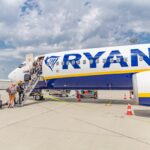
Ryanair flight to Ibiza disrupted by a passenger fight before landing. Credit : icemanphotos, Shutterstock

A Ryanair flight from London Stansted to Ibiza descended into chaos when a dispute over a passenger using the toilet escalated into a physical fight shortly before landing. Cabin crew were forced to intervene as passengers clashed in the aisle, with Spanish police called to meet the aircraft on arrival.

The incident took place on October 5, but footage of the confrontation attracted widespread attention after emerging online on October 15. The video shows chaotic scenes inside the cabin, with passengers standing in the aisle as crew members attempt to restore order.

The disturbance reportedly delayed the aircraft’s arrival at Ibiza Airport. Ryanair has confirmed that police assistance was requested and that a disruptive passenger was removed after landing.

Fight breaks out on Ryanair flight approaching Ibiza

The confrontation began during the final stages of a Ryanair flight from London Stansted to Ibiza, as the aircraft was preparing to land on the Spanish island.

According to Need To Know, the dispute started when a passenger got up to use the toilet while the seatbelt sign was illuminated.

Other passengers reportedly challenged the man over his decision to leave his seat during the descent. What began as a verbal disagreement quickly escalated into a physical confrontation involving several people.

The situation became increasingly tense as passengers exchanged blows and others attempted to separate those involved.

Video footage recorded inside the aircraft shows passengers confronting one another in the aisle, while cabin crew repeatedly instruct them to return to their seats.

At one point, a female crew member can be heard ordering a passenger to sit down as she attempts to bring the disturbance under control.

The confrontation unfolded at a particularly sensitive stage of the flight, when passengers are normally required to remain seated with their seatbelts fastened in preparation for landing.

The incident disrupted what should have been a routine arrival at one of Spain’s busiest holiday destinations.

Chaotic scenes reportedly delay landing at Ibiza Airport

The disturbance continued as the aircraft approached Ibiza, creating further difficulties for the crew during the final stages of the journey.

According to an eyewitness account published by Need To Know, the confrontation was serious enough to delay the landing, with the aircraft reportedly remaining airborne longer than originally planned.

Passengers were left waiting as efforts continued to restore order inside the cabin. The footage captures the tense atmosphere, showing several travellers standing or turning towards the confrontation while others remain seated.

Cabin crew can be seen and heard attempting to calm those involved and prevent the situation from escalating further.

Ryanair has not confirmed the length of any delay or provided details of changes to the aircraft’s landing approach. The airline has, however, acknowledged that a disruptive passenger was involved and that police were requested to attend the aircraft on arrival.

Spanish police called to meet Ryanair aircraft after fight

The confrontation ended with police intervention when the aircraft reached Ibiza Airport. Ryanair confirmed that its crew had contacted the authorities to request assistance following the disruptive behaviour on board.

Officers met the aircraft after landing and the passenger involved was removed. The man was handcuffed and arrested by police. However, Ryanair’s statement confirmed only that the passenger was removed, and no official details of possible charges or subsequent legal proceedings have been established.

The airline reiterated its zero-tolerance policy towards disruptive behaviour, stressing that incidents of this nature can affect the safety and comfort of passengers and crew.

The confrontation comes amid continuing concerns within the aviation industry about unruly passenger behaviour, particularly on busy leisure routes.

Ryanair has previously taken legal action against passengers responsible for serious disturbances.

In an unrelated incident on the London Stansted to Ibiza route in May 2025, a Ryanair aircraft carrying 184 passengers was diverted to Toulouse following disruptive behaviour by two travellers.

The airline announced in May 2026 that the two passengers had subsequently been convicted by a French court, receiving suspended prison sentences and financial penalties.

In the latest incident, the aircraft reached Ibiza and police removed the disruptive passenger. No further official information has been released confirming whether criminal charges were brought following the October 5 confrontation.

Continue Reading

%

Enter Gibraltar’s New High-Tech Watchmen

Published

on

enter-gibraltar’s-new-high-tech-watchmen

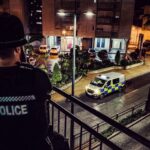
Gibraltar police using latest monitoring equipment Credit: Royal Gibraltar Police

A Moroccan man banned from entering Gibraltar since 2019 has been arrested after being identified by police facial-recognition technology, while a second man has been detained over an allegedly fake British passport at Gibraltar Airport.

Details of both cases were reported by the Royal Gibraltar Police, with the arrests highlighting how Gibraltar’s police and border officers continue to enforce immigration rules following the removal of the old border fence.

The first man, a 40-year-old Moroccan national identified as M.B., was flagged by the Royal Gibraltar Police’s live facial-recognition system on Sunday, October 11, in the frontier area.

Officers from the force’s Response Team arrested him after the system identified him. He was charged with being in Gibraltar in breach of an entry ban, contrary to the territory’s Immigration, Asylum and Refugee Act.

Man was extradited to Spain in 2019

The man was already known to Gibraltar police. In October 2019, he was extradited to Spain under a European Arrest Warrant issued in connection with Operation Iceberg.

The joint investigation by the Royal Gibraltar Police and Spain’s National Police dismantled an organised criminal group involved in the illegal trafficking of migrants between Morocco, Gibraltar and Spain.

An entry ban was imposed on the man following his unlawful presence in Gibraltar. He appeared before the Magistrates’ Court on Tuesday, October 13, and remains on remand at Windmill Hill Prison. He is due to return to court on Tuesday, October 20.

Pakistani man arrested over fake British passport

In a separate case, a 22-year-old Pakistani national was arrested at Gibraltar International Airport on Thursday morning, October 15.

The man, identified as M. A. H., allegedly presented a counterfeit British passport bearing his personal details to officers from the Gibraltar Borders and Coastguard Agency during departure immigration checks.

He was preparing to board a booked flight to the UK when officers detected irregularities on the document’s biometric-data page. Further checks confirmed that the passport was fake. He was taken to New Mole House police station, questioned and charged with possession of a forged or irregular passport, as well as being in Gibraltar without the required legal status.

After appearing before the Magistrates’ Court on Friday, October 16, he remains in custody at Windmill Hill Prison until his next court appearance on October 23.

Security continues after the Verja’s removal

The two cases go to show that the removal of Gibraltar’s old frontier barrier has not ended immigration enforcement. The new UK-EU arrangements took effect on July 15, 2026, bringing the physical Verja to an end while leaving police and border officers responsible for identifying people suspected of breaking the law.

In one case, facial-recognition technology alerted police to a man subject to an entry ban. In the other, airport checks exposed an allegedly counterfeit passport. Both men have been charged and remain in custody pending further court proceedings.

Continue Reading

%

Climber Rescued Near Murcia Summit After Hands Go Numb During Ascent

Published

on

climber-rescued-near-murcia-summit-after-hands-go-numb-during-ascent

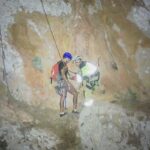
Firefighters rescue stranded climber near Peñas Blancas summit after dark. Photo Credit: Cartagena City Hall

A climber was rescued by firefighters after becoming stranded just 30 metres from the summit of Peñas Blancas in the Region of Murcia, when numbness in his hands left him unable to continue his ascent. The rescue took place after 9:00pm on Wednesday, October 14, when the man was climbing alongside a companion on the XL route, a popular climbing section of the rocky mountain near the Costa Calida municipality of Cartagena.

Stranded near the summit after hands went numb mid-climb

According to reports, the climber managed to reach a ledge where he could remain safely secured while his companion contacted the emergency services for help. Firefighters from Cartagena City Council leapt into action in response to the emergency, accessing the difficult-to-reach area via the Rambla de la Víbora. The rescue team then spent approximately an hour walking to the location, carrying the equipment needed to bring the stranded climber to safety.

Firefighters launch a difficult night-time rescue: Two men brought to safety

Given the challenging terrain and the darkness, rescuers first had to establish the man’s precise position before planning their approach. A drone was deployed to help locate him and allow the team to assess the situation. Firefighters subsequently set up a rescue operation using ropes and anchoring systems to reach the climber and guide him safely to the summit.

Once the first man had been brought to safety, the rescue team also helped his companion leave the area. Fortunately, neither of the two men suffered serious injuries during the incident. Both were reported to have climbing federation licences and were able to leave the area safely following the operation.

The challenges of climbing Cartagena’s Peñas Blancas

Peñas Blancas, which rises to 627 metres above sea level, is the highest peak in the municipality of Cartagena. Its white rock face overlooks the El Cañar gorge and lies close to the Mediterranean coast, between Isla Plana and La Azohía. Although the mountain is not particularly high, its steep rock faces and difficult access can make climbing challenging, especially when an emergency occurs after dark.

The incident, once again, emphasises the important role played by emergency first responder crews in Murcia, who are regularly called to assist people experiencing difficulties in the region’s mountainous and coastal landscapes.

Continue Reading

Trending

Copyright © 2017 Spanish Property & News