
Donald Trump
Honduras Under Nasry Asfura: State Cuts, Violence And The Shadow Of Juan Orlando Hernández

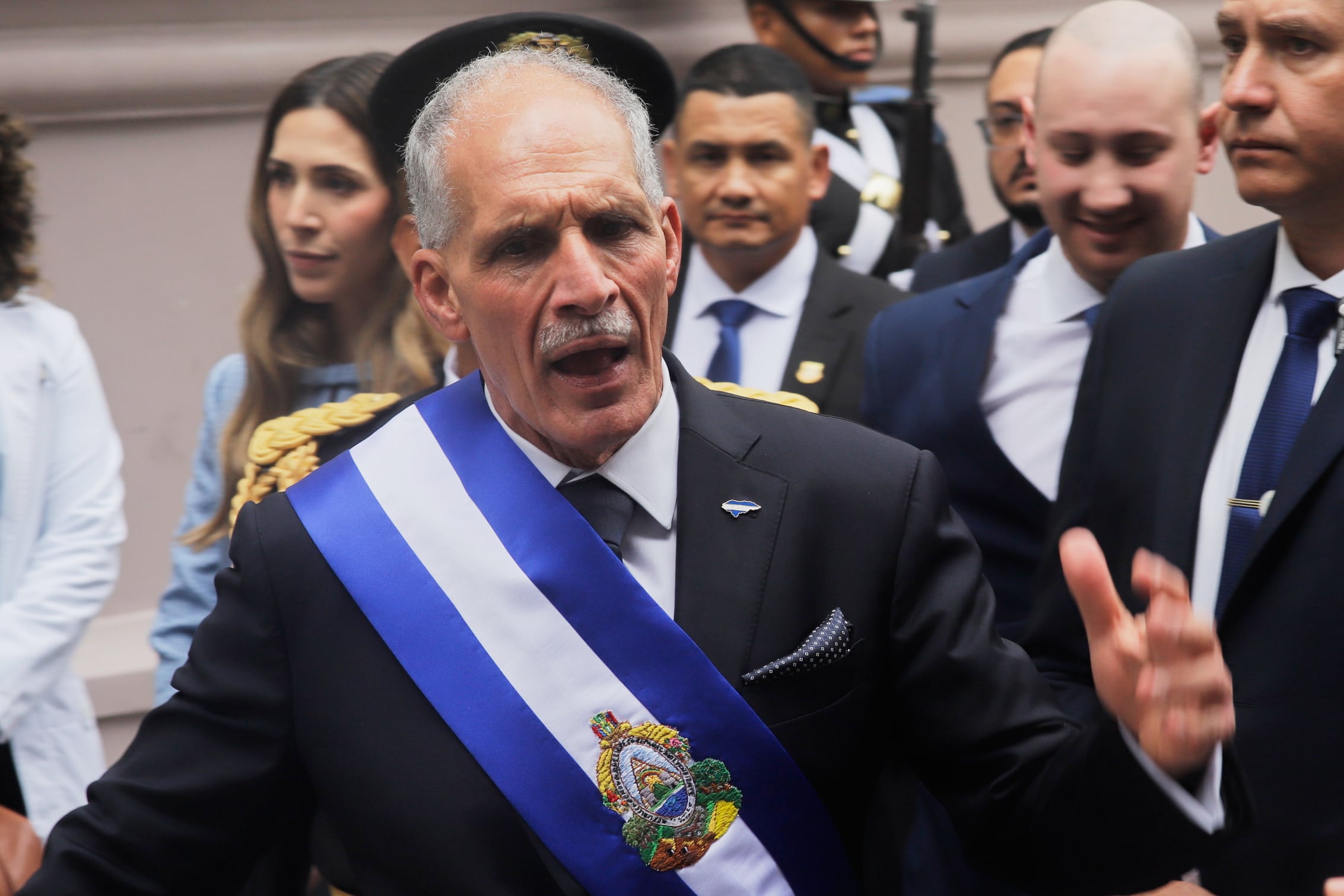
Nasry Asfura came to Honduras’s presidency with a promise that would define the course of his administration: to shrink the State to make it leaner and more “efficient” in a country of 11 million people. At a modest inauguration ceremony on January 27, following elections marred by allegations of irregularities, the new president, backed by U.S. President Donald Trump, asked to be judged by his actions and pledged to get to work immediately. Six months later, with a record tarnished by inefficiency and public dissatisfaction, his government is preparing to confront the return of former president Juan Orlando Hernández, who was convicted of drug trafficking in the United States and later pardoned by Trump.
The austerity drive began almost immediately. In less than a month, the new administration cut staff at 113 institutions and abolished 10 of them entirely. Those eliminated included the National Housing and Human Settlements Commission (Convivienda), the Secretariat for Transparency and the Fight Against Corruption, and the Program for Memory, Truth, Reparation, Justice and Non-Repetition for victims of serious human rights violations.
The first major test came in the healthcare system. During his first month in office, Asfura personally took charge of the portfolio and appointed himself minister of health. Under a declared state of emergency and through an exceptional regime, he approved a trust fund worth 500 million lempiras (about $18.7 million) to address the health crisis. According to the executive branch, the measure was intended to solve medicine shortages, reduce the surgical backlog, estimated at between 13,000 and 20,000 patients waiting for procedures, and restore the operational capacity of public hospitals.
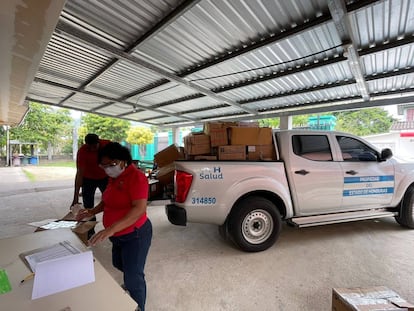
That, however, quickly drew criticism. Various sectors warned that the scheme favored the contracting of private services through a health trust fund and extraordinary agreements. Rather than providing an effective solution, critics argued, it opened the door to the privatization of healthcare.
“Public healthcare has been at the core of corruption in Honduras, and I think that is one of the reasons why the president himself took on that role. But so far, the public perception remains that the fundamental problems persist. Hondurans who depend on public healthcare have seen very few changes,” says Agresio Girón, a political analyst and master’s graduate in political science from the University of Utah.
Four months on, the results have been limited. Hospitals continue to face complaints over shortages and operational deficiencies. In late May, the government itself acknowledged delays in the disbursement of funds and reported that only 227 surgeries had been carried out. Local newspaper La Prensa reported at the end of June that the government had spent 10 million lempiras (about $372,000) on 154 surgeries, at an average cost of $2,400 per procedure.
Beyond the debate over its effectiveness, the decision cemented Asfura’s governing style: a reliance on states of emergency, trust funds, and extraordinary executive powers.
Benefits for the private sector and closer ties with Israel
Not all of the extraordinary measures have advanced at the same pace. While the healthcare emergency has stalled, other decisions by the executive branch and Congress have been implemented swiftly.
In its first six months, the government not only benefited the private healthcare sector through multimillion-dollar contracts. It also approved the Law for the Strengthening and Protection of the Agro-Industrial Sector, which requires the Public Attorney’s Office and the police to act immediately in cases of land occupations affecting agro-industrial projects. Its implementation has already led to the forced eviction of three communities, including a Garífuna community on the Caribbean coast whose land rights are protected by the Inter-American Court of Human Rights (IACHR). At the same time, Congress is considering amendments to the General Energy Law that would privatize electricity distribution.
“These three facts tell us who Asfura is governing for: he is governing for the private sector. By contrast, he has shown himself incapable and negligent toward the rest of the population,” says Lucía Avilés, a researcher at the Center for the Study of Democracy (CESPAD). According to Avilés, the situation is further complicated by the fact that, six months into his term, Asfura still faces allegations of electoral irregularities which, she says, undermine the legitimacy of his administration.
Israel Melo, a Jesuit priest and director of the Reflection, Research and Communication Team (ERIC-Radio Progreso), says: “One of Asfura’s biggest mistakes upon taking office is that his only interlocutors have been big business, Donald Trump, Javier Milei and Benjamin Netanyahu. He has remained disconnected from the population when his main challenge is to rebuild the legitimacy that was lost from the very beginning.”
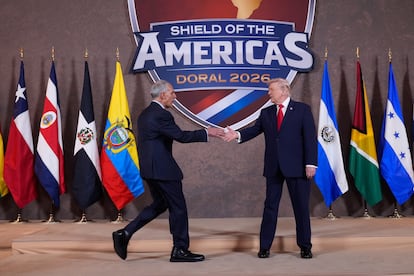
Even before taking office, Asfura signaled a dramatic shift in foreign policy when he traveled to Jerusalem in January 2026 to meet Israeli Prime Minister Benjamin Netanyahu, describing Israel as a “true friend” of Honduras. Under his administration, the Honduran government has forged a close political and strategic alliance with the Israeli government, reopening what both countries have described as a “new era” in bilateral relations.
Anti-corruption efforts in a country long plagued by that scourge have also lost momentum under Asfura. The establishment of the International Commission against Corruption and Impunity in Honduras (CICIH), one of his flagship campaign promises, quickly stalled. The president acknowledged that launching it during his first year in office would be “very difficult” and instead replaced it with a national anti-corruption policy whose results have yet to become visible. By contrast, the abolition of the Transparency Secretariat moved ahead without delay, and its functions were transferred to an attorney general’s office headed by Dagoberto Aspra, a former lawyer who represented Asfura in cases involving alleged corruption.
Security: The unraveling promise
The fight against crime has also deteriorated significantly. During the first quarter of 2026, homicides rose by 5.65% compared with the same period the previous year, and at least 18 massacres have been reported so far this year.
With a homicide rate of 26.6 per 100,000 inhabitants, Honduras remains the most violent country in Central America and the third most violent in Latin America, behind only Haiti and Ecuador. Despite this, the Asfura administration has yet to present a National Security Plan.
In mid-May, two massacres in the Caribbean region left 24 people dead, including five police officers. Although the government dismissed two senior police commanders and assembled an emergency interagency task force, more than two months later there has been no significant progress in the investigation.
This has been compounded by a rise in extortion and disappearances. Local media report that nearly 300,000 Honduran households pay the so-called “war tax,” a form of criminal extortion. The government responded by claiming, without providing evidence, that 80% of extortion complaints are false.
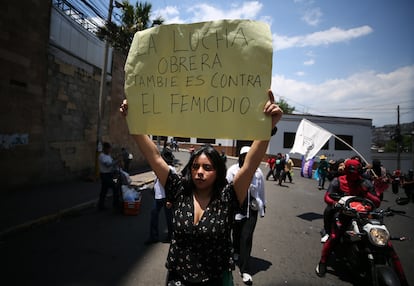
The situation surrounding gender-based violence is equally alarming. As of 16 July, women’s rights organizations had recorded 150 femicides, equivalent to one killing every 31 hours. The Visitación Padilla Women’s Movement for Peace has denounced the fact that 95% of these cases remain unsolved.
The shadow of Juan Orlando Hernández
Asfura’s first six months in office have also been shaped by the geopolitical context. His arrival in power coincided with Donald Trump’s support and with the U.S. pardon granted to former president Juan Orlando Hernández (JOH), who was convicted on drug-trafficking charges and remains a key figure within the ruling National Party.
According to analysts, Hernández’s return, which took place last Sunday, threatens to undermine the government’s ability to govern.
“In Honduras, there is a ‘deep state,’ a real power behind the formal power. There is Asfura’s power in the presidency and Tomás Zambrano’s in Congress, but also a structure entrenched within government and in organized-crime networks that answers to Juan Orlando Hernández,” says sociopolitical analyst Eugenio Moreno.
Although Washington maintains close ties with the current administration, concerns have emerged in the U.S. Congress over worsening security conditions, human rights violations and some of the government’s reforms. At the same time, relations with China have cooled, while Honduras has signalled a willingness to strengthen ties with other actors, including Russia.
For Asfura, the pressure stems not only from criticism of his administration but also from the challenge of governing in the shadow of his predecessor. Hernández returned on Sunday after a local court quashed the arrest warrant against him, while his supporters organized a nationwide welcome that threatens to overshadow a president who came to office promising security, efficiency and zero tolerance for crime and corruption.
Sign up for our weekly newsletter to get more English-language news coverage from EL PAÍS USA Edition




Concacaf
La FIFA Acepta La Derrota: Gianni Infantino Da Marcha Atrás Con Su Propuesta De Privatizar El Mundial

Arabia Saudí
EE UU Responde A La Agresión Iraní Contra Sus Bases En Jordania Con Una “intensa” Oleada De Ataques

Baja California
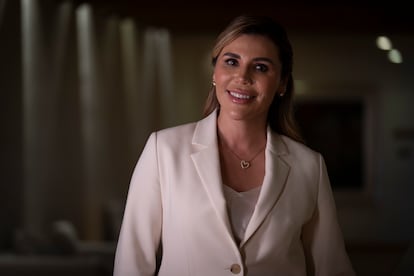
Marina Del Pilar Ávila: ‘They Set A Psychological Ambush For Me. They Even Talked About An Extradition To The US’

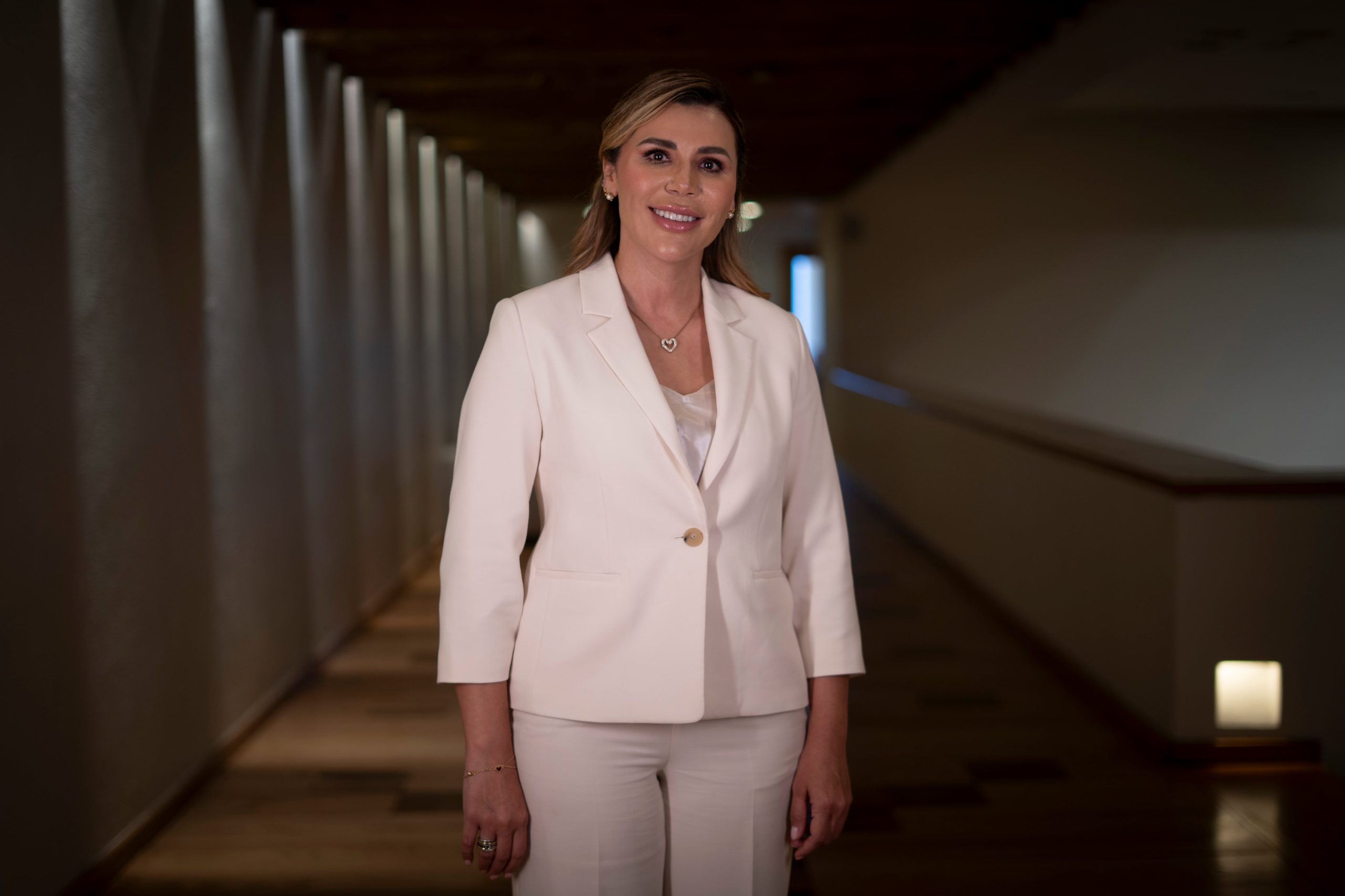
The efforts made by Baja California Governor Marina del Pilar Ávila to recover her U.S. visa have become a problem for the government of Claudia Sheinbaum and Mexico’s ruling party, Morena. Audio recordings were released in which Ávila, 40, is heard speaking with an intermediary in the United States, allegedly from the FBI, offering information to Washington; the leak has dealt a blow to Sheinbaum’s narrative of defending national sovereignty against U.S. interference.
The governor, however, claims that her conversations were merely efforts to recover the visa that the U.S. government had canceled without an explanation for her and her husband, Carlos Torres, in May 2025. Ávila, who denies having cooperated with U.S. authorities beyond the institutional channels as the head of a border state, has not yet regained permission to cross into the United States.
Ávila says that Jaime Bonilla — her predecessor in the governorship and a former party colleague with whom she has a deep enmity — set a trap to record her in December 2025 by making her believe he would help her recover the travel document. The governor says Bonilla sent her an intermediary who claimed to work with “the FBI or HSI,” though she did not specify which agency (the first one reports to the Justice Department; the second one to the Department of Homeland Security). She called it “a psychological ambush” meant to make her believe the United States had her in its sights and might even extradite her. “I am the governor, but I am also a mother. When they started talking about investigations and a possible extradition, I thought about my children, because nothing like that had ever been suggested to me before,” the governor says in an interview with EL PAÍS in Mexico City.
Question. What should the relationship between a border state and U.S. security agencies be like?
Answer. There must be a lot of communication and coordination, without subordination. The president, Claudia Sheinbaum, has said this. I govern one of the world’s most important borders. That implies shared challenges with the United States, not only on security but on migration, the economy, social issues and the environment. There are many topics we address; we have binational security groups to work together.
Q. Regarding the leaked audios, which authorities did you speak with about your visa cancellation?
A. A person came to me who had been recommended by former governor Jaime Bonilla at a time when there was communication between us. He told me: ‘This is someone who can help you, who can give you information about your visa issue.’ I received him thinking we would discuss the matter, but he began raising scenarios I had never heard before: charges, sanctions; he even mentioned extradition and letters. I felt it was a psychological ambush. It was an ambush. I asked, ‘What are you talking about? I hadn’t heard any of this.’ The first thing that came to mind was my children. I have a 13-year-old daughter and a little one who is four. I heard arguments from someone skilled at intimidation, at frightening people, at generating fear and even prompting certain responses. I told him: ‘Take all of that to my lawyers; I thought we were meeting about the visa.’
Q. When did this happen?
A. In mid-December 2025. I told them to handle everything through formal channels, with an advisor. Of course I sought legal advice to ask what was happening. In one of the calls he made to me, they mentioned Panama. I have never been to Panama, not even on vacation. The scenarios mentioned in the audios were never carried out. They never contacted the people who advised me. Today I know it was a trap. It’s clear: they even recorded me, they steered the conversation, they tried to corner me.
Q. How did that individual present himself?
A. As an advisor, an intermediary who was coming to help because of his closeness to the former governor. Bonilla is a U.S. citizen, he lives in San Diego, participates in politics and is affiliated with a party in the United States [the Republican Party], and it seemed to me that he was genuinely someone who would explain the visa situation to me.
Q. What is the status of your visa? Have they explained why it was canceled?
A. The status is ‘administrative process,’ and no, I do not know the reason.
Q. In the audios you say you were willing to provide information from the security groups. What did you mean?
A. At those meetings we discuss crime trends, how common-law crime develops, thefts, homicides… We have binational security groups constantly, operating within the legal framework. The information shared is within the law, and it benefits both sides of the border in combating criminality.
Q. In the context of the visa, what did that offer have to do with anything?
A. No, it was not in the context of the visa; it was in the context of that particular meeting, which was recorded to later publish decontextualized audio fragments as a form of pressure.
Q. Who was the advisor Bonilla sent you?
A. I cannot say more because yesterday I filed a complaint against those responsible for this situation. I have the name and phone number, but his identity will be made known in due course.
Q. What are you accusing them of?
A. Of the crimes that the authorities determine. There was a recording; he presented himself as an advisor to an agency; among other things, there was the psychological ambush intended to intimidate me, the violence I felt at the time. I was alone, without a lawyer, with no one who could explain what they were talking to me about in that moment.
Q. Which agency did he claim to represent?
A. He told me he was an external consultant to the agencies, it could be the FBI or HSI.
Q. Did you inform President Claudia Sheinbaum or anyone in your cabinet, such as Secretary Omar García Harfuch, that you were meeting these contacts about your visa?
A. They knew I was pursuing the visa process.
Q. Did they know about the external advisor?
A. No; I looked for advisors because they made all these proposals and speculations. Of course I seek legal counsel.
Q. Can you swear and maintain that you only discussed the visa with U.S. authorities or advisors?
A. Of course; it is a strictly personal matter and also about coordination within the legal framework for cross-border, binational issues — all within the law.
Q. Will we hear another audio of you about negotiations, judicial benefits or accusations against other Mexican politicians?
A. I don’t know if there will be more audios. However, I know the context in which they were made: an ambush in which they tried to elicit responses, where they put forward complex scenarios.
Q. Did you feel fear?
A. I thought about my children. I didn’t fully understand what they were referring to. They even mentioned that I could be extradited.
Q. Can you confirm that no U.S. authority has told you there is an investigation against you?
A. What I can confirm is that we continue working. At this moment I have not received further information. I continue coordinating with U.S. authorities.
Q. What repercussions do you think these leaks will have for Morena ahead of the 2027 elections?
A. Our movement is strong and united. In Baja California there are many results. We have achieved a reduction in virtually all crimes; we are carrying out projects like never before. For me, one of the main achievements is the reduction of poverty.
Q. Faced with attacks from the opposition, would you be willing to step aside to reduce political pressure and even to be investigated?
A. My conscience is clear and I hold my head high. I do not hide; there has not been a single day when I have stopped working for the people. I am on the ground, in neighborhoods, supporting those who need it most. I do not engage in politics for power. I do it to help others.
Q. Why did you ask Jaime Bonilla for help?
A. I did not ask him for help; he offered it. We had a meeting in the summer of 2025 that I accepted to attend because of the movement we come from and with the aim of generating political peace in the state. I accepted his help in good faith. This [the clash with Bonilla] goes back to 2022 with the cancellation of a 40 billion-peso contract with the company Next Energy to build a photovoltaic plant that did not have federal permits. My responsibility as governor was to cancel that contract. That’s where the revenge and persecution started. It is not a personal or political matter; it is a matter of justice and responsibility. I was not going to be complicit in that fraud.
Q. Given your fraught history with Bonilla, why did you accept his help?
A. It was a moment when we were communicating. It was strictly a personal matter: the visa. I listened to the proposals and then this person [Bonilla’s envoy] sought a meeting with me. Since it was something I would never do to someone else, I accepted in good faith. And yes, it was a mistake to receive [the envoy], I acknowledge that; it was a mistake to trust this person. It was a trap.
Q. It a mistake to trust whom?
A. Both of them.
Q. Are you still trying to recover your visa?
A. Of course. For a border resident, it is an important document.
Q. If you got it back, would you go to the United States? Aren’t you afraid?
A. If I ever recover my visa, of course I would go to the United States.
Sign up for our weekly newsletter to get more English-language news coverage from EL PAÍS USA Edition

Honduras Under Nasry Asfura: State Cuts, Violence And The Shadow Of Juan Orlando Hernández

‘Nekonomics,’ Or The Great Japanese Cat Economy

El Tribunal Constitucional De Perú Anula La Condena A Prisión Del Expresidente Ollanta Humala


-
Costa del Sol2 weeks ago
Plaza Mayor unveils magical summer show bringing nature to life in Malaga
-
Axarquia2 weeks ago
Salobreña launches free beach book libraries for beachgoers
-
Costa Calida2 weeks ago
The last cigarette by the sea Murcia faces a major anti-smoking revolution
-
Bernaldez Latin Jazz Orchestra2 weeks ago
Feel the rhythm and experience the magic of Havana in Estepona
-
European News2 weeks ago
Europe’s new EES machines thrown into meltdown by identical twins
-
expansion2 weeks ago
Flying to Spain from Stansted this summer, the two changes that could make your journey easier
-
Costa del Sol2 weeks ago
Marbella’s Family Dog Day is back with fancy dress contest, live music and Triple A Charity fundraising
-
Cafe Sala2 weeks ago
La Sala Group welcomes riverside venue with the brand new opening of Cafe Sala in Puerto Banus