Connect with us

%

Hooded Saboteurs Destroy Seville Speed Cameras

Published

on

hooded-saboteurs-destroy-seville-speed-cameras

Speed cameras sabotaged in Sevilla. Credit Viral videos X

Hooded figures have been filmed ripping speed cameras from the ground and setting them alight on busy roads around Seville.

Videos circulating on social media show a series of bold, night-time strikes on devices along the A-92 and SE-30. One clip captures three hooded men tying a rope from a Mercedes to a fixed radar near Alcala de Guadaira on the A-92. The driver then accelerates hard, yanking the unit clean out of its concrete base. Another sequence shows a hooded person climbing onto an elevated traffic gantry on the same stretch, setting the radar on fire so flames and debris spill onto the motorway below.

A third attack, filmed on the Ronda Urbana Norte near the SE-30 opposite a well-known local graffiti mural, involves large metal shears or a hydraulic tool cutting through the support post. The camera unit is then loaded into a vehicle, driven away and later found burned in a vacant plot near San Pablo airport. One of these SE-30 incidents dates back to early May, while the others appear more recent.

Police investigations intensify

Guardia Civil’s Unidad de Investigación de Seguridad Vial (UNIS) has opened an investigation to identify those responsible. Authorities have not confirmed whether all the attacks were carried out by the same group. Social media users have linked some of the activity to a group calling itself Los Payasos Justicieros (Justice Clowns), though this has not been officially verified.

Replacing a fixed speed camera can cost around €67,000, according to the DGT’s figures on the cost of vandalised radar equipment. Those caught face compensation bills of nearly €70,000, plus possible prison sentences of up to three years for criminal damage.

These attacks come as Spain continues rolling out more speed-control equipment. Earlier this year the DGT activated 33 new cameras nationwide as part of a wider plan for 122 additional points. EWN previously reported on the 33 new speed cameras across Spain. Seville itself has some of the busiest fixed cameras in the country, with several on the A-92 and SE-30 regularly topping national fine lists. Drivers can consult the DGT’s official speed camera locations and monitoring equipment for the latest information.

Local media have warned that the viral clips risk encouraging copycat attacks elsewhere. For drivers, the practical message remains unchanged: the cameras that are still standing continue to issue fines, and the ones that have been destroyed will be replaced. Drivers can also read more about Spain’s increasingly sophisticated speed camera network.

%

Spain Unveils Unusual Shipping Container Gyms To Help Save Rural Villages

Published

on

spain-unveils-unusual-shipping-container-gyms-to-help-save-rural-villages

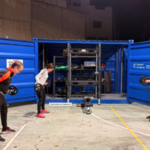
The container is fitted with machines and equipment for strength training and general fitness. Photo credit: Diputación de Valencia

Living in a small Spanish village shouldn’t mean having to travel miles just to find a gym. In Ademuz, in Valencia province, residents can now book a workout inside a converted shipping container, complete with fitness equipment and an instructor on hand to help.

The unusual facility is part of a pilot project designed to bring sports facilities to rural communities at risk of losing residents. Rather than expecting people to travel elsewhere to keep fit, the idea is to take the gym to them. And the early response suggests there is plenty of interest.

A gym residents can book by the hour

The container has been adapted into a compact fitness centre, fitted with machines and equipment for strength training and general exercise. It is located on Avenida de Valencia, beside Ademuz’s covered sports court. Unlike a conventional gym, users cannot simply turn up whenever they fancy a workout. Sessions must be booked in advance using a mobile phone, with limited places available in each time slot. An instructor is also available to advise users on the equipment and their exercises.

There is a competitive element too. Participants can collect medals and appear in participation rankings, giving them an extra incentive to return regularly. The initial response has been encouraging. Ademuz mayor Ángel Andrés said 79 people had registered within just a few days of the facility opening. He described it as a service the village had not previously been able to offer residents.

From military origins 

The container gym is the Box Cube Gym, developed by Valencian company Grupo Contact. The concept was originally designed for the Armed Forces, allowing soldiers to maintain their physical training at bases and during deployments overseas. 

The gyms are now installed at military facilities in Spain and have also been deployed abroad. Their container format allows them to be transported with other equipment and opened up to provide training space wherever troops are stationed.

Could the container visit other villages?

The project is a joint initiative between the Diputació de València and the Valencian Federation of Municipalities and Provinces (FVMP). Its aim is to provide sports facilities in smaller communities where building and maintaining a permanent gym may not be practical. The container is due to remain in Ademuz until the end of December. Authorities will use the trial to assess how well it works and whether residents continue to use it.

If successful, they will consider taking the facility to other municipalities in the province during 2027. That could allow several communities to share the same equipment rather than each having to find the money and space for a permanent gym. For villages with relatively small populations, a portable facility may be a more realistic way of providing access to exercise.

Giving young people a reason to stay

The idea is about more than somewhere to lift weights. Rural towns competing with cities for younger residents need to offer leisure facilities, sporting opportunities and places to meet friends if they want the next generation to see a future there. Andrés said the gym was designed particularly with younger residents in mind. He argued that villages need to offer opportunities comparable with those available in larger towns if they want young people to stay.

A shipping container will not solve rural depopulation, but the trial offers a practical way of bringing a service to places where a permanent facility may be difficult to justify. If the project proves successful, residents in other villages could soon find that getting to a workout no longer means driving to the nearest town.

Continue Reading

%

New Nissan Micra EV Review: Modern Style On Renault 5 Tech

Published

on

new-nissan-micra-ev-review:-modern-style-on-renault-5-tech

The trend of mergers and tech sharing between car makers over the last few years has led to some strikingly similar vehicles, just with different badges on the steering wheel. A modern incarnation of badge engineering from the 1960s. The arrival of the EV revolution seems to have exacerbated this, very much a case of cars being automotive white goods. There to do a job, and generally doing it well, but somewhat soulless in character.

There is still hope though with a number of recent EVs focussing on retro style to great effect, and more are in the pipeline. Renault’s 5, and sister performance brand Alpine’s A290, generated much appreciation, rightly so because they injected some joie de vivre into the EV market.

Another, perhaps arguably more surprising, star in this respect is Nissan’s new Micra. Great cars in their day most people’s image of a Micra now is their local takeaway delivery vehicle. No longer! The all-new Micra is pure EV and, judging by many comments I received about my test car, super stylish.

However, the Micra has a secret, its underpinnings are Renault 5. You can pick out similarities but Nissan has done a fantastic job of turning the Renault 5 from retro chic into modernistic style. Not all buyers like retro and some shy away from the rather brutalist style that comes with many new models.

Two battery sizes are offered with the new Micra, 40kwh with a projected 196-mile range and 52kwh with a longer 257 miles. Prices start at £22,995 but with the UK electric car grant drop to a very attractive £21,495. There are three trim levels and standard fare starts with rear parking sensors, Apple Car Play and Android Auto, Bluetooth, automatic air conditioning, keyless start, rear privacy glass and a heat pump.

The interior of the Micra is different enough, with the choice of materials, to make it stand alone, but then the Renault 5 interior is good anyway and despite some cheaper plastics the Micra feels well-built. There’s a decent amount of passenger space and boot isn’t bad either. Seats are comfortable, the drive smooth and quiet and controls are pretty logical and intuitive. I did find there are too many column stalks on the right of the steering wheel though, with the gear shift lever, wipers and audio.

In small battery form the range makes for an excellent commute/city car with occasional longer journeys, the larger 52kwh adds distinctly more options in terms of journeys. It’s arguably smaller range than some of its rivals may deflect a few buyers, but ultimate range is not everything in a city car.

The Micra is one of the most enjoyable, individual and stylish cars I driven in a long time.

Facts at a glance

  • Model: Nissan Micra Evolve
  • Engine: 110 kw electric motor with 52 kwh battery
  • Gears: Automatic
  • Price: €35,749/£29,865 or €31,261/£26,115 with UK electric car grant
  • Performance: 0-100kph/62mph 8 seconds/Maximum speed 150kph/93mph
  • Range: 257 miles combined driving
  • Emissions: 0 g/km

Model tested was UK-specification and equipment levels and prices may vary in other markets

Continue Reading

%

Spain’s Railway Chaos Deepens As Minimum Services Ignored And Fresh Strike Threatens

Published

on

spain’s-railway-chaos-deepens-as-minimum-services-ignored-and-fresh-strike-threatens

Workers are demanding stronger safety measures. Photo credit:Ekaterina Chuyko/Shutterstock

Spain’s railway passengers have spent Tuesday, November 17, facing cancelled trains, lengthy delays and packed stations, with some commuters finding that the services they were legally supposed to have simply never arrived. Madrid’s Cercanías network was almost brought to a standstill during the morning rush hour, while disruption spread to Barcelona and long-distance routes across the country.

The 24-hour strike, called by railway unions demanding stronger safety measures, has caused serious problems despite compulsory minimum services being ordered. Although some services began recovering during the afternoon, the disruption has already affected hundreds of thousands of journeys.

Madrid Cercanías almost brought to a halt

The worst disruption was in Madrid, where Renfe reported that 97.64 per cent of scheduled minimum services had been cancelled by 10.30am. The Ministry of Transport had ordered 75 per cent of normal Cercanías services to operate during peak hours, making the scale of the cancellations particularly serious for people relying on trains to get to work. By late afternoon, the situation had improved, but the network was still struggling. Renfe reported that 44 per cent of minimum services had been cancelled in Madrid after 05:00pm.

Barcelona’s Rodalies network was also badly affected, with around 41 per cent of scheduled minimum services cancelled by 6pm. The impact extended beyond the two biggest commuter networks. Renfe reported that 22.27 per cent of scheduled services across Cercanías, Rodalies, Avant and Media Distancia had been cancelled, affecting an estimated 666,275 passengers. High-speed and long-distance passengers were not spared either. Cancellations affected services operated by Renfe, Iryo and Ouigo, leaving travellers facing changes to their journeys and limited opportunities to find alternative trains.

Renfe and unions disagree over minimum services

One of the biggest disputes of the day has been over why so many trains failed to operate despite the minimum-service requirements. Renfe accused workers of failing to comply with the compulsory services ordered by the ministry. The company put overall strike participation among its eligible workforce at 16.75 per cent across the night, morning and afternoon shifts. SEMAF, the train drivers’ union, disputed Renfe’s explanation. It argued that the disruption was caused by poor management of minimum-service notifications, claiming that drivers had not been properly informed of their assigned duties.

The disagreement has left passengers caught between the two sides, with little reassurance about when their journeys would return to normal. Renfe advised customers to avoid unnecessary travel where possible and look for alternative transport. It also offered free changes and cancellations for affected tickets.

Safety concerns behind the walkout

The strike was called by several railway unions, including SEMAF, CCOO, UGT and CGT, following the fatal railway accidents at Adamuz in Córdoba and Urda in Toledo, which together claimed 115 lives. Workers are demanding stronger safety measures, better maintenance and additional staffing across the railway network. They also want commitments made during previous discussions to be fully implemented. SEMAF confirmed before the strike that industrial action would continue because important safety issues had not been definitively agreed or resolved, despite technical progress in talks with the Transport Ministry, Renfe and Adif.

That means Tuesday’s disruption may not be the end of the problem. With the safety dispute still unresolved, passengers could face further industrial action while railway workers continue pressing for changes. For the hundreds of thousands affected today, the immediate result has been a miserable day of disrupted travel. For the railway industry, the argument over how to make Spain’s trains safer is still very much on the tracks.

Continue Reading

Trending

Copyright © 2017 Spanish Property & News