
Claudia Sheinbaum
How Organized Crime Captured A City In Mexico

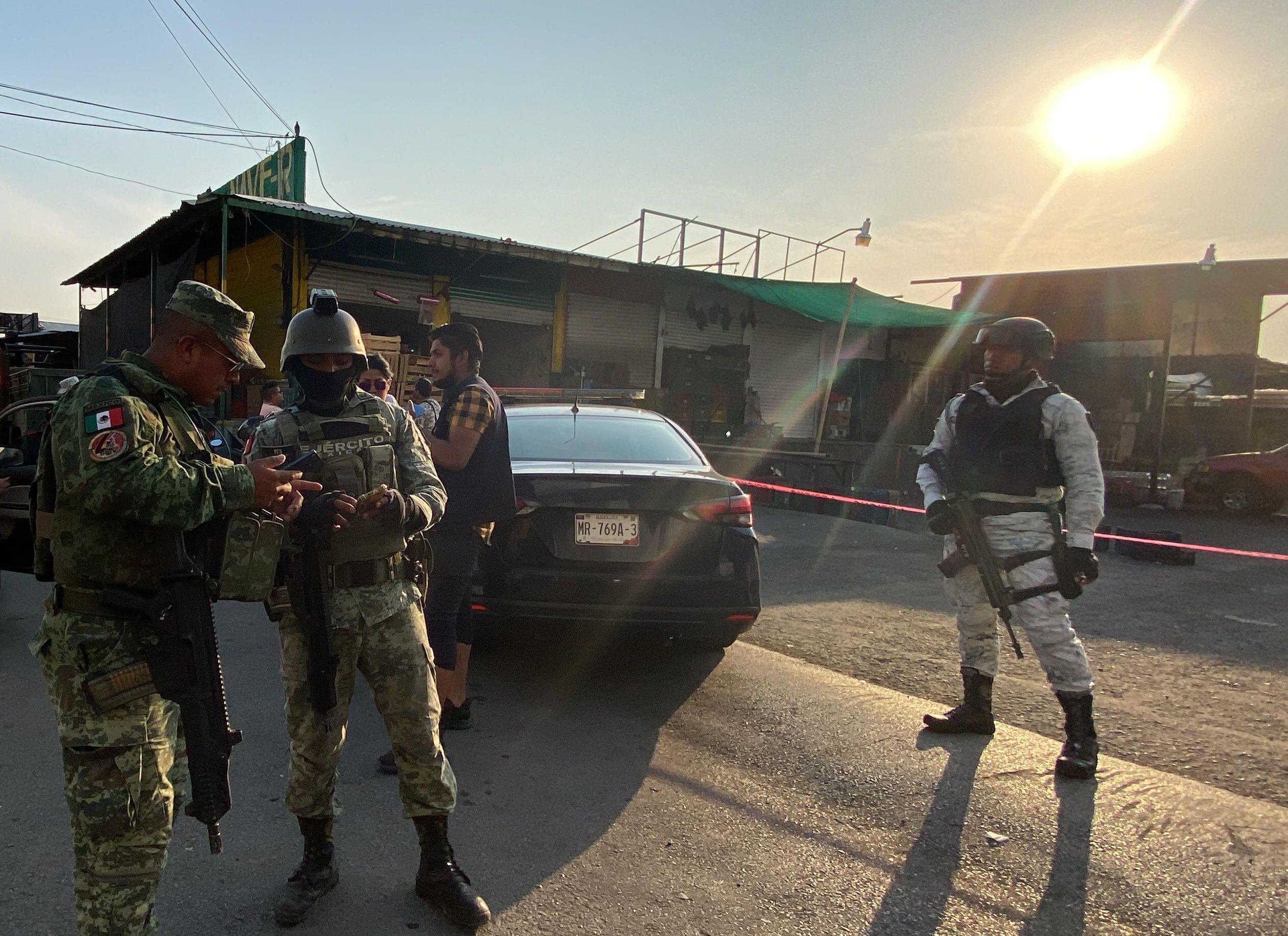
The visit is arranged beforehand. There is little lingering at the door: come in, come in, don’t stand out there. The businessman sits down in a chair and offers the sofa. “Water?” He brings two bottles.
“Three weeks ago, they killed a woman right next door. It was in the morning,” he says. A woman who was there wondered why the ambulance had not arrived. “And another woman who was with her said, ‘No, they’re waiting for her to die’… They’ve killed paramedics too, just for treating victims,” explains the businessman, who gives neither his name, nor the nature of his business, nor the neighborhood where he lives, nor his age — nothing. Violence is the currency of the Mexican city of Cuautla, in eastern Morelos, and the man avoids every possible risk. In the kingdom of extortion and retaliatory gunfire, every precaution is justified.
Cuautla has become a national emergency in Mexico, a vivid example of the country’s criminal dysfunction. It is a city shaped by the unchecked influence of criminal groups, which have infiltrated local government while ruling through violence and intimidation.
In May, as part of the federal Security Cabinet’s Operation Swarm against institutional corruption, authorities arrested the backbone of the municipal administration. From the mayor to the treasurer, including the municipal secretary and the chief administrative officer, key officials were taken into custody. One target escaped: the official in charge of markets and the wholesale food distribution center, who remains at large.
The arrests stem from the alleged collaboration of the local government team with a criminal organization linked to the Sinaloa Cartel and Unión Tepito. The group reportedly controlled street vending, the local slaughterhouse, markets, and the cadastral and property-tax offices, among other sectors.
The problem extends beyond the timeframe and scope of the federal government’s efforts under Mexican President Claudia Sheinbaum. Cuautla reflects a nationwide problem. It is not an exception but rather the rule in many large and small municipalities across Mexico, where powerful political-criminal alliances impose or tolerate systems of extortion and the siphoning of public funds and local economic activity. In this way, criminal organizations prosper and spread across entire regions. What they do in one municipality is repeated in the next. And if not by them, then by others.
The arrests in Cuautla are not isolated cases. Authorities have also detained, in connection with the same matter, the former mayor of Yecapixtla and the current mayor of Atlatlahucan —neighboring municipalities — as well as a mayoral candidate in Atlatlahucan and the former mayor of Ayala, another nearby town.
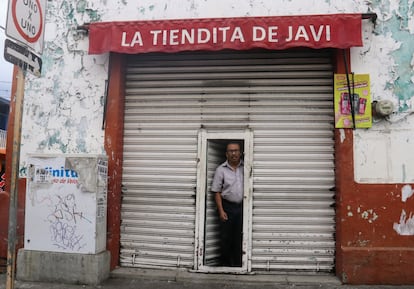
It all began in an avocado grove. Or at least the latest chapter in the criminal cycle did: the rise of a criminal group, pressure from cartel bosses, the infiltration of local institutions and, finally, public scandal.
Long accustomed to compromising images of its politicians, the state of Morelos learned in February last year that a regional crime boss known as “El Barbas” — apparently linked to the Sinaloa Cartel faction operating out of Guasave and Los Mochis — had been meeting with mayors and other officials from the eastern part of the state, where Cuautla serves as the regional hub. There was even a video of one such meeting, held in the summer of 2024, shortly after the latest local and state elections.
Gathered in an avocado grove in Totolapan, near Cuautla, El Barbas appeared alongside all those arrested in Morelos last month: Cuautla mayor Jesús Corona, of the coalition between the Institutional Revolutionary Party (PRI), National Action Party (PAN) and the Party of the Democratic Revolution (PRD); the mayor of Atlatlahucan, from the same coalition; and Irving Sánchez Zavala, the former PAN mayor of Yecapixtla. Several Cuautla officials also attended, including the chief administrative officer, the municipal secretary, the treasurer and the official in charge of the markets.
Someone recorded the meeting. Someone kept the footage. Then, in February 2025, it was leaked. Authorities opened an investigation, building the case with intelligence reports and witness testimony. A little over a year later, in May, they arrested almost everyone who had attended the gathering.
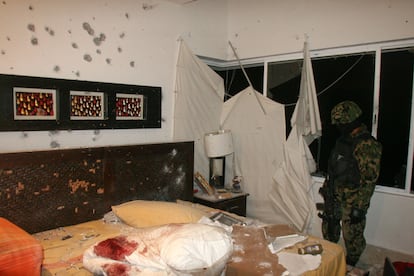
The arrests have raised a host of questions in Morelos, though not so much about the credibility of the allegations — which had been the subject of local gossip for years — as about the realization that the problem cuts across party lines, spans the political spectrum and long predates the current administration.
After all, Corona himself has served twice as mayor of Cuautla, the first time under the banner of the Morena party, from 2019 to 2021. And then there is the Sánchez Zavala family — three brothers and their father — who, under either the PRI or PAN banner, have dominated politics in Yecapixtla for more than a decade. As a former federal official in Morelos, interviewed by EL PAÍS in recent days, put it: “It’s an interparty organized-crime issue. I don’t think any party or government from the last 15 years is exempt.”
The dealings between criminal organizations and local governments, which change hands every three years, create tensions that build up in overlapping layers. Sooner or later, these arrangements tend to unravel. These arrangements also govern the management of the illegal economy: the extortion of restaurants, bars and factories, as well as the retail drug trade, where competition is fierce. In both spheres, violence is the preferred means of settling disputes.
In Cuautla these days, a former senior local official with first-hand knowledge of the region’s shifting power dynamics over the past 15 years put it bluntly: “The problem began when they were allowed in.” He was referring to the criminals — and to the local bureaucracy, a source of revenue in Mexico every bit as lucrative as drug trafficking.
The great decline
There is always a before and an after, however blurred the dividing line may be. In Cuautla’s case, that line can be traced to the final years of Corona’s first term in office, in 2020 and 2021: the beginning of its great decline.
A source familiar with local politics — who has at times advised federal authorities and requested anonymity — says: “That was when street vending really began to get out of control, a lot of bars opened and stayed open until the early hours, and attacks also started to happen.”
Street vending and bars are not, in themselves, a problem. The issue was who was pulling the strings behind them. Drug sales flourished in the bars.
“Extortion also grew a lot [under the cover of street vending], and everyone was saying it was the Unión Tepito,” the source explains.
At the time, Cuautla and eastern Morelos — a corridor linking the state with Guerrero and Puebla — were in a period of transition. In January 2022, local media published a photograph taken years earlier showing then-governor Cuauhtémoc Blanco, of Morena’s coalition, alongside the two leading criminal figures in eastern Morelos: Irving Solano, known as “El Profe,” and Raymundo Castro, alias “El Ray.”
Also pictured was Homero Figueroa, known as “La Tripa,” who was arrested in Puebla a few weeks ago, shortly after the politicians were arrested in May. During Blanco’s years as mayor of Cuernavaca, La Tripa worked for the city’s water and sewerage system. He and his group, the Comando Tlahuica, had discovered that water could be a lucrative business.
Their logic was simple: seize control of the administrative apparatus and collect residents’ water fees and tanker-truck sales themselves.
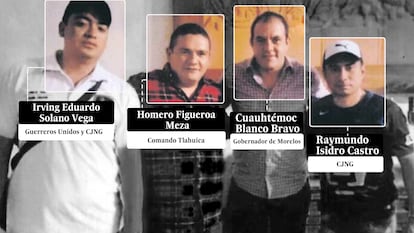
By the time that photograph was taken, in December 2018, “El Profe was also trying to take control of the municipal slaughterhouse,” says the source cited earlier, referring to the facility where hundreds of butchers supplying Cuautla and the surrounding area slaughter livestock and purchase meat. Millions of pesos changed hands there every month.
“El Profe and El Ray had their suppliers and forced the butchers to buy from them,” he explains. “Soon after they took control of the cadastre and property tax collection area of the municipality.”
Although the photograph appeared to suggest that both criminals remained at the height of their power until 2022, their heyday had in fact ended much earlier. El Ray was arrested in 2019 and was murdered in prison later that year. El Profe was captured in 2021 and is serving a decades-long prison sentence.
After Corona left office, Rodrigo Arredondo, also from Morena, won the mayoralty of Cuautla. Barely a year into his term, El Barbas arrived on the scene from Sinaloa.
According to a report published by Reforma in late May, citing the investigation triggered by the video of the meeting with the crime boss, El Barbas teamed up with a Unión Tepito leader known as Milton. In Cuautla, the group operated under the name Gente Nueva.
But his leadership was contested, and the power vacuum left by the previous criminal order continued to generate friction. Drug dealers from the earlier era continued operating in the bars of Cuautla and the surrounding area.
“Then they started fighting with the Unión Tepito people,” the source continues.
And the disputes went beyond drug dealing: there were battles over the slaughterhouse, transport routes and extortion rackets. The result was a mounting death toll. In 2023 and 2024, Cuautla recorded more homicides than ever before.
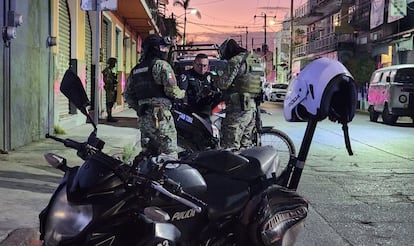
The overlapping layers of criminal groups operating in the region turned Cuautla into a madhouse, a criminal free-for-all. Everyone knew that Unión Tepito operatives were active there; everyone had heard of El Barbas. And everyone assumed that, in between, smaller-time criminals were also trying to get in on the action and make a profit. It became a fever: everybody wanted a piece of the pie.
A businessman from Cuautla recalls a story a police officer told him a few weeks ago.
“A patrol car came across two young men on the highway late one night. Their motorcycle had broken down. The officers stopped and searched their backpack and found two notes inside,” he says. “They were messages they were supposed to deliver to two businesses — a taco stand and a consultancy — telling them to pay protection money.”
According to the businessman, the two youths, both 17, were to be paid 500 pesos each for delivering the notes — about $27.
Extortion is the most visible consequence of the situation in Cuautla and eastern Morelos more broadly, and also the one that causes the greatest harm to ordinary people. From January to May, authorities recorded 313 victims of extortion in the municipality, according to figures from the Executive Secretariat of the National Public Security System (SESNSP), more than double the number recorded during the same period a year earlier.
The figures lend themselves to two interpretations. The first is that the crisis is enormous — worse than ever. The second is that it was already severe before, but that more victims are now coming forward. Beyond that lies another uncertainty: what impact will the severing of one tentacle of the criminal hydra have on a crime as easy to commit as extortion?
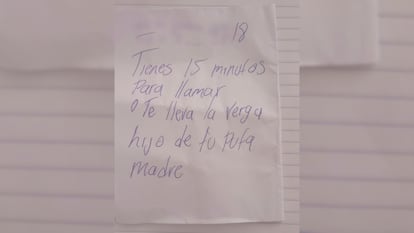
Few businesses in the municipality have escaped receiving threatening notes in recent years, messages along the lines of: “You have 15 minutes to call, or you’re fucked, you son of a bitch,” followed by a phone number.
Small scraps of paper left on a counter, in the hope that fear will compel a shopkeeper or business owner to pick up the phone, make the call and become ensnared in the web of organized crime.
The worst part is that no one really knows who is behind what — whether it is criminals embedded in local government or independent operators. Many business owners choose to pay even when they suspect the extortionists may be impostors; they can be dangerous too. Others choose to shut down altogether.
The businessman, who used to run a shop in the city center, did exactly that. The threatening note reached only his second business, but he says the city center ”had deteriorated too much.”
The present
Unless El Barbas — still a fugitive — eventually proves otherwise, the latest criminal cycle in Morelos appears to have been cut short before reaching full maturity. The arrest of La Tripa effectively brought the previous one to a close; the dismantling of El Barbas’s institutional network has dealt a potentially fatal blow to this latest iteration.
The problem is that the criminal playbook is already well established. The strategy of capturing spheres of institutional power has become a standard feature of organized crime. Morelos, and eastern Morelos in particular, has also seen how this dynamic extends beyond municipal governments. One need only look at the chain of killings linked to the leadership of the Association of Users of the Cuautla River (Asurco), a farmers’ organization that has long benefited from royalties paid by the Federal Electricity Commission (CFE) for its use of the river’s water.
In February 2022, gunmen murdered Francisco Vázquez, chairman of the association’s oversight board. In 2024, Asurco’s then-president, Antonio Domínguez, survived an armed attack at his home. Domínguez, who had also served as mayor of Ayala, a municipality adjacent to Cuautla, stepped down from his position after the attack. He was succeeded by Carolina Plascencia. In September 2025, Plascencia was murdered on a highway.
The circle closed further last week with the arrest of Domínguez and a former associate from his time in Ayala — his municipal secretary. Authorities allegedly found weapons and drugs in their possession.
This sequence of events illustrates the consequences of the struggle for control of the association and its financial resources, even if important pieces of the puzzle remain missing. It is still unclear why Plascencia and Vázquez were killed, why Domínguez was targeted in the first place, or why he has now been arrested.
The senior local official familiar with the region’s shifting power dynamics over the past 15 years argues that the arrest of La Tripa — and his interests and knowledge of the regional water business — ultimately led to Domínguez’s downfall. Local media outlets in Cuautla have reported that the alleged crime boss has entered the Attorney General’s protected-witness programme, although that has not been officially confirmed.
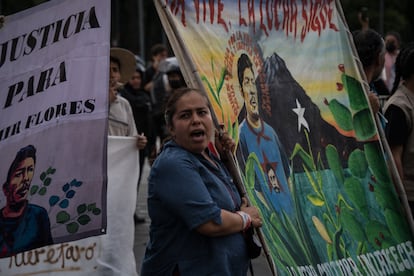
The 2019 murder of activist Samir Flores should be viewed within the same brutal struggle for power and resources that has shaped the region. A resident of Temoac, near Cuautla, Flores belonged to the People’s Front in Defence of Land and Water, which opposed the Morelos Integral Project — a scheme involving two thermoelectric plants, a gas pipeline and an aqueduct serving the area and neighbouring states, and one that also benefited Asurco and the municipality of Cuautla financially. Despite the public outrage sparked by his killing, those who ordered it were never identified. The trial of the only suspect ended with his acquittal in March.
The difficulties in securing justice in this case, as in the others, stem not only from the systemic shortcomings of prosecutors’ offices but also from the strength of the region’s criminal networks.
“Small criminal groups have sprung up in every municipality, without exception,” says the source familiar with local politics in and around Cuautla, who has at times advised federal authorities.
In September 2025, he recalls, authorities arrested a former treasurer of Temoac, known as La Patrona or La Jefa, along with 10 members of the local criminal cell Los Aparicio, who were suspected of involvement in the Flores case. Temoac’s mayor, a relative of La Jefa, had stepped down from office months earlier after surviving an armed attack.
Cuautla and eastern Morelos now find themselves at a crossroads. The apparent end of the most recent criminal cycles raises pressing questions about what comes next. Are new leaders already emerging, waiting only for the next leaked photograph or video to reveal themselves? Have the arrests of public officials and criminal figures achieved anything, or have they merely cleared the way for successors?
The businessman quoted earlier is not especially optimistic. His account is a catalogue of shuttered businesses and executions, of people who paid and others who chose to leave. The decay has reached the point where extortionists distribute threats as casually as advertising flyers.
“They just come and leave the notes, exactly like that,” he says.
With public life corrupted from the top down, the restoration of local institutions appears to be Cuautla’s only real path forward.
Sign up for our weekly newsletter to get more English-language news coverage from EL PAÍS USA Edition










America
United States Says It Will Not Renew The USMCA, The Landmark Trade Pact With Mexico And Canada

Alfonso Durazo Montaño
United States Keeps Up Pressure On Mexico Over Narcopolitics Two Months After Rubén Rocha Indictment

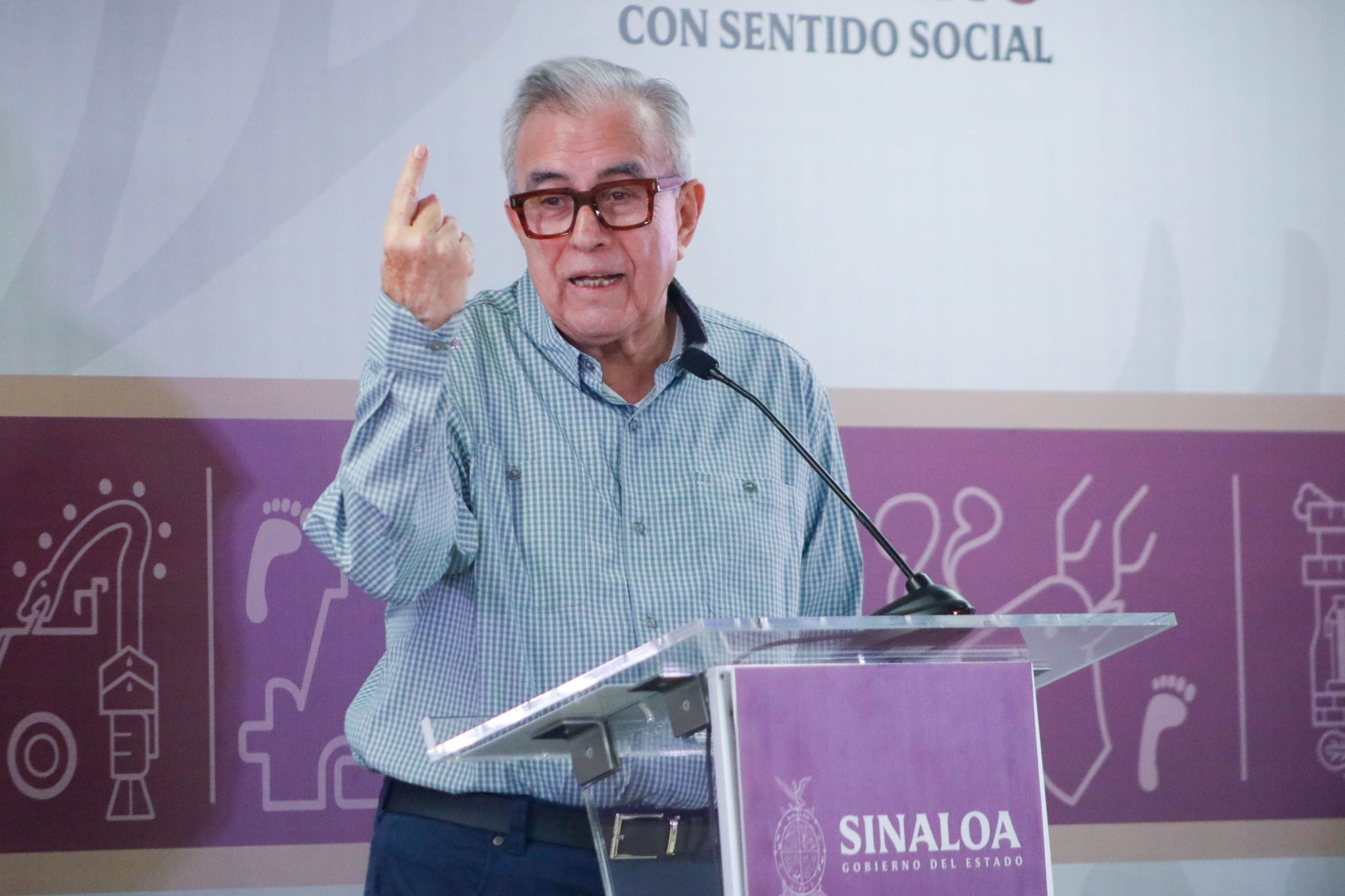
For months, the United States has exerted intense pressure on the Mexican government under the banner of its campaign against alleged ties between politicians and drug cartels. Exactly 60 days ago, the Donald Trump administration formally accused around a dozen officials linked to Morena, Mexico’s ruling party, including Sinaloa Governor Rubén Rocha Moya.
Since then, U.S. media outlets, citing anonymous sources in both countries, have reported that other Morena governors — including those of Sonora, Tamaulipas and Baja California, all border states — appear on a purported list of targets, though Washington has never officially confirmed those claims.
This weekend, fresh reports in the United States alleged that politicians from Mexico’s ruling party have been acting as informants for U.S. authorities in an effort to clear their names. While the officials accused have denied the allegations, Mexican President Claudia Sheinbaum has accused the United States of pursuing interventionist tactics aimed at destabilizing the political movement she leads. According to federal sources consulted by EL PAÍS, the accusations are beginning to generate concern within the ruling party and have fueled suspicions about figures who may be maintaining contacts with Washington.
When the U.S. Department of Justice unusually made public its case against Governor Rocha and several members of the Sinaloa state administration for allegedly collaborating with the Sinaloa Cartel, Mexico responded firmly, arguing that no solid evidence had been presented and that it would not take action without its own investigation by federal prosecutors. Washington had demanded the immediate arrest of Rocha and his associates for extradition purposes, but Mexico said it would wait for the United States to provide convincing evidence of charges ranging from conspiracy to traffic drugs to possession of high-caliber firearms.
To date, neither government has disclosed whether Washington has complied with Mexico’s requests. EL PAÍS contacted spokespeople for Mexico’s Foreign Ministry and the U.S. Embassy regarding the matter, but neither commented.
In response, Sheinbaum instructed Morena officials — from federal lawmakers to state governors — to close ranks in defense of national sovereignty against what she described as foreign pressure. For the ruling party, this was no minor issue. Officials saw clear signs that Trump intended to use Mexico as part of a broader regional strategy. Sheinbaum accused the United States of trying to interfere in the 2027 Mexican legislative elections and speculated about an alliance between Mexico’s opposition and the international far right.
Trump’s moves also prompted the political re-emergence of former president Andrés Manuel López Obrador, who had withdrawn from public life after leaving office. López Obrador, Sheinbaum’s mentor and the founder of Morena, openly argued that Washington’s actions were intended to weaken the movement he created and strengthen Mexico’s right wing so that the United States could once again have “a submissive government” in Mexico.
Far from backing down, the United States raised the stakes. Several members of Trump’s Cabinet publicly threatened incursions into Mexican territory to target drug cartels directly. In May, Trump himself suggested the possibility of ground operations against the cartels after praising strikes against vessels in the Pacific Ocean that Washington accused — without providing evidence — of drug trafficking.
″If they’re not going to do the job, then we’re going to do the job,” Trump said.
Meanwhile, during testimony before the House of Representatives, U.S. Defense Secretary Pete Hegseth urged Mexico to take action against the cartels so that the United States “doesn’t have to.” These threats have at times clashed with statements from other U.S. officials who simultaneously acknowledge the extensive security cooperation Washington has received under Sheinbaum’s administration.
Against this backdrop of interference — further inflamed by revelations that CIA agents had been carrying out security-related activities in Chihuahua without authorization from the federal government — media outlets in both Mexico and the United States have published accusations involving additional Morena politicians.
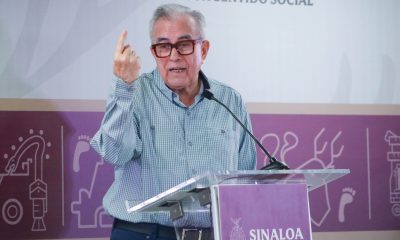
At the forefront of the accusations are the governors of Sonora, Alfonso Durazo, and Tamaulipas, Américo Villarreal. The first blow came with a revelation in the Los Angeles Times that Washington had revoked the visas of both governors, implying they were under investigation for alleged ties to drug trafficking. The report further alleged that Villarreal had continued crossing into the United States using a special permit reserved for individuals cooperating as informants. Durazo and Villarreal denied that their visas had been revoked, denied being subjects of any investigation, and denied serving as informants for U.S. authorities.
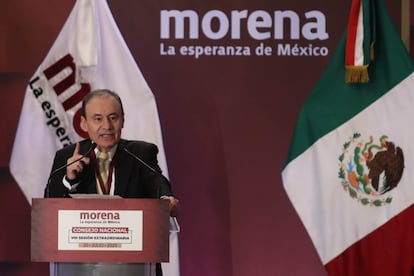
In a fresh report, The New York Times alleged that around a dozen Morena politicians are cooperating with U.S. authorities as informants, providing information “against other members of the party” in an effort to “get ahead of investigations they fear could soon focus on them.” According to the newspaper, the process could trigger a “cascade of cooperating witnesses and indictments” that might weaken Morena. The report also reiterated that both Durazo and Villarreal are under U.S. investigation for alleged corruption.
The two governors once again denied the allegations and criticized the article for failing to provide verifiable evidence. President Sheinbaum also challenged the report, saying her government had no knowledge of any such cooperation and questioning what exactly these officials would be informing on.
The two governors again denied the allegations and criticized the report for not providing verifiable evidence. President Sheinbaum also questioned the NYT, saying her government has no knowledge of such alleged cooperation or of its scope. “First, we don’t know if it’s true. We have no information that anyone is cooperating with the U.S. government. Also, cooperating about what?” the president said at one of her morning press conferences.
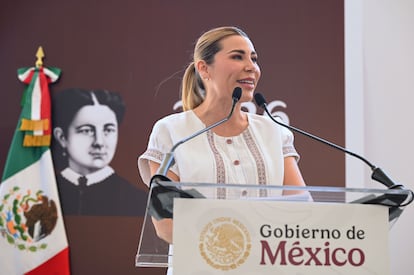
Also drawn into the controversy is Baja California Governor Marina del Pilar Ávila, whose U.S. visa was revoked a year ago and who was recently the subject of a leaked phone conversation suggesting she had been in contact with U.S. officials. The Morena governor acknowledged the conversations but said they concerned efforts to recover her visa, which had been cancelled without any clear explanation.
A federal source told EL PAÍS that the U.S. allegations regarding alleged Mexican narcopoliticians have never been formally discussed in meetings of the Security Cabinet, reinforcing the perception that Sheinbaum’s administration does not attach much credibility to the claims emerging through media leaks. The source added, however, that within Morena circles there is growing speculation about which party figures might plausibly be cooperating with Washington. Among the names reportedly being mentioned, the source said, is the governor of Baja California.
Sign up for our weekly newsletter to get more English-language news coverage from EL PAÍS USA Edition

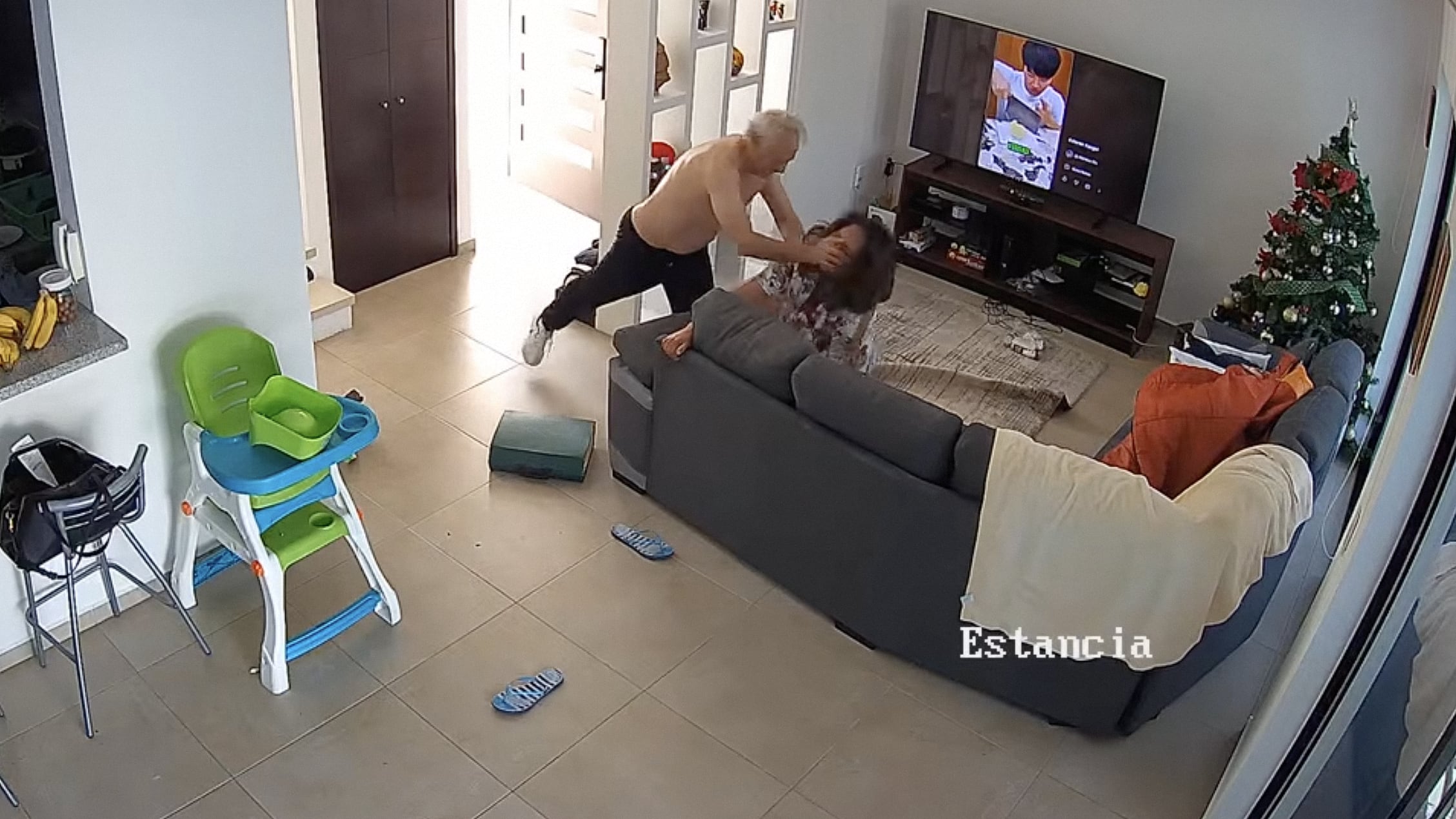
The complaint filed by María Felicia Jiménez, the wife of Víctor Rodríguez Padilla, the former director of Mexico’s state-owned oil company Pemex, has shaken the country. The release of a video showing her being beaten by the former official has sparked solidarity, widespread condemnation, and reactions from Claudia Sheinbaum’s government, which has offered her protection and support in pursuing her complaint. But María Felicia Jiménez is just one of millions of women who suffer gender-based violence in Mexico.
According to figures from Mexico’s National Institute of Statistics and Geography (INEGI) and U.N. Women, 63% of women over the age of 15 in Mexico have experienced some form of violence. Sixty percent of these attacks occur within the home and are committed by their partners. This type of violence often goes unreported, as many victims fear speaking out.
The Executive Secretariat of the National Public Security System recently reported that, between January and May 2026, 230,000 emergency calls to 911 were related to incidents of domestic violence nationwide, with six states accounting for half of these calls: Guanajuato, Mexico City, Sonora, Veracruz, Jalisco and Coahuila. Another 104,000 emergency calls were recorded in connection with incidents of intimate partner violence.
María Felicia Jiménez chose to publicly report her case three months after it occurred, explaining that she did so to protect herself from her alleged attacker, Víctor Rodríguez Padilla, whom she describes as “a senior figure in the current government” who could be shielded due to “his closeness to the highest levels of the presidency.” Rodríguez, who was a classmate of Sheinbaum’s at UNAM’s School of Sciences, served as Pemex director from the start of the administration until May, when he was replaced after receiving praise from the president for his work.
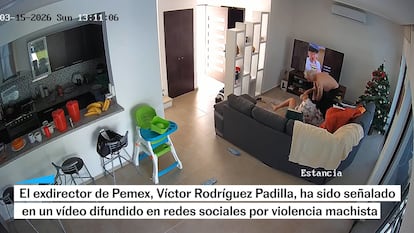
01:20
Former Pemex chief Víctor Rodríguez Padilla accused of domestic violence
In response to the complaint, the Ministry for Women — an agency created by President Sheinbaum at the start of her administration — has established contact with her to provide care, guidance, support, and institutional assistance. María Felicia Jiménez has also received expressions of solidarity from Senator Laura Itzel Castillo, who will take over as head of the Ministry for Women in September.
“From the moment I saw the news about what happened to her, I reached out to the acting head and deputy minister for women to be in contact with the victim and support her in her complaint,” the senator wrote in a message on social media. “I express my solidarity and strongly condemn any act of violence against women. In the position I will assume, I will work to ensure that no act of aggression goes unpunished and that access to justice, the protection of women’s rights, and the right to a life free from violence prevail.”
The former Pemex director has also spoken out in recent hours, calling for “discretion and prudence” so as not to affect his children. “I reiterate my full willingness to cooperate with the competent authorities, trusting that institutions will clarify the facts objectively, fairly, and in strict observance of the principle of the presumption of innocence,” he said in a statement.
Rodríguez Padilla, who had been set to take over as head of the National Institute of Electricity and Clean Energy (INEEL), said he has stepped away from any public office to address the case strictly as a private citizen, without interfering in the investigations. The Energy Ministry confirmed that he will not take up the post.
Sign up for our weekly newsletter to get more English-language news coverage from EL PAÍS USA Edition
Denia’s Fiestas Mayores 2026: Highlights from the final weekend schedule
€12.7 million investment brings a new health centre to Torre del Mar
Miraculous survival. Wild shelduck endures high-speed collision and 30-minute grille ride near Den Helder

Real Estate Agents In Barcelona Are Using AI To ‘pimp Up’ Dilapidated Homes – And It’s Not Illegal

Resultados Elecciones Colombia 2026, En Vivo | De La Espriella, Nuevo Presidente De Colombia, Según El Preconteo De Votos

More Than One Home Is Squatted Every Day In Malaga Province As PP Calls For 24-Hour Evictions And Bill Cut Offs


-
 ai generated property listings2 weeks ago
Real Estate Agents In Barcelona Are Using AI To ‘pimp Up’ Dilapidated Homes – And It’s Not Illegal
-
 Abelardo de la Espriella2 weeks ago
Resultados Elecciones Colombia 2026, En Vivo | De La Espriella, Nuevo Presidente De Colombia, Según El Preconteo De Votos
-
 Andalucia2 weeks ago
More Than One Home Is Squatted Every Day In Malaga Province As PP Calls For 24-Hour Evictions And Bill Cut Offs
-
 Comisiones Obreras2 weeks ago
CC OO Advierte De Que Impulsará Movilizaciones Y Huelgas Ante El Bloqueo Patronal Al Acuerdo De Convenios
-

 Uncategorized2 weeks ago
Red Bull set for radical new design in desperate bid to keep Max Verstappen
-

 Uncategorized1 week ago
F1 Qualifying Results: 2026 Austrian Grand Prix times and grid positions
-

 Andalucia2 weeks ago
Historic June Heatwave Forces Mass Cancellations Of Beach Bonfires On Usually Raucous San Juan Celebrations Over Forest Fire Fears
-
 Abelardo de la Espriella2 weeks ago
Petro: “No Se Puede Proclamar Ninguno Presidente. Tranquilidad Entre La Ciudadanía”