
Alfonso Durazo Montaño
United States Keeps Up Pressure On Mexico Over Narcopolitics Two Months After Rubén Rocha Indictment

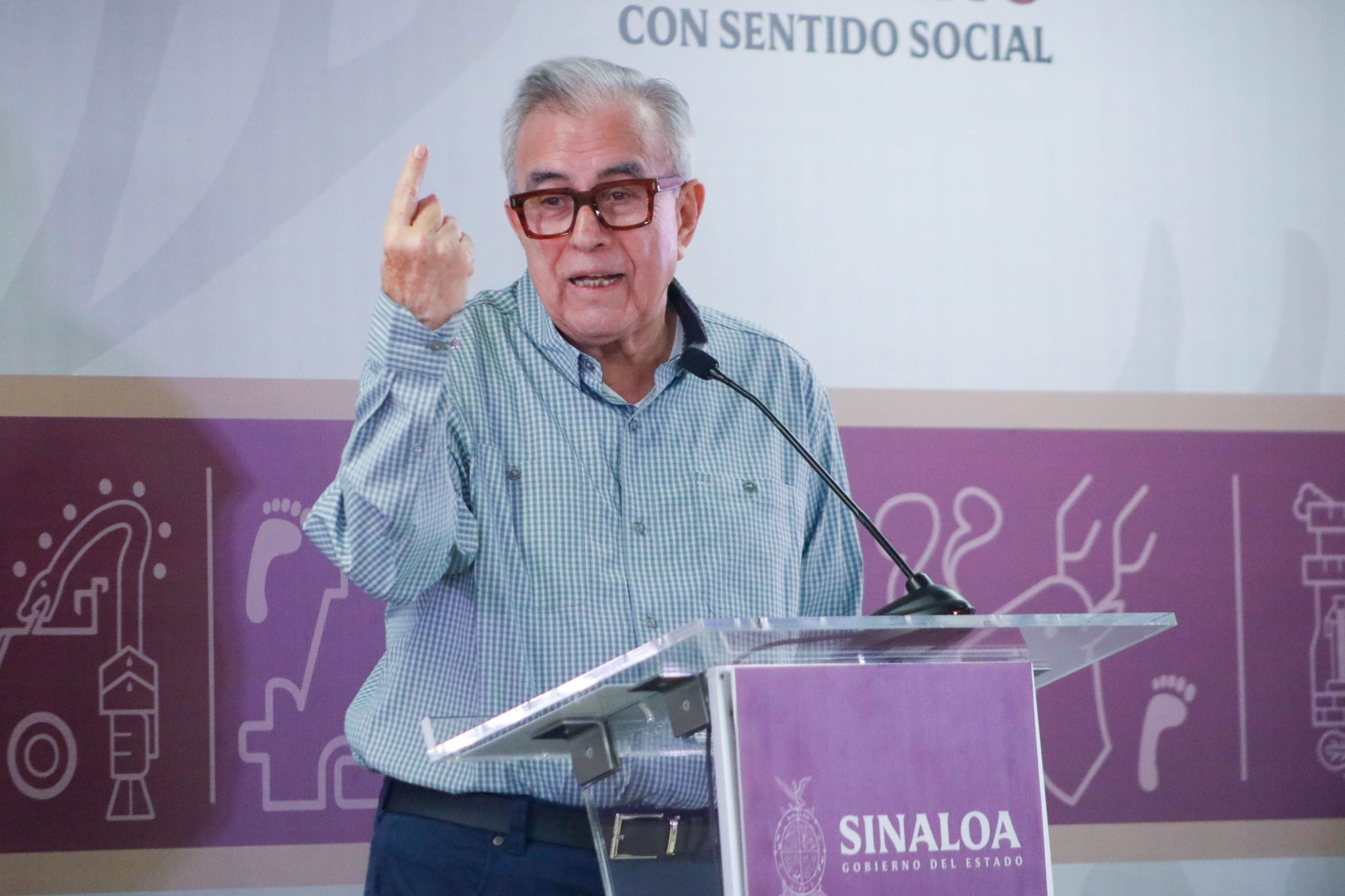
For months, the United States has exerted intense pressure on the Mexican government under the banner of its campaign against alleged ties between politicians and drug cartels. Exactly 60 days ago, the Donald Trump administration formally accused around a dozen officials linked to Morena, Mexico’s ruling party, including Sinaloa Governor Rubén Rocha Moya.
Since then, U.S. media outlets, citing anonymous sources in both countries, have reported that other Morena governors — including those of Sonora, Tamaulipas and Baja California, all border states — appear on a purported list of targets, though Washington has never officially confirmed those claims.
This weekend, fresh reports in the United States alleged that politicians from Mexico’s ruling party have been acting as informants for U.S. authorities in an effort to clear their names. While the officials accused have denied the allegations, Mexican President Claudia Sheinbaum has accused the United States of pursuing interventionist tactics aimed at destabilizing the political movement she leads. According to federal sources consulted by EL PAÍS, the accusations are beginning to generate concern within the ruling party and have fueled suspicions about figures who may be maintaining contacts with Washington.
When the U.S. Department of Justice unusually made public its case against Governor Rocha and several members of the Sinaloa state administration for allegedly collaborating with the Sinaloa Cartel, Mexico responded firmly, arguing that no solid evidence had been presented and that it would not take action without its own investigation by federal prosecutors. Washington had demanded the immediate arrest of Rocha and his associates for extradition purposes, but Mexico said it would wait for the United States to provide convincing evidence of charges ranging from conspiracy to traffic drugs to possession of high-caliber firearms.
To date, neither government has disclosed whether Washington has complied with Mexico’s requests. EL PAÍS contacted spokespeople for Mexico’s Foreign Ministry and the U.S. Embassy regarding the matter, but neither commented.
In response, Sheinbaum instructed Morena officials — from federal lawmakers to state governors — to close ranks in defense of national sovereignty against what she described as foreign pressure. For the ruling party, this was no minor issue. Officials saw clear signs that Trump intended to use Mexico as part of a broader regional strategy. Sheinbaum accused the United States of trying to interfere in the 2027 Mexican legislative elections and speculated about an alliance between Mexico’s opposition and the international far right.
Trump’s moves also prompted the political re-emergence of former president Andrés Manuel López Obrador, who had withdrawn from public life after leaving office. López Obrador, Sheinbaum’s mentor and the founder of Morena, openly argued that Washington’s actions were intended to weaken the movement he created and strengthen Mexico’s right wing so that the United States could once again have “a submissive government” in Mexico.
Far from backing down, the United States raised the stakes. Several members of Trump’s Cabinet publicly threatened incursions into Mexican territory to target drug cartels directly. In May, Trump himself suggested the possibility of ground operations against the cartels after praising strikes against vessels in the Pacific Ocean that Washington accused — without providing evidence — of drug trafficking.
″If they’re not going to do the job, then we’re going to do the job,” Trump said.
Meanwhile, during testimony before the House of Representatives, U.S. Defense Secretary Pete Hegseth urged Mexico to take action against the cartels so that the United States “doesn’t have to.” These threats have at times clashed with statements from other U.S. officials who simultaneously acknowledge the extensive security cooperation Washington has received under Sheinbaum’s administration.
Against this backdrop of interference — further inflamed by revelations that CIA agents had been carrying out security-related activities in Chihuahua without authorization from the federal government — media outlets in both Mexico and the United States have published accusations involving additional Morena politicians.
At the forefront of the accusations are the governors of Sonora, Alfonso Durazo, and Tamaulipas, Américo Villarreal. The first blow came with a revelation in the Los Angeles Times that Washington had revoked the visas of both governors, implying they were under investigation for alleged ties to drug trafficking. The report further alleged that Villarreal had continued crossing into the United States using a special permit reserved for individuals cooperating as informants. Durazo and Villarreal denied that their visas had been revoked, denied being subjects of any investigation, and denied serving as informants for U.S. authorities.
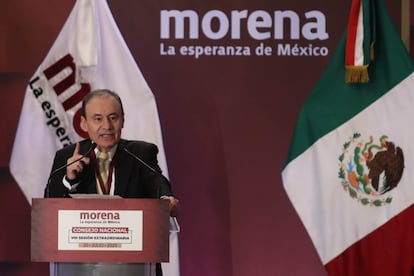
In a fresh report, The New York Times alleged that around a dozen Morena politicians are cooperating with U.S. authorities as informants, providing information “against other members of the party” in an effort to “get ahead of investigations they fear could soon focus on them.” According to the newspaper, the process could trigger a “cascade of cooperating witnesses and indictments” that might weaken Morena. The report also reiterated that both Durazo and Villarreal are under U.S. investigation for alleged corruption.
The two governors once again denied the allegations and criticized the article for failing to provide verifiable evidence. President Sheinbaum also challenged the report, saying her government had no knowledge of any such cooperation and questioning what exactly these officials would be informing on.
The two governors again denied the allegations and criticized the report for not providing verifiable evidence. President Sheinbaum also questioned the NYT, saying her government has no knowledge of such alleged cooperation or of its scope. “First, we don’t know if it’s true. We have no information that anyone is cooperating with the U.S. government. Also, cooperating about what?” the president said at one of her morning press conferences.
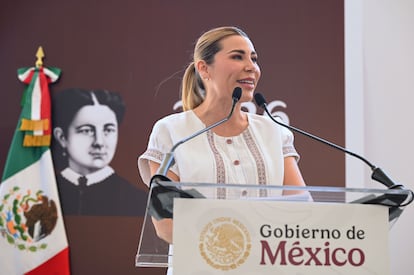
Also drawn into the controversy is Baja California Governor Marina del Pilar Ávila, whose U.S. visa was revoked a year ago and who was recently the subject of a leaked phone conversation suggesting she had been in contact with U.S. officials. The Morena governor acknowledged the conversations but said they concerned efforts to recover her visa, which had been cancelled without any clear explanation.
A federal source told EL PAÍS that the U.S. allegations regarding alleged Mexican narcopoliticians have never been formally discussed in meetings of the Security Cabinet, reinforcing the perception that Sheinbaum’s administration does not attach much credibility to the claims emerging through media leaks. The source added, however, that within Morena circles there is growing speculation about which party figures might plausibly be cooperating with Washington. Among the names reportedly being mentioned, the source said, is the governor of Baja California.
Sign up for our weekly newsletter to get more English-language news coverage from EL PAÍS USA Edition









El Atlético De Madrid Anuncia El Fichaje De Grimaldo

Última Hora De La Actualidad Política, En Directo | Marlaska, Sobre Los Manejos De Leire Díez: “En Mi Ministerio, A Diferencia De Otros, Actuamos Bajo El Principio De Legalidad”

Sanchez Gaffe: PM Hails Spain’s Safest Region As Also Its Least-Foreign During Launch Of €505m Migrant Integration Plan
Dinosaurs are roaring over to Estepona this summer in a massive 5,000m² exhibition

Families Caring For Elderly Parents In Spain Say Brexit Has Left Them With Impossible Choices
Denia launches new La Marineta music festival this summer with Fangoria and Nil Moliner


-
Costa del Sol1 week ago
Dinosaurs are roaring over to Estepona this summer in a massive 5,000m² exhibition
-
 %2 weeks ago
Families Caring For Elderly Parents In Spain Say Brexit Has Left Them With Impossible Choices
-
Costa Blanca North2 weeks ago
Denia launches new La Marineta music festival this summer with Fangoria and Nil Moliner
-

 %2 weeks ago
One Of Spain’s Top Supermarkets Has Just Been Ranked Among Europe’s Most Innovative In A Major New Report
-
 ElPais2 weeks ago
Primary Elections In New York, Maryland, And Utah: Date And How To Vote
-
Finland2 weeks ago
Finns abroad keep Juhannus traditions alive on Spanish coast in 2026
-
Latest2 weeks ago
KEY POINTS: What Changes About Life In Spain In July 2026
-
Costa del Sol1 week ago
Local community gets ready for its annual Calahonda Day celebration on June 27