
Arizona
How The Democrats’ Midterm Victory Could Reshape The Rules For Electing A US President















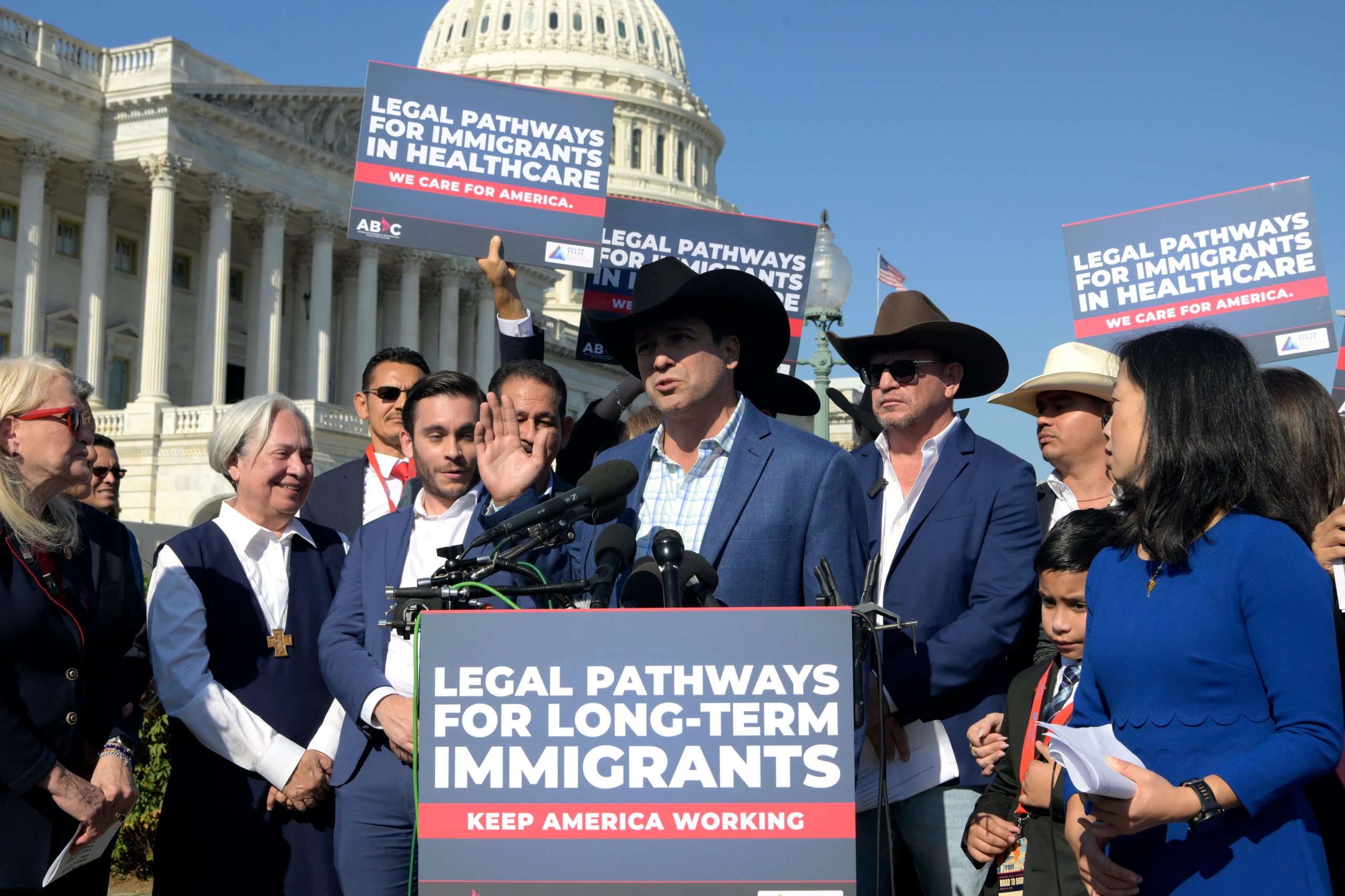
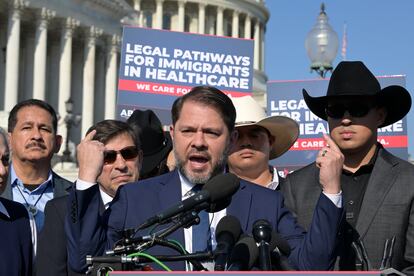
November 11 is Veterans Day in the United States, but stetsons proliferated Wednesday in front of the Capitol. Politicians and business leaders from Texas and Arizona joined forces to demand immigration reform outside the landmark complex that houses both chambers of Congress, which will be under Democratic control starting in January. Familiar faces from the Senate, such as Arizona Senator Rubén Gallego, and from the House of Representatives, including Texas representatives Henry Cuellar, Vicente González, Joaquín Castro, Verónica Escobar, and Sylvia García, were present.
But there were also new faces, freshly elected on November 3, who have come to Washington hoping to shake up a Congress that for decades has been unable to pass immigration reform. JoAnna Mendoza, from Arizona, and Bobby Pulido, the former Tejano singer who was elected to represent Texas’s 15th district, were among them. “In the last election, on November 3, we sent a clear message: we are tired of cruelty and we are tired of corruption,” he said.
Pulido was one of the protagonists of the midterms that helped turn an emblematic Republican state blue — Texas became a key example of the Democrats’ sweeping success in the elections. In his region, arrests by Immigration and Customs Enforcement (ICE) have wreaked havoc on families and the economy. “I am married to a Mexican. My son is from a mixed-status family. We need to fix this. And I want to tell you that I have taken note of the members who are here right now. Count on my commitment to work on this tirelessly. This is extremely important,” he added.
Pulido introduced his colleague Leticia Gutiérrez, a previously unknown face in Washington who will be sworn in as a congresswoman in January after defeating the Republican candidate despite her campaign’s limited resources. Her 9th district is where Mexican national Lorenzo Salgado was killed in July by gunfire from an ICE agent. At the altar where he was honored, residents placed their stickers on election day to show they had voted with immigration policy in mind.
“We should not be spending money on these racist policies that keep targeting our working communities, like Lorenzo Salgado’s, who was killed in my Magnolia Park community. That is my neighborhood, and my family lives there. He was not just a father; he was everyone’s father. Enough. We need to move forward,” Gutiérrez said.
Rejection of the Trump administration’s immigration policy was decisive in the Republican defeat in the midterms, and Democrats want to use the majorities they will enjoy in both chambers to push for a reform that would make it easier to legalize undocumented immigrants who have lived in the country for years.
Joaquín Castro, the representative from San Antonio, Texas, said “change is on the way.” In January, “we will have a Republican president — President Trump — and a Congress with a strong Democratic presence. This is an opportunity to address the issue of immigration reform. It is an opportunity to be true to the history of this country. History tells us that our nation became the most powerful and prosperous on Earth not in spite of immigrants, but because of them. I want us to legislate along those lines,” he said.
Deal with Trump
Rubén Gallego, for his part, recalled how the Latino vote was crucial in delivering victory to the Democrats, largely because of the harassment they face due to the racial profiling used in the deportation campaign.
“Latinos are giving Democrats the chance to win their vote back. And, in part, that requires us to push hard for immigration reform. That includes the possibility of reaching an agreement with Donald Trump,” the senator said.
Latinos voted en masse against the Republicans after a portion of their electorate switched parties in 2024 to support Trump’s return to the White House.
In an interview on CBS’s 60 Minutes on Sunday, the president acknowledged that his immigration policy had been too harsh, resulting in the deportation of many migrants who had worked and paid taxes in the U.S. for years. However, the appointment of Stephen Miller — an advocate of the hardest line — as chief of staff sent contradictory signals about his intentions.
Among the business leaders demonstrating in front of the Capitol was Mario Guerrero, president of the South Texas Builders Association. His sector is one of the most-affected by the labor shortage caused by ICE arrests.
Guerrero is one of the Republicans who, after voting for Trump three times, chose to cast his vote for the Democrats. “To the Republicans: understand that we’ve lost the party; you lost Texas, you lost the Latino vote, you lost the House of Representatives and the Senate. It’s time for President Trump to step aside so we can get real results. Every election is important, but these were historic. Texas has gone Democratic,” he said. And he issued a warning: “A friendly reminder to my friends in the Democratic Party: don’t mess with us. And don’t squander this opportunity, like Biden and Obama did.”
Sign up for our weekly newsletter to get more English-language news coverage from EL PAÍS USA Edition

Struggling With Spain’s Food Prices? This Supermarket Chain Was Built To Help Families Save

Oscar Piastri split takes fresh twist as F1 boss makes Mark Webber claim

Rafa Jódar-Alexander Zverev, El Partido De Las ATP Finals En Vivo| Alexander Zverev Derrota En Dos Sets A Rafa Jódar En El Primer Partido De Las ATP Finals


-

 New Developments2 weeks ago
Luxury Villas For Sale, Estepona – ProjectL1
-
Age Concern Marbella - San Pedro3 weeks ago
Halloween lunch sells out as 51 join Marbella get-together
-

 New Developments3 weeks ago
How To Get A Tourist Rental Licence In Andalusia (Spain) – Step-By-Step Guide 2025
-
Barcelona riots3 weeks ago
Looting and street violence hit Barcelona as El Corte Inglés customers are trapped
-

 %3 weeks ago
Spain Orders Replacement Of Eight Million Gas Meters: New Rules, Costs And Deadlines
-
Costa del Sol3 weeks ago
Where are they? Expat questions local police presence
-
Living in Spain4 weeks ago
Rejected for Spain’s widow’s pension? Unmarried parents could get a second chance
-
Gibraltar3 weeks ago
Proud to be British: HMS Queen Elizabeth opens its doors in Gibraltar