Connect with us

%

Ibiza Brings In €86,000 Lighting Fines

Published

on

ibiza-brings-in-e86,000-lighting-fines

Ibiza has approved new night-time lighting restrictions carrying fines of up to €86,000. As pools and gardens become increasingly decorative, homeowners across Spain may want to check what rules apply to their own outdoor lights.

Modern pool lights, illuminated gardens, terraces and decorative lighting are easy to take for granted when enjoying a Spanish evening. Ibiza has now approved controls on outdoor lighting in an effort to reduce light pollution, cut unnecessary energy use and protect wildlife and dark skies.

Ibiza’s new rules apply across the island, covering both public and private lighting. For anyone living elsewhere in Spain, it’s a reminder that outdoor lighting is not necessarily a free-for-all after dark.

What has Ibiza changed?

Ibiza’s island council, the Consell d’Eivissa, has approved its new Regulation for the Protection of the Night Environment. Winter restrictions will begin at 10pm, while the restricted period starts at midnight during summer, continuing until sunrise. Depending on the type and purpose of the lighting, installations will have to be dimmed or switched off during those hours.

Outdoor ornamental lighting will generally have to stay off during the restricted period. Rules also control the intensity, colour and direction of lighting, including measures designed to prevent light spilling into neighbouring properties or upwards into the night sky.

Illuminated signs and screens will also be subject to restrictions, and sporting facilities must prevent excessive light escaping beyond the area being illuminated.

Could your pool or garden lights be affected elsewhere in Spain?

Ibiza’s rules do not automatically apply outside the island. This is important because lighting regulations vary depending on where a property is located. Spain has national rules on energy efficiency and light pollution, although these mainly apply to larger outdoor-lighting installations. Autonomous communities and town halls can also have additional regulations governing outdoor lighting.

Andalucia is one example. Its 2025 Regulation for Protection Against Light Pollution applies to public and private outdoor lighting, including lighting associated with private developments and detached homes.

Under the Andalucian regulation, the normal night-time period is 11pm to 6am. Outdoor lighting should generally be switched off during those hours unless it is required for an activity or for safety, subject to the specific provisions applying to the installation. Town halls can also alter certain hours and establish local exceptions.

That does not mean every swimming-pool light in Andalucia has to be switched off at 11pm. The treatment depends on the type and purpose of the lighting, its location and applicable local rules.

Why your town hall rules are important

Homeowners should not assume that the rules in Ibiza, Andalucia or another part of Spain automatically apply to their property.

In Andalucia, for example, local councils inspect many private outdoor-lighting installations, although the regional government handles inspections for installations that require environmental authorisation, and can approve their own ordinances within the regional framework.

So anyone planning new garden lighting, pool illumination, security lights or decorative LEDs should check the requirements applying in their local area before installing them.

Ibiza’s fines can reach €86,000

Ibiza’s new penalty system could give anyone breaking them a bit of a sting. Minor offences carry fines of €215 to €860, while serious offences range from €860 to €4,300. Very serious breaches can attract penalties of between €4,300 and €86,000.

Existing installations will generally have up to four years to meet the new technical requirements. Changes to their operating hours have a much shorter deadline of three months. Certain public lighting and sports facilities can have up to eight years to complete technical adaptations. The regulation will enter into force 20 days after its full publication in the Official Gazette of the Balearic Islands.

What should homeowners across Spain do?

Nobody living in other parts of Spain needs to follow Ibiza’s new 10pm or midnight timetable. However, Ibiza’s decision is a good reason to check the position locally.

If your property has a swimming pool, extensive garden lighting, illuminated signs, decorative LEDs or powerful security lights, check your autonomous community and local rules. Pay particular attention if you are installing a new system or substantially changing an existing one.

Requirements may also concern brightness, the direction of the beam, the colour of the light and how much illumination spills outside the area that needs lighting.

For homeowners, one simple check could therefore prevent an unwelcome surprise later: before leaving those garden or pool lights glowing all night, find out what your local rules actually say.

%

Meet Rescued Horses In Coin

Published

on

meet-rescued-horses-in-coin

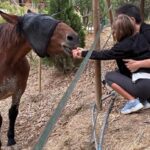
Picture a horse nuzzling your hand in search of a carrot, or a table covered in ribbons, glitter and handmade stars. Saturday, November 14 brings two wonderful reasons to visit an animal sanctuary and help animals that were once given up on.

Two events, one lovely Saturday

Todos los Caballos del Mundo or “All the Horses in the World”, is hosting a guided visit for all the family and a Christmas crafts workshop on the same morning at Ctra. de Borrajo, s/n, 29120 Alhaurin el Grande, Malaga

This guided visit runs entirely in English, from 10:30am to 12:30. You can wander the paddocks, hear the animals’ stories and meet the people who look after them with children are very welcome.

Entry is by donation: €10 for adults and €5 for children under 12, and under-threes go free. All of it goes towards the animals’ care. Please bring carrots for the horses and leave pets at home so the residents stay calm.

Limited spaces are available so you need to book at todosloscaballosdelmundo.com. Go to the “Visits” section and select 14 November.

Make your own Christmas decorations

Prefer something creative? The sanctuary’s Christmas workshop, is a morning of festive crafting surrounded by nature and animals. Organisers promise personalised ornaments and some surprises. Think stars, snowflakes, Christmas trees and reindeers. No experience is needed, only a willingness to have fun.

Tickets cost €30 per person, and is open to everyone so friends, couples and families can all join in. Everyone takes home their own handmade creations, which makes this a lovely way to get ahead on tree decorations or gifts.

Capacity is also limited for this event. To reserve, send a WhatsApp message on 660 092 092.

The sisters behind the sanctuary

Sisters Concordia and Virginia Marquez Garcia founded the charity roughly two decades ago, after moving to Malaga and finding horses abandoned and mistreated. Today it cares for hundreds of animals, including donkeys, dogs and cats, many of them rescued from neglect or illness. It is one of the country’s largest equine sanctuaries.

Can’t make it? You can still help

Anyone unable to attend has other ways to lend a hand. The sanctuary welcomes donations of food, blankets, towels and other useful items. Volunteers are always appreciated, and following and sharing @todosloscaballosdelmundo on social media helps spread the word.

Whichever event you choose, you will leave with a warm feeling, and perhaps a new four-legged friend to sponsor. For more information visit the charity website or social media channels.

Continue Reading

%

Minimum Wage Workers In Spain Could Get €65 A Month More From January

Published

on

minimum-wage-workers-in-spain-could-get-e65-a-month-more-from-january

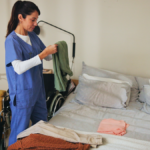
Carers and cleaners are among the workers in line for a new minimum rate from January. Credit: PeopleImages / Shutterstock

Cleaners, carers and seasonal workers across Spain are in line for a bigger pay packet from January, with the proposed minimum for hourly home help rising by 51 cents to €10.06. It’s part of a wider minimum wage rise the government wants signed off before voters go to the polls on Sunday November 29.

Hourly home help would rise to €10.06

Cleaners, carers and nannies paid by the hour would be entitled to at least €10.06 for every hour worked from January 1, up from €9.55, under a draft government order published this week.

That’s a rise of 51 cents, or roughly €80 over a year for someone who cleans for three hours every week and around €530 for a carer who works 20 hours a week. The rate applies to domestic workers who are paid by the hour and don’t live in the household, and the draft says the €10.06 has to cover every part of their pay for the hours actually worked.

The draft also says only cash counts towards the minimum, so payment in kind, such as food or accommodation, can’t be used to make up the difference. 

Short-term staff would get at least €60.88 a day

Workers on short contracts would see a bump too. Anyone hired for up to 120 days by the same company would be entitled to at least €60.88 for each legal working day, up from €57.82 this year.

That daily rate is meant to cover the worker’s share of Sundays, public holidays and the two extra annual payments (pagas extra, normally paid in summer and at Christmas), which is why it’s higher than the plain daily rate of €42.87 that applies to the standard minimum wage. Holiday pay for these workers is regulated separately.

The main minimum wage would climb €65 a month

For everyone else on the minimum, the draft sets €1,286 gross a month over 14 payments, or €18,004 a year for a full-time job. That’s a rise of 5.3 per cent, or €65 more a month than now and €910 across the year.

A group of experts advising the Labour Ministry had recommended 4.9 per cent, which would have meant €1,281 a month, so the government’s figure is slightly higher, only by about €5 a month. The unions CCOO and UGT had asked for at least 7 per cent, which would have meant around €1,306. They’ve made their backing conditional on the decree stopping employers from absorbing existing pay supplements into the new minimum, and hadn’t yet commented on the figure.

Anyone already earning more than €18,004 a year for full-time work isn’t affected, and the minimum will have risen by almost 75 per cent since 2018, when it was €736 a month. We compared the current €17,094 a year with UK minimum pay last month, in case you missed it.

Tax is still withheld, then claimed back

Elma Saiz, Spain’s Social Security minister and government spokesperson, said the Spanish tax agency would again approve a deduction so that minimum wage earners pay no income tax (IRPF).

This year, though, employers would still withhold tax from monthly pay, and the money could only be recovered by filing the annual tax return the following year. The draft also says regional or local rules, and private contracts that use the minimum wage as a reference, will stay on this year’s figure unless the parties agree otherwise.

Approval could land in the middle of the election campaign

The draft is open to comments until Monday November 16. The Council of Ministers could then approve it on Tuesday November 17 or Tuesday November 24, with the campaign officially starting on Friday November 13 and the general election on Sunday November 29.

Last year’s rise wasn’t signed off until Wednesday February 18, and it was backdated to January 1. The new draft is written to apply from January 1. Until the decree is approved and published in the BOE (Spain’s official state gazette), the €1,286 and the new hourly and daily rates remain proposals, so the final figures are worth checking once they appear there.

Continue Reading

%

Casares World Cheese Awards Debut

Published

on

casares-world-cheese-awards-debut

A semi-matured cheese from Casares will compete at the World Cheese Awards for the first time. Queseria Crestellina on the Costa del Sol has entered its queso semicurado, a semi-cured cheese, in the international competition, which runs in Cordoba from November 12 to 15 and features close to 5,000 cheeses from around the world.

A return to competition

Crestellina has entered contests before and has received awards, but it had stayed away from them for several years. Manager Juan Ocaña told Radio Casares that the dairy had concerns about some judging systems and preferred to focus on its work at the farm.

This year’s decision to return was influenced by the event taking place in Andalucia. For the family business, it offers a chance to meet other cheesemakers, compare methods and see how its cheese is received beyond the local area.

Winning is not the priority

Ocaña made clear that a prize is not the main aim. “More than winning another prize, what we really want is to get out of our daily routine and meet other producers, and see other ways of making cheese,” he said.

Crestellina’s entry will bring a cheese made in Casares before international judges. Manager Juan Ocaña hopes taking part will also draw attention to cheesemaking in Malaga province, and to the Payoya goat, a breed closely linked to the area’s rural landscape.

How the awards work

The World Cheese Awards is popularly known in Spain as the “World Championship of Cheese”. Judges assess entries in different categories, awarding recognitions according to the quality of each cheese rather than producing a single ranking of every entry.

With thousands of products entered, the event is a demanding test for any producer. It also gives smaller dairies the opportunity to measure their work against established names from across the international cheese sector.

Keeping tradition going

Crestellina continues to welcome visitors for cheesemaking workshops, tastings and visits to its Payoya goats. Schools, families and international visitors can take part, with activities available in other languages.

Ocaña’s niece, Erika, has recently joined the business, representing a fifth generation connected to the dairy. For the family, that continuity matters as much as any competition result, particularly as small livestock farms face growing pressure.

A name to watch in Cordoba

Medals will be awarded across the competition’s categories after judging. Whether Crestellina’s semi-cured cheese receives recognition or not, its first appearance at the World Cheese Awards puts a modest Casares local producer in front of an international audience.

Continue Reading

Trending

Copyright © 2017 Spanish Property & News