
News from Spain
Ibiza residents strike back as illegal 1,000-guest villa party raided by police

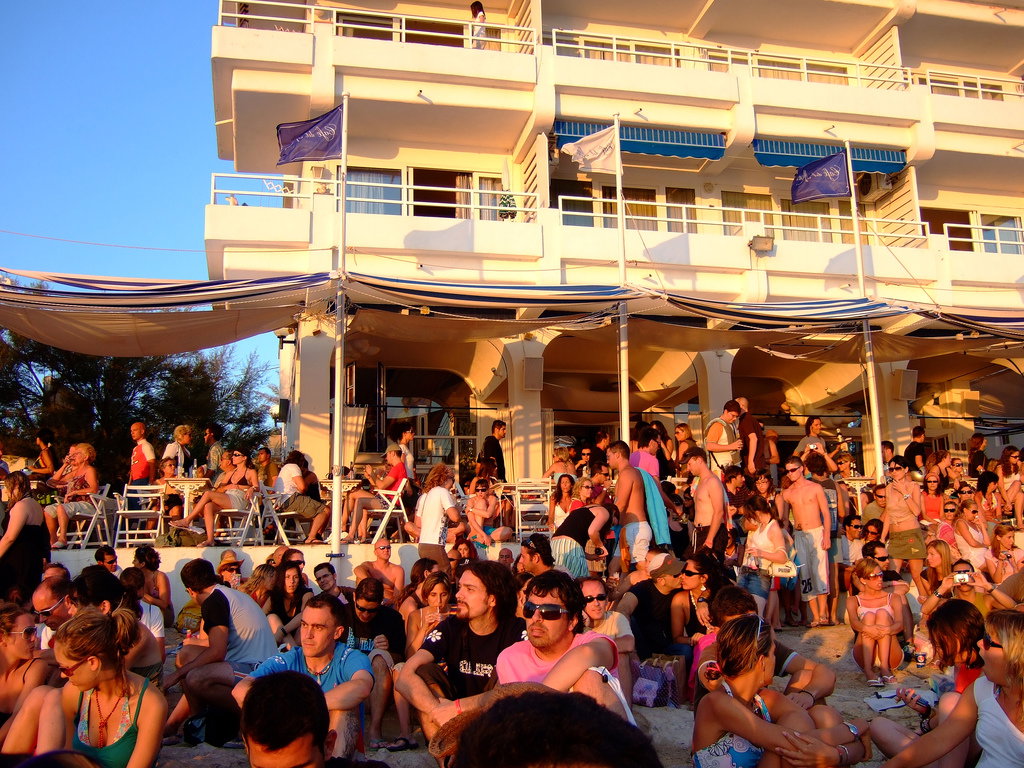
Police raid massive unpermitted Ibiza villa party, sparking resident fury.
Photo Credit: David Loong / Wikimedia Commons
The party is over: a recent illegal villa rager in Ibiza has made waves in the local community after several complaints and even a police raid put a stop to the event. The incident highlights a new reality for residents and visitors of the Balearic Island, as well as holidaymakers and expatriates in other parts of Spain where summer partying is as much a part of daily life as gastronomy and sightseeing.
The massive unpermitted festival grounds in Ibiza: Hundreds of thousands of euros in fines
The Spanish Guardia Civil and the local police descended on the massive villa party on an estate along the Camí Vell de Sant Mateu, which reportedly had some 1,000 guests with many wearing commercial wristbands, as guests at a festival would. The party had lasted for two days, a full-scale, commercial operation disguised as a private gathering, and lacking the necessary permit to be carried out.
The massive, blowout party featured a purpose-built mini-festival ground, including restaurant and dining areas, multiple fully stocked bars, private security teams, black shuttle vans transporting guests from covert meetup points, an on-site ambulance and private medical staff, and even an amusement carousel.
Despite the complexity of the operation, the festival lacked a single legal permit, and the local Sant Antoni Town Hall launched harsh sanction proceedings against the organisers, who now face up to €300,000 in fines for severe violations.
A boiling point for local expat communities
The incident, which happened in mid-June, has highlighted a growing friction between the luxury party industry of Ibiza, and the local and expatriate communities caught in the middle. For Britons living in rural hubs on the Balearic Islands and other Spanish partying hotspots, the raid signals a boiling point.
Illegal villa parties like the large one experienced in June are not uncommon on the Balearic Islands, particularly Ibiza; summer clubbing strips like San Antonio and Playa d’en Bossa are increasingly becoming hotspots for party planners, who use private messaging channels and social media to organise massive parties in rural estates.
Summers of loud parties, nuisances, and stress for locals and holidaymakers on the islands
These parties often cause severe disruptions for locals and other holidaymakers, who may sleep with the windows open during the hot nights on the islands and are disturbed by loud music, have their roads blocked by illegal taxis and an influx of partying visitors, or experience mountains of rubbish left in their local neighbourhoods and on public beaches.
Additionally, according to a report about the same party by El País, local residents claim that the police do not always come to the scene when local residents complain about a party, especially when they deem that the music is not too loud or when it is too early in the afternoon. By the time residents file formal complaints, the problem has usually already been ongoing.
How expat property owners can protect themselves
For expatriate communities experiencing disturbances from villa parties nearby, especially in the Balearic Islands, there are still things that can be done to report them. Primarily:
- Expats should report suspicious behaviour in their neighbourhoods, including an unusual amount of transport shuttles, makeshift parking lots in nearby fields, and other unusual happenings.
- Log the nuisance. Keeping a detailed record of the recurring disturbances and turning it in to the local Neighbours’ Association (Asociación de Vecinos) could help the complaints to carry significantly more weight.
- For expats renting out their villas or otherwise managing properties, it is important to be aware of the laws and restrictions around parties. If a tenant throws an unpermitted commercial event on your property, Spanish authorities could potentially hold the property owner legally and financially liable for the massive fines, regardless of who signed the rental contract.







Spain’s labour market has reached a landmark moment, with unemployment falling below 2.3 million for the first time since January 2008, marking the country’s strongest jobs market in more than 17 years.
The latest figures released by Spain’s Ministry of Labour show the number of registered unemployed fell by 48,920 people during June, leaving a total of around 2.28 million people out of work. At the same time, Social Security registrations rose by more than 76,000, taking total employment to a record high of over 21.9 million workers.
The figures suggest Spain continues to outperform expectations despite global economic uncertainty, with employers continuing to recruit ahead of the peak summer holiday season.
The services sector, fuelled by tourism, hospitality and leisure businesses, once again led the way, accounting for the largest share of new jobs. Hotels, restaurants, bars and travel companies have all increased hiring as millions of holidaymakers head to Spain’s beaches and cities.
Tourism continues to drive growth
For destinations including Mallorca, the Costa Blanca, Costa del Sol and the Canary Islands, the figures underline the importance of tourism to local economies.
Every summer, thousands of seasonal jobs are created across hotels, restaurants, airports, transport services and attractions. This year’s strong visitor numbers have helped businesses recruit staff earlier and in greater numbers, contributing to another fall in unemployment.
Youth unemployment also continued to improve, reaching its lowest level on record, while the number of unemployed women dropped to its lowest point since 2008. The improvements were seen across most regions of Spain, with Andalusia, Madrid and Castilla y León among those recording some of the biggest monthly declines.
Challenges still remain
Despite the positive news, economists caution that Spain still has one of the highest unemployment rates in the European Union, particularly among younger workers.
Many of the new jobs created over the summer are seasonal, meaning employment levels typically fall once the busy tourism period comes to an end. Businesses are also facing rising labour costs and wider economic uncertainty, which could slow hiring later in the year.
Nevertheless, the latest figures represent another significant step in Spain’s economic recovery. With record employment, falling unemployment and a busy tourist season in full swing, the country’s labour market is showing resilience and providing a welcome boost for workers, businesses and holiday destinations alike.

Airports in Europe
Airlines are calling to suspend new border checks just weeks before summer travel chaos
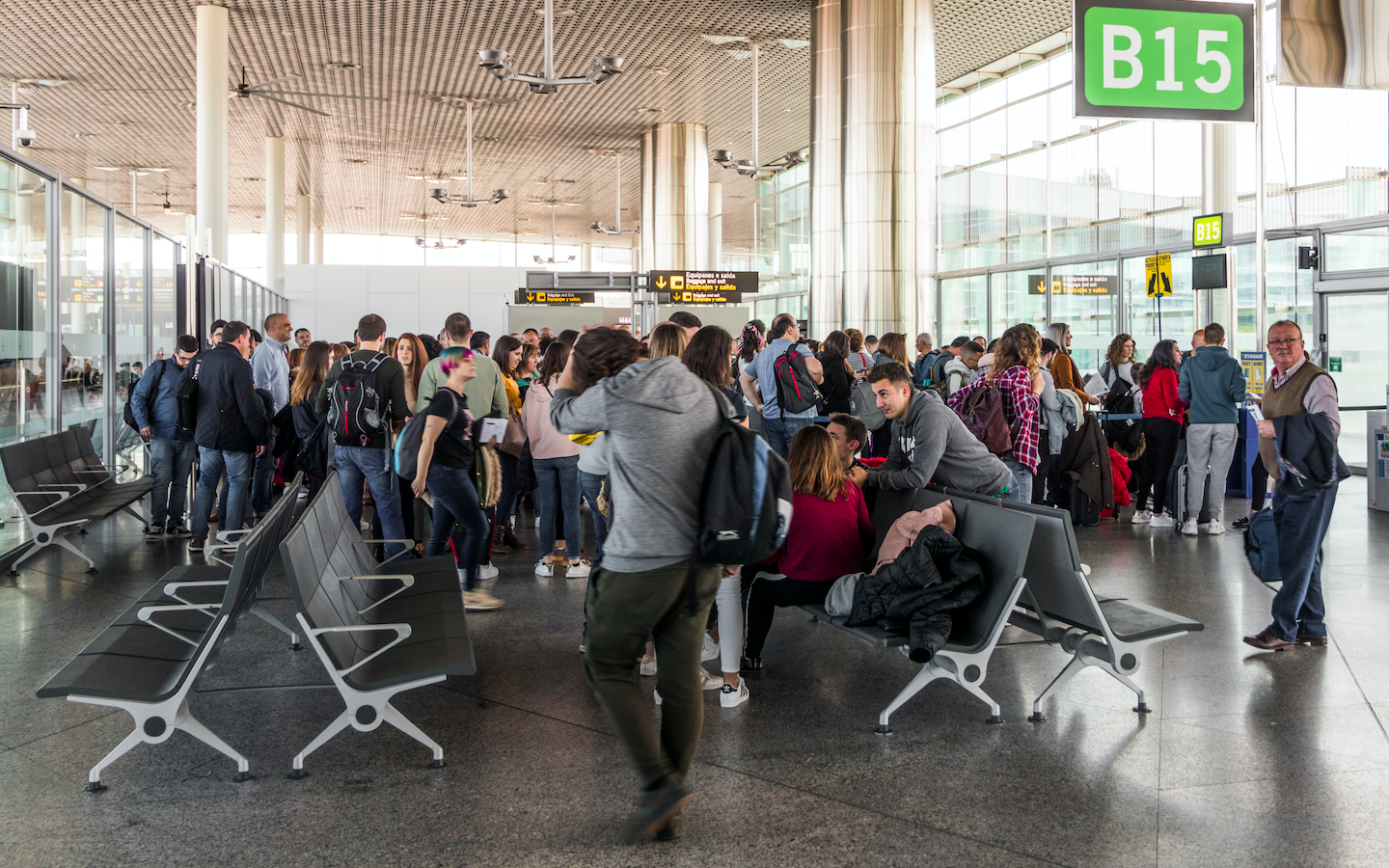
Airports are about to enter their busiest stretch of the year. Photo credit: Joaquin Ossorio Castillo/Shutterstock
If you’ve got a flight to Spain booked this summer, there’s something happening behind the scenes that could have an impact on your journey, and it’s probably not something you were expecting. As airports get ready for the busiest weeks of the year, airlines are raising concerns over one issue they believe could slow passengers down just when millions of people are heading off on holiday.
It’s become such a talking point that they’ve now made an unusual request before the summer rush really gets underway. So, what’s happened, why are airlines asking for a last-minute change, and could it affect your holiday?
Airlines say the biggest problems are still to come
With passenger numbers expected to soar over the coming weeks, airlines and airport operators across Europe are asking for the EU’s new Entry/Exit System (EES) to be temporarily suspended whenever airports become too busy to keep queues under control.
They say they’ve already seen the new system cause lengthy delays at some airports, with reports of passengers waiting for hours to clear border controls. In some cases, travellers have missed flights or onward connections because they simply couldn’t get through the queues quickly enough. Their biggest concern is that what has happened so far could be just the beginning.
July and August are by far the busiest months of the year for air travel, and Spain is one of Europe’s most popular summer destinations. Every day, thousands of flights arrive and depart from airports including Málaga, Alicante, Palma de Mallorca, Barcelona and Madrid. Airlines say that if airports are already struggling during quieter periods, the summer holiday rush could push the system beyond its limits.
So what are they actually asking for?
The industry says it supports the new system in the long term. What it’s asking for is a practical backup plan for the busiest days of the year. The proposal is straightforward. If queues start building to the point where passengers risk missing flights, border staff would temporarily return to manual passport stamping until things are under control.
Once the backlog has cleared, the digital checks would resume. Airlines believe that flexibility could make a huge difference during peak travel periods, helping airports keep passengers moving without creating hours-long bottlenecks.
What does this mean if you’re flying to Spain?
Right now, nothing changes for passengers. The request has been made, but travellers should still expect the current border checks to remain in place unless something changes before the busiest holiday period begins. That doesn’t mean every airport will be affected, and it certainly doesn’t mean every traveller will face long queues. Many people may pass through without any noticeable delays.
But if you’re travelling during the holidays, over a weekend or at one of Spain’s busiest airports, it’s worth allowing more time than you normally would. Nobody wants to start their holiday watching the departure board while stuck in a passport queue, and that’s exactly the situation airlines say they’re trying to avoid. If you’re travelling with children, have an early morning flight or are catching a connecting service, building in extra time could save a lot of unnecessary stress.
Spain’s airports are about to get a lot busier
The timing of the request isn’t a coincidence. Spain is expecting another huge summer for tourism, with millions of visitors set to arrive over the coming weeks. That means airports will be handling some of the highest passenger numbers of the entire year.
Even small delays at passport control can quickly snowball when thousands of people arrive within a short space of time. A process that takes just a little longer for each traveller can eventually leave hundreds of people waiting in line. That’s why airlines are pushing for temporary flexibility before the busiest period really gets underway, rather than waiting until airports are already overwhelmed.
For now, travellers should plan ahead
Whether the request is accepted or not, the advice for anyone flying this summer remains much the same. Check your airline’s recommended arrival time before travelling and don’t leave it until the last minute to get to the airport, particularly if you’re flying during peak holiday dates.
Most journeys are still expected to run smoothly, but airlines believe giving airports the option to temporarily step back from the new border checks during periods of exceptional congestion could help avoid unnecessary delays when millions of people are travelling at once. For now, holidaymakers can only wait and see whether that request is granted. Until then, if Spain is on your summer travel plans, arriving a little earlier than usual could be the simplest way to make sure your holiday gets off to the right start.
How a local charity is helping struggling mothers in Cartagena
Google loses €4.1bn EU fight over the apps Android users see first
Ibiza residents strike back as illegal 1,000-guest villa party raided by police
Dinosaurs are roaring over to Estepona this summer in a massive 5,000m² exhibition

Families Caring For Elderly Parents In Spain Say Brexit Has Left Them With Impossible Choices
Denia launches new La Marineta music festival this summer with Fangoria and Nil Moliner


-
Costa del Sol2 weeks ago
Dinosaurs are roaring over to Estepona this summer in a massive 5,000m² exhibition
-
 %2 weeks ago
Families Caring For Elderly Parents In Spain Say Brexit Has Left Them With Impossible Choices
-
Costa Blanca North2 weeks ago
Denia launches new La Marineta music festival this summer with Fangoria and Nil Moliner
-

 %2 weeks ago
One Of Spain’s Top Supermarkets Has Just Been Ranked Among Europe’s Most Innovative In A Major New Report
-
 ElPais2 weeks ago
Primary Elections In New York, Maryland, And Utah: Date And How To Vote
-
Finland2 weeks ago
Finns abroad keep Juhannus traditions alive on Spanish coast in 2026
-
car crash2 weeks ago
Driver flees AP-7 crash before police find him hiding in trees
-
Costa del Sol2 weeks ago
Local community gets ready for its annual Calahonda Day celebration on June 27