Connect with us

Latest

‘It’s F**ked Us’: Brits In Spain Spell Out The Impact Of Brexit Ten Years On

Published

on

Alex Dunham and Esme Fox

'It's f**ked us': Brits in Spain spell out the impact of Brexit ten years on
Brexit has greatly affected the lives of British people living in and wanting to move to Spain. Photo: JORGE GUERRERO / AFP

From bureaucracy to broken dreams, The Local’s British readers in Spain explain the real-life consequences Brexit has had for them as the UK marks ten years since it voted to leave the EU.

Become a member or log in to continue reading

More

Comments

Join the conversation in our comments section below. Share your own views and experience and if you have a question or suggestion for our journalists then email us at news@thelocal.es.
Please keep comments civil, constructive and on topic – and make sure to read our terms of use before getting involved.

Please log in here to leave a comment.

See Also

Continue Reading
Click to comment

Leave a Reply

Your email address will not be published.

Berlin

The Heat Wave Is Suffocating Germany And Turning Bike Trips Into A Survival Test

Published

on

the-heat-wave-is-suffocating-germany-and-turning-bike-trips-into-a-survival-test

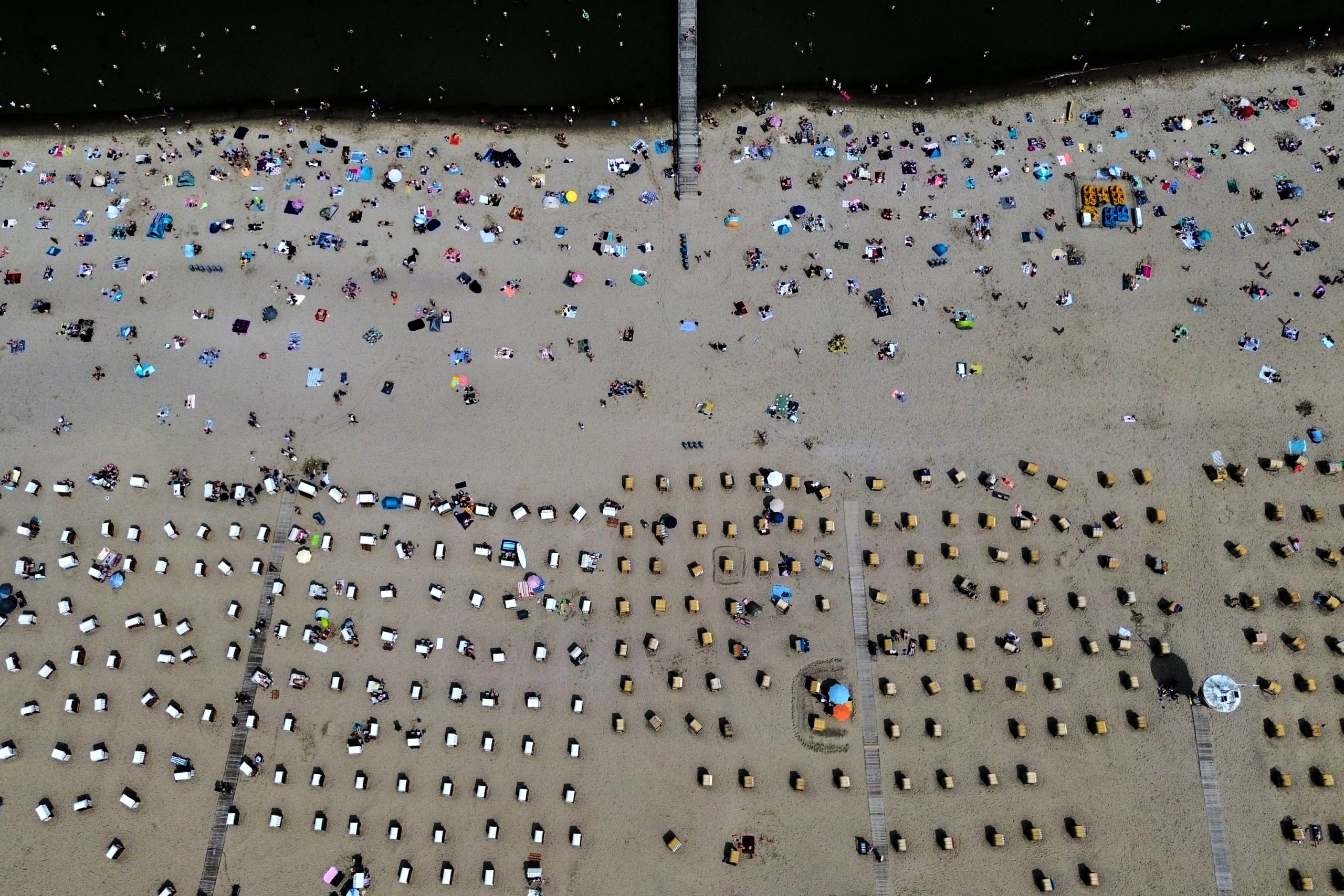
The heat wave hitting parts of Europe is stifling countries where people are not used to these temperatures and often live without air conditioning, such as Germany, which is better prepared for extreme cold than extreme heat. For that reason, German authorities have spent days warning of the danger of heatstroke and urging people to drink plenty of water, stay well cooled and be careful when out in the sun.

According to the German Weather Service (DWD), temperatures well above 30 degrees Celsius (86ºF) will be reached widely over the course of the week. In the western and southern regions of the country, temperatures will climb to 39ºC (102ºF) and, on Thursday, even 40ºC (104ºF) in some areas.

The high temperatures are leading many citizens to plunge into one of the countless lakes and rivers across the country. However, last week the German Life Saving Association (DLRG) urged people not to underestimate the dangers of swimming in this heat. Their fears were confirmed. Just between Friday and Sunday, there were six fatal incidents at five lakes and one canal. The victims were mostly young men.

The heat wave also brings a high risk of storms and raises the danger of wildfires. Meteorologists have forecast intense storms like the one on Sunday in Berlin and Brandenburg, which prompted numerous calls to the fire brigades. Emergency services had to pump water from basements and clear streets of broken branches and fallen trees. Meanwhile, Berlin’s suburban rail network suffered temporary interruptions on some lines. Wind gusts also damaged stalls at traditional street markets and some of the 300 stages set up for the Fête de la Musique concerts.

Temperatures above 30ºC in June are no longer unusual, but it is rare for them to persist for so many days. Given that the heat is likely to last through the weekend, in some places this could be the longest June heat wave on record. The hottest period usually runs from mid-July to mid-August.

The heat also led several hundred people in Berlin last weekend to take part in a new protest against the blanket ban on swimming in the River Spree through the city center. Being allowed to do so is a demand they have been making for some time. About 500 people, according to the Flussbad Berlin association, plunged into the water on Saturday to call for an end to the 101-year ban on bathing in that stretch of the river, which was imposed at the time because of increasing water pollution. The association says that now, more than 80 percent of the time, water quality is good enough for safe swimming. But authorities view it differently and warn that water quality can deteriorate in the short term, for example after a storm.

Recommendations on how to survive the heat are widespread in the mainstream media and on social networks. “I took off last Friday and this Friday from work to be able to go to the garden we have near a lake,” says Zeno Gantner, a man from southern Germany who has lived in Berlin for years and, like many Germans, has a small cabin with a garden by a lake.

He admits to being “a little worried” about the high temperatures, especially for his two young children, although he is the one who suffers the most because, as he says, he sweats a lot. “Right now I’m thinking of buying a portable air conditioner for my office to cool the room,” he says, adding that his wife opposes the idea because she says Germany already consumes too much energy. Lacking air conditioning, he copes with the heat by taking a cold shower before bed and ventilating “strategically” at night. “Fortunately we don’t live in an attic.”

Lisa, 43, is not so lucky. She and her husband live on the fifth and top floor of an old building without air conditioning in south Berlin. “That means it doesn’t cool at night. There are nights when the temperature in our bedroom reaches 28ºC (82ºF) and, even with a fan and the window open, it doesn’t go down,” she says. “We have trouble sleeping and, in fact, after nearly six years in this apartment we can see that each summer there are more nights when we can’t sleep well.” She, like many other Germans, complains that buses and trains are not equipped for this weather. “The air conditioning often breaks down or they don’t even have it,” she criticizes. “I think the problem is that there are almost no transitional seasons anymore. For a long time it was very cold and rainy, and now suddenly it’s constant heat and it doesn’t cool down at night. The weather is becoming more extreme.”

High temperatures also turn cycling commutes into a real survival test. “What tires me most in this heat is the bike ride to the office,” explains Alexander Eckstein, who at least is one of the lucky ones with air conditioning at work. “What I do is take a spare shirt to change into at the office. That’s my tactic,” adds the East German who, like many others, escapes to one of the lakes around Berlin on weekends.

Peter H. also flees to the lake with his wife and young daughter, or at least that’s what he plans to do this weekend. “Luckily, our apartment faces north, so it stays cool. This weekend, at 40 degrees, we’ll see whether it remains cool or if we sweat a lot.” He says he is an avid tennis player, but laments that a long winter and a very rainy spring have been followed by such high heat that it’s impossible to play the sport. “It’s a shame.”

Sign up for our weekly newsletter to get more English-language news coverage from EL PAÍS USA Edition

Continue Reading

Argentina

The Freedom To Not Be Listened To: Argentina’s Milei Limits Citizen Participation In Decision-Making

Published

on

the-freedom-to-not-be-listened-to:-argentina’s-milei-limits-citizen-participation-in-decision-making

The freedom that Javier Milei proclaims does not include citizen participation in the decision-making process. At least that is what two recent initiatives from his government suggest. Last week, the far-right president eliminated by decree the public scrutiny phase of the process for selecting candidates to the Supreme Court. At the same time, his administration is pushing regulation of interactions between officials and private actors with a bill that restricts a citizen’s right to petition authorities, by equating it with corporate lobbying. A broad array of civil society organizations warns that eliminating or reducing the spaces for public participation weakens democracy.

“The government does not get along well with institutional and civil society oversight. Nor does it get along with press scrutiny,” says Pablo Secchi, director of Poder Ciudadano, one of the organizations sounding the alarm about the risky advances of Milei’s administration. “I think this government has many problems with the institutional mechanisms that allow for a strong democracy.”

The alarm was raised earlier this month when the executive branch submitted a bill to Congress titled “Transparency and Public Disclosure of Interest Management”. According to the government, its purpose is to guarantee “the traceability and probity of interactions between public and private actors in the processes of forming and making state decisions,” from issuing or amending laws to contracts, licenses or the handling of public funds, among other measures.

The proposal would create a public registry of “interest managers,” into which both citizens and entities of any kind that make approaches to members of the executive and legislative branches would be required to enroll. They would have to provide not only personal or legal data, but also detail whether they are acting pro bono or not, and whether they represent domestic or foreign interests. They would also have to submit a detailed quarterly report on their activities. Separately, officials and legislators would register their contacts with private-sector actors. The bill provides for fines, prison sentences and disqualifications for those who falsify information or fail to submit the required reports.

Although the far-right administration has presented the proposal as a contribution to building “a more deliberative, transparent and liberal democracy,” nearly 200 associations, foundations, forums and human rights organizations say the bill “threatens the work of civil society,” “restricts participation and autonomy” of their organizations, “centralizes control in an authority that is not independent, and criminalizes formal errors.” In a joint statement they conclude that it “does not strengthen democracy” but rather “erodes it precisely where it matters most.”

The main criticism from NGOs is that the government draws an equivalency between “the relationships among the state, the private sector and civil society.” They argue that “contact between a company and an official seeking a regulatory or direct economic benefit is not comparable to the work of an organization that promotes rights, represents collective interests, voices social demands or carries out democratic oversight of power. Treating them the same under a single regime of registration, control and sanctions is not neutral: it has serious political consequences.”

“We support regulating lobbying as an activity that seeks to contact officials to pursue an economic benefit, but the way it is currently drafted, the bill is so broad it covers actions of a very different nature,” explains Eduardo Ferreyra, co-director of the Asociación Civil por la Igualdad y la Justicia (ACIJ). “If, for example, relatives of victims of an incident were to present their complaints to the authorities, they would be covered by this bill,” he warns.

Another swipe to citizen participation was inflicted by Milei through a decree signed last Tuesday. The president revised the rules governing the appointment of Supreme Court justices, the attorney general and the national public defender. Since 2003, the executive branch had been required to organize a citizen evaluation stage for potential nominees to those posts before sending candidates to the Senate. During that stage, citizens, civil organizations, professional associations, academic institutions and other entities could submit “positions, observations and circumstances they consider relevant” about the prospective candidates. Milei eliminated that stage, claiming that public scrutiny is already guaranteed when the matter is debated in Congress. Incidentally, the same decree also removed the recommendation to respect gender parity when composing the highest court.

A dozen non-governmental organizations voiced their rejection of the presidential decree. “Citizen participation strengthens the quality of decisions and accountability, while diversity lends greater legitimacy to our justice system,” said CELS, Amnesty International, ACIJ, Poder Ciudadano, Inecip and other NGOs. “Restricting spaces for citizen intervention and abandoning criteria aimed at promoting plural integration of the highest court” are measures that increase distrust in public institutions, “weakening democracy.” They add that “the appointment of judicial authorities is one of the most consequential decisions and, as such, requires more oversight, not less.”

The absence, scarcity or weakening of channels and mechanisms for public participation are among the factors political science has long warned about, across various countries, as contributing to democratic erosion. With case-by-case nuances, the phenomenon is often associated with leaders who reach power through elections, establish a direct relationship with their voters and “exercise power without any willingness to accept checks, or even actively seek to undermine those checks, against Congress or the judiciary,” explains political scientist Miguel De Luca.

How does that style of governance coexist with a rhetoric like Milei’s, whose main slogan is “long live freedom”? “There are at least three variants of what is understood by liberalism,” De Luca says. The libertarianism that Milei claims to follow elevates individual freedom, private property and non-intervention by the state as supreme values. “Another variant is what Italians call being ‘liberista,’ which means favoring freedom only in the economic sphere. And the third is the more progressive variant, where liberalism refers to a set of rights across all spheres of social life: religious freedom, freedom to participate in public life, sexual freedom… That conception is entirely absent from Milei’s views. He moves between being libertarian and being ‘liberista.’”

Sign up for our weekly newsletter to get more English-language news coverage from EL PAÍS USA Edition

Continue Reading

España

Zapatero Cuestiona La Validez De Pruebas Claves En El Origen Del Caso Plus Ultra

Published

on

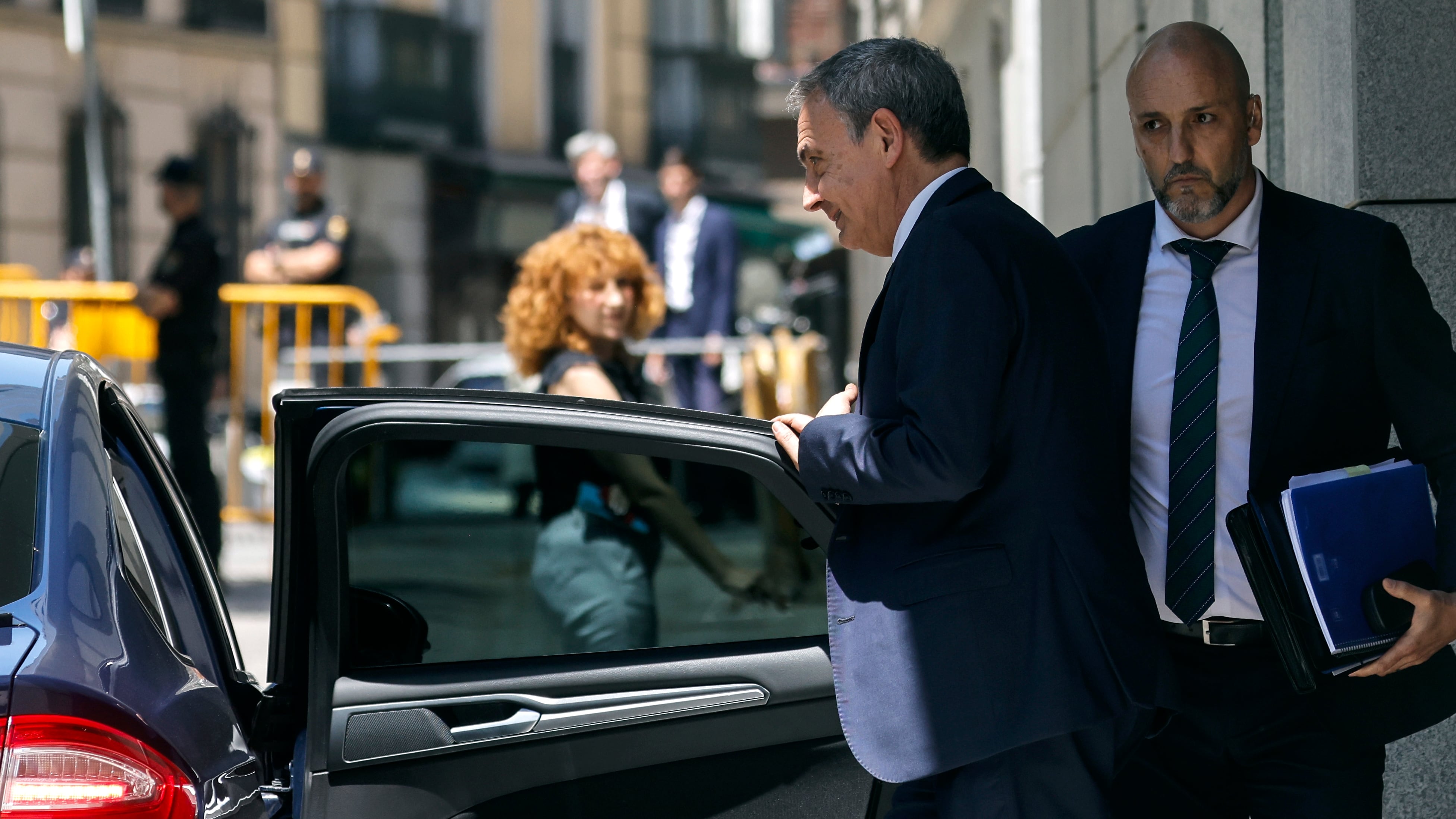
El ex presidente del Gobierno, José Luis Rodríguez Zapatero, a su salida de la Audiencia Nacional.

La defensa del expresidente José Luis Rodríguez Zapatero ha presentado dos escritos (con fecha de este lunes) en los que insiste en conocer el origen de los chats que existen en la causa contra él para explorar una posible vía de nulidad de la investigación. Por un lado, Zapatero quiere que la Fiscalía Anticorrupción aclare cómo se autorizó la apertura del disco duro de uno de los abogados investigados, a quien la Policía le registró el despacho. Por otro lado, recurre la decisión del juez José Luis Calama de no ampliar a Estados Unidos la petición de información sobre el teléfono móvil del dueño de Plus Ultra.

Seguir leyendo

Continue Reading
Advertisement
Advertisement

Spanish Real Estate Agents

Tags

Trending

Copyright © 2017 Spanish Property & News