
Donald Trump
Julián Casanova, Historian: ‘Goebbels Needed To Occupy Countries To Introduce Propaganda. Elon Musk Needs Three Minutes’

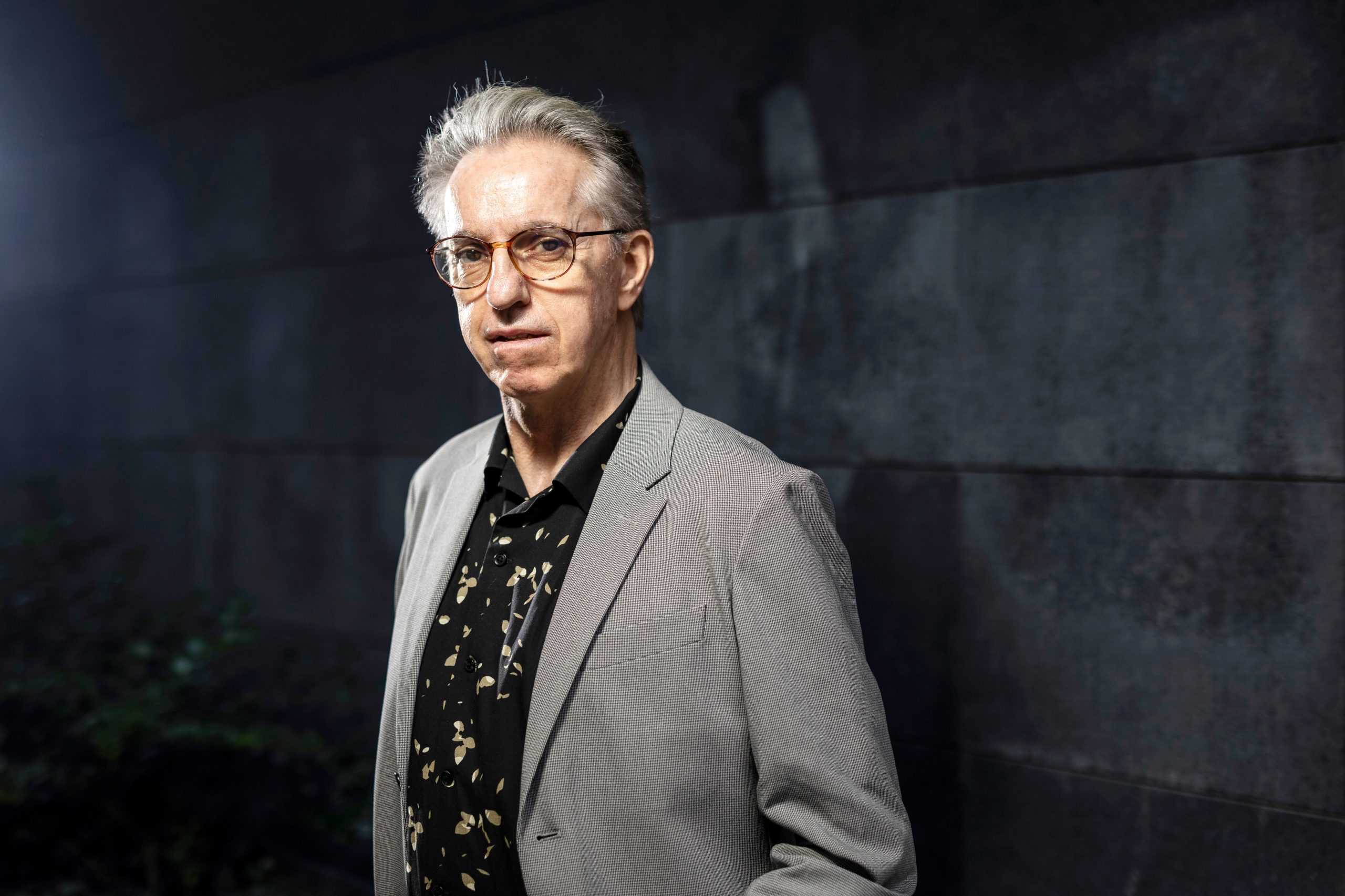
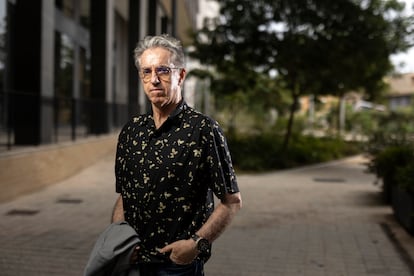
Julián Casanova still writes by hand, just as he did when he started out. He fills countless index cards that help him organize ideas, prepare lectures and build the books that have tackled the major European conflicts of the 20th century, the Russian Revolution, anarchism and, above all, the Spanish Civil War and the figure of Spanish dictator Francisco Franco, to whom he devoted a biography published last year.
The professor of contemporary history at the University of Zaragoza, who was born in Valdealgorfa, in the province of Teruel, in 1956, is retiring, and his most immediate concern is where to put his books in a world that no longer seems to want paper. We meet in Barcelona, where he sits down with EL PAÍS between talks and events marking the 90th anniversary of the Nationalist uprising that sparked the Spanish Civil War.
The son of shopkeepers who worked hard to put their four children through university, Casanova studied history in Zaragoza. His interest in anarchism led him to José Álvarez Junco, who made room for him in his home in Madrid. From there, he moved to the United States in 1981 thanks to his brother José, a sociologist of religion already established in New York. He then went to England in 1985 under the guidance of Paul Preston and other Hispanists.
“They taught me about the public role of history,” he says, visibly moved. “The idea was that history should not be read only by historians in their ivory towers, but also by an educated public that wanted to know.”
Driven by that philosophy, he has taught and conducted research at Harvard, Notre Dame, The New School, the Institute for Advanced Study in Princeton, the Weiser Center for International Studies at the University of Michigan, and the Central European University in Budapest and Vienna. He has authored more than 30 books and supervised 37 doctoral dissertations. His perspective is both deeply specialist and broadly universal.
Question. You’ve spent your career studying the 20th century and its many forms of violence. Is it already possible to identify the defining features of the 21st century?
Answer. The most striking thing is the breakdown of values that had been consolidated in the second half of the 20th century and that were not the result of an evolution but of deep reflection after the moral atrocity that was experienced. There was optimism and a single path for everyone: modernization, redistribution of wealth through fiscal policies, democracy, liberalism… There was no alternative. And that breakdown is the great change of the 21st century. The difference from a century ago is that the state has been strengthened, it keeps the monopoly on violence, there is no paramilitarism or guerrilla warfare, there is practically no terrorism like in the 1960s or 1970s, and it controls mechanisms of coercion so that all the noise, shouting, insults and politics of hatred in parliaments today face far greater obstacles to causing major institutional ruptures than they did at the beginning of the 20th century.
Q. Is the world order breaking down?
A. Yes. Since [U.S. President Donald] Trump’s second victory, there has been a rupture of that order. No one is saying that democracy cannot be rebuilt, even if far-right parties are going to make life difficult for us. But the left no longer exists as a counterproject, as a mass movement. At the beginning of the 20th century, there were significant social counterprojects, like the Russian Revolution, and that is no longer the case today.
Q. Is there a danger of fascism?
A. There is a danger, yes, although it likely has counterweights in the judicial system and the military. When fascism emerged in Italy and Germany, it was an outsider movement. It came from below; it struggled to convince people that it could restore order, and that is what Trump is trying to do. For a while, people were skeptical and downplayed it, believing it wasn’t destroying anything fundamental, but now a form of fascism is emerging that is shattering all of that, permeating the lower classes and drawing on a broad social base. But fascism without militarism strikes me as difficult to conceive. In any portrayal of 20th-century totalitarianism, torture, prisons, the military and repression are presiding over everything, and that seems harder now because democracy has more defense mechanisms.
Q. Immigration and Customs Enforcement (ICE) in the United States is a form of militarism. So is the way the Pentagon uses artificial intelligence.
A. Yes, that’s true, and so is the way immigration is being handled. That’s the root of it. Any intellectual in the U.S. already believes that after Trump, there will be “Trumpism,” and that adds to the pessimism. Trumpism without Trump will endure because it is the product of a breakdown — of a white working class that lost its jobs, of law-abiding, conservative people who suddenly believed that wokeness, feminism, or the dismantling of masculinity had transported them to another world. I place a lot of emphasis on the subordination of the military to civilian authority because I believe that’s where the great breakdowns — wars, ethnic cleansing, and policies of extermination — have always come from. I see dangers, but I don’t see this. Perhaps they no longer need coups d’état, but for us to see dead bodies in the ditches, there would have to be another radical rupture. Democracies advanced because they realized that militarism, ethnic cleansing, and extermination had been disastrous.
Q. Why is the far right gaining ground?
A. Because a sector of the democratic order collapsed with the destruction of the industrial base. The golden age of democracy was built on a working class in industrial sectors that enjoyed rights. In U.S. capitalism — which is ruthless — the only ones who had rights were those working in the big auto industries. When capitalism shifted from the secondary to the tertiary sector, a significant portion of the working class lost out. In Europe, they’re better protected, but the same thing happens there, too. They feel that capitalist democracy no longer offers the benefits it once did; work has become precarious and relies on a workforce that is no longer native — one that comes from a different multicultural world, where the Muslim presence and race play a very important role. And that fuels hatred among those who feel disadvantaged. At first, it’s a labor issue.
Q. Work is at the center.
A. At first, it’s a labor issue, yes. In Marseille with [French far-right leader Marine] Le Pen or in rural Austria with [Jörg] Haider, that line of thinking emerges for the first time. There’s a concept of Christian order — white, male — that’s beginning to crumble. First, they’re taking my job away; then, my health care benefits; next, feminism is undermining my masculinity; on top of that, Muslims are arriving, and identity struggles begin. This is the breeding ground. And then part of it depends on the left, which lived relatively peacefully after the fall of the Wall and didn’t offer an alternative. Social democracy failed to replace that crisis with something different. So a good portion of the working class blamed socialism.
Q. If communism is no longer an option and capitalism is rife with inequality, what do we have left?
A. When the Soviet bloc fell, the myth was shattered and the communist parties lost their credibility. The only ideology left is that of the distribution of capitalism’s benefits and democratic consolidation. But it’s very difficult because socialism has become entangled in a system of corruption in so many places. It has disappeared as a political party. It remains only in Spain and Germany — not in Italy, not in France. Look at the United Kingdom: [Keir] Starmer had to step down. Therefore, part of the blame lies with a form of socialism that failed to manage all of that. When [former Spanish prime minister] Felipe González speaks out against [Spain’s current Prime Minister Pedro] Sánchez, he isn’t defending his model of the welfare state; rather, he’s aligning himself with what the anti-Sánchez camp on the right is saying. They’ve lost faith in that and a broad social base.
Q. Do you understand why many people in Spain are once again defending Franco?
A. When people asked me why there was no far right in Spain, I always said that while it was true there was no party as such, the shadow of Francoism loomed large because there had been no “de-Francoization.” In the media, however, there was a media-driven far right. In the 1990s, historians like us who wanted to sell serious books were pitted against Pío Moa, César Vidal, and their ilk, who were backed by a very influential sector of the media and publishing industry.
So the Civil War and the Franco regime left a very significant legacy that we were unable to dismantle at that time. Now it’s reemerging with force through these new social bases that no longer believe in democracy. And the [conservative Popular Party] PP has joined in. It’s a neo-revisionism that’s global. The collapse of communism led many to say: “You’ve been deceived by anti-fascism because the evil lay in communism; don’t feel guilty about the Holocaust.” That’s the narrative Jiménez Losantos espouses.
The digital age also rapidly undermines the legitimacy of education. Today, something learned in the classroom can be dismantled in two minutes on TikTok. We’re losing sight of the power that discourse holds. In Germany, people also thought such a development was unthinkable, and it is happening.
Q. In Germany too, the far right has also returned, despite denazification.
A. It has returned. You have Trump, [Russian President Vladimir] Putin reminding Russians of the Nazi defeat while avoiding reminders of the civil war or Bolshevism. In other words, everyone is trying to hide the shameful aspects and praise the glorious aspects of identitarian nationalism. Ultra‑nationalism has returned with force.
Q. What went wrong in Spain’s transition to democracy?
A. That generation believed it had done the right thing by consigning the past to oblivion and ensuring it did not interfere with the present. In the early years, during a closely monitored and very difficult transition in which Francoism was fading away very gradually, it took three years to draft a Constitution. But once socialism became established under Felipe González, the opportunity was missed to do three things that are now weighing heavily: they did not want to grant dignity to the memory of the vanquished side, which had been overwhelmingly defeated. They didn’t know what to do about it, and they did not want to deal with it. They didn’t dare to change the system of state-subsidized private schools and create a French-style national system. And on top of that, they had to carry out two or three very dirty deeds: deindustrialization and the GAL [state-backed death squads that operated between 1983 and 1987 in the fight against the Basque terror group ETA].
Q. Why does the right have so much difficulty embracing memory policies?
A. Because it comes from the parties UCD [Union of the Democratic Center] and AP [People’s Alliance], that is, from Francoism. The big problem is that the long [Franco] dictatorship [1939-1976] got to shape collective memory, and for a very long time that history never made its way into the classroom. There was also a first generation of intellectuals who did not want to stir the past. The fact that Spain was unable to reach a consensus on recovering the bodies still lying in roadside graves goes beyond any political dispute. It was an ethical obligation of democracy. It’s the biggest shortcoming, and we’re paying the price for it.
Q. Do you think a shared historical narrative is possible??
A. No society has a shared narrative with a very clear consensus. For the one that seemed to have it — England — colonialism has shattered it. The same goes for Belgium and the Netherlands. France had a triumphant narrative until the truth about Vichy came to light. There should indeed be a shared narrative — one that we historians lack — which is that the Republic was overthrown by a coup d’état that replaced words and parliamentarianism with weapons. But the dictatorship lasted for decades afterward, and that has had repercussions on the political uses of the past.
Q. What do you mean?
A. The political use of the past has been revitalized. It is typical now to adjust it to the present and claim that the left of the 1930s almost destroyed Spain. It is the discourse of [Argentine President Javier] Milei, of Trump, and in Spain the PP has joined in. The idea is to show that the good part of Spain always wanted to defend it, while others always wanted to destroy it, like Sánchez. In that scheme, I am not interested in knowledge, but in the image I want to project. I remove the uncomfortable parts of the past and adjust it to what suits me. That is what they are telling young people about Franco: that the Republic caused the war, that violence against the clergy was perpetrated only by some, while others defended civilization. And that we live well by looking to the future, as opposed to those who want to drag us back to the past. The far right has relaunched that political use of history. We still don’t have a war museum or even a basic consensus that education should be based on knowledge.
Q. Do you detect traces of that support for Franco in the Catholic Church today?
A. When Franco died, no martyrs of the war had been beatified, but under John Paul II there were mass beatifications, and at the same time, a refusal to exhume the bodies from the mass graves. In the Catholic Church, there is still a lingering residue that does not exist in the military. For the military, the Civil War is not a topic for discussion.
Q. Do you see traits of a dictator in Trump?
A. Yes, yes. Whether or not it’s fascism is open to debate, but he undoubtedly exhibits traits of a dictator: authoritarianism, dictatorial behavior, his way of operating, contempt for opposing forces, contempt for civil society that doesn’t align with his own, and exclusionary policies.
Q. Do you think there is a danger that truth could die in the age of Elon Musk, Trump and the technocrats?
A. Today it is the greatest danger, especially with artificial intelligence and the digital era. [Nazi propaganda leader Joseph] Goebbels needed Germany to occupy countries to introduce propaganda. In the digital era, Elon Musk needs three minutes to change the global algorithm. It is much more dangerous. And that’s where I believe there is no longer any truth. We used to think that truth was never absolute, but there was a relative truth and agreements about it. And there was an exaltation of knowledge. Now there is contempt for knowledge. That is the big difference. No one had dared to attack universities in the U.S., and Trump does it because critical reading and knowledge do not interest him. Analytical thinking is failing today. There is no history without critical reading; it leads you to diversity, plurality, to change your ideas when something better comes along. The analytical mind requires listening, contrasting, changing your arguments if necessary, and there is no space for that because in talk shows, everyone arrives with their preconceived notions already set. Critical knowledge is a privilege independent of political ideas.
Sign up for our weekly newsletter to get more English-language news coverage from EL PAÍS USA Edition








Donald Trump wants to meet with him again. Vladimir Putin needs him to sustain his war in Ukraine. And Xi Jinping chose a visit to Pyongyang as his first, and so far only, foreign trip of 2026. Kim Jong-un, the supreme leader of secretive North Korea, has managed to make the United States, Russia and China compete for his attention. Despite leading a nuclear-armed regime long subjected to international sanctions and presiding over a tiny economy, Kim appears to have found a formula for exerting influence over Washington, Moscow and Beijing: offering each of them something different, and something none wants left in the hands of the others.
“Kim has deliberately sought to increase North Korea’s strategic value to several major powers, rather than return to the kind of dependence and isolation it faced years ago,” Rachel Minyoung Lee, senior researcher in the Korea program at the U.S. think tank Stimson, explains by email.
The outcome is less the result of a grand strategy than of a series of opportunities skillfully exploited. Kim could not have foreseen Russia’s invasion of Ukraine or that ties with Moscow would evolve into a military alliance, Lee notes. But he has proved “adept” at turning the needs of others into strategic leverage, she argues.
The latest opportunity emerged last Monday, just hours before U.S. and South Korean forces began their main joint summer military exercises. Trump unexpectedly ordered the Pentagon to “substantially” reduce U.S. participation, citing the high cost of the drills and his dissatisfaction with Seoul’s level of support during the war with Iran.
Trump justified the decision in a post on Truth Social, where he also emphasized that the exercises make North Korea uncomfortable, despite the fact that, he said, the country had been “unthreatening and respectful” since his return to the White House. The Ulchi Freedom Shield exercises ended on Friday, six days ahead of schedule. There is no precedent for military drills of this scale being cut short at Washington’s request once they have already begun.
For Pyongyang, which sees the exercises as rehearsals for an invasion, the reduction amounts to a concession secured before negotiations have even begun, Ramón Pacheco Pardo, professor of international relations at King’s College London, says by phone.
A pivotal player
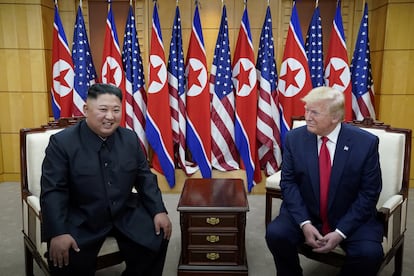
Trump is turning his attention back to Pyongyang at a time of mounting domestic pressure and frustration over his inability to achieve the results he had hoped for in the Middle East. The images of his three meetings with Kim between 2018 and 2019, the only meetings ever held between a sitting U.S. president and a North Korean leader, made headlines around the world. Although the process ultimately ended without an agreement, the Republican still portrays it as one of the major achievements of his first term. In recent days, he has highlighted his “great relationship” with Kim and said he is considering another meeting, perhaps in the fall, when he travels to Shenzhen, China, for the Asia-Pacific Economic Cooperation (APEC) leaders’ summit.
Seven years after their last handshake, however, that photo opportunity comes at a higher price. Kim Yo-jong, the North Korean leader’s sister and one of his closest aides, has denied that the two sides are engaged in negotiations, though she has left the door ajar to dialogue if Washington changes its policy toward Pyongyang. The personal relationship between her brother and the U.S. president, she noted, “remains excellent.”
Still, Jenny Town, director of the publication 38 North, stresses in a phone interview that Pyongyang should not be underestimated. “North Korea has options,” Town says, noting that cooperation with Russia is designed to outlast the war and that North Korea has recently expanded ties with other countries at odds with the West. Relations with China, meanwhile, have entered what Chinese and North Korean state media in June described as a “new historic stage.”
Although sanctions continue to weigh on the country and China’s economic support remains indispensable, there is “no longer any urgency” for Pyongyang to sit down and talk with the United States, Town stresses. That gives Kim room to wait, raise his demands and decide when it suits him to turn back toward Washington. “He believes he is a key player in reshaping the world order” and “on equal footing with his partners,” Town says.
The war in Ukraine has made clear that this ambition extends far beyond rhetoric. North Korea has become a crucial supplier for Russia’s war of attrition in a conflict that has now stretched into its fifth year. The U.K.-based Open Source Centre estimates that, since mid-2023, Pyongyang has shipped between eight million and 11 million artillery shells and rockets, while Ukrainian intelligence believes North Korean supplies have at times accounted for nearly half of the ammunition used by Russian artillery on the front lines.
Weapons have been accompanied by manpower. Since 2024, some 15,000 North Korean troops have fought in Russia’s Kursk region. Kyiv estimates that around 8,500 North Korean personnel are currently deployed in Russia, including engineers, sappers and drone operators. “North Korea can now present itself as a country that contributes to the security of another major power,” Lee notes.
It is a significant reversal of roles: a state long treated as a problem to be contained by others is now providing ammunition and troops to a permanent member of the U.N. Security Council. The relationship has continued to deepen since Putin and Kim signed a strategic partnership treaty in 2024 committing the two countries to assist one another in the event of an attack.
China steps up its diplomacy
The exchange has also reduced Pyongyang’s isolation. In return for its military support, North Korea has obtained revenue, oil, economic cooperation, combat experience for its troops and, possibly, military technology transfers. Russia has also helped weaken one of the main instruments of pressure on North Korea: despite U.N. sanctions, it openly imports North Korean weapons and, in 2024, vetoed the renewal of the panel of experts responsible for monitoring those sanctions. The sanctions remain in force, but they have lost their main independent oversight mechanism.
The burgeoning Russia-North Korea partnership has also altered the balance with Beijing. A European diplomat based in the Chinese capital argues that North Korea’s involvement in Ukraine has forced China’s leadership to reassess its calculations. Although China remains by far North Korea’s main economic partner and traditional ally, the existence of a Russian alternative has reduced Beijing’s ability to impose conditions. That added room for maneuver has unsettled Chinese policymakers, who in recent months have accelerated high-level diplomatic engagement with Pyongyang.
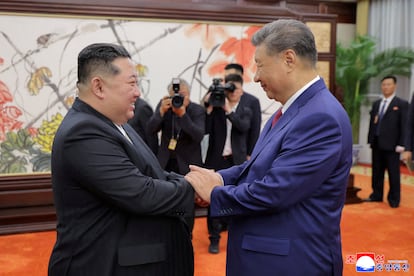
Kim returned to China in September 2025 after six years without meeting Xi, and stood alongside the Chinese leader and Putin during the grand military parade in Tiananmen Square marking the 80th anniversary of Japan’s surrender in the Second Sino-Japanese War (1937-1945) and the end of World War II.
Xi traveled to Pyongyang in June for the first time since 2019, in what remains his only foreign trip this year. For China, keeping North Korea within its orbit means preserving a partner against the U.S. military presence on the Korean Peninsula, preventing instability along its border and ensuring a central role in any crisis that could upset the regional balance. During his visit, Xi reaffirmed a friendship “forged in blood” and a bond of comradeship and mutual trust that, he said, has withstood both the passage of time and a changing international landscape.
The official accounts of the meeting also contained a notable omission. There was no mention of denuclearization, which for years had been one of Beijing’s stated objectives on the Korean Peninsula. Although China has not formally abandoned that goal, it has avoided raising it publicly in the face of an emboldened Kim, who insists that North Korea’s nuclear arsenal is not up for negotiation.
“Kim is trying to make North Korea impossible for the United States to ignore,” Lee says. The researcher argues that Kim’s nuclear arsenal is no longer merely a guarantee of the regime’s survival. It has also become a source of power, autonomy and international status. “He wants to be treated as a normal actor,” Town says, “and to engage with the international community on his own terms.”
And Trump, with his appetite for attention and recognition, may be particularly receptive to that ambition. While previous administrations maintained the complete denuclearization of North Korea as their objective, the U.S. president has gone so far as to refer to the country as a “nuclear power.” That does not amount to formally recognizing North Korea as a nuclear-armed state, his administration still officially calls for denuclearization, but it breaks with the caution of previous governments and raises the possibility that any future negotiations may not begin with demands for the dismantling of Pyongyang’s arsenal.
Pacheco Pardo believes the U.S. president has made it quite clear that his priority is to deal directly with Kim and secure an outcome “he can sell as a victory.”
For now, Kim does not appear to be in any hurry. But a future opening from Washington, and above all any easing of sanctions, would help him continue to diversify North Korea’s international relationships. “North Korea does not want to depend on anyone,” explains Pacheco Pardo.
Having strengthened its ties with Russia and repaired its relationship with China, Pyongyang can afford to wait and assess what it might be able to extract from Trump.
Sign up for our weekly newsletter to get more English-language news coverage from EL PAÍS USA Edition


“I got three beautiful kids.” Applause from the audience. “The point is, I have four kids altogether, but three of them are beautiful. When that fourth one sneaks up on you… Aaaah! Don’t do that to daddy, I thought an orangutan broke into the house.” Laughter and more applause.
The comedian Bill Dwyer is speaking on Comics Unleashed, the show that since May has occupied CBS’s coveted late-night slot. It replaced veteran host Stephen Colbert, who from 2015 had mocked politicians of every stripe in the United States, until he ran afoul of Donald Trump. The Republican demanded his head, and CBS handed it over, in what the network described as “a financial decision against a challenging backdrop in late night.”
Now, instead of interviews with major public figures (Paul McCartney appeared on the show’s final episode) and sharp commentary on the day’s events, Americans are getting a daily dose of harmless jokes that offend no one. The punchlines are about how owners of small dogs can’t be trusted, or the absurdity of excessive airport security measures. Family-friendly humor in a decidedly non-family-friendly time slot: 11:35 p.m. on the East Coast.
The decision to replace The Late Show with Comics Unleashed may look like a simple programming change. In reality, it reflects far deeper currents in U.S. society, politics and economics. The pressures exerted by the Trump administration, undeniable as they are, have arrived at a particularly vulnerable moment for late-night television.
A toxic mix of young viewers’ declining interest in traditional television, political polarization and the omnipresence of smartphones has made it increasingly difficult to gather an entire family in the living room to watch the same program. The result is shrinking audiences, declining revenues and rising costs. Colbert’s demise is a symptom of the broader decline of political satire on U.S. television.
“The pressure from this administration is enormous. Large corporations have a great deal to lose if they refuse its demands,” says Dannagal G. Young, a communications professor at the University of Delaware, speaking by video call. “Political satire is still very much alive, but it is moving away from television and onto other platforms, particularly social media.”
Comics Unleashed is hardly new. CBS’s quick fix for replacing Colbert was to move into that slot a program that had already been around for two decades and cost a fraction of what traditional late-night shows typically do.
Its creator is Byron Allen, a comedian turned media mogul who, at 65, has built a communications and entertainment empire. As he has explained in various interviews, he offered CBS a solution to a business that was becoming increasingly difficult to sustain: he would pay the network $15 million to air Comics Unleashed in exchange for keeping most of the advertising time and selling it himself. It was the same business model that had helped make him wealthy.
The new show has triggered a sharp ratings decline. In its first weeks, CBS’s audience in the time slot fell by roughly 60%. The paradox is that, despite those figures, the arrangement may still be working financially for the network.
Less audience, more money
“CBS has won big-time because they have zero production costs and now they are saving $55 million a year,” he told the Los Angeles Times.
When he accepted the deal, Allen said he regretted the cancellation of The Late Show. “I love Stephen Colbert. I’m a big fan,” Allen said. But once the network had made its decision, he saw no reason not to move ahead with his plans. “This isn’t show business, this is business show,” he said.
The Trump administration has made little effort to conceal its desire to influence television programming and sideline hosts it dislikes. That was evident in the case of Jimmy Kimmel after remarks he made about the killing of conservative activist Charlie Kirk. Brendan Carr, chairman of the Federal Communications Commission and a close Trump ally, was unusually blunt. “We can do this the easy way or the hard way,” he said on a podcast.
A few days later, ABC announced that it was canceling Kimmel’s show, but reversed course after a wave of backlash. “Our government cannot be allowed to control what we do and do not say on television,” the comedian said in his first show after the controversy.
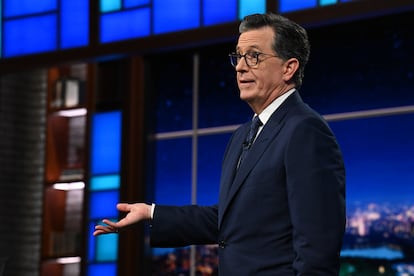
Colbert was not so lucky. He dared to criticize the $16 million settlement that Paramount, CBS’s parent company, agreed to pay Trump in exchange for dropping a lawsuit over what he claimed was an unfairly edited interview with Kamala Harris, the Democratic candidate in the 2024 election. The lawsuit was widely seen as unlikely to succeed, but Paramount was reluctant to antagonize the administration while seeking approval for its merger with Skydance. On air, Colbert remarked that the “technical name” for the agreement was “a big fat bribe.” Days later, CBS announced that the show would end. Its final episode aired on May 21.
“All of these changes stem from an administration characterized by the concentration of power in the executive branch, the silencing of dissenting voices and a disregard for satire, a form of expression protected by the Constitution,” says Professor Young, who is also the author of Wrong: How Media, Politics, and Identity Drive Our Appetite for Misinformation.
David Letterman, the legendary host of The Late Show from 1993 until he handed the reins to Colbert in 2015, expressed what many believe about both the cancellation of the program and its replacement by Comics Unleashed. Of the cancellation, he called it “pure cowardice.” As for the new show, he said: “They don’t want to spend any money, so they’re going to make money. They charge Byron Allen some reasonable price. He sells all the advertising for his Comics Unleashed and it’ll be, I think, 90 minutes or two hours of comics talking about funny stuff.”
Hours before Colbert’s final show was taped at Manhattan’s Ed Sullivan Theater on May 21, a line of fans stretched for several blocks. Many had traveled from other cities to pay a final tribute to their idol. And they seemed to agree on one thing: it was a bad day for both U.S. television and the United States.
Sign up for our weekly newsletter to get more English-language news coverage from EL PAÍS USA Edition
America
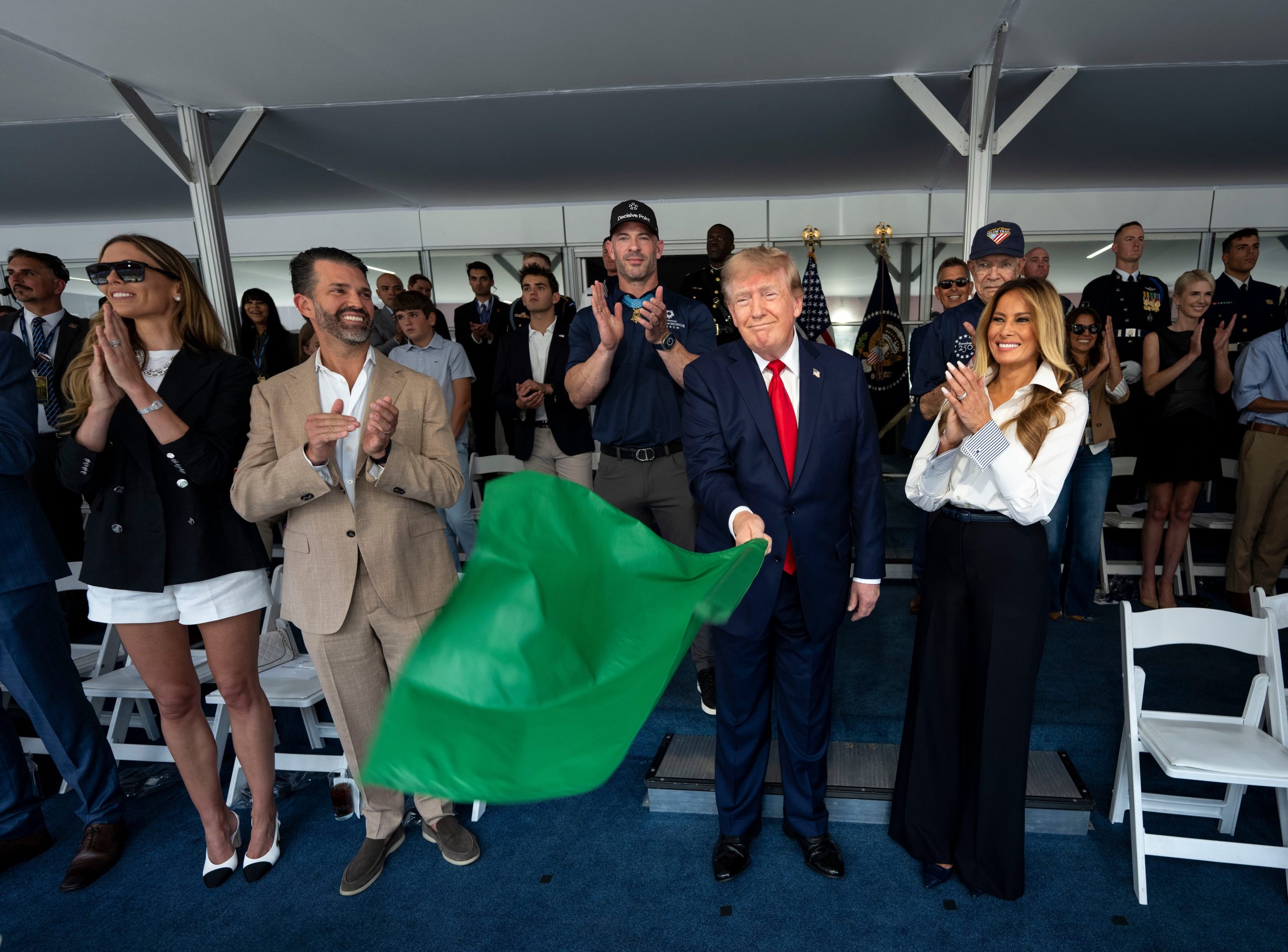
Trump Clausura El 250 Aniversario De EE UU Con Una Carrera De Indycar En Las Calles De Washington

The revamped Paseo hosts Almería’s Feria for the first time since its €11.2m transformation
Huge tornado rips through southern France as Vuelta cyclists flee giant hailstorm

Can’t Afford To Buy? Four In 10 Spaniards Now Considering Building Their Own Home To Escape Soaring Housing Costs

Attaoui Saca Un Bronce En 800m De La Casi Nada

Última Hora Del Terremoto En Colombia, En Directo | Al Menos 132 Muertos Y 570 Heridos Por El Seísmo De Magnitud 7,4
Flames force Spanish troops to evacuate 1,000-year-old kings’ bones from burning monastery


-
 800 metros lisos2 weeks ago
Attaoui Saca Un Bronce En 800m De La Casi Nada
-
 Bogotá2 weeks ago
Última Hora Del Terremoto En Colombia, En Directo | Al Menos 132 Muertos Y 570 Heridos Por El Seísmo De Magnitud 7,4
-
aragon wildfire1 week ago
Flames force Spanish troops to evacuate 1,000-year-old kings’ bones from burning monastery
-
Mallorca2 weeks ago
Qatar Royal Family’s £300m ‘Palace in the Sky’ lands in Mallorca ahead of historic eclipse
-
Latest2 weeks ago
EU Curbs On ‘forever Chemicals’ In Food Packaging Kick In
-
Benalmadena pueblo2 weeks ago
Five days that turn Benalmadena pueblo into a giant street party and everyone’s invited
-

 ElPais2 weeks ago
The Total Eclipse In Spain, In Pictures
-
Costa del Sol1 week ago
Motril Port closing in on record cruise year with 47,000 summer passengers