
Axarquia
Kamikaze fish stage dramatic dockside exit in Caleta de Velez

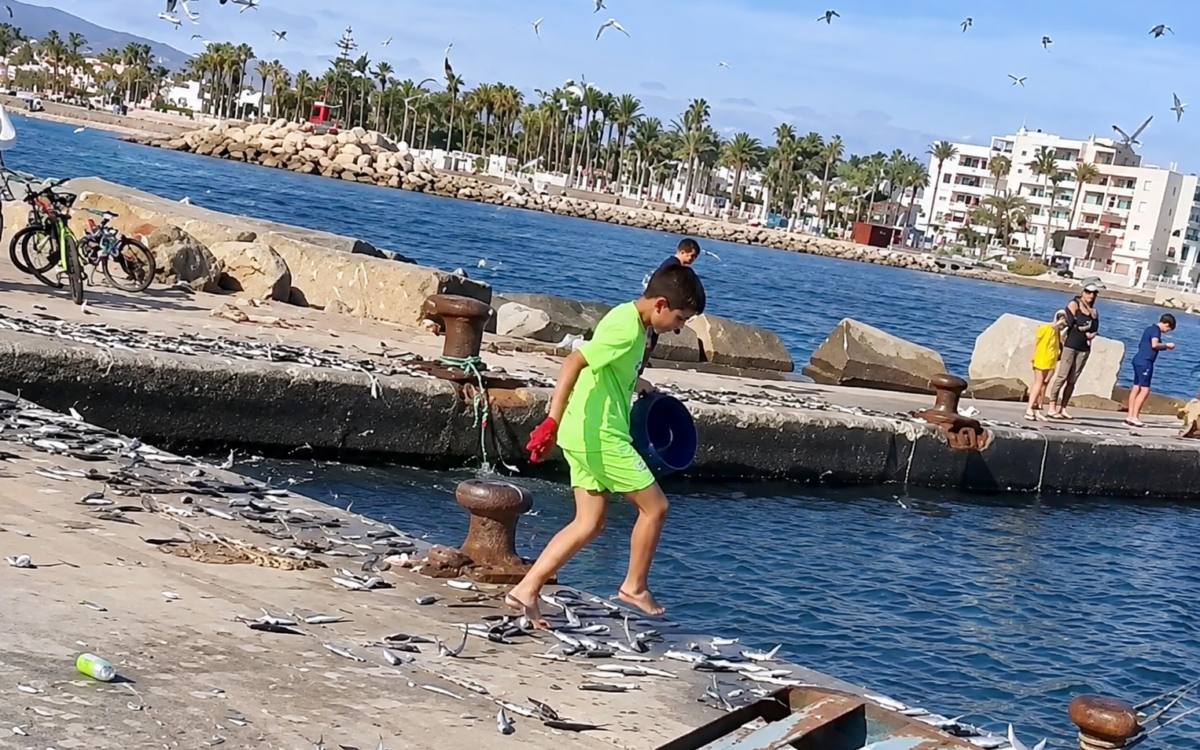
On Sunday lunchtime, November 15, the working harbour at Caleta de Velez offered free entertainment of a decidedly unhinged kind. Thousands of small silver fish known as lachas suddenly decided the water was no longer for them and before they could evolve legs, launched themselves onto the concrete quay, the piled nets and the edges of the fishing boats. Within minutes the dock looked less like a working port and more like the aftermath of a particularly enthusiastic fishmonger’s clear-out.
These lachas, close cousins of the sardine, are common along the Mediterranean coast. What they were doing, marine biologists and local fishermen agree, was trying to run for their lives. A large predator, almost certainly a tuna, had cornered the school inside the relatively confined harbour basin. In open water the fish would simply scatter or dive; against a concrete wall the only remaining escape route is straight up and over. The result was a brief but spectacular mass suicide attempt that left thousands of fish flopping on dry land until harbour staff and bystanders began tossing them back.
Are tuna getting hungrier?
The timing is, frankly, suspicious. Only the day before, beachgoers in the Marbella area (San Pedro) had spent the morning helping a large tuna that had washed up in the shallows of the beach back into deeper water. Whether that particular fish is the same one now allegedly stalking the Axarquia coast is, of course, pure speculation. Still, after being manhandled off a beach by concerned sunbathers and their deckchairs, a 200-plus-kilo bluefin might reasonably feel it has earned a substantial lunch. The lachas of Caleta de Velez appear to have volunteered.
This is not the first time the phenomenon has been recorded on the Andalucian coast. Almost identical stampedes were filmed in Garrucha last July and earlier at Nerja and Mezquitilla. In each case the same explanation has held: a hungry tuna or other large predator driving a school into a dead-end corner of a harbour. The fish are not ill, the water is not toxic, and no one has spiked the harbour with anything stronger than the usual diesel and seagull droppings. They are simply doing what small fish have always done when a much larger fish turns up, panicking, and occasionally overdoing it.
Local reaction has been a mixture of astonishment and mild opportunism. Some people filled buckets “for the cats”. Others filmed. A few just stood there wondering whether it was a sign of the end of the World. By early evening most of the fish that could still be saved had been returned to the water, the dock had been hosed down, and the harbour had returned to its normal state of quiet industry. Somewhere offshore, one suspects, a very large, hungry tuna is still looking for the rest of its meal.






Foreign residents are encouraged to get involved in their local community as the town prepares for its annual November 25 demonstration.
Residents of all nationalities are being encouraged to join Velez-Malaga’s 10th annual march against gender-based violence on Wednesday, November 25, with foreign residents also invited to show their support.
The event coincides with the International Day for the Elimination of Violence against Women, an annual United Nations initiative calling for greater awareness and action against violence directed at women and girls.
Organised by Vélez-Málaga Town Hall through its Department of Social Rights and Equality, this year’s march will involve pupils from 18 local schools and colleges, as well as members of the wider community.
Where and when to join the march
Anyone wishing to participate should gather at 10.30am on Wednesday, November 25, on the esplanade beside the Social Services building in the Calle Hojalateros area, where the town’s Thursday market is normally held.
The march will set off at 11am, passing through the historic centre before reaching Paseo de Andalucía at approximately midday. A ceremony will then take place to remember women murdered through gender-based violence during 2026.
According to figures presented by the organisers, 44 women have been killed in Spain so far this year. The latest official figures published by Spain’s Ministry of Equality also record 44 victims.
A minute of noise instead of silence
One of the most poignant parts of the gathering will be the reading of the victims’ names, followed by a minute of noise rather than the traditional minute of silence. The gesture is intended to demonstrate that the community will not stay quiet in the face of violence against women.
Schoolchildren will also take part in the ceremony, with contributions from Colegio San José and the Reyes Católicos, Almenara and Juan de la Cierva secondary schools.
A manifesto written by Colegio San José pupils will be read out, while prizes will be presented for the town’s eighth annual anti-violence poster competition and a separate slogan-writing contest.
The Town Hall will also display a white ribbon on its balcony, while the Cerro Hermitage and the Virgen del Carmen fountain on Torre del Mar’s seafront will be illuminated in purple.
Getting involved in local life
For British and other foreign residents living in Axarquia, the march offers an opportunity to take part in an important local event and show unity with Spanish neighbours.
Getting involved in community activities is also a valuable way for expats to become more connected with the places they have chosen to call home. From supporting local charities to attending cultural celebrations and community gatherings, participation can help bridge the gap between international residents and Spanish neighbours.
Velez-Malaga’s previous community celebrations and local events have demonstrated the town’s ability to bring people of different backgrounds together.
The November 25 march is another opportunity to do just that, while supporting a cause that affects communities across Spain and beyond. Participation is open to all residents who wish to attend and show their support.
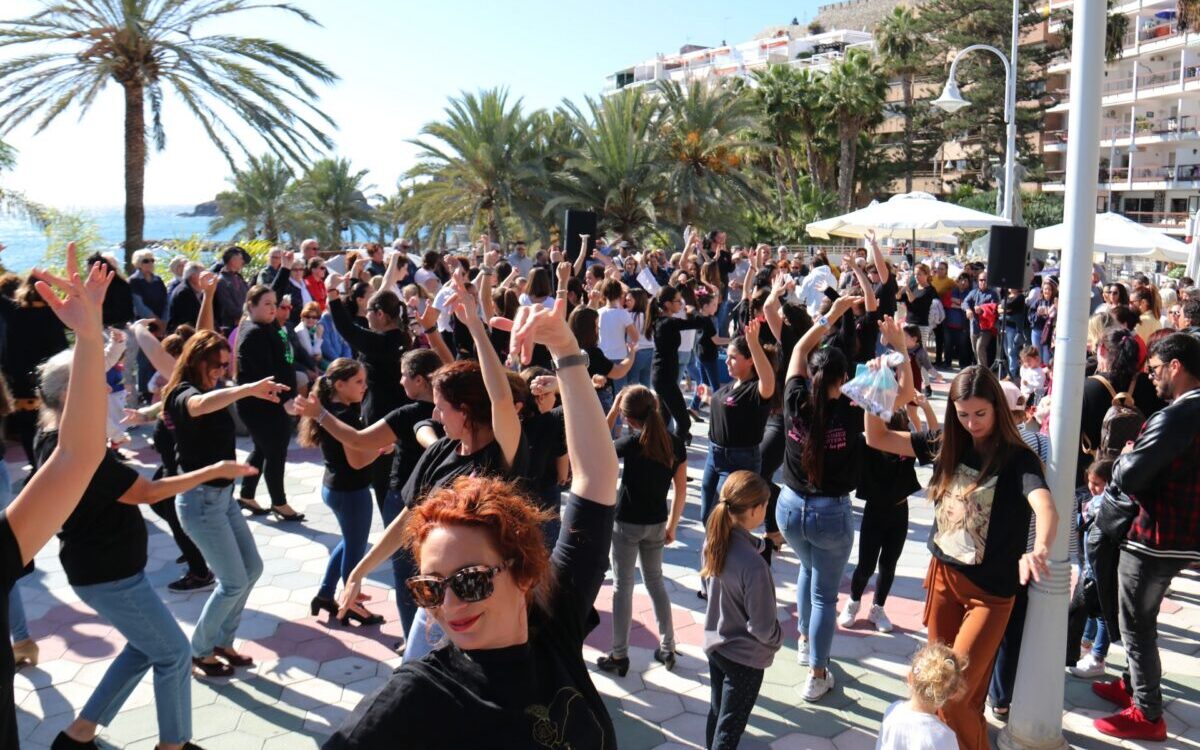
Almuñecar is preparing a free afternoon of flamenco beside the Mediterranean, with local performers, live music and a communal paella planned for Saturday, November 21.
The celebrations will take place on Paseo del Altillo, with the stage set up in front of Pub Arena Flamenco. Proceedings begin at 2.30pm with a popular paella, before a programme of dancing, singing and flamenco fusion continues throughout the afternoon.
Local dance academy
The programme will feature the academy led by local dancer Paola Almodovar, followed by performances from Arena Flamenco dancers Ray Benitez and Vero ‘La India’.
Two singers from the Costa Tropical will also take to the stage. Almuñecar-born Antonio Gomez, known as ‘El Turry’, and Motril singer David De Jacoba will perform with guitarist Jose Fermin Fernandez. Flamenco fusion group Mestizay is scheduled to bring the day to a close.
Organisers say the event is free to attend and open to all ages, offering residents and visitors an opportunity to enjoy the traditional art form in a seafront setting.
The date follows International Flamenco Day on November 16, which commemorates the day UNESCO added flamenco to its Representative List of the Intangible Cultural Heritage of Humanity in 2010. The recognition reflects flamenco’s combination of singing, dance and musicianship, as well as its deep roots in Andalusian culture.
Almuñecar has a long association with flamenco, and the Paseo del Altillo is now home to Arena Flamenco, a dedicated tablao founded by singer Antonio Gomez ‘El Turry’ and local businesswoman Tamara Gomez. The venue runs regular live performances during the week. The town has previously celebrated the art form through events celebrating International Flamenco Day in Almuñecar.
With free entry, food and a line-up drawn from across the Costa Tropical, the November 21 celebration is expected to appeal to flamenco enthusiasts and anyone looking for a relaxed cultural afternoon by the sea. The seaside location makes it easy to combine the performances with a stroll along the promenade or a visit to the town centre and nearby shops.


Struggling With Spain’s Food Prices? This Supermarket Chain Was Built To Help Families Save

Spain Hit By Yet Another Train Derailment As Madrid Railway Line Is Shut
Back in the running? Mijas considers four proposals for abandoned horse-racing complex


-

 New Developments2 weeks ago
Luxury Villas For Sale, Estepona – ProjectL1
-
Age Concern Marbella - San Pedro3 weeks ago
Halloween lunch sells out as 51 join Marbella get-together
-

 New Developments3 weeks ago
How To Get A Tourist Rental Licence In Andalusia (Spain) – Step-By-Step Guide 2025
-
Barcelona riots3 weeks ago
Looting and street violence hit Barcelona as El Corte Inglés customers are trapped
-

 %3 weeks ago
Spain Orders Replacement Of Eight Million Gas Meters: New Rules, Costs And Deadlines
-
Costa del Sol3 weeks ago
Where are they? Expat questions local police presence
-

 New Developments3 weeks ago
Inside The Most LUXURIOUS Apartment Building In Spain!
-
Gibraltar3 weeks ago
Proud to be British: HMS Queen Elizabeth opens its doors in Gibraltar