
Donald Trump
Loyalty, Telegenic Appeal And Testosterone: Hegseth’s Extraordinary Run At The Head Of The Pentagon

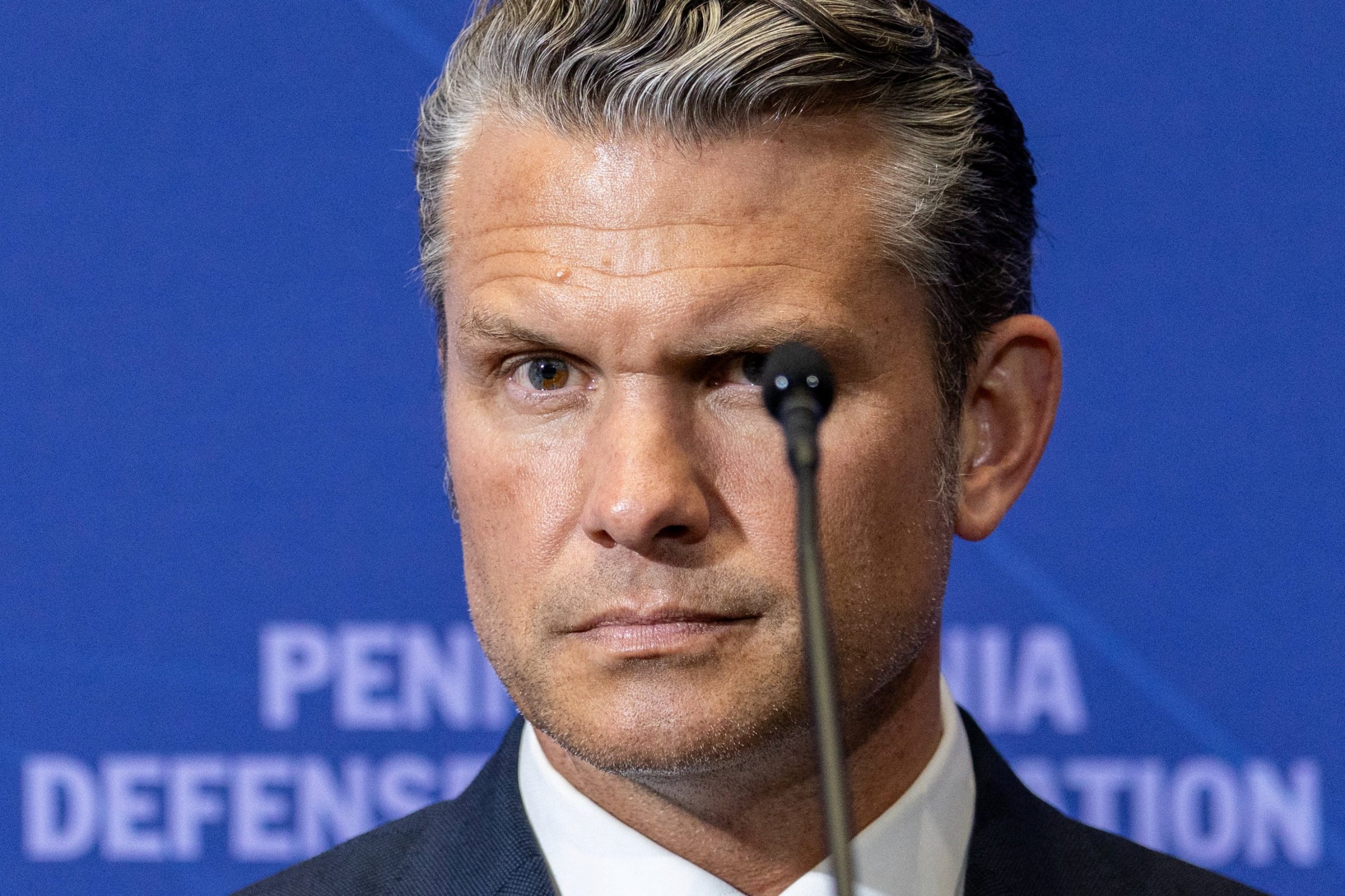
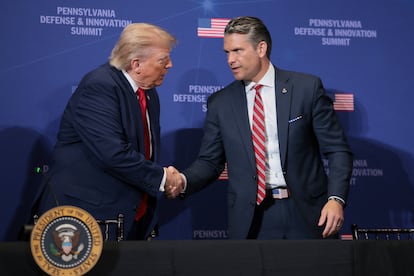
At a meeting held in the tea room of Donald Trump’s Mar-a-Lago mansion/hotel where it was decided on November 11, 2024, that Pete Hegseth would be the next U.S. secretary of defense, the then president-elect offered two arguments he considered decisive. “Nobody has performed better on camera than that guy” was one. “He’s always treated me very well,” was the other.
Loyalty and telegenic appeal are two virtues the Republican president prizes. And at that meeting — the details of which await the reader of Regime Change: Inside the Imperial Presidency of Donald Trump, written by Maggie Haberman and Jonathan Swan of The New York Times and revealing the inner workings of the current White House — Trump praised Hegseth’s campaign in defense of three veterans of Iraq and Afghanistan accused of war crimes. For the future president, those efforts proved why his administration needed a candidate at the Pentagon who was “willing to stick up for the tough guys.”
Last Wednesday, that man — a former Fox News morning host and a military veteran — went a step further in his plan to reshape the U.S. military around his vision of masculinity by announcing he will require soldiers over 30 to undergo annual testosterone testing; testing will be optional for those younger than that.
Concern about low levels of the male hormone among military personnel predates Hegseth and has been addressed by Congress from a medical standpoint: low testosterone can be a symptom of stress, and can cause loss of muscle mass and sexual desire, obesity, or erectile dysfunction, or be associated with more serious conditions such as diabetes, osteoporosis, or depression. The difference this time is that the secretary of defense made the announcement with the highest possible profile, in a solemn social media video that seemed scripted by the writers of Saturday Night Live, the comedy show in which his character, played by Colin Jost, is as recurring as it is successful.
With his self-confidence and fraternity-member manner, Hegseth often gives the impression that he does not mind being fodder for parody. He was mocked when, to demonstrate his committed adherence to Christian nationalism — the belief that the United States’ destiny is inexorably linked to the teachings of the Bible — he recited at a Pentagon religious service a passage he believed came from the Old Testament but that was actually a fictional monologue spoken by Samuel L. Jackson’s character in Pulp Fiction. Or when he used press briefings on the progress of the offensive in Iran to speak voluptuously about the “pure destruction” he sought to unleash on the enemy and about the “violence” of war, which he called, in this case, “holy.”
A “feminized” military
His obsession with masculinity goes back further. In his 2024 memoir, The War on Warriors, he warns of the dangers of a “feminized” military; he refers to “Pentagon pussies” as the principal enemy because they prevent soldiers from acting with the full “lethality” at their disposal, and lays out the theory that would underpin his diversity-hostile program at the head of the Department of Defense (which he likes to call the Department of War, though he lacks the necessary congressional approval to do so).
“In their zeal to fight racism, generals provoke racial conflict,” Hegseth writes in the book. “By pushing gender equality, they weaken unit readiness. By trying to eradicate ‘extremism,’ they expel patriotic rank-and-file soldiers (like myself). By sheltering trans soldiers, commanders are forced to walk on eggshells instead of forming warriors. Killers.”
In the 15 months since he took office, he has had ample time to apply those ideas. After surviving a Senate confirmation that nearly collapsed amid accusations of sexual assault that he denies and coworker testimony about his fondness for alcohol, Hegseth has purged a significant number of senior officers and hindered military careers, especially those of women and Black men.
Last week, his week of testosterone, a new episode in that systematic campaign went largely unnoticed amid news that the secretary of defense blocked five officers — all women or people of nonwhite race — from being promoted to admiral. The decision means that, for the first time in over a decade, no woman will be promoted to admiral in the United States.
Although his animus also extends to certain men who do not fit his vision of what a soldier should be. The secretary has outlawed bellies, long hair, and facial hair, and declared war on trans service members. The latter has led many to point out the irony that the optional testosterone-replacement treatments he offers to troops found to have low levels closely resemble gender-affirming treatments used by trans men in the military.
A convert to Christianity, Hegseth is not only the secretary of defense who has done the most to politicize the institution; he has also infused it with an extreme evangelism. He has the Jerusalem cross tattooed on his chest and “Deus Vult,” the crusaders’ battle cry in their holy wars against Muslims, tattooed on his right biceps. He has also instituted the practice of monthly prayer breakfasts at the Pentagon headquarters. And he has brought his pastor, a man named Doug Wilson — who argues that women should not have the right to vote and that suffrage should be decided at the family level (patriarchal, of course) — out of the margins.
With all those outbursts, and given the clearly limited success of the U.S. war in Iran, the question in Washington has often been when Trump would decide to remove him from the Cabinet, since after a year of relative calm in the White House the first purges have already begun (mainly targeting women: from Pam Bondi, attorney general, to Kristi Noem, secretary of homeland security, and national intelligence director Tulsi Gabbard).
But Hegseth appears to still enjoy the boss’s favor, someone for whom what sufficed the day he chose him for the post seems to still be sufficient. For the president of the United States, an irresistible combination of loyalty, telegenic appeal and, now more than ever, testosterone.
Sign up for our weekly newsletter to get more English-language news coverage from EL PAÍS USA Edition








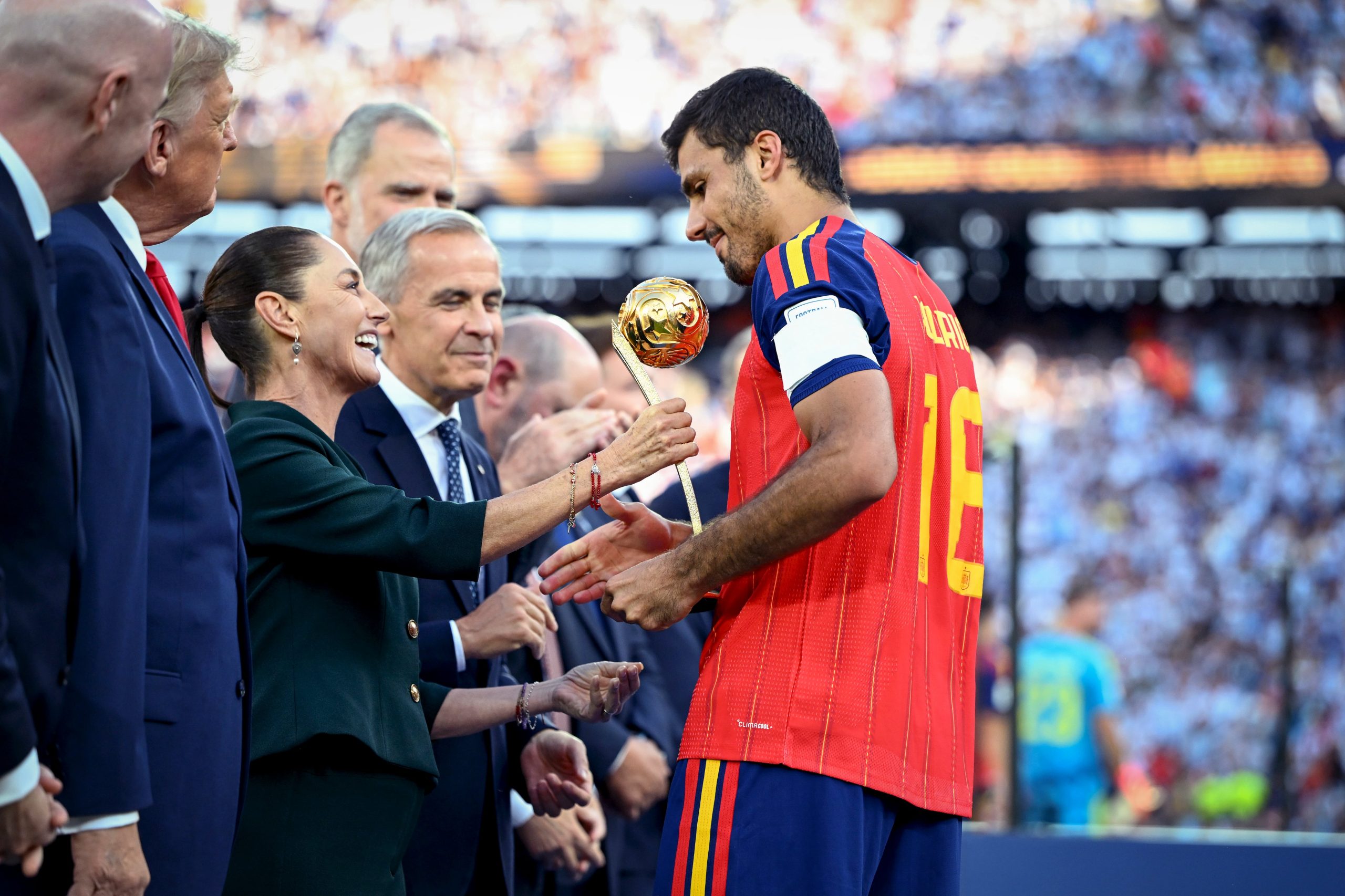
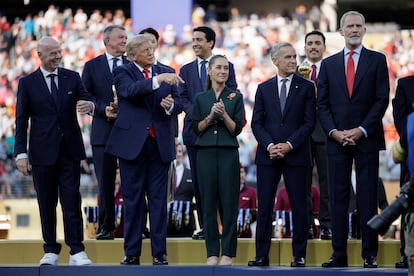
La presencia de la presidenta Claudia Sheinbaum en la final del Mundial de 2026 terminó convirtiéndose en un reconocimiento colectivo a México. Es lo que ha contado la mandataria este lunes tras su visita a Nueva York. El rey Felipe VI de España, el presidente del Gobierno español, Pedro Sánchez, el presidente de Estados Unidos, Donald Trump, y el primer ministro canadiense, Mark Carney, aprovecharon los minutos previos y posteriores al partido entre España y Argentina en el MetLife Stadium de Nueva York, para felicitar a México por la organización del torneo, como una de las tres sedes, y por el ambiente que ofreció la afición mexicana durante la justa deportiva.
Sheinbaum ha compartido durante su conferencia matutina, que su asistencia al cierre de la Copa del Mundo, por invitación de su homólogo estadounidense, sirvió como un espacio de diálogo informal. “Quiero decirles que todas y todos, desde el presidente Trump hasta el ministro Carney, el rey de España, con quienes tuve oportunidad de platicar, todos hablaron maravillas de la selección nacional. Con las dos cosas: de qué bien lo hizo México en la recepción del Mundial. Todos felicitaron la alegría de la afición. Cómo recibimos tanto a las selecciones de otros países, a los turistas, a los aficionados, como del buen desempeño de la selección”, ha dicho desde Palacio Nacional.
Hace apenas unas semanas, Felipe VI y Sheinbaum protagonizaron en Palacio Nacional un encuentro que marcó el inicio de una nueva etapa en la relación entre México y España, después de años de desencuentros diplomáticos heredados del sexenio de Andrés Manuel López Obrador. El rey español pasó de ser un símbolo de disputa bilateral a convertirse, en palabras de la presidenta mexicana, en uno de los jefes de Estado que reconocieron públicamente el papel de México como anfitrión del mayor Mundial de la historia.
La mandataria se ha mostrado satisfecha con el papel que México tuvo en la organización de la justa deportiva. Durante meses, la capacidad de México para organizar un torneo compartido con Estados Unidos y Canadá estuvo bajo escrutinio por los retos de seguridad, infraestructura y logística. La celebración transcurrió, sin embargo, sin incidentes mayores y con estadios llenos, una imagen que el Gobierno mexicano ha convertido en uno de los principales activos.
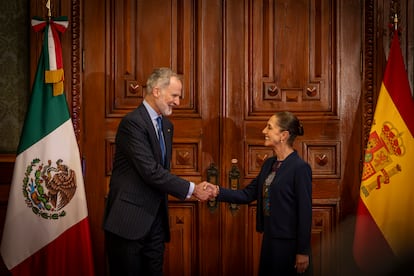
Sheinbaum insistió en que las felicitaciones no se limitaron al dispositivo de organización. Según contó, varios de los mandatarios aprovecharon para destacar el desempeño de la selección mexicana, que llegó a los octavos de final y recuperó parte del entusiasmo de una afición desilusionada por los resultados de los últimos mundiales. “Todos me felicitaron y les mando una felicitación nuevamente a la selección nacional porque cada persona que se acercaba me decía:‘Qué bien jugó la selección mexicana’”, abundó la mandataria.
Donald Trump
Mahmoud Khalil, The Palestinian ICE Jailed And Trump Wants To Deport: ‘They Came For Me And They Will Go After Anyone Who Dissents’

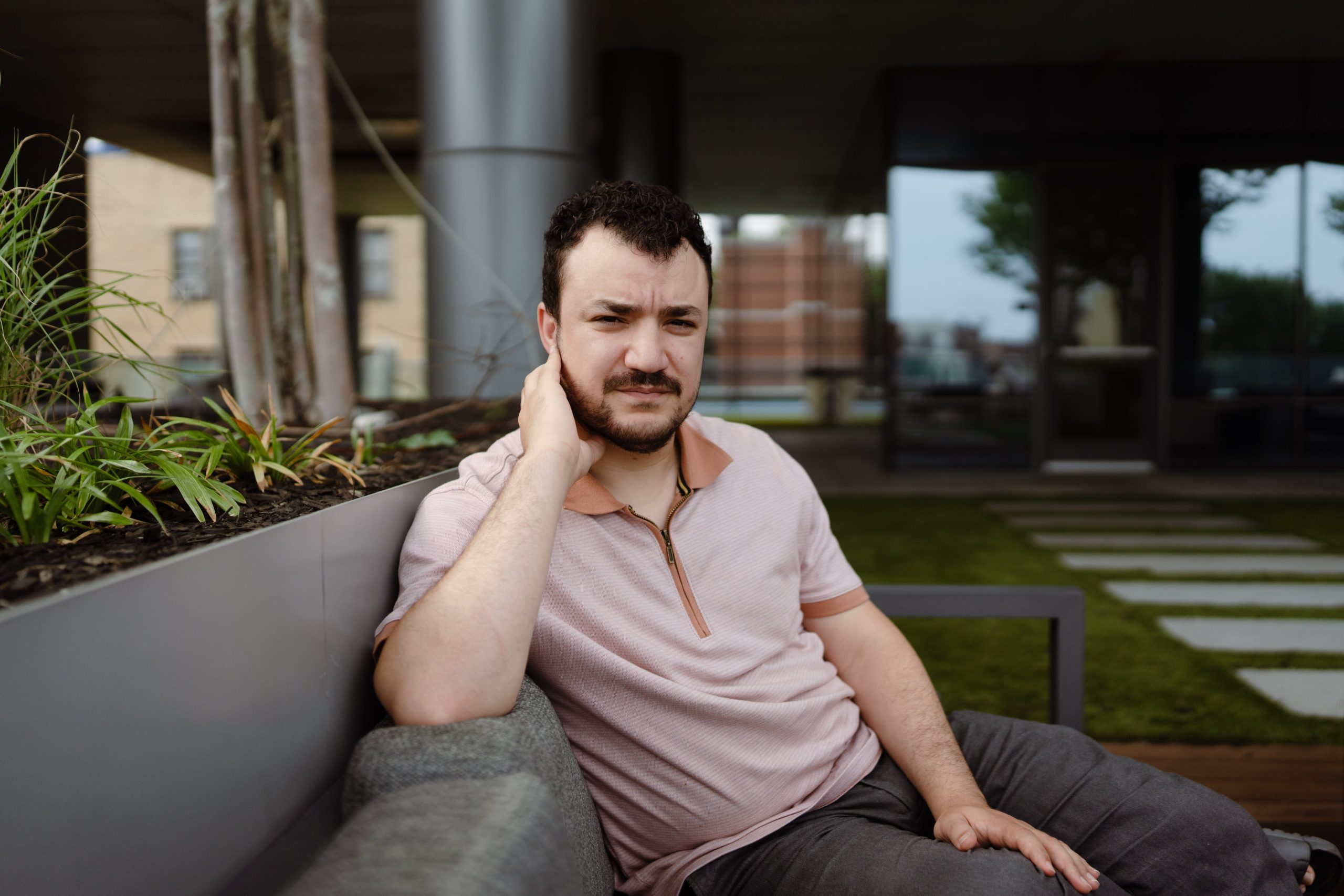
Mahmoud Khalil is a man living under a heavy burden. The threat of deportation from the United States prevents him from making plans. Next month, he could be at home in New York with his wife and child or anywhere else in the world. “I have the full weight of the Donald Trump administration against me, trying to deport me by any means,” he says.
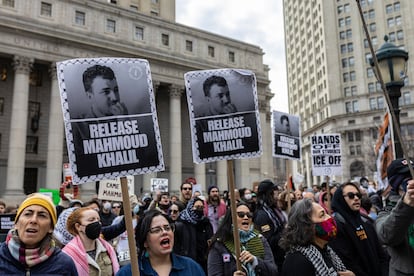
His case has grown into a symbol not only of the Palestinian cause but also of the fight for free speech in the United States. “They came for me, and they will go after anyone who dissents,” he says emphatically in an interview with EL PAÍS.
It is one of the ironies in the story of this 31-year-old: the persecution of a previously anonymous Palestinian student has ended up turning him into a celebrity. Khalil, one of the most visible faces of the protests against the Israeli massacre in Gaza that rocked U.S. universities in the spring of 2024, now rubs shoulders with politicians such as New York City Mayor Zohran Mamdani and is in demand at numerous events.
After serving as a negotiator for pro-Palestinian demonstrators at Columbia University, he was detained without charges by federal authorities in an immigration detention center. He spent 104 days there. As if that were not enough, Khalil — who holds permanent resident status and is married to a U.S. citizen — is now subject to a deportation order issued by an immigration court under the Department of Justice. He does not know when or how it will be carried out.
He receives visitors on the rooftop of a building in Brooklyn. During an hour-long interview, he insists that what happened to him is merely an example of the United States’ authoritarian drift. And in this struggle, he says, Palestinians are simply the canary in the coal mine: a warning that worse is yet to come.
“My case was only the start of everything. After that came mass deportations, attacks on journalists, attacks on universities… The White House made it clear by saying my detention would set a precedent. Now everything is much clearer.”
1. Deportation
In a case riddled with irregularities like his, the deportation process is no exception. The government is seeking to fast-track his removal before a hearing that the Supreme Court must hold. “It’s an insane turnaround, particularly for such a high-profile case on a novel legal issue,” Homero López, a former member of the Board of Immigration Appeals, the body responsible for the decision, told The New York Times.
The Department of Justice did not respond to this newspaper’s questions about the case. But members of the Trump administration have in recent months offered various arguments to justify Khalil’s deportation: from alleged antisemitism to errors in the information he provided when applying for a visa in 2024. He denies both accusations. He admits antisemitism is a real problem and that, sadly, it is rising in the United States and around the world. “But it’s rising because of the actions of Israel, a country that is using Judaism as a shield against any criticism. And because this administration is siding with far-right politicians, at home and abroad,” he says.
Khalil does not want to think about what he will do if he is deported. For now, he is focused on fighting to win the case. “I want to do it, first, to stay with my family. But also to show that we will not be intimidated. And that it is illegal to attack freedom of expression,” says Khalil, who will publish his memoirs, No Land To Stand On, in September.
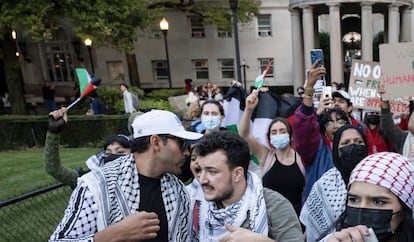
Khalil’s name began to circulate when the wave of outrage against the Israeli government reached Columbia University. There the young Palestinian — who was born in Syria but holds Algerian citizenship — was studying at the School of International and Public Affairs. “The repression was tremendous. Hundreds of students were expelled or suspended. The FBI raided homes. Columbia cooperated with the government to suppress freedom. I don’t think, in its recent history, the United States has inflicted such a degree of violence upon its own people,” he says.
But in his case, the worst was yet to come.
2. ICE detention
On March 8, 2025, federal agents burst into his university residence without a judicial warrant. His wife was eight months pregnant. After being moved through several facilities, the U.S. Immigration and Customs Enforcement (ICE) agents took him on March 10 to a detention center in Louisiana, more than 2,000 miles from his home.
There he received what he describes as degrading treatment, including inedible food and freezing conditions. But what affected him most was something else: “I remember the injustice around me. I saw broken men, crying when they saw on television that they were being called criminals and rapists. People whose only crime had been seeking a better future for their families.”
The worst thing, he says, was missing the birth of his son. “I will never forgive those who stripped me of such a divine moment, a moment every human being on this earth wants to share with their significant other.” On June 20, he was released by a judge of a federal court in New Jersey who found no basis for his detention.
— During your detention, you wrote a letter that said: “The Trump administration is targeting me as part of a broader strategy to suppress dissent […] At stake are not just our voices, but the fundamental civil liberties of all.” One year later, what do you think?
— You tell me (laughs). It was a warning of how Palestine would be used as a Trojan horse to come after others. The laws on material support for terrorism in this country were designed around Palestinians, but later expanded to other groups.
The situation raises a question: why would someone who has endured this ordeal want to keep living in the United States? “Above all, to prove that this administration is wrong,” Khalil replies. “If I leave, what message would that send to the millions of people who support Palestine? That I did not fight. The second reason, of course, is that my wife and my son are American. Also, I love New York and I believe in that premise that the United States is the land of the free.”
When asked if he still believes that, he replies: “That’s why I keep fighting.”
3. What now?
The interview, held on Friday, June 26, took place at a pivotal moment for U.S. politics. Only days had passed since the New York Democratic primaries in which candidates backed by Mayor Zohran Mamdani scored sweeping victories. What they all share is unequivocal support for the Palestinian cause and fierce criticism of the Israeli government.
Far from being an isolated development, the results reflect a seismic shift in U.S. public opinion: for the first time, polls show greater sympathy for the Palestinian cause than for Israel.
Khalil attributes this change, among other factors, to the student protests in which he took part. “Our movement has succeeded. Above all because it has drastically shifted public opinion in this country, not only among young people but across the population. The hypocrisy of the establishment, where everything stops at the word ‘Palestine,’ has been exposed. Palestine was, in a way, what exposed this horrendous policy.”
Speaking about his relationship with Mamdani, Khalil notes that the mayor raised his case with Trump during a visit to the White House. “A big reason for Kamala Harris’s defeat was due to the Biden administration’s policies on Gaza. And this will be a big question for any presidential candidate in 2028,” he says.
Trump campaigned in 2024 as a defender of free speech against what he described as a “woke” dictatorship. But cases like Khalil’s cast doubt on that narrative. Khalil says that is precisely why his experience has resonated with so many Americans. But, he argues, the issue extends beyond his own case. “If Trump can do this, any other president, Republican or Democrat, could do the same,” he says. “These tools will be available to any president, to any administration, and they can use them against anyone who they dislike.”
To understand Khalil, it helps to know where he comes from. Born in Syria in a refugee camp for Palestinians, he later took part in protests against Bashar al-Assad’s regime. The experience of dispossession and a deep sense of injustice have shaped his life.

“I never thought the world was a fair place. I grew up with the sense that everyone had turned their backs on us. My grandparents always hoped to return to Palestine. Seeing them die in Syria after spending the second half of their lives in a refugee camp with tents and mud houses deepened my sense of injustice.”
Later, in the United States, seeing what he views as a continuation of the persecution his family had experienced only reinforced that feeling. “Palestinians are not only victims of violence in our land. It is something that follows you wherever you are when you defend the rights of our people.”
— Why do you think you were chosen as a target?
— It was pure coincidence. They were looking for someone to make an example of. Someone who did not have the protections other protesters had. They thought that because I was Palestinian, I would not fight. That person was me.
— When you began taking part in the protests in 2024, did you fear something like this could happen in a country like the United States?
— (Smiles). Oh, no, no. I absolutely miscalculated. Because I wasn’t doing anything wrong. And I also thought my role as a negotiator would carry much less risk than actually organizing big protests. I never wanted to be the face of the movement for Palestine.
— Looking back, would you get involved in this again?
— Absolutely. I would do exactly the same thing again. I have zero regrets.
Sign up for our weekly newsletter to get more English-language news coverage from EL PAÍS USA Edition

Those years and Scott
During my adolescence, I had a friend named Scott. Scott was a “Zonian,” which gave our friendship an unusual edge. What was a Zonian? An inhabitant of a unique space: the Panama Canal Zone. Panama was living with the presence of the United States military, sometimes under tense circumstances.
What exactly were relations like between the United States and Panama? Little by little, I will try to sketch them out.
My friends nicknamed me “Chombo.” By chombo, I mean a Black man of Afro-Caribbean descent. The derogatory term’s origin alluded to the stereotypical size of Afro-Caribbeans — “jumbo” — although my adolescent body was tall and thin.
After the failure of the French canal project, creative efforts had to be made to recruit workers for the American-led one. Word had already spread that the work could be deadly. The Caribbean islands had to be flooded with pamphlets featuring the so-called “Panama Man” — who was allegedly making a fortune on the isthmus — to achieve any results.
In his book Silver and Gold: Untold Stories of Immigrant Life in the Panama Canal Zone (2014), Guillermo Evers Airall recounts that most of the islanders dreamed of amassing a fortune and returning to their homelands. But this generally didn’t happen: most started businesses with their earnings — enjoying varying degrees of success — and found a new home in the country.
Scott and I had two things in common: rock-band T-shirts and our age. In every other respect, we were different. He bore a striking resemblance to Metallica’s lead singer, James Hetfield. I, meanwhile, sported a short, stiff afro.
But something else connected us: like teenagers of all eras, we felt lonely. I found solace in my gallada [crew of friends], while Scott had his parents, which, for a 15-year-old, is another way of saying he had no one.
Why was Scott where he was, at that particular moment in time? Sometimes military-base housing became available more slowly than new recruits arrived. Houses near the Canal Zone were rented to make up for the shortage.
Our friendship blossomed without any apparent reason. My friends and I welcomed him to our dead-end street, with the powerful sound of heavy metal blasting from the cassette player. We drank more than a few beers and talked until late into the night.
Discovering the military bases
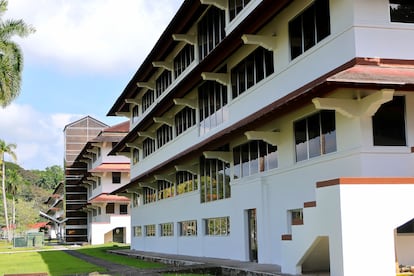
Scott’s parents invited us to spend a day with him after they had settled into the military bases. Gratitude peeked through their smiles. There was also an unspoken tension. It was the 1980s, and the boundaries that enclosed the interoceanic route were beginning to blur. Students from the National Institute were no longer being shot at for demanding sovereignty over the Canal Zone (January 9, 1964), but the roots of the conflict remained alive beneath the surface. The Torrijos-Carter Treaty had been signed in 1977, and its implementation seemed to move painfully slowly.
Just as we were about to leave the base, I saw an Indigenous woman. Illuminated by fluorescent sportswear, she jogged along the traffic-free streets. I will never forget her fleeting colors. Never had I seen such a determined display of female and ethnic power. Blond Americans were attracted to women like that; gringos fell in love with our cholitas. And the opposite was also true. “White flesh, the downfall of the Black man,” people used to say.
A strange crossing of thoughts
My anti-imperialist reading progressed in parallel to my friendship. For years, my parents had been involved with the party founded by Omar Torrijos, the nationalist general. My father had been given books written by Panamanian journalist Joaquín Beleño, which I devoured. One thread in my mind became intertwined with my friendship with Scott.
Beleño wrote a novel titled Gamboa Road Gang (1960). One of his characters was a reddish-skinned Black man named Atá. Atá wasn’t entirely fictional; he was based on Lester León Greaves. Like Atá, Greaves was imprisoned in a Canal Zone jail. His crime was more common than one might think: falling in love with a white American woman. But the clashes and reconciliations with the United States had been happening long before this case.
The construction of the Canal transformed the country forever. Adding up the figures from the French and U.S. projects, a local population of approximately 315,000 inhabitants received 100,000 newcomers. The impact was etched into a collage of customs and architectural styles. The Indigenous component, however, was absorbed by the U.S., European and even African-descended influences.
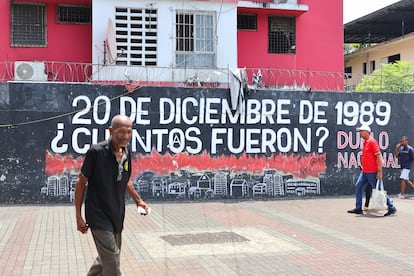
In a report titled Panamanian Society: The History of its Formation and Integration (1970) — coordinated by historian Alfredo Castillero Calvo — there’s a chapter that examines Afro-descendant migration and the social classes along the interoceanic route. Like the rest of Latin America, Panama is an Indigenous nation with branches of immigration, but the construction of the Canal multiplied its diversity.
Harmonizing history
How can we fondly recall the camaraderie of Jimmy Carter when we’re faced with an aggressive Donald Trump? It seems that, every so often, the White House threatens to erase generational struggles.
Even so, we should accept that the history of Panama, of all Latin America (is it too risky to say of the entire planet?), is inseparable from that of the U.S. empire. We should weigh each moment on its own terms. Not all Americans were gringos, even though the current president is unashamedly one.
A night to end the day
I had just finished teaching at the university and was heading back to the apartment where I lived at the time. But I had recently separated from my partner, and I hated spending more time than necessary in an empty home. A neon-green sign with zigzagging letters reflected across my windshield. I parked and decided to cap off the night with a drink.
At the bar, I settled onto a stool at one end of the counter. I did not want to be disturbed. I ordered rum on the rocks. Before long, I was sipping it slowly, intending to stay only a short while. Then I felt a hand slap me on the shoulder. I turned around. It was a lean, cheerful face: Scott. Gone was the long hair; now he wore a close-cropped haircut and long sideburns.
I leaped up to greet him. I told him I taught classes and that, to supplement my income, I also worked in a monotonous government office. It was obvious that he didn’t quite recognize me: he seemed to be searching for traces of my old self in his memories.
He cut me off. He said he worked with the stock market. He had rented an apartment in the luxurious district of Paitilla. From there he could see the magnificent, endless sea. He would only be staying a few days. I could not reconcile him with my memories either. Without his Hetfield-like appearance, he no longer seemed like Scott. The way he pronounced his words, his tone of voice, felt affected. I had to replace the present with the past.
For a while I simply watched him without speaking. My body remained half-turned between the stool and the padded bar. My eyes looked through Scott rather than at him. I felt nostalgia, not joy. All that remained was to talk about the dead-end street, the brief visit to the military base, our friends. We exhausted the subject. We had spent half an hour together without finding what either of us was looking for.
I smiled. I explained that I had to wake up early the next morning. We embraced, briefly tightening the waist of time. My country and the United States: an indelible past, a future yet to be revealed. I walked slowly toward the exit.
Sign up for our weekly newsletter to get more English-language news coverage from EL PAÍS USA Edition

Las Celebraciones De Los Campeones Del Mundo, En Directo | Cientos De Miles De Aficionados Arropan A Los Campeones Del Mundo En Su Recorrido Por Madrid

De Keyne, El Hermano De Lamine Yamal, A La Familia Numerosa De Cucurella: Los Apoyos De Los Jugadores De La Selección Española Fuera Del Campo

Loyalty, Telegenic Appeal And Testosterone: Hegseth’s Extraordinary Run At The Head Of The Pentagon


-

 New Developments1 week ago
Luxury Villas For Sale, Estepona – ProjectL1
-

 New Developments2 weeks ago
How To Get A Tourist Rental Licence In Andalusia (Spain) – Step-By-Step Guide 2025
-

 New Developments1 week ago
Stylish 3-Bedroom Apartment With Panoramic Sea Views – Benalmádena
-
Cataluña wildfire2 weeks ago
Spain travel chaos as Cataluña wildfires close major roads and suspend trains
-
Cheap food options2 weeks ago
Public supermarkets could be coming to Spain. Could they make food cheaper?
-
calpe2 weeks ago
Calpe seafront makeover backed by €278,000 in EU funding
-

 Uncategorized1 week ago
F1 season ticket announced for 2027 and it
-
 Bélgica1 week ago
Bélgica No Logra Repetir La Gesta De 1986: “Pero Hemos Jugado Bien”