Connect with us

%

Magenta Slipperz Brings Hilarious Music Bingo Bango Night To Puerto De Mazarron

Published

on

magenta-slipperz-brings-hilarious-music-bingo-bango-night-to-puerto-de-mazarron

Magenta Slipperz hosts a lively coastal Music Bingo Bango party. Photo Credit: La Sal Music Bar / Facebook

Residents and visitors on the Costa Calida should get ready for an extraordinary evening of music, laughter, and interactive entertainment as the iconic drag performer Magenta Slipperz brings the ever-popular Music Bingo Bango Night to El Puerto de Mazarron on the evening of Saturday, October 3, 2026. Organised by Hartley Hartley Music, this highly anticipated event turns a classic pub game into a vibrant and hilarious party, taking over the La Sal Music Bar for a coastal night out that promises non-stop fun along the coastline.

Music Bingo Bango in Puerto de Mazarron: A fresh spin on a traditional pub classic

Music Bingo Bango completely does away with the quiet halls and numbered balls. Instead, bingo players tune in to song snippets, recognisable chorus lines, and famous dance anthems across multiple musical eras. As each track plays through the sound system, participants identify the song and check off matching titles on their customised game cards, with the chance to win prizes.

The experience is a mix of lively music trivia and an interactive stage show. Driven by Magenta Slipperz’s quick-witted banter, unexpected sing-alongs, and spontaneous audience participation, the event caters equally to music lovers, casual game players, and group outings simply looking for something beyond a standard weekend night out.

Quick-witted humour and stage presence with Magenta Slipperz

At the heart of the show is the unmistakable stage presence of Magenta Slipperz, whose sharp humour and dazzling hosting style keep the crowd laughing and the energy high all throughout the night.

Unwind at La Sal Music Bar by the marina

La Sal Music Bar provides the ideal setting for the occasion, situated right along the waterfront at Puerto Deportivo in El Puerto de Mazarron. Known for its welcoming atmosphere, great drinks menu, and prime marina views, the venue offers a relaxed Mediterranean backdrop for an evening of friendly competition and lots of laughs. With doors open prior to the official 7:00pm start time, attendees are encouraged to arrive early, grab a drink, and secure their seats before the party begins.

Whether a bingo buff or a curious newcomer, Music Bingo Bango Night in Puerto de Mazarron will be a memorable night, with a very memorable host.

%

Benahavis Wildfire Stabilised: 300 Hectares Burnt

Published

on

benahavis-wildfire-stabilised:-300-hectares-burnt

Heavy helicopters drop water in one of biggest operations of year. Credit: Infoca X

Residents forced from their homes by the Benahavis wildfire can now return after firefighters brought the major blaze under control following a difficult 24 hours.

More than 300 hectares of woodland and scrub have been affected by the fire, which started near the Ermita del Rosario on Sunday afternoon and spread rapidly through steep terrain and strong easterly winds.

Around 50 people from Montemayor Alto were evacuated as the flames threatened areas where homes and forest meet. Residents of Montemayor and Benahavis Hills, together with the occupants of a property known as La Coja, were among those later given permission to return.

Andalucian emergency authorities said the fire was declared stabilised at around 7.30pm on Monday, allowing the operation to be scaled back to pre-emergency level.

More than 300 hectares affected by fire

Antonio Sanz, the Junta de Andalucia’s vice-president and regional minister for emergencies, said the progress represented an important stage in dealing with the blaze. Firefighters had spent the night working to stop the head of the fire from advancing, with heavy machinery used to protect Benahavis and nearby residential areas.

Monday’s operation involved around 200 personnel and a large fleet of aircraft and ground vehicles. The aerial response grew considerably during the day, with up to 16 aircraft involved at one stage.

Despite the improved situation, firefighters have not simply left the area. INFOCA crews are staying behind to check the perimeter, tackle hot spots and prevent the flames from starting again.

Three people injured in Benahavis fire

Three people were injured during the emergency. A 78-year-old man suffered burns to between 30 and 35 per cent of his body after trying to tackle the flames. He was taken to hospital in Malaga before being transferred to the burns unit at Hospital Universitario Virgen del Rocio in Seville.

A forest firefighter suffered a broken wrist in a fall, while another person received medical attention after inhaling smoke.

No homes were reported to have been destroyed, although emergency authorities reported some damage to outdoor features, including fences, terraces and access points.

A-7175 road reopened

The A-7175 road was also affected by the wildfire after being closed during the emergency. It was reopened overnight, helping residents who had been outside the municipality to get back home.

Fire behaviour was made more difficult by the combination of wind, steep slopes and the area’s numerous ravines and valleys. According to the technical analysis carried out by INFOCA, the flames spread quickly along ridges and slopes exposed to the wind.

Although the immediate danger to Benahavis residents has eased, INFOCA personnel will continue working at the scene until the fire is fully extinguished.

Police investigations now point to an initial blaze which broke out on the main road to Benahavis Village from what appears to be a stopped car moments before the alarm was officially raised.

#benahavis así ha empezado el incendio en Benahavís. Hemos avisado al 112 en ese momento pic.twitter.com/eBknt6AWRK

— mariareke 🐾✨ (@mariareke) September 13, 2026

Continue Reading

%

Algarrobo’s La Quema Reenactment This Weekend

Published

on

algarrobo’s-la-quema-reenactment-this-weekend

Players in the reenactment fiestas. Credit: Ayto

Algarrobo is about to step back to 1811. From Friday 18 to Sunday, September 20, the Axarquia village stages the 12th La Quema de Algarrobo, a provincial tourist-interest fiesta that recalls how Napoleonic troops failed to torch the place during the Peninsular War.

Town hall and the Asociacion Historico Cultural Quema de Algarrobo run the weekend, with backing from Malaga’s Diputacion. Neighbours, or locals that call themselves themselves “tiznaos”, fill the streets as guerrillas and French soldiers. Craft stalls, workshops, a tapas trail heavy on mangoes and village tortas, and live music sit around the battles.

Friday night: capture, speech and a staged burial

Action starts at 9pm on Friday with the capture of Marcos Loco. A theatrical burial of Marcos Loco and mayor Francisco Ramos follows along with many more battle reenactments, and partying to the small hours.

Saturday: street fights, a river ambush and a rock gig

Saturday carries are the biggest events. Sonnet recitals, skirmishes in the old streets and the opening of a French headquarters run through the day. Late afternoon brings an ambush by the river, with more than 60 riders. That set-piece leads into the central play, La Quema de Algarrobo — el jinete heroico — at 10pm.

Hugely famous Spanish rock band Seguridad Social closes Saturday from 11.30pm in the municipal marquee, and bound to bring a night full of dancing and revelry.

Sunday: 300 reenactors and a last play

Sunday’s Encuentros Historicos parade draws more than 300 people from about a dozen Andalucian reenactment groups. Theatre wraps at 5pm with La noche de El Melgares.

Anyone heading in should expect packed streets, horses, gunfire effects and evening crowds. Parking in the village centre will be tight; arriving early or using Algarrobo Costa and walking up is the usual workaround.

Official programme details can be found at Axarquia tourism via axarquiacostadelsol.es.

Continue Reading

%

EU Changes Course On EES As Nine Countries Further Delay Biometric Checks

Published

on

eu-changes-course-on-ees-as-nine-countries-further-delay-biometric-checks

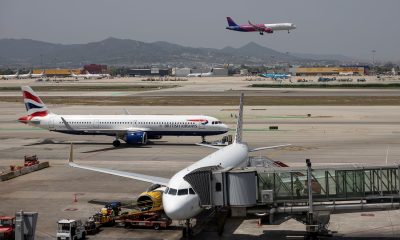
The latest development puts the EU in an uncomfortable position. Photo credit: Colinmthompson/Shutterstock

If you are travelling into the Schengen area from outside the EU, you may have been expecting the new biometric border checks to become unavoidable this month. Instead, the rules have taken another turn. Nine Schengen countries have told Brussels they are not ready to fully enforce the EU’s Entry/Exit System (EES), and the European Commission has reportedly agreed to let them delay the checks while technical problems are sorted out.  

France and Portugal are among the nine countries, alongside Belgium, Germany, Greece, Italy, Malta, the Netherlands and Switzerland. The development comes just days after the temporary flexibility built into the system expired on September 6. That arrangement had allowed countries to temporarily suspend biometric registration when queues became too long, helping airports deal with the summer rush. Now, the countries concerned are effectively being allowed more time.

Nine countries hold back on full EES rollout

The nine countries have reportedly told the Commission that they will not fully enforce the new controls until the necessary technology and systems are working properly. According to the latest reports, Brussels has informally agreed to the delay in order to maintain what officials describe as “border fluidity” and avoid a repeat of severe queues at busy crossings.

The European Commission has not publicly confirmed the arrangement in detail. The decision affects some of Europe’s busiest tourist destinations, with several major airports still struggling with queues and technical problems.

Why is Spain not one of them?

Spain is notably absent from the list, despite also experiencing problems with EES during its rollout. Spanish airports previously had the ability to temporarily pause biometric registration when queues became excessive during the transition period. However, Spain has continued with full implementation after the September 6 deadline rather than asking Brussels for the additional flexibility now being used by the nine countries. That does not mean Spain avoided the technical problems affecting other European countries.

The difference is that Spain is currently considered capable of operating the system in full, while the nine countries seeking further flexibility still have problems at some of their border crossing points. For travellers, that means the experience can vary considerably depending on where they enter the Schengen area. Someone arriving in Spain should not assume that the flexibility available in France, Portugal, Germany or the other affected countries will apply at a Spanish border crossing.

Queues and technical problems behind the decision

The rollout has brought problems at several major European travel hubs. Airports in countries including Greece, Italy and Portugal have experienced long queues, while technical difficulties have affected the ability of border officials to register biometric data and retrieve information from the central system.

Reports of passengers facing lengthy waits and missing flights have added pressure on governments and the travel industry to slow down the full rollout.  France had already been using the flexibility during the summer to keep queues moving. Portuguese authorities have also used temporary suspensions when congestion became too severe. The difference now is that the September 6 deadline has passed.

What this means for travellers

For British travellers, the change could mean that arriving in France, Portugal, Belgium, Germany, Greece, Italy, Malta, the Netherlands or Switzerland does not always result in the full EES biometric registration process being carried out immediately. However, it does not mean EES has been cancelled in any of the nine countries.

Travellers should still expect the system to be used and should have their passport ready for the new registration process where it is operating. The arrangements can also differ between individual border crossing points, meaning that a traveller cannot assume that EES will be suspended simply because they are entering one of the nine countries.

Brussels faces an awkward border problem

The latest development puts the EU in an uncomfortable position. The bloc has spent years developing EES as a major overhaul of Europe’s external borders, with the aim of making crossings more secure while replacing manual passport stamps with a central digital system. Yet nine countries have now effectively asked for more time to make it work without creating major disruption for travellers.

The Commission had already acknowledged before the September deadline that some member states still needed adjustments at particular border crossing points. At a September 1 briefing, a Commission spokesperson said officials were in contact with the countries concerned and were looking at transitional arrangements for places where further adjustments were needed.  For anyone travelling to the nine countries in the coming weeks, that means one thing: the EES rules are still changing, even though the system is officially up and running. The biometric border system has not disappeared. But neither has the ability of some of Europe’s busiest destinations to put the brakes on it when the technology or queues become a problem.

Continue Reading

Trending

Copyright © 2017 Spanish Property & News