
Barack Obama
Mallorca Mansion Loved By The Obamas With 11 Bedrooms And Stunning Sea Views Goes On Sale For €46 Million


 The main house, built in the 1940s, is spread across five floors linked by a private lift and has seven bedrooms and eight bathrooms, as well as a living room with a fireplace.













Abdul El-Sayed
Islamophobia, Free Healthcare, And A Final Blow: The Battle For Michigan Will Determine Just How Far To The Left The United States Can Shift


Barack Obama
What If The Polls Are Wrong? How The Democrats’ ‘blue Wave’ Could Become A Tsunami Or Fade Into A Ripple


Barack Obama
Andrea R. Flores: ‘Democrats Are A Decade Behind On Coming Up With An Answer To Immigration’

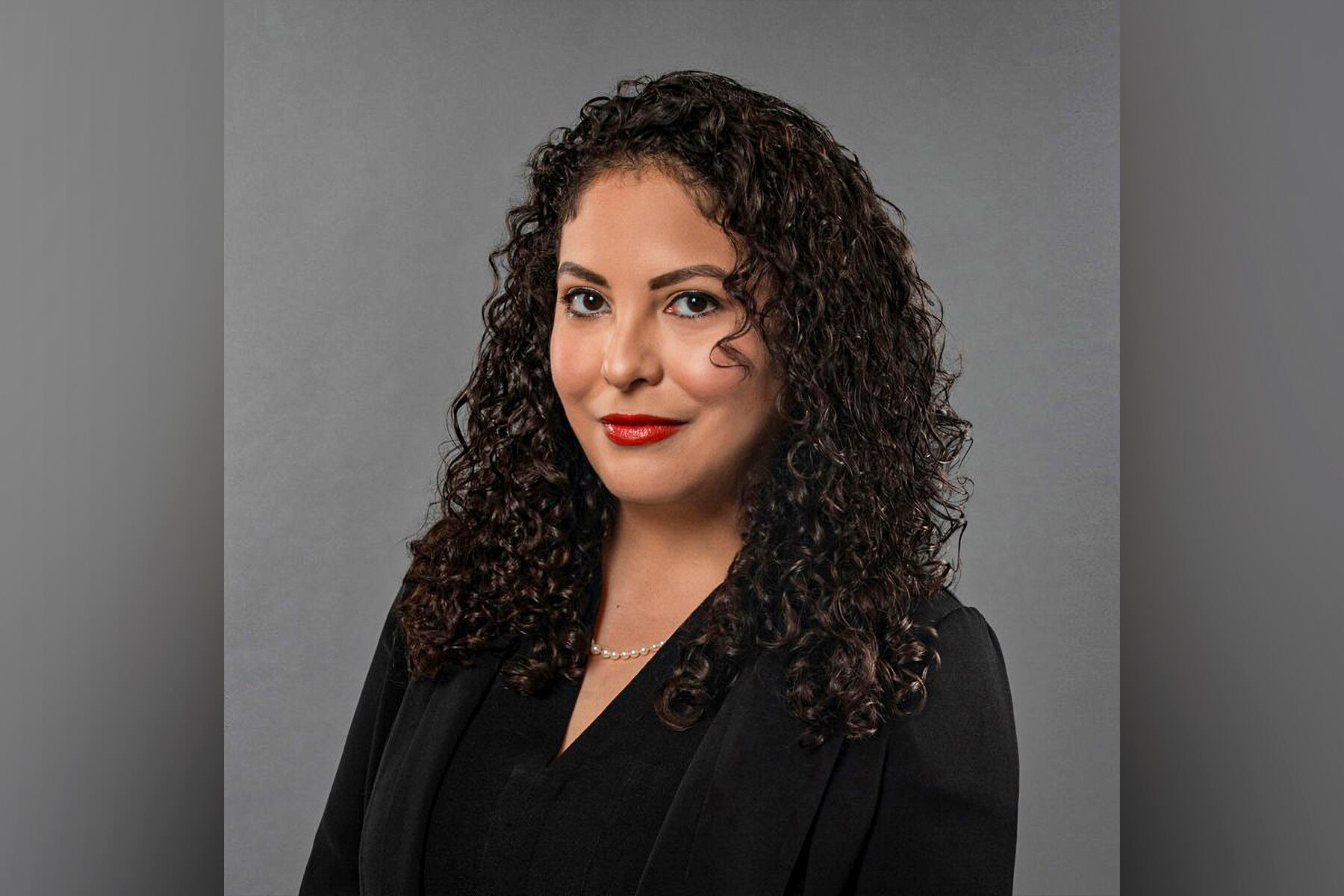
The United States is living through a strange moment. Thanks to Trump’s policies, border crossings have fallen to levels not seen in decades. At the same time, Americans have watched ICE and Border Patrol agents hunt down immigrants in their streets, with abuses and acts of violence that have provoked open outrage. And yet, in Washington, talking about a more humane immigration policy remains almost taboo, regardless of party.
Andrea Flores (Las Cruces, New Mexico, 1988) has spent years keeping that debate alive against all odds. She knows the problem from the inside: she grew up in southern New Mexico, near the border, and worked in the White House under Barack Obama and Joe Biden, in the Senate and at the Department of Homeland Security, trying to modernize the immigration system. On her Substack, Securing America’s Promise, and in outlets such as The New York Times and CNN, she presses one idea: the system is unjust and riddled with provisions that allowed Trump to push restrictions to an unprecedented extreme. Reforming it, to lift millions of people out of legal limbo, is urgent and yet nearly impossible, given the lack of will in both parties.
None of this discourages her. Although Trump has locked in ICE’s funding through the end of his term, Flores believes a Democratic victory in the midterm elections, even if only in the House, could reopen the national conversation on reform. But she warns that Democrats still lack an alternative of their own, and failing to build one would be a fatal mistake.
Q. How do you assess Trump’s immigration policies?
A. They are the most extreme immigration policies we’ve seen in modern American history. He brought a long-time, multigenerational anti-immigrant movement into the White House, and he took ideas that used to be very fringe — ending birthright citizenship, suspending the refugee program, ending asylum as we know it — and he is implementing all of those. One of the reasons he is able to operate such an extreme agenda is that immigration law itself, in many ways, permits it. Directing the secretary of state to revoke visas from students for their political views: that’s an existing immigration law. Picking up long-time immigrants who haven’t committed any crimes and sitting them in detention: that’s our current immigration system. It’s full of provisions that should have been removed long ago, and both parties left certain tools in place, assuming nobody would misuse them. It has always been possible for ICE and the Border Patrol to be deployed in the ways we’ve seen under this administration. If the laws are written that way, all you need is one president with the intent of turning it into a federal police force and changing the nature of who gets to be here.
Q. Where does that come from?
A. Since chattel slavery, we have been in a national debate over who gets to be a citizen. Then you had waves of immigration that built up the American economy as we know it: Chinese immigrants in the late 19th century, then European immigrants and, for really the last century, Mexican and Central American immigrants. When we bring in people who are actively building up certain industries, we tend to leave them undocumented, because our political bodies can’t answer whether they should stay, but we keep using their labor. That’s why the United States has the largest undocumented population in the world.
A lot of the reason I got into this work was that I felt this was deeply unfinished work from the Chicano movement and the civil rights movement: as long as we have a noncitizen workforce that is predominantly racial minorities, that is not good for the rest of the minority communities in this country. Trump has proven that by showing how easy it is to racially profile people of Latin American descent.
Q. Where does the idea of a multiracial democracy stand today?
A. If you’d asked me a year ago, I would have said Americans were nervous about demographic change after the Biden administration, when they saw a lot of people cross the border. But what you saw when thousands of federal agents invaded Minneapolis surprised many experts, including myself. In Washington, we operate as though Americans will only support one type of immigrant with one type of status. Instead, we witnessed Americans in a city standing up for their neighbors, sitting outside construction sites when roofers were trapped on a roof in the cold, organizing. That was a real rebuke to Trump. The Latinos who voted for Trump appear to be swinging back, as people realize what mass deportation really means. And we’re only getting started.
Q. Is this a turning point, or a backlash against excesses that doesn’t amount to support for an alternative?
A. I would say the latter. We are seeing a reaction to perceived overreach. People still think immigration enforcement has a role to play, but they do not like what they are seeing in terms of racial profiling. The reason I don’t believe it’s a bigger shift is that Americans are not yet being offered an alternative. There is not a pro-immigrant party offering an alternative right now. There is just a restrictionist party offering deportation.
The question is: are Democrats building an immigration system where ICE is more professional, where agents don’t wear masks? Or are they moving us toward a system where fewer people are subject to deportation — because we know they make up one in four construction workers in Texas, almost half of the dairy industry — using something like legalization? That’s the world I hope Democrats start fighting for, instead of just saying ICE reforms are the end of the road. Because what that says to me is: you’re trying to deport grandmothers more professionally. We’ve had more professional versions of ICE before, but we still have the largest undocumented population in the world.
Q. What would make voters trust Democrats to govern on immigration?
A. What I experience regularly is Democrats thinking: we have nothing to gain by ever talking about it, we only have things to lose. Republicans spend so much money and so much time talking about immigration. There are better issues for Democrats — health care, the cost of living — and those should be at the top of the agenda. But you cannot refuse to have an affirmative plan on the president’s top issue.
I support Congressman Gabe Vasquez, in a must-win House district in southern New Mexico. He put out a bill for a care-worker visa that would also legalize some undocumented care workers. It’s an easy concept for the average American to understand: your current care worker doesn’t have a path to citizenship; I know you want to keep them here; here’s an option. That’s solving a problem for an American family.
Q. Why piecemeal instead of comprehensive reform?
A. I worked on the last comprehensive reform. It came through a trade: we’ll do more on the border if you legalize people. But after the Biden administration, Democrats were saying: we want to end asylum, we want to shut down the border. So what are they trading now for a path to citizenship? Most Americans don’t care about the form it takes. And I don’t think it’s been good that we’ve segmented immigration out from other core issues. If Democrats pass a big housing bill, there should be a workforce component in it — a combination of new visas and legalizing current construction workers — because we know you already need those workers. Ideas like a state-sponsored visa could be really smart, because every state has different immigration needs. I think about New Mexico, about [organic food company] Hatch Chile. Allow states to raise their hand and say: these are the immigrants I need.

Q. Why did so many Latinos swing toward Trump?
A. I’m from southern New Mexico. I grew up in a border community, and I was unsurprised. Sitting in the White House in Biden’s first year, all we did was dismiss Latino border communities. We ignored exactly what they were telling us about what was happening at the border. Then you add the mistake of not doing anything about people being bused into cities, and long-time undocumented community members seeing new arrivals receive work permits they had never received. It was the border plus dropping this long-time Democratic promise.
And in the 2024 campaign, you never heard either President Biden or Vice President Harris explain what mass deportation actually is: that it would mean anyone with an immigration violation. Their silence allowed a lot of people to believe: well, he’s going to get these new people out, and that seems fine with me. So Latino voters now feel very betrayed. They say: we thought you meant someone else, not us. We didn’t think you’d stop the DoorDash drivers, the construction workers.
Q. ICE and Border Patrol are funded through 2029. If Democrats win only the House, what can they actually do?
A. It will be very difficult, because giving people legal status is the single most protective thing Congress could do. They could try to claw back resources, but that requires Trump to sign a bill. So their most powerful tool is going to be oversight, to grow the unpopularity of mass deportation. We’ve seen President Trump pull back before: after family separation, he ended the policy. Democrats have an opportunity to link this to the arguments they’re making in other spaces: who is getting rich off of our family members being detained? What was traded to send a long-time U.S. resident to a country on the African continent they have no ties to? They could pass a bill saying ICE cannot make arrests at schools, hospitals, and other sensitive locations. But President Trump would veto it.
Q. He’ll veto anything. So, nothing substantial changes until Trump is gone?
A. This is where I wish Democrats were a little more cutthroat: make him say, “No, I want ICE in schools.” Force him to veto it. People want fighters. I believe what we’re starting is organizing toward the end of the Trump era. But Democrats have to decide they don’t want to be a country where ICE can stop any Latino and ask for their papers. You have to change the law to do that.
Q. What should a Democratic majority investigate first?
A. Some of the more explosive oversight will be around contracting: deals for warehouses being built around the country to detain people, the funding transfer to Florida for Alligator Alcatraz. We still need many more details about the El Salvador agreement. Are they trading natural resources for detention and deportation flights? Congress has been very hands-off with the policies that govern ICE. It has been a norm that ICE doesn’t show up at a hospital, because that’s bad for public health. What this has shown is that the norm is meaningless if a president doesn’t want to follow it.
A few whistleblowers have exposed a rapid hiring process, lowering qualification standards for people to carry a lethal weapon in our streets. My first encounter with Border Patrol as a citizen, I was 12 years old, leaving middle school. Border Patrol has long held very bad and invasive practices, and now there’s a pipeline from Border Patrol to ICE. The agent who killed Renee Nicole Good was a Border Patrol agent, and it was a group of Border Patrol agents who killed Alex Pretti, both in Minneapolis. People didn’t care when those practices were at the border, but now it’s in your street. I’m very curious about which of the president’s friends are getting rich off of mass deportation.
Q. On legalization, who comes first: Dreamers, TPS holders, long-time residents?
A. Where I sit, I still feel like I’m convincing Democrats to put forward legalization again, to even consider going beyond the American Dream and Promise Act, which would protect Dreamers and TPS holders but would leave out a huge portion of the undocumented population. When I think about some of the most painful moments of the past year — the death of Lorenzo Salgado Araujo — he would not be covered by either bill. How do you make the case that someone like Lorenzo, who was American except for the lack of a document — how does this Congress protect him?
When we make it all or nothing, one attempt, like under the Reagan administration, everyone feels we did it once. But we need to do it multiple times, and I can imagine different champions. If there’s a senator who really cares about military families, that person should lead a legalization of military family members. It sounds piecemeal, but what it really is is trying to add on to the base and not leave people out. The easiest thing in the world would be to say: let’s change the registry date. But Democrats aren’t there. This is the same group of Democrats who voted for the Laken Riley Act.
Q. Do the progressive wing and the center approach it differently?
A. They both lack answers and vision. Progressives have been really concrete about their goals on affordability. Then they say things like “Abolish ICE.” And I tell them: I would give anything for you to organize around legalization instead, because you can abolish ICE and it will just be moved into something different, but you’ll still have the undocumented population.
Say you have an American family — I get these calls all the time — and they say: this neighbor who works at our store, whom I’ve known for 10 years, has just been taken away. What can I do? And I tell them there’s nothing you can do. There’s no line for them to get into. There’s no way for you to sponsor them. There’s no way to help your neighbor. If we aren’t responding as a party to that missing piece of the law, we’ve failed to respond to this moment in history.
Q. Can Democrats defend an orderly border and a functioning asylum system without accepting Trump’s approach?
A. We could have built a system that worked differently. I joined the Biden administration to do that. I ran the wind-down of Remain in Mexico, but what it really was was a test of what it would look like to work with the border community and with Mexico to triage the most vulnerable asylum seekers in an orderly process. That process got stopped. What ended up happening was three years of absolute chaos and disorder.
I resigned. We were not trying to prevent catastrophes like 10,000 Haitians showing up at the border one day without the White House knowing it was happening. I didn’t want to be part of pretending we were doing the best we could for my own community. I saw community spaces in Las Cruces, New Mexico, turned into shelters. I fly home through El Paso, and I’d never seen migrants sleeping on the floor all along the El Paso airport. The Biden White House didn’t appreciate that constituency.
Q. Border crossings are near zero. Hasn’t Trump been effective?
A. If you went from 100,000 encounters a month at the worst of it to under 10,000, that’s tangible. Lower border crossings are generally better for everyone involved. But I get nervous when any nation says the border is fixed. Under Biden, we kept Trump’s exact border policy, and in the first weeks of the term, Mexico stopped taking people back in Tamaulipas. All of a sudden, we were in crisis. If Mexico changed its policies, the numbers could go up next week. Trump has the same laws, the same constraints the Biden administration had. That’s why I’m so bullish on Democrats having something else to offer, because I don’t think we can compete with Trump on the perception of the border being closed.
Q. If Latinos prove decisive, how do they turn that into lasting influence?
A. My dream is border communities leading the future of asylum and processing, because they’re the ones who experience it. And I always say you need to show up on the Hill. Something Dreamers were so effective at was getting people to show up and do meetings. Senator Bob Menendez used to say: where are the protesters? Where are the groups pushing us on anything? A big part of developing champions is constituency groups telling them: this was our vote, and this is something we need you to act on. If you look at early press conferences from the future speaker, Hakeem Jeffries, immigration is not on the priority list. That is the signal to all those voters.
Q. According to a May UnidosUS poll, immigration reform ranks fifth among Latinos’ concerns.
A. I’ve never been a proponent of it being any Democrat’s top issue. But Democrats will suffer consequences if they don’t address it, because they’ll find themselves taking over another White House — this is my lesson learned from Biden — thinking opposition to Trump was enough to substitute for a vision on immigration. There are going to be more American citizens impacted. Operation Wetback in the 1950s was a model for what we’re seeing now, but that was more concentrated in the Southwest and California. It’s almost like Minneapolis was an acute emergency-room situation, and now the whole country has a low-grade fever. This White House was okay doing meatpacking raids in Kansas when they may lose a seat there. Democrats are a decade behind on coming up with an answer.
Q. Can you build a majority for legalization without reducing immigrants to their economic usefulness?
A. I find the economic argument more compelling than I did earlier in my career. Do you reduce immigrants to their economic contributions, or do you try to get Americans to see them as the full human beings they are? Right now, because of President Trump’s own actions, there’s a new way to bring people into seeing how the average American benefits from ICE not being in their communities. Jazmine Ulloa of The New York Times told me Latinos say it’s like a second pandemic. People are staying home again and having friends deliver their groceries. That is an economic chilling effect for everyone. Where ICE arrests have exceeded the average for an area, Americans have lost jobs. When you have a president who wants to deport every immigrant in your community, you lose out.
Q. If Democrats win on November 3 and still can’t stop the deportation machine, what would be unforgivable not to even attempt?
A. Not attempting to pass as many legalization vehicles as possible, and not making sure every American knows that you have one party with a plan to protect their neighbor, their employee, and their family member, and another party that is going to keep taking those people from your homes and communities. A path to citizenship is very popular. For Democrats not to add that back as an advantage they actually have over Republicans would be a massive mistake.
Sign up for our weekly newsletter to get more English-language news coverage from EL PAÍS USA Edition

Struggling With Spain’s Food Prices? This Supermarket Chain Was Built To Help Families Save

Oscar Piastri split takes fresh twist as F1 boss makes Mark Webber claim

Rafa Jódar-Alexander Zverev, El Partido De Las ATP Finals En Vivo| Alexander Zverev Derrota En Dos Sets A Rafa Jódar En El Primer Partido De Las ATP Finals


-

 New Developments2 weeks ago
Luxury Villas For Sale, Estepona – ProjectL1
-
Age Concern Marbella - San Pedro3 weeks ago
Halloween lunch sells out as 51 join Marbella get-together
-

 New Developments3 weeks ago
How To Get A Tourist Rental Licence In Andalusia (Spain) – Step-By-Step Guide 2025
-

 %3 weeks ago
Spain Orders Replacement Of Eight Million Gas Meters: New Rules, Costs And Deadlines
-
Barcelona riots3 weeks ago
Looting and street violence hit Barcelona as El Corte Inglés customers are trapped
-
Costa del Sol3 weeks ago
Where are they? Expat questions local police presence
-
Living in Spain4 weeks ago
Rejected for Spain’s widow’s pension? Unmarried parents could get a second chance
-
Gibraltar3 weeks ago
Proud to be British: HMS Queen Elizabeth opens its doors in Gibraltar