
Barack Obama
What If The Polls Are Wrong? How The Democrats’ ‘blue Wave’ Could Become A Tsunami Or Fade Into A Ripple











Barack Obama
A Former Model And A Paralympic Medallist: How Democrats Hope To Break Republicans’ Grip On Iowa

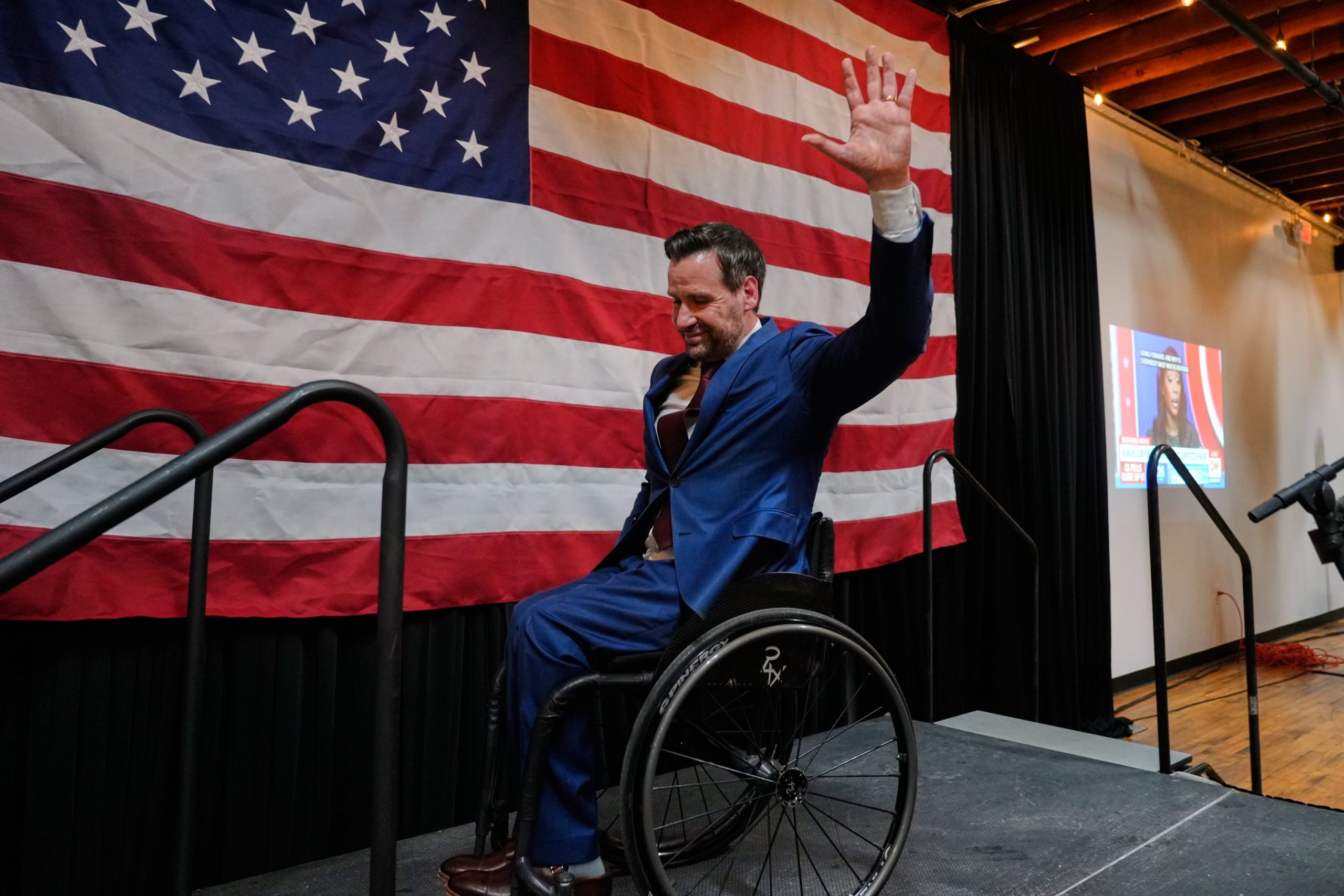
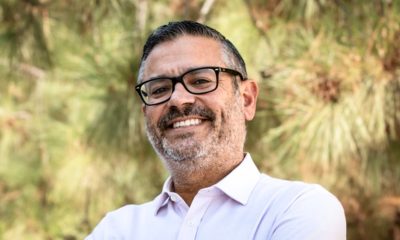
A dozen cancer patients have gathered at the Smokey Row café in Ankeny, a prosperous suburb north of Des Moines. They have come to share their experiences with Rob Sand, the charismatic Democratic candidate for governor of Iowa, a Midwestern state known for its endless cornfields. It is one of the emblematic territories of the so-called Corn Belt, the agricultural heartland of the United States, which overwhelmingly backed Donald Trump in the 2024 election. The Democrats are pinning their hopes on Sand. He is slightly ahead in the polls over his conservative rival, Zach Lahn. He is on the verge of becoming the first Democrat to win a major statewide election in Iowa in nearly two decades.
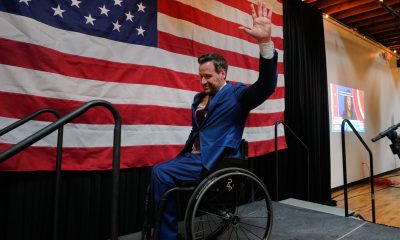
The Democrats’ other leading contender for breaking through in rural America is Josh Turek, a 47-year-old three-time Paralympic basketball medalist. He has used a wheelchair since childhood. He is running for Iowa’s U.S. Senate seat, which has been in Republican hands for 18 years. He is tied in the polls with Republican Ashley Hinson, a former local television presenter. Hinson is young, blonde and has stronger debating skills than Turek, as she demonstrated in the two televised debates. But Turek is steady, persistent and projects an image of resilience and perseverance that draws voters’ interest.
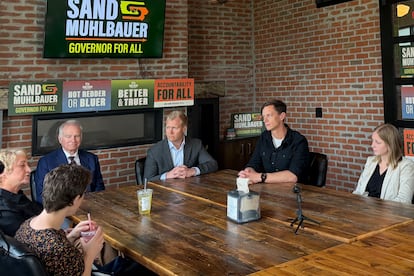
A week spent roaming Des Moines and Cedar Rapids, Iowa’s two largest cities, is enough to realize that the issue weighing most heavily on voters’ minds is water quality. Many wonder whether it has been contaminated by runoff from agricultural chemicals such as fertilizers, pesticides and nitrates. Cancer rates in the state have risen alarmingly in recent years, and many point to the water as a possible cause. The concern surfaces in conversation after conversation. Iowa has the country’s second-highest increase in cancer cases among young adults.
Rob Sand, wearing gray New Balance sneakers and a dark shirt untucked over beige trousers, as if he were a college student, listens patiently as each attendee shares their story at an event attended by EL PAÍS in mid-October. Among them is Isabelle Ireland, who has travelled 37 miles from Saint Marys, to explain that she was diagnosed at 16 with an extraordinarily rare form of cancer and treated with the same chemotherapy that was being used 50 years ago.
Sand asks questions, takes an interest in the details of each case and, above all, avoids making empty promises. He does not deliver a long, grandiose speech: he only pledges to focus the administration’s efforts on patients rather than bureaucracy.
From ‘Vogue Italia’ to hunting a bison
Rob Sand stands around 6 ft 3 in tall. He is 44, with light brown hair, blue eyes and the face of Tom Sawyer. No one would guess that this moderate Midwestern politician, who enjoys bow hunting and keeps a bison head mounted in his office, once worked as a model on the runways of Milan and Paris.
As a young man, he had the languid, carefree look favored by fashion magazines such as Vogue Italia. He even posed for photographers including Terry Richardson, but it is not something he likes to be remembered for. That chapter is behind him. Today, he cultivates the image of an ordinary Iowan concerned with the everyday problems of his neighbors. That is why he is in a café in Ankeny.
Sand is not a conventional politician. Despite his relaxed appearance, he often seems like a man from another era: somewhat moralistic, religious, teetotal and moderate. He opens his rallies with America the Beautiful, one of Donald Trump’s favorite songs; likes to weave Christian references into his speeches; and criticizes political polarization. He describes the two major parties as “private clubs.” He has a particular knack for steering clear of controversial issues and avoiding hot-button disputes.

Some say he bears a certain resemblance to John F. Kennedy. The Wall Street Journal described him as “the Democrat who Republicans fear in red-state America.”
Sand is married to Christine Lauridsen, the chief executive of a company that produces additives for broths and pet food. They have two children. His wife comes from a wealthy family that has financed much of his political career.
Originally from Decorah, a forested area in the state’s northeast, Sand is the son of a doctor and a physiotherapist who worked with children with disabilities. He earned a degree in Political Science from Brown University in Rhode Island, where he attended on a scholarship and wrote a thesis on political participation. After graduating, he spent some time in Europe working as a model. Upon returning to Iowa, he completed a law degree at the state’s university. He often boasts that he turned down Harvard to stay in Iowa, known as the United States’ largest agricultural producer.
He worked for several years as an aide to the state attorney general before running for the elected post of state auditor. His victory drew the attention of the Democratic Party. Since then, he has received numerous endorsements for his ability to win elections in deeply conservative territory.
His experience as auditor has left its mark. He seems almost obsessed with efficiency, repeatedly stressing the need to ensure that every public dollar is spent effectively and not lost to irregularities or bureaucratic waste.
Turek, the image of perseverance
In addition to water quality, Iowa voters are worried about the economy. In recent years, discontent has been growing among the state’s influential farmers. That is where Josh Turek comes in. Seated in his aluminium wheelchair atop a carbon-fibre frame, he has travelled to all 99 counties in Iowa, explaining the impact that tariffs and the war with Iran have had on the region’s economy.
Turek is challenging Ashley Hinson for Iowa’s U.S. Senate seat in a state that Donald Trump carried by more than 13 percentage points two years ago. But he thrives on competition. He has spent his entire life fighting.
Turek was born with spina bifida as a result of his father’s exposure to chemical agents during the Vietnam War. He had already undergone 21 surgical operations by the time he was 10. He has used a wheelchair ever since. But that has never stopped him from taking on challenges.
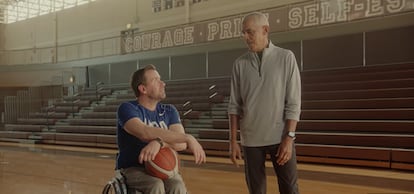
When he saw his younger brothers playing basketball beside the porch of their home, he wanted to join them. At 12, he attended a camp for people with mobility disabilities. What began as a hobby became a way of life.
He went on to become a standout athlete at the University of Minnesota, where he captained the team. In late 2004, he moved to Spain to play for Fundosa ONCE, one of the top teams in the Spanish league, where he became a star. He later signed for a team in Bilbao. Altogether, he spent nearly a decade playing for various clubs in Spain’s wheelchair basketball league, where he met his wife, who is of Dominican origin.
Since 2022, when he won election to the state legislature, he has served as a lawmaker in Des Moines. He often highlights the dozens of times he has worked across party lines with Republicans on issues such as tougher penalties for repeat offenders among immigrants and public safety measures.
Basketball star in Spain
Turek is from Council Bluffs, a small town in the state’s southwest, and was raised in a humble household. His father, an Army veteran, carried the grief throughout his life of losing his first daughter, who drowned in a swimming pool. His mother worked as a social worker for people with intellectual disabilities.
“It’s hard enough to grow up in poverty, but it’s really tough to grow up poor and disabled,” he said at one rally, where he acknowledged he suffered bullying because of his mobility issues. “I didn’t have many friends, I had low self-esteem, and basketball and adaptive sports gave me an escape,” he said.
He retired from professional basketball in 2022 with an impressive record: two gold medals at the Paralympic Games in Rio (2016) and Tokyo (2021), after winning bronze in London.
He returned to Iowa to work for a mobility-device company. His leap into politics came after he grew frustrated seeing how many medical requests for children with disabilities were denied. He ran for the state House and won his seat by six votes. He describes himself as “a prairie populist” and, while he holds progressive views, he has emphasized his moderate credentials on the campaign trail to counter attacks from his opponent. Hinson argues that he is too liberal for Iowa.
The candidate has secured the endorsement of Barack Obama, who recorded a campaign video playing basketball with Turek. “He’s someone who knows how to win,” the former Democratic president said.
During the two televised debates between Turek and Hinson, the Republican demonstrated a quicker ability to respond on her feet than the former athlete, who at times appeared uncomfortable, pausing to drink water as his mouth went dry. Still, he held his own by repeatedly attacking the conservative congresswoman, accusing her of excessive loyalty to Trump and of backing the tariffs, the war with Iran and the Big Beautiful Bill, which has cut healthcare coverage for thousands of Americans.
Hinson accuses him of frequently being absent from his office and skipping sessions of the state legislature. He counters that he has chosen instead to spend time out in the field with voters. Unlike his opponent, Turek does not stand out for his physical presence or his debating skills. But local residents describe him as reliable, persistent and genuinely committed to the community. Polls suggest he has a real chance of wresting the seat from the Republicans. To do so, he will need to sink one final basket.
Sign up for our weekly newsletter to get more English-language news coverage from EL PAÍS USA Edition
America
Obama En Su Regreso A La Batalla Electoral: “La Gente Está Harta De Estar Harta. Se Respira Un Aire De Cambio”

What If The Polls Are Wrong? How The Democrats’ ‘blue Wave’ Could Become A Tsunami Or Fade Into A Ripple

Michael C. Hall: ‘Twenty Years Have Passed For Dexter And For Me, And With Age Come Struggles, Wisdom, Battle Scars…’

Foro World In Progress 2026 De Barcelona, En Directo | Escrivá Advierte De La “enorme Incertidumbre” Para La Política Monetaria Por La Guerra De Irán: “El Contexto Es Preocupante”


-

 Arabia Saudí3 weeks ago
Un Ataque De Los Hutíes Contra El Aeropuerto De Riad Causa Al Menos 12 Muertos Y Más De 300 Heridos
-
DGT2 weeks ago
Viral video in Spain sparks fury over drivers who ‘have no idea how to drive’
-

 %4 weeks ago
Spain Payslip Change Coming In January 2027
-
 America3 weeks ago
Un Tirador Mata A Ocho Personas En Una Vivienda En Pensilvania
-
 House prices4 weeks ago
Spanish House Prices Rise 9pc But Market Growth Stalls In H1 2026
-

 %3 weeks ago
Concrete Balcony Slabs Collapse Onto Marbella Street
-

 America3 weeks ago
Trump Llega A Un Acuerdo Con Putin Para Que Rusia Libere Miles De Barriles De Diésel En Los Mercados Mundiales
-
News from Spain3 weeks ago
Spain police warn parents over WhatsApp scam that uses their children’s real accounts