Connect with us

%

Mallorca’s Eclipse May End With A Rare Green Flash Few Ever See

Published

on

mallorca’s-eclipse-may-end-with-a-rare-green-flash-few-ever-see

A brief green flash could cover the upper edge of the setting Sun. Credit: Omar Amjed / Shutterstock

Once daylight returns after roughly 90 seconds of totality, the show may still reveal an emerald encore. Mallorca’s low sunset could produce a flash so brief and elusive that Jules Verne even sent a heroine around Scotland to find it.

Mallorca’s glimpse at the anomaly would arrive at sunset

The partial eclipse will begin in Palma at 7.38pm on Wednesday August 12, according to Spain’s National Geographic Institute (IGN). The Sun will then disappear completely at around 8.30pm, depending on the observer’s location, with totality lasting approximately a minute and a half across Mallorca.

Maximum eclipse in Palma comes at about 8.32pm, when the Sun will be only two degrees above the horizon. Sunset follows at around 8.49pm to 8.50pm. That final interval could produce an unexpected anomaly. As the Moon begins uncovering the Sun, the remaining crescent will continue sinking towards the Mediterranean and at the final instant of sunset, a tiny part of its upper edge may turn vivid green.

Amando Carbonell Santos, president of the Mallorca Astronomical Observatory, told El País that the unusually low eclipse creates the possibility of two spectacles within minutes of each other. It is, however, still only a possibility. Unlike the eclipse, the green flash cannot be 100% forecasted. Low clouds, haze or dust over the horizon could ruin the moment completely.

The green ‘ray’ is smaller and faster than its name suggests

As stunning as it would still be to capture this, potentially, once-in-a-lifetime event, the phenomenon isn’t actually a huge green beam shooting across the sky. It generally appears as a tiny emerald segment, spot or flicker along the upper edge of the setting Sun, sometimes lasting only a second or two. It happens because the atmosphere bends and separates sunlight much like a prism. When the Sun is almost below the horizon, its different colours are refracted by slightly different amounts.

Red, orange and yellow disappear first. Blue and violet light are more readily scattered through the atmosphere, potentially leaving green as the last visible colour. A clean atmosphere and a distant, unobstructed horizon make the effect easier to catch, which is why it is most closely associated with sunsets over the sea. Carbonell was lucky enough to capture one in a photograph from the Banyalbufar viewpoint in May, according to El País.

Jules Verne turned this sunset phenomenon into a test of love

The flash was already known when Jules Verne published The Green Ray in 1882, but his novel helped transform a piece of atmospheric optics into a romantic legend. Its heroine, Helena Campbell, refuses an arranged marriage until she has witnessed the green ray. Her pursuit takes her around the Scottish coast, following a belief that anyone who sees it will understand their own feelings and never again be mistaken in matters of the heart. When the long-awaited sunset finally arrives, Helena misses the phenomenon because she is looking into the eyes of the man she loves instead. She finds the answer she wanted, even if she fails rather badly at the astronomical part of the journey.

It’s a considerable expedition for something that can disappear faster than a phone camera opens, although I imagine back then they didn’t have to worry about uploading it to their Instagram story two seconds later. 

If the horizons are clear, you could be in luck

An expensive boat trip or remote cliff is not essential, however desirable it is for the ‘gram. The Balearic Government says the eclipse can be watched from home or holiday accommodation if there is a completely clear view towards the western horizon.

Nine official observation areas have also been designated in Mallorca, including Platja de Palma and Platja de Santa Ponça. These locations were selected for accessibility, capacity and emergency cover rather than because they necessarily provide the island’s finest view. With traffic controls affecting the Serra de Tramuntana and other sensitive areas, spectators should avoid setting off for an unofficial viewpoint without checking if roads may be closed or diverted.

Certified eclipse glasses must be worn whenever any part of the Sun is visible. They may be removed only during complete totality and must go back on before the first direct sunlight reappears. Cameras, binoculars and telescopes also require a suitable solar filter fitted over the front of the optics. Ordinary sunglasses are not enough.

If residents and visitors watch carefully, and the atmosphere cooperates, the result could be a stunning view of an emerald crescent as the sun meets the sea during its final moments.

%

Mosquitoes Are Evolving, And The Sprays Designed To Kill Them Are Losing Power

Published

on

mosquitoes-are-evolving,-and-the-sprays-designed-to-kill-them-are-losing-power

The challenge for scientists is staying ahead of an insect that evolves quickly. Photo credit: BAZA Production/SHutterstock

They are smaller than a fingernail, but mosquitoes remain one of the world’s deadliest animals. Now scientists are warning that some mosquito populations are becoming harder to control, with growing evidence that they are developing resistance to the insecticides designed to stop them. Dr Rohit Lakhwani, whose research focuses on mosquito behaviour and insecticide resistance, says scientists are seeing clear signs that mosquitoes are adapting to chemical treatments that have been used for decades.

“We have evidence that mosquitoes are developing resistance to insecticides,” researchers warn, raising concerns over the future effectiveness of one of the main tools used to control mosquito-borne diseases. The discovery is particularly worrying as mosquito populations continue to spread into new areas, including parts of Europe where warmer temperatures have allowed species such as the Asian tiger mosquito (Aedes albopictus) to establish themselves.

The mosquito’s deadly advantage

Mosquitoes are responsible for spreading some of the world’s most serious diseases, including dengue, malaria, Zika and chikungunya. Their danger comes not from the bite itself, but from the pathogens they can carry between humans. For decades, insecticides have played a central role in reducing mosquito numbers. Sprays, treated mosquito nets and chemical treatments have helped control outbreaks and protect millions of people.

But repeated use of the same insecticides has placed pressure on mosquito populations, allowing those with natural resistance to survive and reproduce. Over time, these resistant mosquitoes become more common, making traditional control methods less effective.

How mosquitoes survive insecticides

Scientists have identified several ways mosquitoes can resist insecticides. Some develop changes that prevent chemicals from affecting their nervous system, which is usually the target of many insecticides. Others produce enzymes that break down or neutralise the chemicals before they can cause harm.

Some mosquitoes have also developed changes in their outer body layers, making it harder for insecticides to enter. These adaptations mean that a treatment that once killed large numbers of mosquitoes may no longer work as effectively.

A growing concern for Europe

Although mosquito-borne diseases have historically been associated with tropical regions, Europe has seen increasing concern over mosquito expansion. The Asian tiger mosquito has spread across much of southern Europe, including Spain, Italy and France. Warmer temperatures allow mosquitoes to survive for longer periods, while international travel increases the chances of diseases arriving in areas where the insects are already established.

Spain has experienced outbreaks of mosquito-borne illnesses, including locally transmitted cases of dengue, while health authorities continue monitoring the spread of invasive mosquito species. The combination of climate change, mosquito expansion and insecticide resistance has created a new challenge for public health experts.

Why scientists want new approaches

Researchers say relying on one type of insecticide is not a long-term solution. Mosquito control programmes are increasingly looking at alternative methods, including rotating different chemicals, improving surveillance and using biological control techniques.

The aim is to reduce mosquito numbers while slowing the development of further resistance. Scientists are also studying mosquito genetics to understand how resistance develops and spreads through populations. Knowing which mechanisms mosquitoes use to survive can help researchers design better strategies to control them.

The battle against a tiny enemy

The mosquito’s ability to adapt has made it one of the most successful insects on Earth. Its size makes it easy to underestimate, but its impact is enormous. According to health organisations, mosquito-borne diseases affect hundreds of millions of people worldwide every year. The challenge for scientists is staying ahead of an insect that evolves quickly.

Every time a new control method is introduced, mosquito populations are placed under pressure to adapt. Those that survive pass their resistance on to future generations. The result is a constant battle between human technology and mosquito evolution.

A warning as summer mosquito numbers rise

For people across Europe, the issue is becoming increasingly relevant during the warmer months when mosquito activity rises. Experts advise reducing standing water around homes, using insect screens where possible and taking precautions against bites, particularly in areas where mosquito populations are increasing.

The tiny insect may be a familiar nuisance on summer evenings, but scientists warn it should not be underestimated. Mosquitoes have survived for millions of years by adapting to changes around them. Now, researchers are watching to see how far that ability to adapt will take them, and whether humanity can develop new ways to keep up.

Continue Reading

%

Mijas Deploys Drone Cleaning Trial On Public Buildings

Published

on

mijas-deploys-drone-cleaning-trial-on-public-buildings

Mijas trials drone technology in the Pueblo. Credit Ayto. Mijas

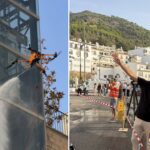
Mijas has launched a pilot scheme using drone technology to clean hard-to-reach sections of council buildings. Work has begun focusing on the glass lift in Mijas Pueblo and the side facade of the town hall as part of upgrades under the new public buildings cleaning contract.

This approach modernises local services by bringing in advanced tools already adopted by forward-looking administrations elsewhere in Spain. Goals centre on delivering greater efficiency, stronger protection for staff and superior upkeep of council properties. The pueblo blanco is meant to stay ‘blanco’ is the message from the council.

New contract expands cleaning capabilities

New terms and conditions in the cleaning agreement introduce tasks rarely performed before, including exterior treatment of large glazed areas and other hard-to-reach zones. Officials behind the contract sought the strongest available technology and resources to raise standards for residents. Success in the current trial could see the method rolled out across further municipal sites.

Safety measures and operational setup

Strict protocols support the operation, especially in terms of public safety. Authorisation for drone flight was achieved, the surrounding area cordoned off and a lifeline installed in line with current rules for urban work of this kind.

Clece, the firm awarded the contract, favours the system as it gains in both speed and workplace safety. Group manager for Malaga Andrés Alarcón noted that drones reach places where conventional methods demand elaborate rope access or scaffolding. “Drones complete the job faster and more efficiently while cutting risks for teams by limiting height work whenever possible,” he said.

How the drone system works

A drone linked to a filtered water supply removes limestone and prevents marks on glass. Depending on the dirt present, the unit can use cold or hot water plus specialised detergents to get a high-quality finish.

Path toward wider adoption

Results from the pilot will guide decisions on applying the same technique to other buildings that share similar features. The move is about bettering the council’s commitment to public services that grow more modern, efficient and aligned with technological progress.

Continue Reading

%

Africa’s Richest Monarch Celebrates 27 Years

Published

on

africa’s-richest-monarch-celebrates-27-years

Pedro Sánchez and King Mohammed VI. Credit: maroc.ma/ar

King Mohammed VI has completed 27 years ruling Morocco, confirming his place as Africa’s richest monarch while the kingdom’s industrial expansion continues to draw praise from world leaders. Yet the same week thousands of young Moroccans entered Spain’s North African enclave, exposing social gaps that still drive people abroad and testing the future of the Madrid-Rabat partnership.

Congratulatory messages arrived for the royal anniversary celebrations held at the palace in Tetouan. Britain’s King Charles III, Dutch King Willem-Alexander, Belgian King Philippe, Swedish King Carl XVI Gustaf and Jordan’s King Abdullah II all sent good wishes. Oman’s Sultan Haitham bin Tarik, Bahrain’s King Hamad bin Isa Al Khalifa, Saudi Crown Prince Mohammed bin Salman, Chinese President Xi Jinping, Russian President Vladimir Putin, Egyptian President Abdel Fattah El-Sissi and Senegal’s Bassirou Diomaye Faye also paid tribute. Estimates put Mohammed VI’s personal fortune near $5.7 billion, largely through the royal family’s Al Mada holdings.

From quiet economy to industrial strength

When Mohammed VI took power in 1999 after King Hassan II, Morocco relied heavily on farming, tourism, phosphates and money sent home by workers abroad. Factories stayed limited and many rural families struggled. Heavy investment since then has altered the picture. Ports, roads, high-speed trains, solar and wind projects plus industrial zones have taken shape. Tangier Med now ranks among Africa’s top ports, giving the country a clear logistics gateway to Europe and beyond.

Car and aircraft makers have set up plants and supply chains, drawn by trade deals and closeness to European markets. Per-person income has nearly doubled since the late 1990s. Growth reached about 4.8 per cent in 2025, and forecasts point to 4.4 per cent this year, helped by farming recovery and building work. Foreign investment almost doubled to roughly $3.34 billion last year, with electric vehicles, batteries and clean energy projects leading the way. Defence ties have grown too, including a ten-year roadmap with the United States running to 2036 and deals covering missiles, Apache helicopters and possible F-35 jets.

King Mohammed VI of Morocco has named the 1,055-km Tiznit–Dakhla road the President Donald J. Trump Highway. pic.twitter.com/2juYzJwmvV

— Globe Eye News (@GlobeEyeNews) July 27, 2026

Social gaps and the border pressure

Benefits have not reached everyone. Youth joblessness remains high and inequality still bites. Protests led by young people flared in September 2025 over work, hospitals and schools. Some turned messy before officials promised talks and extra funding. Euro Weekly News has already reported the full details of the late-July events at the Spanish North African enclave, when an estimated 50,000 to 60,000 people crossed by land and sea. At least 67 died. Most went back within a day or two once Spanish forces regained control.

Spanish officials pointed to people-smuggling gangs and social-media claims that the border stood open after a court ruling. Questions remain over how freely Moroccan forces acted in the early hours. EU figures show around 275,000 cases of Moroccan citizens found irregularly across the bloc between 2021 and 2025. The episode left Madrid under pressure from other European capitals and reminded both sides how population movements can still dominate the relationship.

Looking ahead for Madrid and Rabat future

Trade between the two countries now runs well over €20 billion a year, making Spain Morocco’s top commercial partner. Cars, wiring, clothes, fruit, vegetables and energy move both ways. Plans for a rail tunnel under the Strait of Gibraltar keep moving forward, with studies confirming it is technically possible. Realistic opening dates sit between 2035 and 2040. Spanish funding for technical work has continued even after the recent border pressure.

Madrid has chosen careful language, calling Morocco a reliable partner on border management while reinforcing the enclave’s sea barrier. Future ties will rest on balancing strong business links and long-term tunnel vision against repeated population movements and youth frustration at home. Mohammed VI’s next years in power will show whether industrial gains can finally create enough jobs to keep more young Moroccans from risking the journey north.

The next few days of diplomatic tussle will only tell what happens to the relationship.

Continue Reading

Trending

Copyright © 2017 Spanish Property & News