Connect with us

%

Mijas Deploys Drone Cleaning Trial On Public Buildings

Published

on

mijas-deploys-drone-cleaning-trial-on-public-buildings

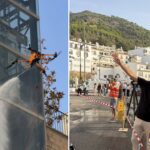
Mijas trials drone technology in the Pueblo. Credit Ayto. Mijas

Mijas has launched a pilot scheme using drone technology to clean hard-to-reach sections of council buildings. Work has begun focusing on the glass lift in Mijas Pueblo and the side facade of the town hall as part of upgrades under the new public buildings cleaning contract.

This approach modernises local services by bringing in advanced tools already adopted by forward-looking administrations elsewhere in Spain. Goals centre on delivering greater efficiency, stronger protection for staff and superior upkeep of council properties. The pueblo blanco is meant to stay ‘blanco’ is the message from the council.

New contract expands cleaning capabilities

New terms and conditions in the cleaning agreement introduce tasks rarely performed before, including exterior treatment of large glazed areas and other hard-to-reach zones. Officials behind the contract sought the strongest available technology and resources to raise standards for residents. Success in the current trial could see the method rolled out across further municipal sites.

Safety measures and operational setup

Strict protocols support the operation, especially in terms of public safety. Authorisation for drone flight was achieved, the surrounding area cordoned off and a lifeline installed in line with current rules for urban work of this kind.

Clece, the firm awarded the contract, favours the system as it gains in both speed and workplace safety. Group manager for Malaga Andrés Alarcón noted that drones reach places where conventional methods demand elaborate rope access or scaffolding. “Drones complete the job faster and more efficiently while cutting risks for teams by limiting height work whenever possible,” he said.

How the drone system works

A drone linked to a filtered water supply removes limestone and prevents marks on glass. Depending on the dirt present, the unit can use cold or hot water plus specialised detergents to get a high-quality finish.

Path toward wider adoption

Results from the pilot will guide decisions on applying the same technique to other buildings that share similar features. The move is about bettering the council’s commitment to public services that grow more modern, efficient and aligned with technological progress.

%

WHO Warns Ultra-Processed Food Giants Are Fighting Health Laws In Court

Published

on

who-warns-ultra-processed-food-giants-are-fighting-health-laws-in-court

Researchers found that around three-quarters of the cases were ultimately unsuccessful. Photo credit: Beauty-box/Shutterstock

Food companies have challenged hundreds of government measures aimed at tackling obesity, with the WHO accusing the industry of delaying policies designed to protect public health The battle over unhealthy food is no longer only being fought in supermarkets. Governments around the world are introducing warning labels, sugar taxes and advertising restrictions in an attempt to tackle rising rates of obesity and diet-related disease.

But according to the World Health Organization, some of the world’s biggest food companies are fighting back through the courts. An international investigation has uncovered hundreds of legal challenges brought against governments attempting to introduce measures aimed at changing how unhealthy products are sold and promoted. The findings have triggered a response from WHO Director-General Dr Tedros Adhanom Ghebreyesus, who accused parts of the food industry of using legal action to slow down public health policies.

Hundreds of legal battles uncovered

The investigation, led by The Guardian alongside Lighthouse Reports, researchers and media partners across four continents, examined lawsuits filed between 2010 and 2025. It identified 235 legal challenges against policies including front-of-pack warning labels, sugary drink taxes, restrictions on marketing aimed at children and rules limiting health claims on food packaging.

Researchers found that around three-quarters of those cases were ultimately unsuccessful. However, the legal battles still had an impact, delaying health measures by an average of two and a half years. Public health experts say those delays can prevent governments from introducing policies designed to reduce consumption of products linked to obesity, diabetes and heart disease.

The fight over food moves into courtrooms

For years, campaigns against unhealthy diets focused mainly on personal choices, encouraging people to eat better and exercise more. That approach has increasingly shifted as governments argue that consumers are making choices in an environment shaped by aggressive marketing, cheap processed products and easy access to foods high in sugar, salt and unhealthy fats. As a result, countries have introduced stronger measures designed to influence behaviour before health problems develop.

Warning labels on products, restrictions on advertising to children and taxes on sugary drinks have become some of the most common tools used by governments trying to reduce the impact of poor diets. Food manufacturers have challenged many of those measures, arguing that they can damage businesses and restrict consumer choice.

Major companies named

The investigation found that 38 per cent of identifiable lawsuits were linked to eight major parent companies: Coca-Cola, PepsiCo, Mondelēz International, Kellogg’s, Danone, Ferrero, Xignux and Heartland Food Products Group. The companies involved have argued that legal challenges are a legitimate way to question regulations they believe are unfair, excessive or unsupported by evidence.

Health organisations disagree, arguing that legal battles can delay policies that could prevent illness and reduce pressure on healthcare systems. The WHO says governments should not abandon measures designed to improve public health because of legal threats from powerful industries.

Why ultra-processed food is under scrutiny

Ultra-processed foods include many packaged snacks, sugary drinks, confectionery, processed meats, ready meals and other products made using industrial ingredients and additives. Not all processed foods are considered unhealthy, but research has increasingly linked diets high in ultra-processed products with higher risks of obesity, cardiovascular disease, type 2 diabetes and other serious health conditions.

Scientists continue to study exactly why these foods are associated with poorer health outcomes, but concern has grown enough for governments to introduce new regulations. The WHO argues that individuals alone cannot solve the problem when unhealthy products are heavily marketed and widely available.

A global health battle

The legal disputes uncovered by the investigation have taken place in countries including Mexico, Brazil, Colombia, the United Kingdom and the United States. While many lawsuits have failed, health campaigners say the process itself can slow progress by forcing governments to spend time and money defending policies instead of implementing them. Dr Tedros has called on countries to continue introducing measures backed by scientific evidence and has urged food companies to work with governments rather than challenge public health protections.

The dispute reflects a much bigger argument over who should decide how food is regulated: governments responding to health data, or companies defending their commercial interests. For shoppers, the outcome could affect everything from the labels on supermarket products to the adverts children see online. The fight over ultra-processed food may be happening in courtrooms, but its consequences could end up on every kitchen table.

Continue Reading

%

The King’s Fury Over Ceuta Crisis As Felipe VI Delivers One Of The Strongest Statements Of His Reign

Published

on

the-king’s-fury-over-ceuta-crisis-as-felipe-vi-delivers-one-of-the-strongest-statements-of-his-reign

The King watched the events in Ceuta with “great concern and indignation”. Photo credit: La casa Real de S.M el Rey on X

Spain’s monarch breaks with tradition after deadly migration emergency, demanding the State guarantees the security of Ceuta and Melilla Spain’s King almost never speaks like this but as politicians traded accusations over the worst migration crisis to hit Ceuta in years, Felipe VI abandoned the measured language expected of a constitutional monarch and delivered a message that has reverberated across the country.

The King said he had watched the events in the North African enclave with “great concern and indignation”, before issuing a serious warning: “The State must ensure the security of Ceuta and Melilla and prevent these events from happening again.” For a monarch whose constitutional role depends on political neutrality, the choice of words was extraordinary. It was not simply a message of sympathy. It was a clear declaration that what unfolded on Spain’s southern frontier was unacceptable.

A crisis that reached the Royal Palace

The statement, issued by the Royal Household from the Marivent Palace in Mallorca, came after a day of unprecedented scenes in Ceuta that stunned Spain and much of Europe. Thousands of migrants crossed into the autonomous city in a matter of hours, overwhelming security forces, emergency services and local authorities. The humanitarian cost quickly became apparent, with dozens of lives lost during the chaos and countless others requiring medical attention. 

As the scale of the emergency became clear, Felipe VI remained in constant contact with Prime Minister Pedro Sánchez, Ceuta president Juan Jesús Vivas, Melilla president Juan José Imbroda and opposition leader Alberto Núñez Feijóo. Behind palace walls, the King was being kept informed as one of Spain’s most sensitive border emergencies unfolded. When the Royal Household finally broke its silence, the language reflected the seriousness of the moment.

Not politics, but a constitutional warning

Spanish monarchs do not govern, they do not set migration policy, negotiate with neighbouring countries or direct the security forces. Their role is deliberately removed from day-to-day politics. That is precisely why Felipe VI’s intervention has attracted so much attention.Rather than criticising the Government or entering the political battle now raging in Madrid, the King focused on what he described as the State’s constitutional responsibility: protecting Spanish territory and ensuring the security of its citizens.

He also insisted that Ceuta and Melilla should receive “a united, clear and determined message” that they have the backing of the entire country. For many observers, the King’s use of the word “indignation” was almost as significant as his demand that the crisis must never be repeated.

How did Spain get here?

The political fallout has been immediate, the Government has admitted it failed to foresee the scale of the mass crossings, acknowledging that better intelligence could have changed the response. Opposition parties have accused ministers of losing control of Spain’s borders, while pressure continues to mount for answers over what happened in the hours before thousands of migrants reached Ceuta.

Questions have also been raised about Morocco’s role after reports suggested border controls on the Moroccan side were initially relaxed before later being reinforced. Madrid and Rabat remain in diplomatic contact as investigators attempt to establish exactly how one of the largest irregular border crossings in Spanish history was able to develop so quickly.

Ceuta at the centre of Europe once again

Although geographically located in North Africa, Ceuta is Spanish territory and forms part of the European Union’s external border. That makes every migration crisis there an issue that extends far beyond Spain. The emergency has once again exposed the enormous pressure placed on the city whenever diplomatic tensions or migration flows suddenly intensify. For residents, the scenes were unlike anything they had experienced before.

Emergency workers, police officers, Guardia Civil personnel and military units were stretched to their limits as they dealt with exhausted migrants, frightened families and an unfolding humanitarian tragedy. In his statement, Felipe VI paid tribute to all those who worked throughout the crisis, acknowledging the professionalism shown under exceptionally difficult circumstances.

A message that carries weight

Royal speeches are carefully crafted, every sentence is scrutinised, every word considered and every phrase weighed for constitutional neutrality. That is why Saturday’s statement immediately stood apart. The King did not simply express sadness over the loss of life or solidarity with those affected. He made it clear that Spain has an obligation to guarantee the security of Ceuta and Melilla and that the events witnessed this week cannot become the new normal.

Whether his intervention changes the political debate remains to be seen. What is certain is that when Spain’s monarch, a figure renowned for measured language and restraint, publicly says he is “indignant”, the country takes notice. For the people of Ceuta, who have spent days living through one of the darkest chapters in the city’s recent history, the King’s words will be seen as recognition that what happened was not simply another migration incident. It was a national crisis, and, in the eyes of Spain’s Head of State, one that must never be allowed to happen again.

Continue Reading

%

Mallorca’s Eclipse May End With A Rare Green Flash Few Ever See

Published

on

mallorca’s-eclipse-may-end-with-a-rare-green-flash-few-ever-see

A brief green flash could cover the upper edge of the setting Sun. Credit: Omar Amjed / Shutterstock

Once daylight returns after roughly 90 seconds of totality, the show may still reveal an emerald encore. Mallorca’s low sunset could produce a flash so brief and elusive that Jules Verne even sent a heroine around Scotland to find it.

Mallorca’s glimpse at the anomaly would arrive at sunset

The partial eclipse will begin in Palma at 7.38pm on Wednesday August 12, according to Spain’s National Geographic Institute (IGN). The Sun will then disappear completely at around 8.30pm, depending on the observer’s location, with totality lasting approximately a minute and a half across Mallorca.

Maximum eclipse in Palma comes at about 8.32pm, when the Sun will be only two degrees above the horizon. Sunset follows at around 8.49pm to 8.50pm. That final interval could produce an unexpected anomaly. As the Moon begins uncovering the Sun, the remaining crescent will continue sinking towards the Mediterranean and at the final instant of sunset, a tiny part of its upper edge may turn vivid green.

Amando Carbonell Santos, president of the Mallorca Astronomical Observatory, told El País that the unusually low eclipse creates the possibility of two spectacles within minutes of each other. It is, however, still only a possibility. Unlike the eclipse, the green flash cannot be 100% forecasted. Low clouds, haze or dust over the horizon could ruin the moment completely.

The green ‘ray’ is smaller and faster than its name suggests

As stunning as it would still be to capture this, potentially, once-in-a-lifetime event, the phenomenon isn’t actually a huge green beam shooting across the sky. It generally appears as a tiny emerald segment, spot or flicker along the upper edge of the setting Sun, sometimes lasting only a second or two. It happens because the atmosphere bends and separates sunlight much like a prism. When the Sun is almost below the horizon, its different colours are refracted by slightly different amounts.

Red, orange and yellow disappear first. Blue and violet light are more readily scattered through the atmosphere, potentially leaving green as the last visible colour. A clean atmosphere and a distant, unobstructed horizon make the effect easier to catch, which is why it is most closely associated with sunsets over the sea. Carbonell was lucky enough to capture one in a photograph from the Banyalbufar viewpoint in May, according to El País.

Jules Verne turned this sunset phenomenon into a test of love

The flash was already known when Jules Verne published The Green Ray in 1882, but his novel helped transform a piece of atmospheric optics into a romantic legend. Its heroine, Helena Campbell, refuses an arranged marriage until she has witnessed the green ray. Her pursuit takes her around the Scottish coast, following a belief that anyone who sees it will understand their own feelings and never again be mistaken in matters of the heart. When the long-awaited sunset finally arrives, Helena misses the phenomenon because she is looking into the eyes of the man she loves instead. She finds the answer she wanted, even if she fails rather badly at the astronomical part of the journey.

It’s a considerable expedition for something that can disappear faster than a phone camera opens, although I imagine back then they didn’t have to worry about uploading it to their Instagram story two seconds later. 

If the horizons are clear, you could be in luck

An expensive boat trip or remote cliff is not essential, however desirable it is for the ‘gram. The Balearic Government says the eclipse can be watched from home or holiday accommodation if there is a completely clear view towards the western horizon.

Nine official observation areas have also been designated in Mallorca, including Platja de Palma and Platja de Santa Ponça. These locations were selected for accessibility, capacity and emergency cover rather than because they necessarily provide the island’s finest view. With traffic controls affecting the Serra de Tramuntana and other sensitive areas, spectators should avoid setting off for an unofficial viewpoint without checking if roads may be closed or diverted.

Certified eclipse glasses must be worn whenever any part of the Sun is visible. They may be removed only during complete totality and must go back on before the first direct sunlight reappears. Cameras, binoculars and telescopes also require a suitable solar filter fitted over the front of the optics. Ordinary sunglasses are not enough.

If residents and visitors watch carefully, and the atmosphere cooperates, the result could be a stunning view of an emerald crescent as the sun meets the sea during its final moments.

Continue Reading

Trending

Copyright © 2017 Spanish Property & News