Connect with us

European News

Man bills German neighbour €3,500 for leaves falling into his garden

Published

on

Three of the trees are particularly close to the neighbouring house. Photo credit: Valerie Quemener/Shutterstock

Most people accept that a garden comes with a certain amount of sweeping, raking and clearing up. But one homeowner in Germany says the leaves falling from his neighbour’s trees have become such a burden that he wants more than €3,500 a year to cover the work.

He claims he has to collect around 250 wheelbarrows of leaves annually, as well as repeatedly clearing his gutters and paying  to dispose of the garden waste. His neighbour, meanwhile, owns 14 oak trees, some of which are around 200 years old and stand close to the complainant’s property. The dispute has turned an ordinary autumn nuisance into a costly disagreement over who should pay for the mess created by trees growing next door.

Fourteen oak trees are at the centre of the dispute

The neighbour being asked to pay owns 14 oak trees, estimated to be around 200 years old. Three of them stand just one metre from the other man’s house. The trees are approximately 25 metres tall, with canopies measuring between 18 and 24 metres across. Their branches extend between nine and 12 metres beyond the property boundary, according to the measurements reported by the complainant.

Apparently the problem is not just limited to a few leaves landing on the lawn, the man says the falling foliage and acorns create work throughout the autumn, particularly between weeks 40 and 48 of the year, when he claims he has to clear his gutters repeatedly. He says the trees do not comply with the required distance from the neighbouring property, adding another point of contention to the dispute. The owner of the oaks has not been reported as agreeing to pay the requested amount.

How he calculated the €3,540 demand

The homeowner has put a price on every part of the work he says the trees create. The largest part of his claim is for cleaning the gutters. He says he has to carry out 18 additional cleans each year, taking two and a half hours each time. That amounts to 36 hours of work, which he values at €40 an hour. His calculation comes to €1,800 for gutter cleaning alone.

He then adds the time spent collecting leaves from the garden. During nine weeks of the year, he says he spends four hours each week raking and clearing the fallen foliage. At the same hourly rate, that adds another €1,440 to his demand. Finally, he wants €300 to cover the removal of six containers of garden waste, calculated at €50 each. Together, the three amounts bring his annual demand to €3,540.

A neighbour dispute with a hefty price tag

The case has attracted attention globally on social media because of the sheer scale of the compensation being requested for what is usually considered an unavoidable part of living near trees. For the complainant, however, the issue is not simply having to sweep up a few leaves. He argues that the volume of foliage and acorns creates repeated work, takes up hours of his time and comes with additional disposal costs due to this his demand is for an annual payment to cover the work he says he has to carry out every autumn.

The figures are his own calculation of the time and expense involved. There is no indication in the report that a court has ordered the neighbour to pay the money, or that the €3,540 demand has been accepted. For now, the dispute comes down to 14 old oak trees, one neighbouring garden and a homeowner who says he is tired of spending so much of his year clearing up after someone else’s trees.


%

Hackers Tried To Turn Blood Bank Fridges Into Ovens In Chilling Cyberattack

Published

on

hackers-tried-to-turn-blood-bank-fridges-into-ovens-in-chilling-cyberattack

The identity of the hackers has not been disclosed. Photo credit: Peter Porrini/Shutterstock

Patients needing transfusions and medicines made from donated plasma could have been affected by a cyberattack on France’s national blood service, after hackers tried to tamper with refrigeration systems at three sites.

The attempt was detected before any blood products were damaged, and the French Blood Establishment (EFS) says no supplies were lost and no health consequences have been identified. But the incident has exposed a disturbing weakness: equipment responsible for keeping vital medical products safe can be put at risk through a supplier’s computer systems.

Hackers targeted blood storage facilities

The attack took place on Monday, November 2, and targeted refrigeration equipment used at three EFS sites storing plasma. The blood service said temperature and defrosting settings had been changed to extremely high levels. The affected cold rooms normally keep products at around minus 30°C.

French media reported that hackers attempted to raise the temperature to 110°C. The EFS has not confirmed that precise figure, saying only that the settings were pushed to very high levels.

The cold rooms held bags of plasma intended for transfusions, as well as plasma used in the manufacture of medicines. Plasma is the liquid part of blood and contains proteins used in treatments for a range of serious conditions. It must be stored under carefully controlled conditions to remain suitable for medical use.

Alarms stopped the attack before products were damaged

The EFS said its monitoring and alarm systems quickly detected the abnormal settings. Staff were then able to intervene, securing the products or transferring them to other storage facilities before they were compromised.

Blood collection and distribution continued without interruption, according to the service. Hospitals and patients were therefore not left facing a disruption to supplies, and the EFS reported no loss of blood products or samples.

Attack came through refrigeration supplier

The hackers did not directly break into the EFS’s own computer network. The attack affected equipment supplied by Coolworld, a company providing refrigeration services. Coolworld acknowledged a cybersecurity incident involving a limited number of its units.

In a statement, the company said the vulnerability reported in the media related to a component supplied by a third party and was outside its direct control. It said it had responded promptly and taken appropriate measures. Coolworld did not provide further details about the affected customer or the method used by the attackers.

French authorities are investigating how the incident happened and how many refrigeration units may have been exposed. The Health Ministry said technical investigations were continuing, while remote access to the affected refrigerators was disabled.

Could similar attacks put other essential supplies at risk?

The identity of the hackers has not been disclosed, and there is no confirmed link between this incident and recent attacks on supermarket refrigeration systems elsewhere in Europe. Those attacks have caused serious disruption for retailers, with hackers remotely altering the settings of fridges and freezers. Food had to be discarded after temperatures rose, leaving businesses with substantial losses. The targeting of blood storage facilities brings the potential consequences into sharper focus: instead of spoiled groceries, a successful attack could have put medical supplies needed by hospitals at risk.

The incidents also raise questions about the security of equipment connected to the internet for remote monitoring and maintenance. A refrigeration system may appear far removed from the digital networks used to manage patient records, but it still relies on software and remote access. If those systems are compromised, the consequences can move beyond computers and into the physical world.

For now, the EFS says its blood supplies remain safe and its services are operating normally. The alarms worked, staff acted in time and no plasma was lost. Investigators still need to establish how the attackers gained access and whether other equipment could be vulnerable. The attempted attack did not cause a shortage or interrupt treatment, but it showed how quickly a cyber incident can threaten something hospitals cannot do without.

Continue Reading

%

Supermarket Cyberattacks Spread Across Europe

Published

on

supermarket-cyberattacks-spread-across-europe

Freezers turn to cookers across Europe. Credit: Wiliamhero – Shutterstock

Supermarkets across Europe are facing a growing cybersecurity crisis after suspected hackers remotely interfered with refrigeration systems, causing temperatures in fridges and freezers to soar and forcing retailers to throw away large quantities of food.

The latest incidents were reported in Sweden this morning, but have now spread to Belgium, Luxembourg, Ireland and Estonia, with several major supermarket chains affected. The attacks follow a similar incident in France last month, when hundreds of stores suffered refrigeration failures after their cooling systems were compromised.

The growing number of incidents has raised questions about the security of supermarket equipment connected to the Internet, particularly systems which allow refrigeration units to be monitored and controlled remotely.

Sweden supermarkets hit by overnight attacks

Sweden was among the first countries to report problems on Monday, November 2, with supermarket chains ICA and Coop confirming incidents affecting refrigeration equipment.

ICA said a limited number of its stores had experienced problems overnight, while Coop reported that six outlets had been affected.

One ICA supermarket in Sjöbo reported that its refrigerators and freezers had been remotely set to 50°C, leaving staff with spoiled stock to remove. At another ICA store in Stockholm, employees discovered that its freezers had stopped working following an overnight incident.

Sweden’s National Cybersecurity Centre is investigating several incidents involving supermarket refrigeration systems. Its director has also warned about exposed operational technology devices which need security updates and patches.

Belgium and Luxembourg report widespread disruption

Belgium has also suffered serious disruption, with several supermarket groups reporting problems. Around 40 Delhaize stores were affected by an IT incident involving their refrigeration systems, according to reports from Belgian news agencies.

Carrefour Belgium confirmed that 15 of its more than 700 stores had experienced problems, although the company described the impact as limited. Five Spar supermarkets operated by the Colruyt Group also reported attacks on their refrigeration equipment.

The disruption extended into neighbouring Luxembourg, where Delhaize stores also experienced refrigeration problems. Technicians were called out overnight to disconnect affected equipment and prevent further damage.

One Belgian refrigeration company said attackers had switched evaporators inside the cooling units into defrost mode, causing temperatures to rise.

Irish supermarkets forced to remove food

Ireland has now joined the list of affected countries after SuperValu confirmed that refrigeration equipment at 13 of its 223 stores had been affected. The supermarket chain’s parent company, Musgrave, said chilled and frozen products had been removed from sale as a precaution. Stores stayed open, with other products available to customers.

The company said the incident involved a specific model of refrigeration equipment and that its monitoring systems had alerted staff to the problem. Musgrave is working with equipment suppliers and cybersecurity specialists to investigate what happened and restore normal operations.

Estonia reports temperatures reaching 50°C

An incident was also reported in Estonia, where a supermarket refrigeration system was accessed remotely and its temperature settings raised to 50°C. Technology supplier Kitman Coldtech confirmed that one of its customers had been affected. The supermarket chain Selver subsequently confirmed that one of its outlets had experienced the problem. The incident was reportedly dealt with within minutes, limiting the damage. One suspects, it was dealt with by detaching fridges from the Internet.

France suffered an earlier attack affecting hundreds of supermarkets

The latest developments follow a much larger incident in France last month, when hackers gained access to refrigeration control systems used by hundreds of supermarkets. French authorities reported that up to 700 supermarkets were affected, with temperatures in some refrigeration units reaching 50°C.

Intermarché, Carrefour, Monoprix and other major retailers reported disruption and substantial food losses. Some stores also experienced fires linked to overheating equipment.

Investigators examined how attackers had manipulated remotely controlled refrigeration systems, interfering with temperature controls and defrost programmes. The incidents exposed weaknesses in older equipment which had not received important security updates.

Could Spanish supermarkets be next?

There have been no confirmed reports of Spanish supermarket refrigeration systems being targeted in this latest wave of incidents.

However, the developments are likely to raise concerns among retailers in Spain, where major supermarket chains also depend on electronically monitored refrigeration systems to keep fresh and frozen products at safe temperatures.

The attacks go to show how equipment designed to make supermarket operations more efficient can also create potential security weaknesses if it is not properly protected.

Spain’s National Cybersecurity Institute (INCIBE) is providing advice and assistance on digital security incidents, while the Spanish Interior Ministry’s Cybersecurity Coordination Office publishes guidance on protecting connected and industrial equipment.

Who is behind the supermarket attacks?

Despite the growing number of incidents, investigators have yet to identify those responsible. No group has publicly claimed responsibility, and authorities have not established whether all the reported incidents are connected.

The absence of obvious ransom demands has also raised questions about whether the intention is financial gain or deliberate disruption. For supermarket operators, the immediate concern is protecting refrigeration equipment and preventing further food waste.

For shoppers, the incidents raise a wider question about how vulnerable essential food supplies can become when everyday supermarket equipment is connected to the internet.

Continue Reading

%

Europe Erupts In Halloween Unrest – What About Spain?

Published

on

europe-erupts-in-halloween-unrest-–-what-about-spain?

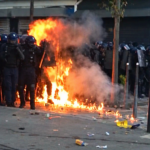
Police in Paris had to deal with petrol bombs. Credit: Viral images X

Spain has escaped the widespread Halloween looting feared by police after a major nationwide security operation, but violence broke out in France and Germany as demonstrations continued across Europe.

Spanish police identified more than 1,000 people and made at least 11 arrests during Saturday night’s operation targeting suspected organisers and participants linked to the Blocus movement.

Meanwhile, Germany experienced serious disturbances after largely peaceful youth demonstrations, with shops looted in Frankfurt and police attacked in several cities. France also saw fresh clashes following another weekend of demonstrations involving hundreds of thousands of people.

Although the countries share concerns about living costs, housing, education and public services, the protests are not all connected to one organisation or coordinated European campaign.

Spain: Police prevent widespread Halloween looting

Spain’s major Halloween security operation appears to have prevented the widespread disturbances authorities had feared following last weekend’s violence in Barcelona.

‼️⚠️ En lo que llevamos de tarde ya han detenido a más de 450 personas en Barcelona #blocus https://t.co/CFv395nvzp

— Maria 🩷 (@maariaprv) October 31, 2026

More than 1,000 people were identified and at least 11 arrested during Saturday’s nationwide operation, according to reporting published on Sunday morning by El Español. Police seized dozens of potentially dangerous objects, including knives and balaclavas, while security measures were reinforced in major cities.

Barcelona and Madrid were among the locations where police restricted access to central areas and monitored groups of young people following online calls for gatherings. The operation followed serious disturbances on October 24, when groups of young people looted businesses, smashed shop windows and clashed with police in Barcelona.

Investigators subsequently turned their attention to Blocus, a movement whose name appeared in online calls encouraging gatherings and alleged acts of vandalism.

On Friday, October 30, the Guardia Civil arrested a 20-year-old in Picanya, Valencia province, described by investigators as the alleged founder and main driving force behind Blocus in Spain.

The Spanish Interior Ministry also confirmed separate arrests in Malaga, Fuengirola, Marbella, Tenerife and Bilbao involving people suspected of promoting looting, sabotage and violence.

The Malaga arrest was particularly relevant to Costa del Sol residents. A 20-year-old was detained over alleged calls to loot businesses in Malaga city, Fuengirola and Marbella during Halloween night.

Although the police operation prevented further spread of a call to violence, and after many shops and businesses boarded up their windows, potential rioters appear to have been dissuaded from carrying out their threats. Investigations into the online networks and alleged organisers are continuing.

France: 320,000 protesters take to the streets as clashes erupt

France experienced another major day of demonstrations on Saturday, October 31, with the Interior Ministry estimating that approximately 320,000 people took part nationwide. Around 70,000 demonstrators gathered in Paris, although the overall turnout was lower than the previous two weekends.

The demonstrations began with students protesting against deteriorating school facilities, teacher shortages and education funding. They have since attracted trade unions and other groups angry about living costs, housing and public services. Most authorised marches proceeded peacefully, but tensions increased when demonstrations dispersed.

Police used tear gas and carried out charges against groups in Paris, Lyon, Toulouse and Marseille. Authorities said they had prevented more radical groups from breaking away from the main demonstrations to carry out looting and vandalism. The government had deployed approximately 70,000 police officers and gendarmes to deal with the security threat.

The demonstrations followed serious disturbances on October 17, when masked groups smashed shop windows, set vehicles alight and attacked public buildings.

Businesses have suffered substantial losses during the unrest, with the French retail sector estimating the damage from several weeks of disturbances at more than €1 billion.

Germany: Frankfurt shops looted as youth protests turn violent

Germany has experienced some of the most serious overnight disturbances, despite the majority of Saturday’s demonstrations initially passing peacefully. Thousands of young people took part in demonstrations organised under the Gen Z regelt banner, which translates roughly as ‘Gen Z takes charge’.

Rallies were held in 34 cities, including Berlin, Frankfurt and Munich, with participants demanding better education, affordable housing, improved public services and greater investment in climate protection. The campaign has also attracted opposition to plans to reintroduce compulsory military service.

However, trouble erupted in Frankfurt after the main demonstrations. Masked groups smashed shop windows and looted at least two businesses, stealing trainers and other goods. A gun shop was also attacked, prompting police intervention. Officers recovered two weapons from the premises.

🇩🇪🇩🇪🇩🇪👇🏾

Last night in Frankfurt, Germany looked like France: masked rioters smashed shop windows, looted stores (including a gun shop), set bins and barricades alight, and threw Molotov cocktails at the police… https://t.co/dNcvVpzAk1

— ‘Seeing is believing’ (@dave24144975) November 1, 2026

Police reported that officers were attacked with stones, bottles, fireworks and other projectiles. Several officers were injured.

In Cologne, disturbances included attacks on police and thrown objects, while Hamburg experienced burning barricades and further confrontations. Water cannon were deployed during the unrest. German authorities said the majority of demonstrators had behaved peacefully, with smaller groups responsible for the violence.

Netherlands: Police prepare for trouble but major violence fails to materialise

The Hague experienced an increased police presence after online calls for demonstrations and fears that Halloween could bring further looting. Like in Spain, Many businesses boarded up their windows, while officers carried out checks on groups of young people dressed in black.

However, the situation remained relatively calm during Saturday afternoon, with no major disturbances reported in the latest available coverage.

The Netherlands has been among the countries where online calls for demonstrations have circulated, but there is no evidence of widespread Halloween-related violence.

Italy: Police remain alert after earlier clashes

Italy has also experienced demonstrations and confrontations during the wider European protest movement. Cities including Milan, Turin and Bologna have seen unrest, with police monitoring further gatherings.

Protests have focused on living costs, wages, education and public services, alongside opposition to government policies. However, the latest reporting does not establish a comparable nationwide Halloween security operation or widespread Halloween-night looting in Italy.

Why are young people protesting across Europe?

Although the demonstrations are organised separately, several common grievances have emerged. Rising living costs, unaffordable housing, deteriorating education facilities and dissatisfaction with public services are among the issues bringing younger demonstrators onto the streets. In Germany, opposition to compulsory military service has also become a central issue.

Spain’s Blocus investigation is somewhat different, with police alleging that some online groups used the appearance of student demonstrations to encourage looting, sabotage and attacks on businesses. Authorities across Europe are continuing to monitor social media activity and possible further gatherings.

For now, the biggest overnight development is the contrast between Spain, where the feared widespread Halloween looting failed to materialise, and Germany and France, where further violence accompanied the demonstrations.

Continue Reading

Trending

Copyright © 2017 Spanish Property & News