Connect with us

%

Marbella Estate Agents Fall In Love With Rescued Animals At ACE Shelter

Published

on

marbella-estate-agents-fall-in-love-with-rescued-animals-at-ace-shelter

Fabienne from ACE and Nadia from Buró, Guadlmina. Credit: EWN

Burò estate agency representatives from Guadalmina made their way to the ACE-SHIN animal shelter in Mijas on Tuesday, April 28 with multiple sacks of dry food for the many dogs and cats housed there.

Fabienne Paques from the rescue charity welcomed the group and introduced all the team members to the adorable animals living at the shelter. It was clear to see that the Burò collaborators soon couldn’t help but fall in love with the many dogs and cats seeking forever homes across Spain, Europe and occasionally further afield.

Nadia from the estate agency took the opportunity to outline plans for a long-term partnership under their “Home for Everyone” initiative during conversations with shelter staff.

The “Home for Everyone” initiative combines professional property services with dedicated support for the animal shelter in the Costa del Sol area. Burò intends to create social media content to raise awareness of ACE-SHIN’s work among its international clients and promote animals ready for adoption.

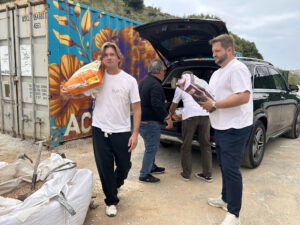
falling in love with dogs lugging bags of food

Regular visits and probable small events will form part of the ongoing collaboration to foster a culture of community involvement. Clients of the estate agency who value social responsibility and animal welfare will find meaningful ways to contribute through this project. The shelter set up by Fabienne and her late husband has been rescuing abandoned and mistreated animals for decades, and with community help now extending to local entrepreneurs, they stand a real chance of turning the tide and finding forever homes for the loving dogs and cats in their care.

ACE Charity Depends on Donations to Care for Hundreds of Animals

ACE charity currently cares for around 500 dogs and 200 cats without any government funding and relies completely on the generosity from supporters.

Dry food donations of this kind make a direct difference to daily operations at the facility and help keep the animals healthy and happy.

Local businesses can play an important role in improving conditions for abandoned animals in the region by getting involved in similar ways.

ACE also seeks donations towards an emergency power generator to maintain essential services during frequent power outages caused by extreme weather conditions. The costs for them just keep on mounting up.

Estimated costs for the equipment and installation are around €42,000, something local corporate friends can get involved with and truly help organisations like ACE achieve.

This type of practical aid brings hope to the dedicated team and all the vulnerable pets depending on their care every single day.


%

EU Cars To Get Flashing Brake Lights

Published

on

eu-cars-to-get-flashing-brake-lights

Flashing brake lights will become mandatory in new EU cars from July 2026 Credit : Canetti, Shutterstock

From 7 July 2026, every new car registered in the EU will have to come with a set of built-in safety systems, and one of them is something drivers will spot straight away. When a vehicle brakes sharply, its rear lights will flash quickly instead of staying steady, giving a clearer warning to the car behind.

It sounds like a small change, but it targets a very common type of accident. For drivers in Spain and across Europe, it is likely to become a familiar sight over the next few years as newer cars gradually replace older ones on the road.

And importantly, nothing changes overnight for cars already in use.

Why flashing brake lights are being introduced

Anyone who drives regularly knows how easy it is to misjudge the car in front.

In busy traffic or on fast roads, a standard brake light does not always show how urgent the situation is. A driver might tap the brakes lightly or slam them hard, and from behind, both can look similar at a glance.

That is where flashing lights come in.

When the system detects sudden or heavy braking, the lights blink rapidly to signal that something serious is happening. The idea is simple. Make the warning more obvious, and the driver behind reacts faster.

That extra moment can be enough to avoid a collision or at least reduce the impact.

Rear end crashes remain one of the most common accidents on European roads. Even a small improvement in reaction time can make a difference.

Other safety features arriving at the same time

Flashing brake lights are only one part of a wider set of rules coming into force on the same date.

From July 2026, new vehicles will also need to include:

  • Automatic emergency braking systems that can step in if a crash is likely
  • Lane keeping assistance to help prevent drifting out of lane
  • Warnings for driver fatigue or loss of attention

Intelligent Speed Assistance, which helps drivers stay within speed limits

An event data recorder that stores information in case of an accident. Preparation for alcohol interlock systems, which can stop a car from starting if the driver has been drinking Some of these features already exist in newer models, but they will now become standard rather than optional.

For buyers, it means cars will come with more built in safety as part of the basic package.

What drivers in Spain need to know

One point is worth making clear. These rules apply only to new vehicles registered from July 2026 onwards. If you already own a car, you do not need to change anything.

There is no requirement to retrofit older vehicles or install new systems. The shift will happen gradually as people replace their cars over time.

So if you are driving in Spain today, you will not suddenly see every vehicle with flashing brake lights. It will take a few years before the change becomes widespread.

Will it actually make a difference

That is the question many drivers will ask. On its own, a flashing light does not prevent accidents. But it improves communication between drivers, and that is where its value lies.

Driving is full of small signals. Indicators, brake lights, road markings. They all help drivers understand what others are doing. By making emergency braking more visible, the system aims to reduce confusion in critical moments.

It is not about changing how people drive. It is about giving them clearer information when it matters most.

How driving habits might evolve

At first, seeing flashing brake lights could feel unusual, especially for those who have been driving for years. But like many safety features, it is likely to become normal quite quickly.

Think of how seatbelt alerts or parking sensors were once seen as extras and are now standard.

The same could happen here. Drivers may begin to recognise the difference between a gentle slowdown and a sudden stop more instinctively, simply because the signal is clearer.

For new drivers, it will be part of how they learn from the start.

Part of a broader shift in car safety

These changes are part of a wider effort by the EU to reduce serious accidents and improve road safety. Human error still plays a role in many crashes, whether through distraction, fatigue or delayed reactions.

Technology is increasingly being used to support drivers in those moments. Some systems warn. Others assist. A few can even intervene.

The aim is not to take control away from the driver, but to reduce the chances of something going wrong. Flashing brake lights sit somewhere in the middle. They do not act on behalf of the driver, but they make their actions easier to read.

A change you will start to notice

For now, most drivers will not see any difference.

But from mid 2026 onwards, anyone buying a new car in Spain or elsewhere in the EU will be driving a vehicle with these systems already in place.

And anyone following behind will start to notice something new. A sudden stop will no longer be just a red light. It will flash, and that flash could be the signal that gives you just enough time to react.

Continue Reading

%

Petting Zoo And Family Festival In Estepona

Published

on

petting-zoo-and-family-festival-in-estepona

If you don’t want to fall in love with animals then this is not the festival for you. Hipica Los Limoneros in Estepona is opening its doors and stables to the public on Sunday, May 10 with a full-day fun outdoor festival for all the family. 

Arrival is from 11:30am with a start time of 12pm with a free transfer from Aldi to take you from your car to the venue. A wonderful day is to be had, with full on animal experiences, entertainment, and food. Visitors can enjoy horse and pony rides, a hands-on petting zoo where children can feed and interact with animals, and a range of activities including games, dancing, and a trampoline area and of course a glimpse into their ‘my rabbit’ programme. Food stalls and an artisan market with a generous prize draw with the chance to win rewards such as riding lessons and photo sessions.

The event is free to attend, although advance registration is required due to limited capacity. 

More than your average riding school

Horse riding for all ages from 3 years old with a team of teachers who speak 6 different languages is the main pull for Hipica Los Limonerss. However the venue has expanded into a wider range of fun animal friendly activities. These include a petting zoo experience with mini pigs and little goats, photography sessions against their incredible backdrop and other areas to rent for parties, yoga and masterclasses. 

The cutest programme on the coast

One of the main features for the kids is the ‘My Rabbit’ programme, where your child can choose one from the selection they have, the name plate is put on the hutch and you get a photo in whatsapp every 2 weeks. No cage at home, no smell, just enjoyment. 

The mixture of animals, outdoor space, food and prizes make the Hipica Los Limoneros family festival one for the diary. Details on the shuttle and how to register can be found on their facebook and instagram. 

Continue Reading

%

Mijas Rotarians Smash Charity Cycle For Alzheimer’s Centre

Published

on

mijas-rotarians-smash-charity-cycle-for-alzheimer’s-centre

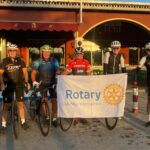
Setting out on the mammoth ride. Credit: LIM

Mijas residents witnessed an extraordinary display of endurance this past weekend as two dedicated cycling teams pushed their physical limits for a vital local cause. Frank Flebus and Dr Peter, representing the Rotary Club Mijas International, spearheaded a gruelling sponsored ride to fund a much-needed new facility for AFA Mijas (Asociación de Familiares de Enfermos de Alzheimer).

Gruelling 200km and 12okm routes tests international riders

Restaurante La Morena, near Mijas Golf, served as the atmospheric starting point for this ambitious journey. Two distinct groups—Team Frank from Belgium and Team Dr Peter from Luxembourg—embarked on separate but equally demanding routes. While Frank’s squad tackled a relentless 200km trek toward Nerja and back, Dr Peter’s team battled the punishing inclines of the mountains through Pizarra and Antequera, navigating the steep terrain of El Torcal to complete 120km.

Safety remained a constant concern throughout the expedition. The weather was fine after a rainy Saturday which led to postponing to the Sunday, but safety was paramount with car teams meeting the riders on route. Despite all, the riders maintained their pace, completing up to seven hours of continuous cycling to reach their respective finish lines.

Fundraising success for local families

Sponsorship funds flooded in via social media channels even as the teams were pedalling through the hills. Early counts confirmed over €3,600 so far has been raised within hours, though organisers remain optimistic about reaching a final grand total of €15,000. Every euro collected contributes directly to the construction of new premises for AFA Mijas, an organisation providing essential support to those living with Alzheimer’s.

Rotary President Andy Wheaton praised the “wonderful achievement”, saying that the stamina shown by both teams reflects the club’s commitment to the president’s chosen charity. Celebrations at the finish line mirrored the excitement of a Formula 1 podium, with champagne flowing as the riders surpassed their initial financial targets. Contributions can still be made through the Rotary Club Mijas International to support this local infrastructure project.

Continue Reading

Trending

Copyright © 2017 Spanish Property & News