
ElPais
Members Only: Private Clubs For The Wealthy Take Over Madrid


“In Europe, Madrid was playing in a lower league than it deserved. The major European capitals are Paris and London. And then, there’s another tier: Berlin, Milan, Amsterdam… [but] Madrid wasn’t even there.”
“[he city] finally had the opportunity to grow up. And I think the fact that [Spain’s economy] is doing well has also played a big role, since money attracts money,” explains Andrés Rodríguez, sitting in the lobby bar of Forbes House, a five-story private club (plus rooftop and basement). He’s the director, founder and mastermind of the establishment.
In an interview with EL PAÍS, he tries to answer the following question: what has had to happen in Madrid for so many private clubs to suddenly spring up like mushrooms?


Rodríguez explains how, for decades – and until just a year-and-a-half ago – the world of private clubs in Madrid was divided into two types. “The traditional clubs, which, with all due respect, were like our parents’ clubs: Nuevo Club, Club Financiero Génova, Puerta de Hierro,” he lists. “And then, there was the Matador Club, geared toward a creative crowd.”
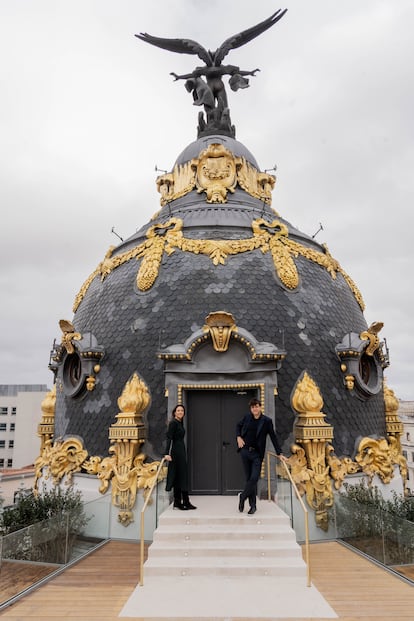
However, in 2025, Forbes House arrived on the scene. And, this year, Club Metrópolis has emerged, located in one of Madrid’s most emblematic buildings. “It is the second-most photographed after the Puerta de Alcalá,” the club promoters affirm, referring to the triumphal arch that Madrid is known for.
The promoters – Sandro Silva and Marta Seco – lead the Paraguas Group, a set of six fine dining establishments. They’ve spent more than 20 years leading the biggest success story in Madrid’s restaurant industry, including an international expansion to London, Dubai and Monte Carlo.
“Many of the clients we’ve had over the years are the ones who put their trust in us to set up this club, even before we even started construction,” they state. Conceived as an exclusive, international private club, Metrópolis houses seven different dining spaces, including a restaurant specializing in lobster and a terrace under its famous dome. There’s also a luxury boutique hotel for clients and VIPs.

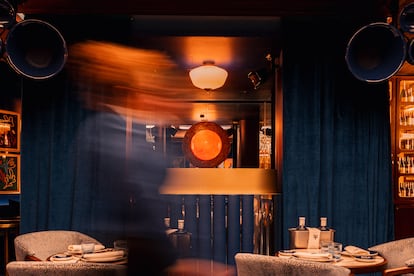
The latest arrival is Club Vega, in the Salamanca district. Its public face is Iñigo Onieva, the “bad boy” with a heart of gold. He’s beloved by the tabloids for his marriage to Tamara Falcó. The daughter of socialite Isabel Preysler and aristocrat Carlos Falcó, she is the singer Enrique Iglesias’ half-sister.
Onieva’s explanation for the shift in Madrid begins in London. He studied there, experiencing a lifestyle in which many personal, professional and social interactions take place within private clubs. When he returned to Madrid in 2018, he considered importing the model, but he ultimately concluded that the city wasn’t ready yet. Now, he affirms, it is.
“Madrid is finally ready for this,” he repeats several times, during his conversation with EL PAÍS.
Over the past few years, Madrid has been changing so rapidly that it seems as if nobody has had time to realize it. For decades, it was a reasonably large and important capital. But suddenly, it began appearing in international investment rankings. Luxury hotels multiplied. Major brands began competing for prime locations along the so-called “Golden Mile.” Investment funds set up shop on the Paseo de la Castellana, a major thoroughfare. “Latin American students arrived, attracted by the business schools. And then, their parents came,” Rodríguez notes.
Vega is a prime example of the new Madrid: it occupies a huge space on Lagasca Street, surrounded by luxury boutiques, law firms and asset management companies. The club combines a restaurant, event space and meeting rooms, giving the impression that it’s essentially a place for celebrities to have fun, without fear of appearing in the press. This must be what Onieva means when he constantly talks about “community.”
He explains that they want a mix of businesspeople, artists, athletes, designers, politicians and executives. Spaniards and foreigners, youngsters and older folks. “We don’t want it to be a business club or a creative club. We want diversity,” he emphasizes.
But not diversity when it comes to finances, of course. Membership in these clubs costs around €4,000 a year, or $4,500. And that’s just for entry: drinks are extra. And exclusivity isn’t so much in the price as in the selection process. To get in, you have to be recommended by a member and accepted.
Rodríguez insists that Forbes House isn’t a club for the rich. Rather, he clarifies, it’s a club for success. The difference seems minor, but for him, it’s fundamental. “In Spain, there’s still a certain idea that success has to be invisible,” he explains. “Here, there’s no shame in saying that you want to boost your business, your personal brand, or meet interesting people.”
For members only
The three projects are distinct. And yet, they share an intuition. Madrid no longer behaves like the open and relatively egalitarian city that it once was. Or, at least, not only like that. There have always been clubs for Madrid’s elite, but leisure activities mostly revolved around the bar: a democratic space, open to everyone (in principle). The new clubs reflect the expansion of the elite social class and replicate its principle of exclusion. Forbes House has an admissions committee. Vega has a selection process. And, at Metrópolis, memberships sold out before the club even opened. These are places where who gets in is just as important as who gets left out.
Sign up for our weekly newsletter to get more English-language news coverage from EL PAÍS USA Edition






Baja California
Marina Del Pilar Ávila: ‘They Set A Psychological Ambush For Me. They Even Talked About An Extradition To The US’

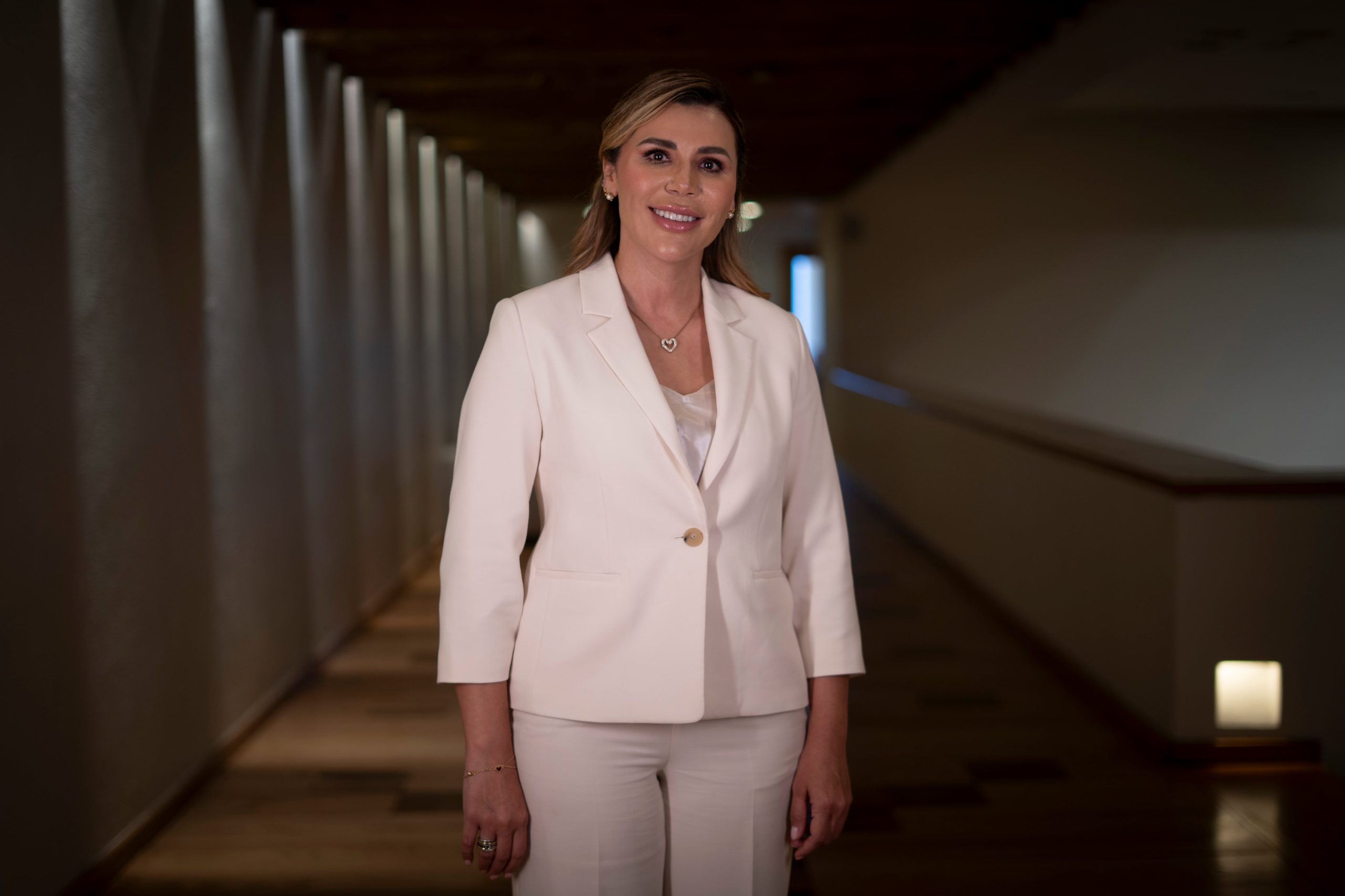
The efforts made by Baja California Governor Marina del Pilar Ávila to recover her U.S. visa have become a problem for the government of Claudia Sheinbaum and Mexico’s ruling party, Morena. Audio recordings were released in which Ávila, 40, is heard speaking with an intermediary in the United States, allegedly from the FBI, offering information to Washington; the leak has dealt a blow to Sheinbaum’s narrative of defending national sovereignty against U.S. interference.
The governor, however, claims that her conversations were merely efforts to recover the visa that the U.S. government had canceled without an explanation for her and her husband, Carlos Torres, in May 2025. Ávila, who denies having cooperated with U.S. authorities beyond the institutional channels as the head of a border state, has not yet regained permission to cross into the United States.
Ávila says that Jaime Bonilla — her predecessor in the governorship and a former party colleague with whom she has a deep enmity — set a trap to record her in December 2025 by making her believe he would help her recover the travel document. The governor says Bonilla sent her an intermediary who claimed to work with “the FBI or HSI,” though she did not specify which agency (the first one reports to the Justice Department; the second one to the Department of Homeland Security). She called it “a psychological ambush” meant to make her believe the United States had her in its sights and might even extradite her. “I am the governor, but I am also a mother. When they started talking about investigations and a possible extradition, I thought about my children, because nothing like that had ever been suggested to me before,” the governor says in an interview with EL PAÍS in Mexico City.
Question. What should the relationship between a border state and U.S. security agencies be like?
Answer. There must be a lot of communication and coordination, without subordination. The president, Claudia Sheinbaum, has said this. I govern one of the world’s most important borders. That implies shared challenges with the United States, not only on security but on migration, the economy, social issues and the environment. There are many topics we address; we have binational security groups to work together.
Q. Regarding the leaked audios, which authorities did you speak with about your visa cancellation?
A. A person came to me who had been recommended by former governor Jaime Bonilla at a time when there was communication between us. He told me: ‘This is someone who can help you, who can give you information about your visa issue.’ I received him thinking we would discuss the matter, but he began raising scenarios I had never heard before: charges, sanctions; he even mentioned extradition and letters. I felt it was a psychological ambush. It was an ambush. I asked, ‘What are you talking about? I hadn’t heard any of this.’ The first thing that came to mind was my children. I have a 13-year-old daughter and a little one who is four. I heard arguments from someone skilled at intimidation, at frightening people, at generating fear and even prompting certain responses. I told him: ‘Take all of that to my lawyers; I thought we were meeting about the visa.’
Q. When did this happen?
A. In mid-December 2025. I told them to handle everything through formal channels, with an advisor. Of course I sought legal advice to ask what was happening. In one of the calls he made to me, they mentioned Panama. I have never been to Panama, not even on vacation. The scenarios mentioned in the audios were never carried out. They never contacted the people who advised me. Today I know it was a trap. It’s clear: they even recorded me, they steered the conversation, they tried to corner me.
Q. How did that individual present himself?
A. As an advisor, an intermediary who was coming to help because of his closeness to the former governor. Bonilla is a U.S. citizen, he lives in San Diego, participates in politics and is affiliated with a party in the United States [the Republican Party], and it seemed to me that he was genuinely someone who would explain the visa situation to me.
Q. What is the status of your visa? Have they explained why it was canceled?
A. The status is ‘administrative process,’ and no, I do not know the reason.
Q. In the audios you say you were willing to provide information from the security groups. What did you mean?
A. At those meetings we discuss crime trends, how common-law crime develops, thefts, homicides… We have binational security groups constantly, operating within the legal framework. The information shared is within the law, and it benefits both sides of the border in combating criminality.
Q. In the context of the visa, what did that offer have to do with anything?
A. No, it was not in the context of the visa; it was in the context of that particular meeting, which was recorded to later publish decontextualized audio fragments as a form of pressure.
Q. Who was the advisor Bonilla sent you?
A. I cannot say more because yesterday I filed a complaint against those responsible for this situation. I have the name and phone number, but his identity will be made known in due course.
Q. What are you accusing them of?
A. Of the crimes that the authorities determine. There was a recording; he presented himself as an advisor to an agency; among other things, there was the psychological ambush intended to intimidate me, the violence I felt at the time. I was alone, without a lawyer, with no one who could explain what they were talking to me about in that moment.
Q. Which agency did he claim to represent?
A. He told me he was an external consultant to the agencies, it could be the FBI or HSI.
Q. Did you inform President Claudia Sheinbaum or anyone in your cabinet, such as Secretary Omar García Harfuch, that you were meeting these contacts about your visa?
A. They knew I was pursuing the visa process.
Q. Did they know about the external advisor?
A. No; I looked for advisors because they made all these proposals and speculations. Of course I seek legal counsel.
Q. Can you swear and maintain that you only discussed the visa with U.S. authorities or advisors?
A. Of course; it is a strictly personal matter and also about coordination within the legal framework for cross-border, binational issues — all within the law.
Q. Will we hear another audio of you about negotiations, judicial benefits or accusations against other Mexican politicians?
A. I don’t know if there will be more audios. However, I know the context in which they were made: an ambush in which they tried to elicit responses, where they put forward complex scenarios.
Q. Did you feel fear?
A. I thought about my children. I didn’t fully understand what they were referring to. They even mentioned that I could be extradited.
Q. Can you confirm that no U.S. authority has told you there is an investigation against you?
A. What I can confirm is that we continue working. At this moment I have not received further information. I continue coordinating with U.S. authorities.
Q. What repercussions do you think these leaks will have for Morena ahead of the 2027 elections?
A. Our movement is strong and united. In Baja California there are many results. We have achieved a reduction in virtually all crimes; we are carrying out projects like never before. For me, one of the main achievements is the reduction of poverty.
Q. Faced with attacks from the opposition, would you be willing to step aside to reduce political pressure and even to be investigated?
A. My conscience is clear and I hold my head high. I do not hide; there has not been a single day when I have stopped working for the people. I am on the ground, in neighborhoods, supporting those who need it most. I do not engage in politics for power. I do it to help others.
Q. Why did you ask Jaime Bonilla for help?
A. I did not ask him for help; he offered it. We had a meeting in the summer of 2025 that I accepted to attend because of the movement we come from and with the aim of generating political peace in the state. I accepted his help in good faith. This [the clash with Bonilla] goes back to 2022 with the cancellation of a 40 billion-peso contract with the company Next Energy to build a photovoltaic plant that did not have federal permits. My responsibility as governor was to cancel that contract. That’s where the revenge and persecution started. It is not a personal or political matter; it is a matter of justice and responsibility. I was not going to be complicit in that fraud.
Q. Given your fraught history with Bonilla, why did you accept his help?
A. It was a moment when we were communicating. It was strictly a personal matter: the visa. I listened to the proposals and then this person [Bonilla’s envoy] sought a meeting with me. Since it was something I would never do to someone else, I accepted in good faith. And yes, it was a mistake to receive [the envoy], I acknowledge that; it was a mistake to trust this person. It was a trap.
Q. It a mistake to trust whom?
A. Both of them.
Q. Are you still trying to recover your visa?
A. Of course. For a border resident, it is an important document.
Q. If you got it back, would you go to the United States? Aren’t you afraid?
A. If I ever recover my visa, of course I would go to the United States.
Sign up for our weekly newsletter to get more English-language news coverage from EL PAÍS USA Edition
America
US Recalls Over 19 Million Eggs Due To Salmonella Outbreak That Has Caused Illness In Nearly 100 People


ElPais
Were The Dinosaurs Incinerated In A Matter Of Hours? The Meteorite Created A Layer Of Dust That Turned The Planet Into A Grill

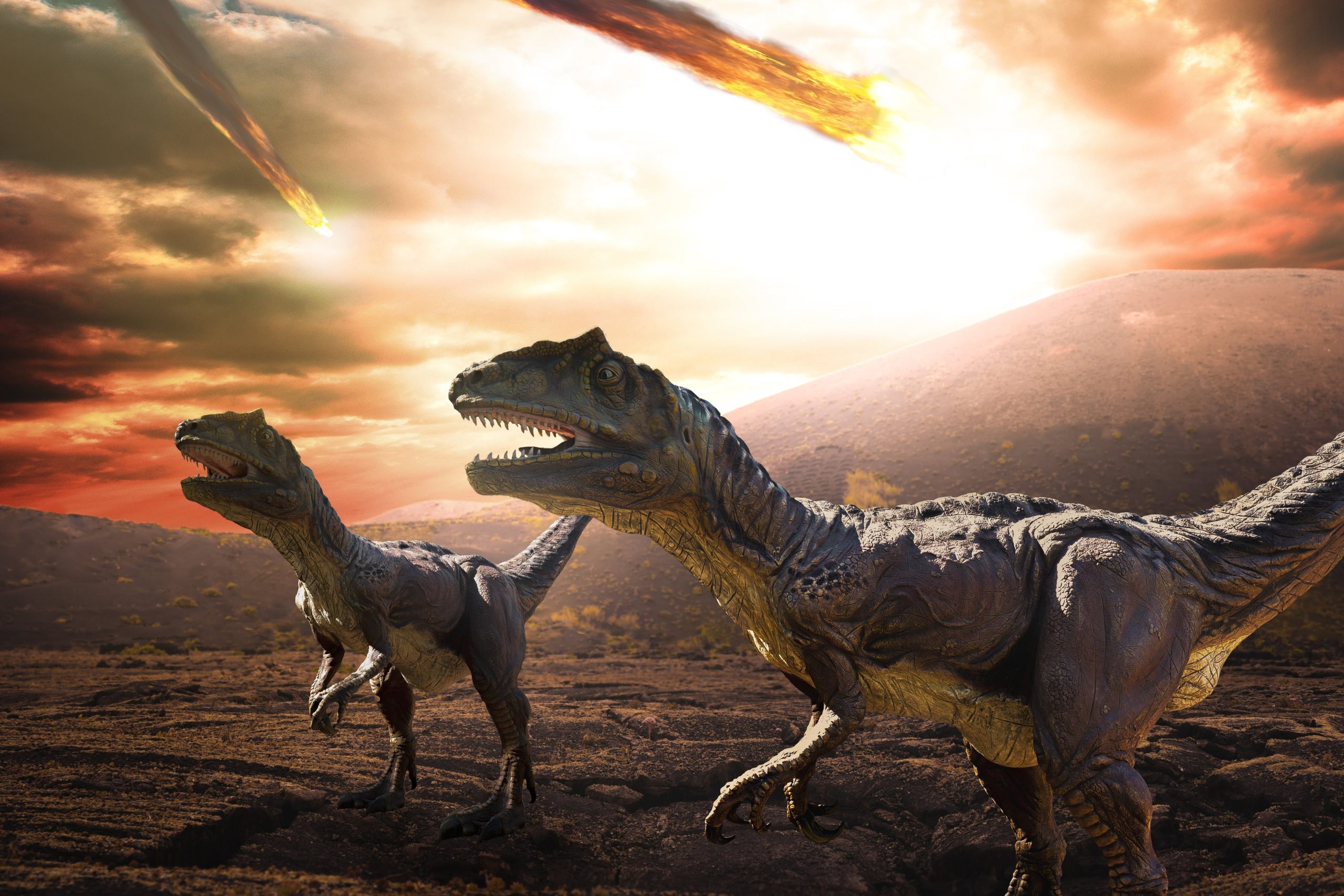
Dinosaurs, which dominated the planet for tens of millions of years, may have perished in a matter of hours. The asteroid impact about 66 million years ago turned Earth into an inferno within its first day. But specialists who study the cataclysm disagree about what happened next. For some, the energy released by the strike triggered a chain of global catastrophes (widespread fires, megatsunamis…) that wiped out most terrestrial life. For others, the atmosphere filled with dust that blocked sunlight — similar to major volcanic eruptions — producing a decades-long winter. A new study, however, assigns this dust an immediate, deadly role: it turned the planet’s surface into a grill that seared the dinosaurs.
The impact near what is now the Yucatán Peninsula (Mexico) disintegrated the asteroid — a body roughly 12 kilometers (7.45 miles) in diameter — but also vaporized a huge portion of the impact zone. The authors of the new paper, published in Journal of Geophysical Research: Biogeosciences, estimate it vaporized more than 1,000 cubic kilometers of material, made mainly of vaporized rock and soil particles, as well as all the animals and plants in the strike path and the meteorite itself.
“Part of the rock vapor and the spherules escaped to space and never fell back to Earth,” Brandon Johnson, a crater and planetary impact expert at Purdue University (United States) and the study’s lead author, wrote in an email. But most of both components, which rose to between thousands to tens of thousands of kilometers above the surface, eventually fell back. “The spherules can pass through the atmosphere and separate from the rock vapor as they are decelerated by drag forces”; that differing behavior is key to what followed.
The spherules, no larger than a grain of sugar, generated heat during atmospheric friction on their descent similar to that produced during rocket and capsule reentries. Their presence in sediments worldwide has allowed scientists to pinpoint the exact moment of the impact and to explain the global fires that followed. But much of the material — especially what remained of the asteroid — would not have behaved the same way: this new study reveals it did not condense into spherules but remained as an ultra-fine dust cloud that ultimately enveloped the planet.
“All that enormous kinetic energy has to go somewhere and, in the end, it is converted into heat,” Johnson said. But the dust cloud, several millimeters thick, would have prevented that heat from dissipating upward, reflecting it back toward the ground. The researchers estimate the radiation was 17 times higher than the level needed to kill a human. “That’s what killed the dinosaurs and the other animals. It wasn’t the shock wave from the impact or the fireball, because those effects don’t reach very far,” the U.S. researcher added.
Alexandria Johnson, a professor in Purdue’s Department of Earth, Atmospheric and Planetary Sciences and a co-author of the study, analyzed the physical properties of individual dust particles and of the cloud as a whole to determine their radiative characteristics. Her conclusion is stark: “We found that the dust layer was so opaque to radiation that it trapped virtually all the heat generated by the falling spherules near the planet’s surface. It’s like the dust acted as a lid on a pot.” Only animals able to shelter underground — such as early mammals — fish in non-surface waters, or some avian dinosaurs would have survived the inferno.
But the dust did more than intensify lethal heat. Its effects continued long afterward, but in the opposite direction. Over time the heat waned, while sunlight continued to be blocked for years or decades, causing a prolonged winter. Simulations in earlier studies indicate average global temperatures dropped by 20 degrees Celsius and stayed that way for about 30 years. That would likely have been the final blow marking the end of an era — the Cretaceous and the age of dinosaurs.
Both Brandon and Alexandria Johnson and their co-authors believe global fires were the main cause of mortality, but acknowledge their case rests on a single, highly significant site — the Tanis deposit in North Dakota. There, roughly 3,000 kilometers (1,865 miles) from the impact zone, they found the most consistent evidence: countless animals that died almost instantly, including many fish with spherules lodged in their gills. The death layer is capped by a thin stratum of extraterrestrial dust — the material analyzed in the new study.
“It’s possible that, over time, we will find evidence of truly global wildfires,” said Alfio Alessandro Chiarenza, a paleontologist at University College London who did not participate in the study. “It’s just that, for now, we don’t have any,” he added in a statement. If such evidence is found and the near-instant deadly role of the dust layer can be generalized, scientists could determine whether the end-Cretaceous mass extinction that ushered in the Paleogene occurred in hours (from scorching heat), in years or decades (from subsequent cooling), or from a combination of both processes. “It would be fantastic to find out which animals survived immediately after the impact and what their biological traits were. That might finally explain why some animals survived while others, like the dinosaurs, did not,” Chiarenza concluded.
Sign up for our weekly newsletter to get more English-language news coverage from EL PAÍS USA Edition

Members Only: Private Clubs For The Wealthy Take Over Madrid

Última Hora De Los Incendios Forestales, En Directo | Interior Da Por Estabilizado El Incendio En Madrid, Pero Preocupa Uno En Zamora De Nivel 2

El Gobierno Libera Frecuencias De Radio De Uso Nacional Para Emergencias Autonómicas Sin Trámite Previo


-
andulacia wildfires2 weeks ago
Axarquia wildfire cause emergency response across Archez, Competa and Canillas de Albaida
-
House prices2 weeks ago
Buyers are pushing back against high house prices in Spain
-

 España2 weeks ago
Lotería Nacional: Comprobar Sorteo Del Jueves 16 De Julio
-

 Amazon2 weeks ago
El Escurreplatos De Dos Niveles Que Libera Espacio En La Cocina Está Rebajado Más De Un 50%
-

 New Developments2 weeks ago
Inside The Most LUXURIOUS Apartment Building In Spain!
-
Are dogs allowed on trains in SPain2 weeks ago
Renfe opens all trains to dogs weighing up to 40 kg
-
 Audiencia Nacional2 weeks ago
La Directora De La Guardia Civil Y Su Jefe Operativo Declaran Como Imputados En La Audiencia Nacional Por El ‘caso Leire Díez’
-

 Uncategorized2 weeks ago
F1 press conference shut down over Red Bull driver transfer rumours