
Elon Musk
E







Born in Telde (Las Palmas de Gran Canaria) in 1971, Juan Verde arrived in the U.S. at the age of 15. There he was taken in by the Seoanes, a Cuban family whom his own family had helped when they emigrated to Spain before moving to Boston. He set foot on American soil without speaking a word of English; he graduated cum laude in political science and international relations; he earned a master of public administration from Harvard and ended up working for three U.S. presidents: Bill Clinton, Barack Obama, and Joe Biden. Today he is a consultant in both the private and public sectors and has specialized in sustainable economics. “With this last name,” he says (Verde means “green” in Spanish) “it was predestined.”
Question. If you were that 15-year-old boy from Telde today, do you think your parents would have sent you to the USA to study English?
Answer. Probably not. They’d be afraid. The decline in foreign students and tourists… these are indicative of the erosion in the country’s international reputation.
Q. Immigration and the recruitment of talent from around the world were crucial to the development of the U.S., which today has a specific police force dedicated to hunting down immigrants. And in Spain, which for decades was a country of emigration, support is growing for a party, Vox, that promises to expel millions of immigrants and associates them with crime. At what point did populism and the far right reverse this narrative?
A. In France, Germany, Italy, and in Spain, with Vox, the far right is advancing with a rhetoric based on hate that reminds me a lot of the U.S. Populism is the red light that signals that democracy is in danger. The far right is protectionist, nationalist, and anti-European at a time when global geopolitics is telling us that, if it wants to be relevant, Europe has to be more European than ever. These movements are growing because we have made it very easy for them. A sector of the population felt abandoned by the system because economic development was not inclusive. Blaming immigrants is the easy way out, but we need more immigrants than ever, and, in fact, we haven’t just benefited from immigration; we have been immigrants ourselves. In my family, on both my mother’s and father’s side.
Q. Has democracy been able to use its weapons to stop the advance of the far right and populists?
A. We are facing the most vulnerable moment for democracy in the last 100 years. The far right and populism are capable of growing in a democratic system, and that is their greatest danger, because once in power, they do not respect the rules of the game. Donald Trump is capable of attempting a coup and winning the presidency of the United States again. But I believe that if there are elections in two years, the Democrats will win.
Q. In 2016, when you were working for Hillary Clinton, you warned that a Trump victory would dismantle the strategic architecture that had maintained global stability, and that U.S.-European relations would suffer greatly. But Trump not only won, he won again after the 2021 assault on the Capitol. What factors do you think were most decisive in that second victory?
A. We haven’t been able to govern without neglecting certain segments of the population, and people are fed up. The Democratic Party’s base was the working class, the unions, the farmers… and we lost them. The polarization in the U.S. is social, but it has an economic basis: inequality. There used to be a strong middle class. Today, a father can’t make ends meet on his salary. And in that context, someone emerges who seems to offer easy solutions to very complex problems and who uses algorithms to lie.
Q. What has weighed more: the circumstances or the mistakes of the Democratic Party?
A. They’ve gone hand-in-hand. It wasn’t an election between Republicans or Democrats, left or right, but between more of the same or something new, like in Argentina with [Javier] Milei. We had to switch horses 92 days before the election, and the problems of a lack of leadership were compounded by the inability to engage those affected by globalization, young people… which is where Vox is growing in Spain. Nobody bothered to develop a narrative aimed at those segments. But there’s a before and after. We’ve been through the worst with Trump.
Q. Isn’t that saying a lot, with Trump?
A. I am absolutely convinced that the midterm elections are going to be a debacle for him. There are 23 seats up for grabs in Congress, and we need five to win it back. A large segment of the Republican Party base feels betrayed, and the Democrats have realized that the future lies in grassroots activism, in the people, not in outdated and rigid party structures. I am optimistic as long as there are elections in the United States.
What I’m about to say could have repercussions for my career: Israel has a power in American politics that it shouldn’t have, absolutely disproportionate
Q. You have said several times “if there are elections.” Do you think there might not be any?
A. It’s not that I believe the United States could become a dictatorship where voting isn’t allowed, but I do fear that the elections won’t be fair. Cuba, China, Russia… in theory they have elections, but they’re rigged so that the ones who are supposed to win, win. In the U.S., they’re already redrawing electoral districts so that what was a Democratic district will no longer be one. The director of the counterterrorism office resigned because he disagreed with the invasion of Iran, and 24 hours later, the FBI and the IRS were investigating him.
Q. Do you think that fear of retaliation could affect the Democratic campaign’s fundraising, that is, that some businesspeople might be afraid of being singled out if their candidate doesn’t win?
A. Yes. Washington is experiencing an unprecedented moment of absolute corruption: pardons are being sold, meetings with secretaries of state are being arranged… Before, businesspeople didn’t act altruistically, and if they were in the renewable energy sector, for example, they might donate to the Democratic Party thinking it would benefit them, but knowing that it didn’t guarantee them contracts. Now they have to be careful because showing their ideology can have economic repercussions, even lead to their demise.

Q. Who do you think has the best chance of being the next Democratic nominee, and who is your favorite?
A. In the party structures, they were all white men, and very old, and that’s changing. I think the next president of the United States will be a Democrat and an unknown. Someone new, who injects freshness, enthusiasm, capable of mobilizing people. I really like the Texas Senate candidate, James Talarico, a young man, a pastor, the son of a single mother, who comes to politics from a religious background and with an anti-everything message, the opposite of Trump, who blames everything on immigrants, women, Democrats…
Q. The fact that the next candidate could be an unknown speaks to the deep crisis in the Democratic Party.
A. Yes. We need profiles like Talarico’s, [people] who are not part of the system and are unlike what we had before. That’s what brings credibility.
Q. In 2018, The New York Times published an anonymous opinion piece for the first time. The author was an official from the first Trump administration who explained how there was a resistance group within the White House whose daily mission was to prevent the president from pressing the red button of disaster. Has that group disappeared in light of recent events?
A. Yes, and that’s the big difference compared to Trump’s first term. In the White House, there’s no longer room for critical voices or independent thought, and that’s very dangerous. It’s what explains the war in Iran.
Q. The V-Dem Institute has just indicated that it no longer considers the U.S. a full democracy, and the dollar’s share of the reserve currency has fallen from 70% at the beginning of the century to less than 60%. Do you think the war in Iran could be the final straw for the popularity of a president who boasted that he could shoot at his audience and they would still vote for him?
A. Yes. It’s the point of no return. Reports from the War Department, as it’s now called, over the last 20 years have said that we had to be very careful about a war with Iran because this could happen: international instability, energy inflation with repercussions for the global supply chain, and in the financial and debt markets…
Q. Do you believe the initial disagreements between Trump and Israeli Prime Minister Benjamin Netanyahu, following the bombing of South Pars, the world’s largest gas field, are real?
A. What I’m about to say could have repercussions for my career: Israel has a power in American politics that it shouldn’t have, absolutely disproportionate. Without that influence, we wouldn’t be in this war.
Q. Why do you think it might be dangerous for your career to say that?
A. Because today in the United States, any criticism of Israel is used to label you antisemitic and anti-American, and the Israeli lobby has a whole infrastructure to attack people who supposedly criticize Israel. I am not anti-Israel, but I am totally against Netanyahu’s policies. What he is doing seems insane to me.
Q. And why have you decided to say it despite the risk?
A. Because the democratic viability of the U.S. is at stake, and we must be brave. Robert Mueller, the former FBI director, just died, and the first thing Trump said was that he was glad he was dead. A man who dedicated his entire professional life to serving the country. The U.S. needs more courageous people to overcome the absolute fear that companies and institutions now have of confronting the system.
Q. Trump has openly criticized Spain, a country of “losers,” he says, and has even threatened it with an embargo. Do you share the position of Spanish Prime Minister Pedro Sánchez regarding the war in Iran and previously in Gaza?
A. Ethically and morally, I understand Prime Minister Sánchez, but I don’t agree with his decision because Spain is part of NATO and there are commitments that must be respected. And regarding Gaza, the biggest historical mistake the U.S. has made was allowing that genocide, which could now happen in Lebanon. It was the only one that could have prevented it, [but it] gave Netanyahu all the support he needed to carry it out.
Q. But Trump himself is threatening NATO partners, such as Denmark. And the Iran war violates international law. What do you think should be the order of fulfillment of commitments if they conflict?
A. What I believe is that two wrongs don’t make a right. If Trump acts outside the law, you can’t do the same. The most disastrous impact of the Trump administration on the world has been to undermine the credibility of multilateral institutions, from the United Nations to the International Monetary Fund and the World Bank. Since 1945, the world order has been built on a system based on the strength of these kinds of institutions, and that system has brought us development, prosperity, and stability. If there is no longer a world order based on rules and anything goes, then your budget priority has to go to defense.
Q. He later backtracked, but European Commission President Ursula von der Leyen declared a few days ago that “the rules-based system is no longer the only way to defend oneself.” Trump captured Maduro and bombed Iran outside the bounds of international law, but before him, the U.S. also showed little interest in being part of that rules-based system, for example, by joining the Rome Statute that established the International Criminal Court. Would it have been more difficult for Trump to do what he is doing if the U.S. had signed those international treaties?
A. We’ll never know. The U.S. may not have signed all the agreements it should have, but it promoted and defended a world order. Democrats and Republicans have committed all sorts of atrocities and errors around the world, but there are differences between them. Diplomacy is now transactional and opportunistic. There are no longer ideals, only interests, and uncertainty has skyrocketed.
Q. The U.S. has revived the Monroe Doctrine of interventionism in Latin America. Trump says it will be “a great honor” for him to “take Cuba.” Do you think he’s capable of it?
A. Absolutely. He has demonstrated through his actions that his position is not just rhetoric. With the Monroe Doctrine, the U.S. reserved the right to intervene in what it considered its sphere of influence, but that view is terribly flawed and short-sighted because with a paternalistic approach you will never earn the respect or cooperation of the countries and citizens of the region. It has never worked. The U.S. strategy should be a Marshall Plan for Latin America, not investing in a wall.
Q. A former Spanish politician, José María Lassalle, believes that during the attempted coup in the Capitol, U.S. stability depended on the control of social media wielded by the major platforms, which ultimately thwarted the coup for reputational reasons. In his first term, Trump hired Peter Thiel, founder of PayPal and an admirer of Milei. In his second, he hired Elon Musk, owner of X. What role do you think Big Tech plays in the decline of liberal democracies?
A. This is extremely important. We are witnessing the rise of technological oligarchies. It all stems from the struggle for hegemony between the U.S. and China, and this struggle is technological, based on artificial intelligence, on the control of social media… Never before have so few companies had so much influence over so many millions of people, and there isn’t enough regulation to rein them in. We Democrats lost the election, in part, because Kamala Harris and Biden said they were going to regulate tech companies, which then rushed to fund Trump en masse.
Q. The second most-read book in the U.S. after the Bible is Atlas Shrugged by Ayn Rand, which is the bible of ultraconservatives who advocate for a selection of leaders not based on the democratic system, but on wealth and technological skills. Thiel declared in 2009: “I no longer believe that freedom and democracy are compatible.” And Paul Krugman, Nobel laureate in Economics, wrote an article in 2020 entitled “How Many Americans Will Ayn Rand Kill?” Which thesis do you think is gaining ground and why? Are money, power, and influence in the best hands?
A. A Pentagon general summoned the country’s military elite to tell them that Trump is God’s chosen one, and absolutely nothing happened. I’m worried about the lack of oversight of power. But I’m very optimistic because time puts things right: it did so at the beginning of capitalism when there was no regulation whatsoever and the power of big industry was immense.
Q. You helped former vice president Al Gore, one of the first outside the scientific community to draw attention to climate change, to establish his foundation in Spain and Argentina. Trump has amassed more than 300 measures to dismantle U.S. climate policy and promote fossil fuels, and in Spain, Vox is forcing the most voted party, the PP, to do something similar against what it calls “climate fanaticism.” The evidence seems to have failed to bury the denialist discourse. If regulatory pressure disappears, what incentives or disincentives will companies have to adopt measures to reduce their environmental impact?
A. Trump’s anti-climate policies are a demonstration of his alliance with certain lobbies, particularly the fossil fuel lobby. It’s a matter of fundraising. But in the long run, I’m not worried because I think that, although it slows things down, it doesn’t change direction. The regulatory framework helps, but perhaps we haven’t made the transition easy enough, and in any case, today, the green revolution in the U.S. is led by the private sector, not the public one. Fighting climate change means investing in national security so as not to depend on supplies from countries that don’t share our views — that is, being able to steer our own course.

Sign up for our weekly newsletter to get more English-language news coverage from EL PAÍS USA Edition

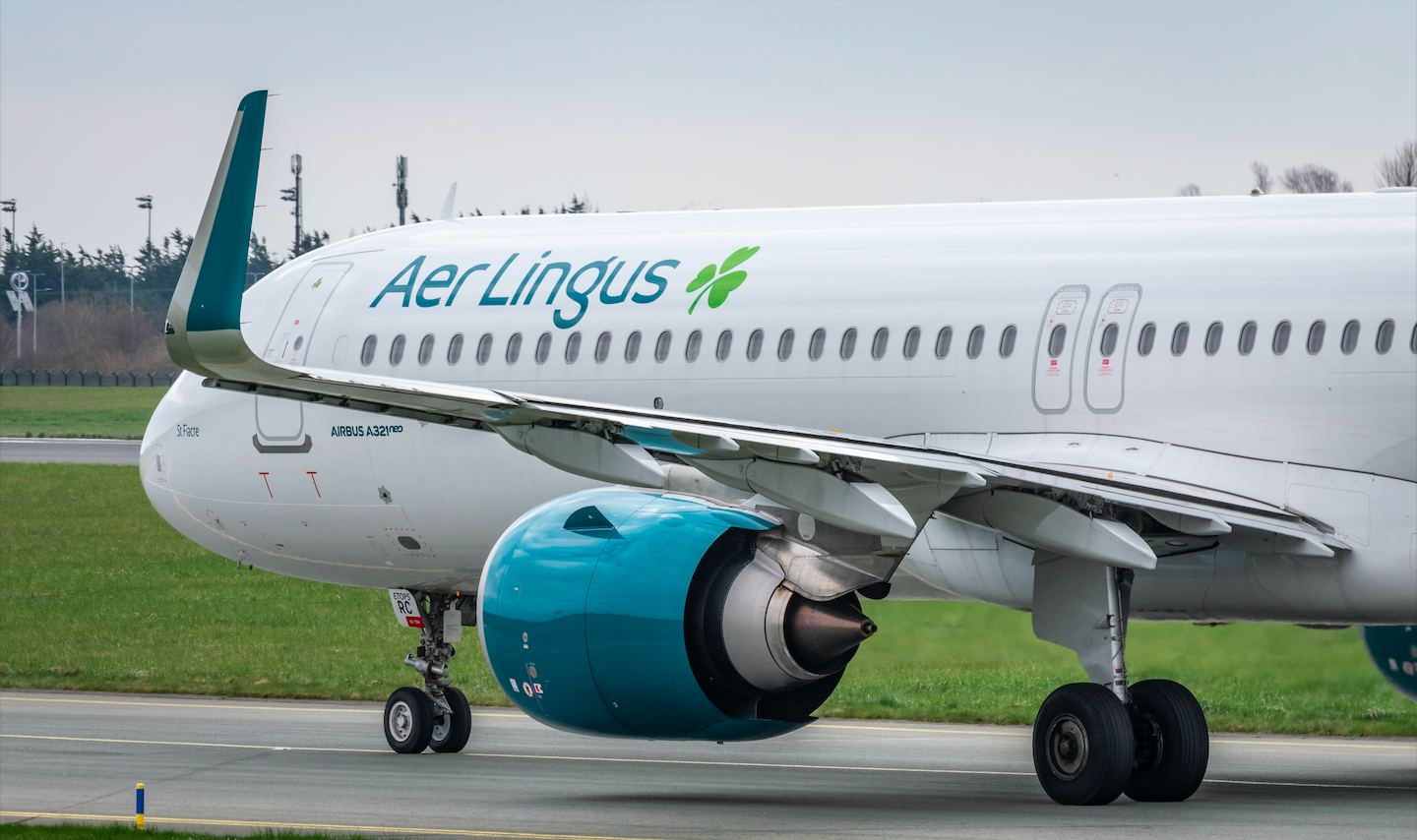
Passengers on Starlink-equipped aircraft can expect internet performance closer to ground-based broadband. Photo credit: Croatorum/Shutterstock
Aer Lingus has begun installing Starlink satellite internet on its aircraft, bringing a significant improvement in in‑flight connectivity for passengers. The service, developed by Elon Musk’s SpaceX, is intended to provide faster and more reliable internet during flights.
The launch follows a broader announcement in late 2025 by International Airlines Group (IAG), Aer Lingus’s parent company, that it would implement Starlink-enabled internet across more than 500 aircraft across its airline brands, including British Airways, Iberia, Vueling and LEVEL. The initiative is part of a long-term plan to enhance passenger experience on both short-haul and long-haul flights.
Strategic partnership to improve internet on board
Under the IAG initiative, Starlink’s satellite network, consisting of low-Earth-orbit satellites, will provide reliable broadband to aircraft across the group’s fleets. The partnership aims to operate more Starlink-enabled aircraft than any other airline group in Europe.
IAG’s chief executive, Luis Gallego, stated that connectivity has become increasingly important to passengers. He explained that providing Starlink internet would improve both the speed and consistency of in-flight connections for customers.
First aircraft enters service with Starlink
The rollout has begun in earnest. The first Aer Lingus aircraft equipped with Starlink returned to service on a transatlantic route between Dublin and New York. Passengers on this flight were among the first to experience satellite-based internet connectivity provided by Starlink on an Aer Lingus aircraft.
The introduction of Starlink internet on Aer Lingus flights is designed to give customers greater flexibility in how they use their devices during flight, whether browsing the web, streaming video, or working on cloud-based applications, tasks that have been challenging with previous in-flight systems.
Part of a wider industry trend
The adoption of Starlink Wi‑Fi by Aer Lingus and other IAG airlines reflects a broader trend in the aviation industry, with a growing number of carriers introducing satellite internet to improve passenger experience. Airlines worldwide, including major carriers in North America, the Middle East and Europe, are fitting Starlink connectivity to some or all of their fleets.
Starlink’s system of low-Earth-orbit satellites allows for lower latency and higher speeds than many existing satellite internet providers, and its use in aviation is changing expectations for onboard connectivity.
Technical and customer experience improvements
Passengers on Starlink-equipped aircraft can expect internet performance closer to ground-based broadband. The service allows faster downloads, smoother streaming, and better access to online tools than older in-flight Wi-Fi systems.
For business and leisure travellers alike, improved connectivity may make long journeys more productive and convenient. The system also aids airlines with communication between aircraft and ground operations, supporting both customer services and internal digital systems.
Future rollout and availability
While the first Aer Lingus aircraft with Starlink is in service, the complete rollout across the airline’s fleet will continue through 2027, especially on long-haul aircraft.
The phased installation is partly due to regulatory approvals and the logistical challenge of fitting the equipment across the fleet. Once complete, the service is expected to be available on most Aer Lingus flights.
Changing expectations for in-flight connectivity
Traditionally, in-flight internet has been slow, inconsistent, or available for an additional charge. Introducing a more reliable service as part of the standard offering represents a notable improvement for passengers.
This approach addresses growing demand for consistent connectivity during flights, which is increasingly seen as a standard expectation rather than a luxury. It also brings Aer Lingus closer to other international airlines that have implemented satellite-based internet.
Significance for Aer Lingus and passengers
For Aer Lingus, the rollout of Starlink internet is a milestone in modernising passenger services. The airline intends to provide the service free to most customers onboard.
The new connectivity system is expected to strengthen the airline’s appeal on transatlantic and European routes, offering a more seamless travel experience. As satellite-based internet becomes more widely used, it is likely to become a standard feature in commercial aviation, reshaping how passengers remain connected at altitude.

El Real Madrid Cumple Su Objetivo En La Euroliga Ante Luka Doncic

El Braga Reina En El Gigantesco Colapso Del Betis

Armed Robbers Take 25 Hostages At Naples Bank Then Vanish Underground


-

 New Developments2 weeks ago
Luxury Villas For Sale, Estepona – ProjectL1
-

 New Developments4 weeks ago
How To Get A Tourist Rental Licence In Andalusia (Spain) – Step-By-Step Guide 2025
-

 New Developments2 weeks ago
Stylish 3-Bedroom Apartment With Panoramic Sea Views – Benalmádena
-

 Uncategorized4 weeks ago
Max Verstappen left laughing after Nurburgring triumph
-

 %2 weeks ago
Poland Disconnects Utilities At Russian Consulate That Moscow Refuses To Hand Over
-

 Uncategorized3 weeks ago
Lewis Hamilton goes from Karate Kid to Samurai Warrior with Kill Bill guru
-

 Uncategorized4 weeks ago
Max Verstappen team-mate sheds light on Nurburgring mistake
-

 Foreign demand4 weeks ago
Non-Resident Foreign Buyers Retreat Sharply In 2025