Connect with us

%

Mijas Police Nab Two Men Driving Stolen Car

Published

on

mijas-police-nab-two-men-driving-stolen-car

Officers from the local police in Mijas stopped a suspicious car during one of their programmed random roadside security checks on May 4 in Camino de Campanales, Las Lagunas.

Routine patrol uncovers year-old theft

Local police spotted unusual behaviour from the vehicle and signalled it to pull over. Identification checks on the driver and passenger revealed the car had been reported stolen in 2025.

Authorities read them their rights before placing both under arrest on suspicion of theft. Personnel transferred the pair to Guardia Civil custody ahead of a court appearance.

This kind of immediate intervention shows ongoing efforts by Mijas authorities to tackle vehicle-related offences through regular roadside controls, something that has become a familiar sight over the last year. The intensified checks have been part of Mayor Ana Mata’s pledge to not allow criminal elements to creep into Mijas from surrounding areas.

Vehicle theft numbers hold steady locally

Mijas recorded 54 vehicle thefts in the period covered by recent official figures, showing no increase from the previous year. Overall crime in the municipality fell by around 10 per cent through 2025, a rare positive result for the Costa del Sol. Local police carried out 103 arrests in the first four months of 2025, a rise of 41 per cent compared with the same period in 2024. Many operations target stolen cars used in other crimes.

Mijas outperforms neighbours on crime metrics

Several nearby towns experienced rises in recorded offences while Mijas posted declines in categories including burglaries and robberies. Vehicle theft is still a serious pending issue throughout Malaga Province, yet proactive patrols are helping Mijas keep figures stable. Data from the Ministry of the Interior confirm fewer incidents affecting daily life here than in areas such as Marbella or Fuengirola, where property crime pressures often prove higher.

Increased vigilance delivers results

Frequent checkpoints and coordination with Guardia Civil contribute to recoveries and arrests. Residents benefit from this approach, which focuses resources on visible policing and quick response. Drivers can reduce risks by fitting additional security devices and parking in well-lit zones.

Cases like the May 4 stop show how consistent enforcement limits opportunities for thieves. Mijas continues to show that targeted action produces measurable improvements even as regional challenges remain.

%

Spain’s Southern Beaches Prepare To Receive 56,500 Tonnes Of Invasive Brown Algae

Published

on

spain’s-southern-beaches-prepare-to-receive-56,500-tonnes-of-invasive-brown-algae

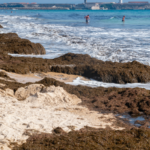
Authorities describe the situation as continuous, as the algae is repeatedly reintroduced by marine currents rather than arriving in isolated seasonal events. Photo credit: Andreas Poertner/Shutterstock

Coastal authorities in southern Spain are preparing for continued large-scale arrivals of invasive Japanese brown algae (Rugulopteryx okamurae) along the Andalucía coastline in 2026. Aggregated regional reporting indicates that around 40 municipalities may be affected to varying degrees, as marine currents continue to transport significant volumes of algae onto beaches.

The species, commonly known as Japanese brown algae or Asian invasive seaweed, has spread rapidly since its arrival in waters linked to the Strait of Gibraltar. It is now established along much of the southern Spanish coast, creating persistent challenges for local authorities responsible for beach maintenance and environmental management.

Tens of thousands of tonnes expected annually

Regional estimates suggest that approximately 56,500 tonnes of invasive algae could be deposited on Andalucía’s beaches during 2026. The figure is based on accumulated removal data and observed seasonal patterns rather than a fixed scientific forecast.

The distribution is uneven, with the highest concentrations typically recorded in Cádiz and Málaga provinces, particularly in coastal areas closest to the Strait of Gibraltar. Smaller but persistent accumulations are also recorded in Huelva, Granada and Almería.

Authorities describe the situation as continuous rather than seasonal, as the algae is repeatedly reintroduced by marine currents rather than arriving in single isolated events.

Around 40 municipalities affected across the coastline

Aggregated regional monitoring indicates that around 40 municipalities across Andalucía are affected to varying degrees. These include both large urban coastal centres and smaller towns dependent on seasonal tourism.

In Cádiz province, municipalities such as Algeciras, Tarifa, La Línea de la Concepción, Barbate, Conil de la Frontera, Bolonia, Caños de Meca and Rota have reported repeated beach accumulations. These areas are among the most exposed due to their proximity to the Strait of Gibraltar.. 

In Málaga province, the impact is concentrated along the western Costa del Sol corridor. The most consistently affected areas include Manilva, Casares Costa, Estepona, Marbella, Mijas Costa and Fuengirola. Occasional lighter deposits have also been recorded further east in Torremolinos and parts of the western Málaga city coastline have also experienced regular deposits requiring mechanical removal  depending on seasonal current conditions. 

Additional lower-intensity impacts have been recorded along parts of Granada, Almería and Huelva.

How the algae affects beaches

The arrival of Japanese brown algae can significantly alter beach conditions. When large volumes accumulate on shorelines, the algae forms thick mats that cover sand surfaces and shoreline edges.

Key impacts include:

  • Reduced usable beach area during peak accumulation periods 
  • Changes to the appearance and texture of sand, as algae mixes with sediment 
  • Odour issues as decomposing algae is exposed to heat and sunlight 
  • Increased labour requirements for mechanical and manual beach cleaning 
  • Temporary disruption to beach facilities in heavily affected zones 

While not structurally damaging to sand itself, repeated deposition can require frequent intervention to maintain safe and accessible beach environments.

What it means for beach goers

For visitors, the algae does not pose a direct health risk, but it can affect the overall beach experience.

In heavily affected areas, beachgoers may encounter:

  • Sections of shoreline covered in decomposing seaweed 
  • Reduced swimming and sunbathing space during peak accumulation 
  • Strong organic odours in hot weather conditions 
  • Increased presence of cleaning machinery during the day 

In many locations, municipalities prioritise clearing main swimming areas first, meaning conditions can vary significantly along the same stretch of coastline.

Despite these disruptions, beaches generally remain open, with local councils working to maintain accessibility throughout the tourist season.

Ongoing removal operations across Andalucía

Local authorities across Andalucía have implemented continuous removal programmes. These include mechanical beach cleaning, manual collection in environmentally sensitive areas, and transport of collected algae to authorised disposal sites.

In some municipalities, repeated interventions are required during peak accumulation periods. In more exposed locations, cleaning may take place daily in order to maintain beach usability.

The cost of these operations has placed pressure on municipal budgets, particularly in smaller coastal towns with limited seasonal revenue.

Environmental pressures and long-term management

Marine scientists continue to monitor the ecological impact of the Japanese brown algae.

Beyond its presence on beaches, Rugulopteryx okamurae has significant ecological consequences in coastal waters. The algae can form dense mats on the seabed, blocking light from reaching native marine vegetation and reducing the space available for local species to grow. This process can displace native algae and seagrass habitats, leading to reduced biodiversity in affected areas. Over time, the structure of local ecosystems may shift, with fewer native species able to compete for space and resources.

Marine scientists also note that the algae can alter seabed composition and simplify habitats used by fish and invertebrates. This reduces ecological complexity in nearshore waters and can affect local food chains. Once established, the species is extremely difficult to remove. Authorities and researchers generally agree that eradication is not currently feasible, and management efforts focus on containment and repeated removal rather than elimination.

Outlook for 2026

With continued inflows expected throughout 2026, municipalities across Andalucía’s coastline are likely to remain engaged in ongoing clean-up operations. While severity varies significantly by location, the overall trend indicates sustained pressure on coastal maintenance systems, particularly in the 40 municipalities identified as most affected.

Continue Reading

%

Benalmadena Hacks Off Lockboxes

Published

on

benalmadena-hacks-off-lockboxes

Fresh action against illegal tourist apartment key safes has taken place in Benalmadena after council workers removed several lockboxes fixed to public railings in busy residential areas.

Town hall officials said the metal boxes had been attached without permission and formed part of unauthorised use of public street furniture connected to holiday rental properties.

Tourist flat crackdown reaches Benalmadena streets

Many tourist flat owners use self check-in systems instead of greeting guests personally, allowing visitors to collect keys at any hour without arranging face-to-face handovers. Many of the boxes carry apartment numbers, labels or coded markings allowing holiday guests to identify which keys belong to their rental property.  Several had been attached directly to railings and other public structures across the town.

Council teams removed the devices following complaints linked to the growing spread of tourist accommodation in residential neighbourhoods.

Councillor Presi Aguilera said public spaces cannot be used for private commercial activity and confirmed inspections will continue in areas with large numbers of tourist apartments.

Residents voice frustration over holiday rentals on Costa del Sol

The ongoing growing anger surrounding tourist flats continues relentlessly across parts of Costa del Sol, with residents regularly raising concerns online about housing pressure, neighbourhood disruption and the changing character of residential districts.

Heated discussions on social media and local forums connected to Malaga province have increasingly focused on the rapid growth of short-term holiday accommodation in towns popular with visitors.

Benalmadena joins several Spanish municipalities attempting to tighten controls on the tourist rental sector through inspections, registration checks and enforcement measures targeting illegal activity, although Benalmadena appears to be among the first areas to publicly remove the lockboxes. 

Council representatives said further operations could take place in other parts of the town as authorities continue to make efforts to keep public areas free from unauthorised installations linked to tourist apartments.

Continue Reading

%

Palma’s Binter NightRun Transformed The City Into A Huge Open-Air Sporting Festival

Published

on

palma’s-binter-nightrun-transformed-the-city-into-a-huge-open-air-sporting-festival

Palma’s Binter NightRun drew thousands of runners and spectators for its sixth edition across the city centre. Credit: Instagram/Binter NightRun

Thousands of runners and spectators filled the streets of Palma on Saturday night as the sixth edition of the Binter NightRun turned the city centre into one of Mallorca’s biggest sporting events of the spring.

The popular night race returned to Palma on May 9 with illuminated routes, live music, DJs and entertainment points spread across the city, creating a festival atmosphere that continued late into the evening. Organisers described the event as one of Spain’s leading urban night races, attracting participants of all ages and abilities.

Three races brought runners through Palma’s landmarks

The event featured three different race formats designed to appeal to both experienced runners and families. The Green Family Mile, a charity-focused 1.7-kilometre route, began at the Dalt Murada esplanade beneath Palma Cathedral. The race was designed as an accessible and inclusive event encouraging participation from families and casual runners.

Later in the evening, participants took part in the 5K and 10K races through Palma’s historic centre and waterfront areas. The 5K route began near the Consolat de Mar on Passeig Sagrera, while the longer 10K race started at Bellver Castle before runners descended into the city centre under special lighting and entertainment effects. Large crowds gathered along the routes as runners passed some of Palma’s best-known landmarks including the Cathedral, the seafront promenade and the old city walls.

Music, lights and entertainment created festival atmosphere

Unlike a traditional road race, the Binter NightRun focused heavily on creating an entertainment experience for both runners and spectators. Throughout the evening, DJs, music stages and lighting installations animated the route while bars and terraces across Palma remained busy with visitors watching the race unfold. Organisers promoted the event as a combination of sport, tourism and nightlife, helping strengthen Palma’s growing reputation for large-scale urban sporting events.

Participants were encouraged to arrive early, with race bib collection taking place at El Corte Inglés Alexandre Rosselló throughout Friday and Saturday before the event.

Palma continued growing role in sports tourism

The Binter NightRun forms part of a wider race series held in several Spanish cities including Tenerife, Murcia, Zaragoza and Las Palmas. Palma’s edition has steadily expanded in recent years and is now considered one of the island’s standout sports tourism events. Earlier this year, the race was officially promoted at FITUR 2026 as part of Mallorca’s international tourism strategy.

For many runners, however, the appeal went beyond competition. The combination of illuminated streets, warm Mediterranean temperatures and a festive city atmosphere once again transformed Palma into a giant nighttime celebration of sport and community.

Continue Reading

Trending

Copyright © 2017 Spanish Property & News