The Town Hall plan to transform roads, parking and public spaces Credit: Mijas City Council
Big positive change is coming for Mijas, as the Town Hall approved a package of investments totalling more than 33 million euros at its April plenary session on Friday, April 24, with votes in favour from the governing team.
The funds, activated through a budget amendment, will be directed towards road infrastructure, sports facilities, public equipment, cleaning services, and water supply works. The package also includes the drafting of projects for street remodelling and pedestrianisation across the municipality.
A large portion of the investment is set aside for parking improvement
A significant portion of the investment is dedicated to Mijas’ municipal parking plan. The new car park in Mijas Pueblo will move forward with a budget of 6.5 million euros, covering both the project design and the tendering of construction works. The Los Santos car park, already under development, is set to open in the near future. Additional parking projects earmarked for project design and works tendering include Parque Andalucia, with a budget of 250,000 euros, and sites at Las Cañadas, La Candelaria, and El Juncal.
Other projects included in the amendment are the installation of new underground waste containers across the municipality, the renovation of the popular La Butibamba park, and the completion of the remaining sections of the Senda Litoral coastal path connecting to Fuengirola.
Roads and sports facilities are among the improvements included
Road improvements form another key part of the package. The council has allocated funding for the widening of the Camino de Coin between the Victims of Terrorism roundabout and the Camino de Campanales junction. The bridges providing access to the Gran Parque have received a budget of 800,000 euros. 2.5 million euros has been set aside for resurfacing the road network throughout Mijas.
Great news for sports also with works at the Las Lagunas sports complex also included, with funding set aside for the design of a project covering the replacement of the grass pitch, as well as new storage and changing room facilities at the annexe football ground.
Around seven stops are proposed, decreasing to less over time Credit: Spanish trains
Exciting news for travellers wanting to enjoy pastel de nata and patatas bravas within a few hours of each other, as Portugal has now confirmed plans for a high-speed rail connection between Lisbon and Madrid, setting a target completion date of 2034. Prime Minister Luis Montenegro has stated that all necessary conditions are now in place to deliver the long-discussed project, following agreements now reached.
Journey times set to drop to around three hours
Plans indicate that travel between the two capitals could take roughly three hours once the full high-speed network is completed. Earlier phases are expected to deliver a journey of about five hours before further upgrades reduce the duration.
Existing infrastructure already covers part of the route, particularly between Evora and the Spanish border. Technical validation currently underway may allow some completed sections to begin operating before the entire project is finished.
So where will the train stop?
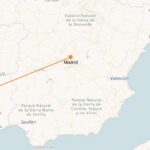
Proposed stops on the Lisbon to Madrid high-speed route are not yet confirmed but current planning outlines a series of key stops across Portugal and Spain. In Portugal, trains are expected to depart from Lisbon, with intermediate points including Poceirao and Evora before reaching a planned international station near Elvas, close to the Spanish border.
Crossing into Spain, the route plans to continue through Badajoz, followed by Merida and Caceres, before heading north to Plasencia. Further stops have been indicated in Navalmoral de la Mata and Talavera de la Reina, with connections into the wider high-speed network near Toledo before arriving in Madrid.
Service patterns have not yet been finalised, meaning some high-speed trains may operate non-stop between major cities while others call at additional intermediate stations.
New track sections and river crossings
Development of the railway will include new track sections, improved signalling systems, and studies for a third Tagus River crossing near Lisbon.
A positive step for the future between two great countries
The completion of the Lisbon to Madrid high-speed line will establish a direct rail link between the two EU capitals, replacing existing indirect routes. This infrastructure will boost commercial travel and tourism between Portugal and Spain, integrating the Iberian Peninsula into the wider European high-speed network where cross-border rail travel is standard.
With the high-speed connection currently scheduled for 2034 it will just miss out on the Spain, Portugal, and Morocco hosting of the 2030 FIFA World Cup. Despite missing the tournament deadline, the project still shows long-term commitment to improving international mobility. Once the service is up and running and fully operational, the faster transit times should strengthen regional ties for decades to follow.
During the last few years motorhomes and camper vans have been accumulating and occupying spaces for cars visiting loved ones in the Hospital Costa del Sol in Marbella. And now, the situation is rising to fever pitch with foreseeable problems this coming summer.
They are inhabited by healthcare workers who have been suffering all this time living in vehicles parked at the hospital because rents in Marbella have soared beyond reach.
Nurses, doctors and support staff from the public Costa del Sol Hospital in Marbella regularly spend nights inside cars and camper vans parked in the facility’s own car park. Skyrocketing housing prices in Marbella have forced many essential personnel into these makeshift living arrangements simply to keep their jobs.
Alicia Ordóñez from the CSIF union explained that professionals accept temporary contracts to accumulate points on the regional job register in the hope of a permanent position elsewhere, yet face impossible choices. Without affordable accommodation nearby, they sleep in vehicles for weeks or even years while separated from families and normal home life. Others drive hundreds of kilometres daily from other parts of Andalucia to avoid giving up their positions.
Daily reality involves undignified conditions for hospital employees
One ex-employee was recently interviewed by Antena Tres News, saying after 5 years in the job, she felt obliged to quit after years of living in a camper van without a bathroom or a kitchen. She had sold her car, which she previously used to commute from Granada Province in, to be able to buy the camper van. The cost of petrol she had been spending on the commute was more or less what she was earning each day. After 5 years of not receiving what she had been hoping for, another posting in a reasonably priced town, she abandoned her career.
Workers who do take up roles often have to put up with exhausting routines. Some park camper vans, motorhomes, or cars overnight in the hospital grounds after failing to find any reasonable rental in Marbella or neighbouring areas. This hardship has become routine rather than exceptional, turning what should be stable employment after years of study into a daily struggle for dignity.
Union representatives warn that such circumstances damage staff wellbeing and create growing gaps in hospital rosters. Summer months will bring extra patient pressure from tourism, yet attracting replacement personnel for holidays is already proving extremely difficult when basic housing remains out of reach.
Transport cuts compound the housing difficulties
Cancellation of the regular bus service from Malaga and other coastal points since February has left many employees without reliable commuting options. Health professionals now face total isolation in their attempts to reach the workplace each day.
The CSIF union has formally asked hospital management to introduce immediate remedies before services collapse under the strain. One practical suggestion involves opening the nearby Marbella Public Holiday Residence, only three kilometres away and publicly owned, as temporary accommodation for medical staff. Authorities recently granted operation of this residence to a hotel operator.
Residents first reported sightings of the lynx moving through streets. Photo credit : Screenshot from footage of SOS Felina Felinae Aranjuez/Facebook
The appearance of an Iberian lynx known as ‘Veneno’ in the Toledo village of Cabañas de Yepes has triggered a dispute between cat rescue groups, local authorities and conservationists after reports that all the free-roaming colony cats have been killed. The case has drawn attention due to it placing two sensitive issues in direct conflict: the protection of one of Spain’s rarest native predators and the management of feral/abandoned cats living outdoors.
Residents first reported sightings of the lynx moving through streets and open land around the municipality. According to local media, neighbours say the animal has been seen attacking and killing street cats. The town council later sought to reassure residents, stating that the lynx was not considered a danger to people and that the relevant authorities had been informed. Monitoring measures were also discussed with environmental services and SEPRONA, the Guardia Civil’s nature protection unit.
Complaints from cat rescuers
The deaths of the colony cats has caused anger among some animal rescue volunteers and cat welfare supporters, who argue that managed colonies exist because of years of pet abandonment and a lack of responsible ownership. Campaigners say the cats should not be blamed for a problem created by humans and have called for stronger intervention to protect sterilised colonies already being fed and monitored.
Supporters of colony management often point to CSR programmes, capture, sterilise and release, as a humane way to reduce uncontrolled breeding while caring for animals already living on the streets. Across Spain, many municipalities have introduced schemes based on that model following reforms under animal welfare law.
Why ecologists disagree
Wildlife specialists and ecologists have responded that the central issue is not the presence of the lynx, but the continued presence of domestic cats in natural and semi-natural environments. The Iberian lynx is a native species once pushed close to extinction and remains strictly protected in Spain. Its recovery has been one of Europe’s most notable conservation successes, supported by habitat restoration, breeding programmes and legal protection.
Experts quoted in recent coverage said lynx preying on cats is natural predator behaviour. As an apex hunter, the lynx may view smaller carnivores, including feral cats, as competitors for food and territory. Scientists also note that outdoor cats can have a far wider ecological impact than a single lynx because, unlike the lynx, they are surplus killers. In the US alone they kill over one billion birds, reptiles, mammals and insects each year, across urban edges, farmland and scrubland.
Several report citing researchers said free-roaming cats kill hundreds of millions of wild animals each year in Spain, many of these endangered species, far exceeding mortality linked to traffic or hunting in some categories. Conservation groups also warn that unmanaged cats can spread disease to wildlife and interbreed or compete with native species. At the current moment in time the main concern is what diseases the feral cats can spread to the lynx.
The legal and practical challenge
The lynx and the cat are treated very differently under Spanish law. The Iberian lynx is an endangered, protected wild species, meaning harming or harassing it can lead to severe penalties. Domestic cats, by contrast, are not native wildlife. While protected from cruelty, they are a human-introduced species whose outdoor populations must be managed responsibly.
That legal distinction is why councils cannot simply remove a protected lynx because it is hunting cats. Instead, authorities usually focus on public guidance, monitoring and coordination with environmental agencies.
A different model for cat colonies
Some conservationists argue the longer-term solution is to move away from open colonies altogether and towards enclosed managed spaces, often known as ‘catios’ or secure outdoor compounds. In that model, unowned or abandoned cats can still receive food, shelter and veterinary care, but without roaming freely or hunting native wildlife.
Supporters say enclosed colonies would reduce conflict between animal welfare goals and biodiversity protection. Birds, small mammals and reptiles would face less predation, while cats themselves would be safer from vehicles, disease and attacks by dogs or wild predators such as the lynx.
Wider significance
The dispute in Cabañas de Yepes shows a problem faced in many parts of Spain. The country is investing heavily in the recovery of endangered species while also trying to respond to concerns over abandoned pets and urban animal welfare. Veneno’s arrival has forced those priorities into the same space.
For now, the lynx remains a symbol of ecological recovery. But the controversy surrounding the village’s cat colonies suggests that future wildlife policy may depend not only on saving rare species, but on deciding where domestic animals should and should not live.















 %3 weeks ago
 Uncategorized4 weeks ago
 Uncategorized4 weeks ago
 Uncategorized3 weeks ago