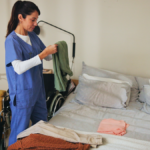
Carers and cleaners are among the workers in line for a new minimum rate from January. Credit: PeopleImages / Shutterstock
Cleaners, carers and seasonal workers across Spain are in line for a bigger pay packet from January, with the proposed minimum for hourly home help rising by 51 cents to €10.06. It’s part of a wider minimum wage rise the government wants signed off before voters go to the polls on Sunday November 29.
Hourly home help would rise to €10.06
Cleaners, carers and nannies paid by the hour would be entitled to at least €10.06 for every hour worked from January 1, up from €9.55, under a draft government order published this week.
That’s a rise of 51 cents, or roughly €80 over a year for someone who cleans for three hours every week and around €530 for a carer who works 20 hours a week. The rate applies to domestic workers who are paid by the hour and don’t live in the household, and the draft says the €10.06 has to cover every part of their pay for the hours actually worked.
The draft also says only cash counts towards the minimum, so payment in kind, such as food or accommodation, can’t be used to make up the difference.
Short-term staff would get at least €60.88 a day
Workers on short contracts would see a bump too. Anyone hired for up to 120 days by the same company would be entitled to at least €60.88 for each legal working day, up from €57.82 this year.
That daily rate is meant to cover the worker’s share of Sundays, public holidays and the two extra annual payments (pagas extra, normally paid in summer and at Christmas), which is why it’s higher than the plain daily rate of €42.87 that applies to the standard minimum wage. Holiday pay for these workers is regulated separately.
The main minimum wage would climb €65 a month
For everyone else on the minimum, the draft sets €1,286 gross a month over 14 payments, or €18,004 a year for a full-time job. That’s a rise of 5.3 per cent, or €65 more a month than now and €910 across the year.
A group of experts advising the Labour Ministry had recommended 4.9 per cent, which would have meant €1,281 a month, so the government’s figure is slightly higher, only by about €5 a month. The unions CCOO and UGT had asked for at least 7 per cent, which would have meant around €1,306. They’ve made their backing conditional on the decree stopping employers from absorbing existing pay supplements into the new minimum, and hadn’t yet commented on the figure.
Anyone already earning more than €18,004 a year for full-time work isn’t affected, and the minimum will have risen by almost 75 per cent since 2018, when it was €736 a month. We compared the current €17,094 a year with UK minimum pay last month, in case you missed it.
Tax is still withheld, then claimed back
Elma Saiz, Spain’s Social Security minister and government spokesperson, said the Spanish tax agency would again approve a deduction so that minimum wage earners pay no income tax (IRPF).
This year, though, employers would still withhold tax from monthly pay, and the money could only be recovered by filing the annual tax return the following year. The draft also says regional or local rules, and private contracts that use the minimum wage as a reference, will stay on this year’s figure unless the parties agree otherwise.
Approval could land in the middle of the election campaign
The draft is open to comments until Monday November 16. The Council of Ministers could then approve it on Tuesday November 17 or Tuesday November 24, with the campaign officially starting on Friday November 13 and the general election on Sunday November 29.
Last year’s rise wasn’t signed off until Wednesday February 18, and it was backdated to January 1. The new draft is written to apply from January 1. Until the decree is approved and published in the BOE (Spain’s official state gazette), the €1,286 and the new hourly and daily rates remain proposals, so the final figures are worth checking once they appear there.
















 Arabia Saudí4 weeks ago

 America4 weeks ago

 %4 weeks ago

 America4 weeks ago

 Uncategorized4 weeks ago