Connect with us

News from Spain

Mother and grandmother die trying to save child in Spain reservoir tragedy

Published

on

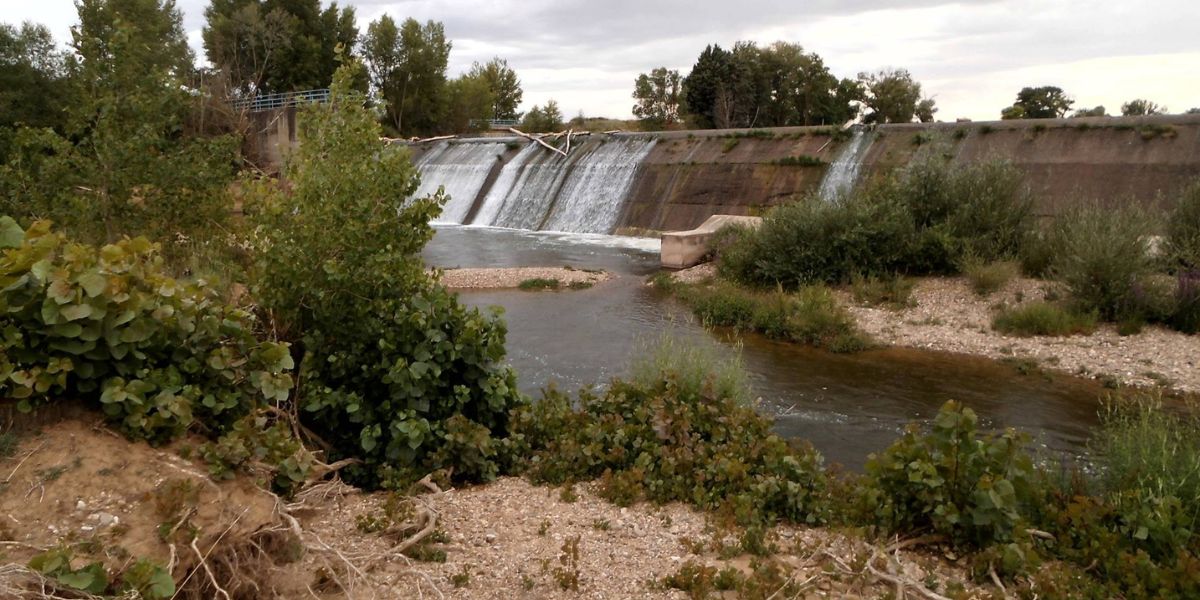
Tragedy occured at the Baños de Cerrato reservoir
Credit: Facebook/PerrunosporPalencia

A devastating family tragedy has shocked Spain after two women lost their lives while trying to rescue a young child from the water at a reservoir in the city of Palencia.

The incident happened on Sunday evening at the Baños de Cerrato reservoir, in the municipality of Venta de Baños, Castilla y León. Emergency services were alerted shortly after 6.30pm when reports came in that a young boy had fallen into the water and was struggling to stay afloat. According to authorities, family members immediately entered the water in an attempt to save him.

Child survives rescue attempt

The two women, aged 32 and 52, have been identified as the child’s mother and grandmother. Both became trapped in difficulty during the rescue effort and were unable to make it back to shore. Emergency responders later confirmed that they had died at the scene.

The child, reported to be five years old, was eventually located alive by fishermen who were nearby. He was found clinging to safety near the opposite bank and was taken conscious to Río Carrión Hospital in Palencia for medical assessment. A male relative who witnessed the incident was also taken to hospital suffering severe shock.

Major emergency response launched

Following the emergency call, a large-scale rescue operation was deployed involving firefighters from Palencia, the Guardia Civil, medical teams and a mobile intensive care unit. The regional emergency coordination centre also activated specialist psychological support teams to assist relatives and witnesses affected by the tragedy.

Officials described the incident as an “authentic tragedy” that has deeply affected the local community. The Guardia Civil has opened an investigation to establish the exact sequence of events and determine how the accident unfolded. Early reports suggest the child entered an area of water where currents may have made it difficult to return safely to shore.

Water safety warning

The deaths have once again highlighted the dangers posed by reservoirs, rivers and inland bathing areas, particularly during periods of warm weather when more families are spending time near the water. Authorities continue to urge caution around unsupervised swimming spots and areas with hidden currents.


%

Two Arrested After Fake Empadronamiento For 18 People At Single Home For Up To €800 Each

Published

on

two-arrested-after-fake-empadronamiento-for-18-people-at-single-home-for-up-to-e800-each

Spanish authorities have previously warned about fraudulent empadronamiento practices. Photo credit: Matthew Figg/Shutterstock

Two men have been arrested in Spain after police uncovered a scheme in which up to 18 people were fraudulently registered at a single address in exchange for payments of up to €800 per person. The investigation focused on a property in El Puig, in the province of Valencia, where officers found that multiple individuals were officially recorded as living at the address despite not residing there in reality.

Authorities say the arrangement was used primarily by people in vulnerable situations, many of them foreign nationals seeking to regularise their administrative status in Spain through municipal registration records. The property was linked to a wider operation in which individuals were allegedly paid to be registered at the address in exchange for money, despite having no genuine connection to the home.

Payments between €150 and €800 per registration

According to police findings reported, those involved in the scheme charged varying amounts depending on the circumstances of each case, with payments ranging from around €150 up to €800 per person.

Investigators identified at least 18 people listed at the same address. Most were not living at the property, and officers concluded that the registrations were being used to generate official documentation needed for administrative processes, including residency-related procedures.

The homeowner and an associate are alleged to have benefited financially from the arrangement, with one acting as an intermediary between those seeking registration and the person controlling the property.

Investigation triggered by irregular registration patterns

The case began after authorities detected unusual registration activity linked to the same address. This prompted further checks by police, who later confirmed that the property was being used as a vehicle for multiple false declarations of residence. Officers established that the home was not being occupied in line with the number of people registered there.

In some cases, there was no evidence that individuals had ever lived at the address. Police say the situation pointed to systematic misuse of the municipal registration system, which is intended to record genuine residence rather than serve as a commercial service.

Charges linked to immigration facilitation and fraud

Both suspects, aged 38 and 55, were arrested in the Valencia region. They are being investigated for alleged offences including fraud and facilitating irregular immigration procedures.

After giving statements to police, both were released pending further legal proceedings, with obligations to appear before judicial authorities when required.

Investigators are continuing to examine whether additional individuals were involved in the scheme or whether similar arrangements existed at other properties.

Wider issue of illegal registration schemes in Spain

Spanish authorities have previously warned about fraudulent empadronamiento practices, where individuals are registered at addresses where they do not live in order to obtain administrative advantages.

Municipal registration in Spain is used to access services such as healthcare, schooling, and residency procedures. Because of its importance in administrative processes, it has increasingly become the target of abuse in cases involving vulnerable migrants.

Similar investigations in other regions have uncovered networks charging fees to register people at overcrowded or unused properties, sometimes involving dozens of names at a single address.

Authorities say such practices distort official population records and can place pressure on local services if not properly controlled.

Final Outcome

Two men have been arrested in the Valencia region after police discovered that up to 18 people had been fraudulently registered at a single property in El Puig in exchange for payments of up to €800 per person. The investigation is ongoing, with authorities examining the scale of the alleged scheme and whether further individuals were involved.

Continue Reading

%

Formally Enrol School By June 1 Andalucia

Published

on

formally-enrol-school-by-june-1-andalucia

Registration opens on June 1 for pupils entering infant education, primary education and special education at publicly funded schools across Andalucia. Hundreds of thousands of families across the region can begin registering children for the 2026–27 academic year from Monday, with education officials encouraging parents to complete enrolment before the deadlines.

Families whose children have already been offered places must still complete the enrolment process to confirm their attendance in September. Nearly 667,000 pupils are expected to register across Andalucia during the coming days.

Important registration dates for families

General enrolment remains open until June 8 for Infant Education (second cycle, ages 3–5), Primary Education and Special Education. Children enrolled in the first cycle of Infant Education, covering ages 0 to 3, have a slightly longer deadline, with registrations accepted until June 10. Missing the official registration period will result in families losing their allocated place and being excluded from the ordinary admissions process.

Earlier stages of the admissions process took place during March, when parents submitted new applications for school places. The current registration period forms the final compulsory step for successful applicants before the new academic year begins in September.

A major change this year, smaller class sizes

The biggest change for families enrolling three-year-olds this September is a reduction in Reception class sizes. From 2026–27, classes for children entering their first year of Infant Education will be capped at 22 pupils, down from the previous maximum of 25. This is lower than the national standard set by the Spanish government and comes after agreements between the Junta de Andalucia, teaching unions and school associations.

At least 152 new classrooms are being created to accommodate the smaller groups, a figure expected to grow as final demand becomes clear. The reduction will be introduced progressively, starting with three-year-old Reception classes and extending into Primary in future years.

For families in high-demand areas, including parts of Malaga, Seville and popular bilingual schools along the Costa del Sol, the smaller class sizes mean fewer places per group. The points threshold needed to secure a preferred school may be higher than in previous years.

Online school registration grows

Families can complete registration through the Junta de Andalucia’s Virtual Secretariat platform using a computer, smartphone or tablet. Paper forms are also available directly from schools for those who prefer in-person registration.

More than 296,000 registrations were completed online during the previous academic year, representing over half of all enrolments and a 16 percent increase on the year before. Most families used the iANDE authentication system, while others accessed services through the Cl@ve platform and digital certificates. Around 59 percent of online registrations were submitted using mobile devices.

Families who already have a child at the school can find their iANDE key in the iPasen app under the Comunicaciones section.

School meals and extra services

Parents can request additional services during registration, including school meals (comedor), breakfast clubs (aula matinal) and extracurricular activities. These are requested at the same time as enrolment. Applications for complementary services can generally be submitted until June 10 but families should confirm this with their individual school.

What should you do now

Check the admission result published by your child’s school. Results were published on May 14
Log in to the Junta de Andalucia’s Virtual Secretariat using your iANDE or Cl@ve credentials to enrol online.
If you have a child already enrolled, find your iANDE key in the iPasen app under Comunicaciones.
Complete enrolment by June 8 (or 10 June for ages 0–3).
Request school meals, breakfast club and any other services at the same time.
If you prefer to enrol in person, collect a paper form direct from the school.
Do not miss the deadline. Families who fail to register within the official window will lose their allocated place.

Common questions

I was on the waiting list and have just been offered a place. What do I do?

Families on the waiting list who are offered a place have a separate enrolment window from June 11 to 17. Any offered place not taken up by June 18 will be considered renounced. Remaining vacant places will be published on June 18, and a reallocation process runs from June 19 to 25.

My child is already at the school. Do I still need to enrol?

Yes. Receiving an offer or being a returning pupil does not automatically secure the place. All families must formally complete enrolment during the June window or risk losing the place.

My child was assigned to a school that was not our first choice. What can I do?

Your child’s assigned school should have been confirmed on May 25. You must enrol at the assigned school by June 8. If you remain unhappy, you can apply for reallocation between June 19 and 25 once vacant places are published on June 18

What happens next

Once the standard registration window closes schools will confirm final class lists. Vacant places freed up by families who did not enrol will be published on June 18. A reallocation round will allow remaining families to apply for places at schools with availability, with final enrolments completed between June 26 to 39

Families moving to the area after the main enrolment period, or those whose circumstances change, may apply through an extraordinary admissions process running from July 1 onwards.

For full information and to access the online enrolment portal, visit the Junta de Andalucía Portal de Escolarizacion at the official website.

Continue Reading

Mallorca

A Palma Airport advert has sparked outrage across Mallorca and here’s why

Published

on

By

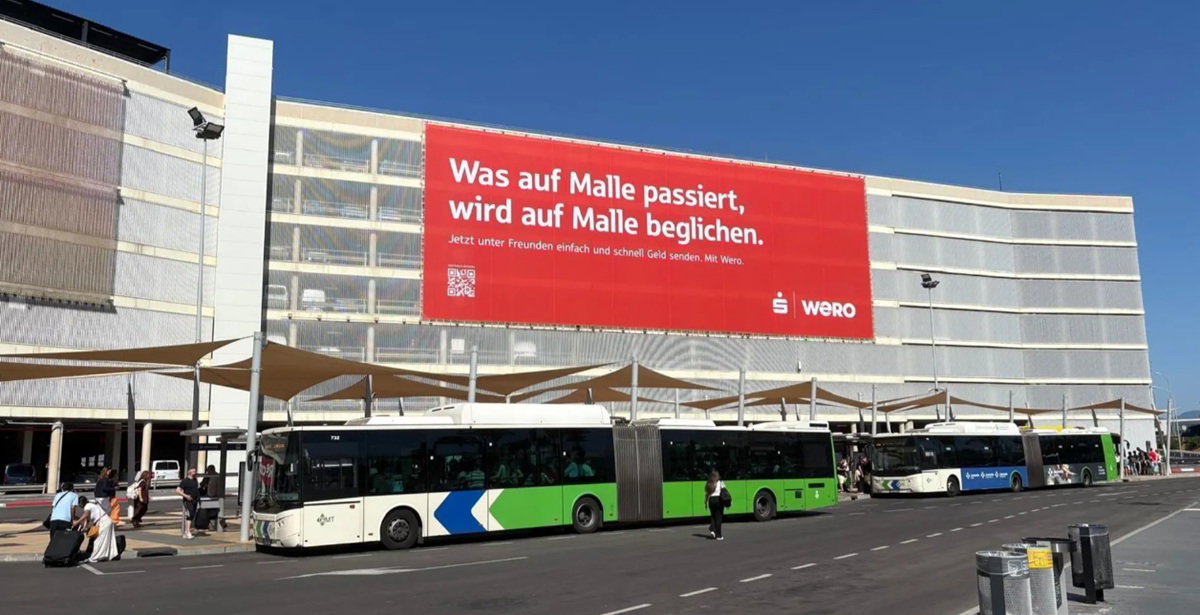
The Wero billboard at Palma Airport has sparked criticism from politicians who say it sends the wrong message about Mallorca.
Credit : Europa Press

A giant advert at Palma Airport has sparked an unexpected row in Mallorca. The billboard is not promoting alcohol, nightlife or package holidays. It advertises Wero, a digital payment service similar to Bizum.

Yet its slogan has angered politicians and residents who believe it sends exactly the wrong message about the island. Within days, it had become one of the most talked about topics on the island.

The reason was not the product being advertised. It was a phrase that many people in Mallorca felt carried a message they have grown tired of hearing.

The billboard promotes Wero, a money transfer service similar to Bizum. But critics say the slogan echoes one of the most famous tourism campaigns ever created: ‘What happens in Vegas stays in Vegas.’

For some people, that comparison may seem harmless.

In Mallorca, it landed very differently.

The Balearic government has now asked airport operator Aena to remove the advert, arguing that it projects an image of the island that many residents and local authorities have spent years trying to move away from.

Why a banking advert has caused such a strong reaction

The wording on the billboard refers to paying friends back quickly and easily during a trip.

On its own, it sounds fairly innocent. The controversy comes from what many people believe it is referencing.

The slogan has been widely interpreted as a wink to the famous Las Vegas campaign that became globally known in the early 2000s.

That campaign was built around the idea of holidays without limits, wild nights out and experiences best left untold.

Whether the creators of the Mallorca advert intended that comparison or not, many people immediately made the connection.

And that is where the problems began. Tourism councillor Jaume Bauzà described the campaign as unacceptable and argued that it damages Mallorca’s international image.

Politicians from both the Partido Popular and Més per Mallorca have publicly called for the billboard to be taken down.

Their criticism is not really about a payment app. It is about what they believe the slogan represents.

A sensitive moment for Mallorca

The timing probably explains why the reaction has been so strong. Tourism remains the island’s economic lifeblood, but discussions about overcrowding and visitor numbers have become increasingly common.

Over the past few years, Mallorca has found itself at the centre of debates about overtourism, housing pressures and the strain that millions of visitors place on infrastructure every summer.

At the same time, local authorities have tried to promote a broader image of the island.

Beaches remain important, of course. So do restaurants, hotels and nightlife.

But officials have increasingly focused on culture, gastronomy, nature and year round tourism rather than the party destination reputation associated with certain resorts.

That is why some residents saw the advert as a step backwards. For them, it revived a stereotype that Mallorca has spent years trying to shake.

The use of ‘Malle’, a nickname commonly used by Germans when referring to Mallorca, generated criticism as well.

To many German tourists, the term is completely normal. To some locals, it has become associated with a version of Mallorca that feels disconnected from the island’s identity.

Aena says the criticism is misplaced

Aena has defended the billboard and rejected claims that it promotes excessive tourism. The airport operator points out that the advert is marketing a financial service and not encouraging any particular type of behaviour.

It has also stressed that airports do not determine tourism demand.

According to Aena, the number of visitors travelling to Mallorca depends on the destination itself and the tourism offer available on the island. That response has done little to calm the debate.

What makes this story unusual is that almost nobody is arguing about the actual product being advertised.

The discussion is entirely about perception :  One side sees a harmless marketing campaign. The other sees a slogan that recalls a tourism model Mallorca is trying to leave behind.

For travellers arriving at Palma Airport, the billboard may be little more than another advertisement among hundreds of others.

For many people living on the island, however, it has become something much bigger than that. It has become part of a conversation Mallorca has been having with itself for years about the kind of destination it wants to be in the future.

Continue Reading

Trending

Copyright © 2017 Spanish Property & News