Connect with us

%

Murcia Athlete With Cerebral Palsy Takes On 3,479-Metre Mulhacén Challenge

Published

on

murcia-athlete-with-cerebral-palsy-takes-on-3,479-metre-mulhacen-challenge

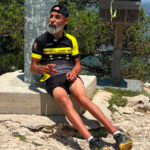
His latest challenge will see him tackle the demanding ascent of Mulhacén on foot. Photo credit:TotalEnergies Maratón Murcia Costa Cálida/FAcebook

When most people look up at Mulhacén, they see the highest mountain on the Iberian Peninsula, a towering summit that rises 3,479 metres above sea level and tests even experienced hikers with its steep climbs, thin air and unpredictable conditions. One Murcian man, however, sees something very different: another finish line.

Francisco Pérez, better known as “Superpaco,” will attempt to climb Mulhacén, despite living with cerebral palsy, a condition that affects the movement and coordination of his legs. His challenge is about far more than reaching the summit, it is about proving that determination can carry people further than many believe possible.

A mountain with a message

At 43 years old, Superpaco has become a familiar face in Murcia’s adapted sports community, and his latest challenge will see him tackle the demanding ascent of Mulhacén on foot, supported by a team of companions who will help him maintain his balance across the mountain’s most difficult sections. Volunteers from the association Zancadas sobre Ruedas will also provide logistical support throughout the climb, ensuring he can concentrate on the demanding journey ahead.

For many climbers, reaching Mulhacén’s summit is a personal achievement, but for Superpaco the mountain represents something much bigger. He hopes his ascent will encourage children, young people and adults living with disabilities to believe that barriers are not always as immovable as they first appear. “I’m not climbing Mulhacén to prove I’m different,” he said ahead of the challenge. “I’m climbing it to show that we’re all capable of going much further than we believe.”

No stranger to breaking barriers

This is not the first time Superpaco has refused to let cerebral palsy define what he can achieve. He is the Spanish T71 Frame Running 100-metre champion, competing in a discipline designed for athletes with coordination and mobility impairments, and has already completed numerous sporting challenges, including reaching the summit of Revolcadores, the highest mountain in the Region of Murcia, as well as taking part in the TotalEnergies Maratón Murcia Costa Cálida.

Each challenge has carried the same message: physical limitations do not have to limit ambition. Mulhacén, however, represents his biggest test yet, demanding endurance, resilience and determination over one of mainland Spain’s most demanding mountain routes.

More than a climb

The expedition will also form part of the documentary Superpaco, héroes sin capa (Superpaco, Heroes Without a Cape), which follows his sporting journey and the people supporting him along the way. Photos and videos from the ascent are expected to be shared on social media, allowing supporters to follow his progress from the foothills to the summit of mainland Spain’s highest peak.

The documentary aims to draw attention to not only the physical challenge itself, but also the importance of inclusive sport, determination and the network of volunteers, family and friends who make challenges like this possible.

An inspiration beyond Murcia

Mulhacén has challenged mountaineers for generations, attracting thousands of walkers to the Sierra Nevada every year, but this week many people will be following the mountain for an entirely different reason. They will not be watching to see how quickly someone reaches the top, but to witness the determination it takes simply to begin a challenge that many would dismiss as impossible.

Whatever happens on the climb, Superpaco has already achieved something that cannot be measured in metres climbed or hours spent on the mountain. By choosing to take on one of the Iberian Peninsula’s toughest ascents despite the daily challenges of cerebral palsy, he is reminding people that courage is not depend on physical strength alone, but on the willingness to keep moving forward when every step demands more than most can imagine.

For those following his journey from Murcia and beyond, the most powerful part of this story may not be whether he reaches the summit. It is that he refused to let the mountain, or his disability, decide where his limits should be.

%

Two Chilean Recluse Spiders With A Fearsome Reputation Have Reached Portugal

Published

on

two-chilean-recluse-spiders-with-a-fearsome-reputation-have-reached-portugal

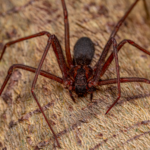
Recluse spiders are often blamed for injuries they did not cause. Photo credit: Vinicius R. Souza/Shutterstock

If you have recently seen headlines about one of the world’s most infamous spiders being discovered in Portugal and immediately started checking your shoes before putting them on, you are probably not alone. The discovery of a spider with a reputation for causing serious skin reactions sounds alarming, but before Portugal is imagined as a new home for a dangerous eight-legged invader, there is something important missing from many of the headlines, the reality is far less dramatic.

Scientists have confirmed the discovery of two male specimens of Loxosceles laeta, better known as the Chilean recluse spider. The finding marks the first official record of the species in Portugal and the first documented record on the Iberian Peninsula. It is an important scientific discovery, but it does not mean Portugal or Spain is suddenly full of Chilean recluse spiders hiding in homes.

Two spiders do not equal an invasion

Two male Chilean recluse spiders were discovered in Porto months apart. While that is enough for scientists to officially record the species in Portugal, it does not mean the spider has successfully colonised the Iberian Peninsula. For an introduced species to become established in a new country, it needs much more than simply arriving. It must survive, reproduce, adapt to the environment and create a self-sustaining population over generations.

Finding two unexpected visitors is very different from discovering a thriving population. However, scientists acknowledge that further isolated discoveries in Iberia would not be surprising. Global trade constantly moves species around the world, and accidental introductions can happen through cargo, packaging and imported goods.

A spider that travelled the world

One of the most interesting examples of an introduced Chilean recluse population comes from Finland. A colony became established inside the Natural History Museum of Helsinki after the spiders were believed to have arrived through fruit shipments during the 1960s and 1970s.

Despite decades of visitors passing through the building, including school groups and children, only one confirmed bite has ever been recorded from that colony. The example shows that even where these spiders are present, human encounters remain extremely uncommon.

Spain’s arachnologists urge calm

To find out what this discovery really means, I spoke to friend and colleague Cristian Pertegal, PhD, one of Spain’s leading arachnologists, who has spent more than a decade carrying out active research into spiders and other arachnids. While Pertegal believes the discovery is scientifically significant, he is concerned that some media coverage risks turning it into something it simply is not.

“My biggest concern is that some local media will blow it out of proportion,” he told Euro Weekly News. “Finding two specimens is scientifically interesting, but it shouldn’t be interpreted as evidence that the species has established itself across the Iberian Peninsula.” Pertegal believes the biggest danger at the moment is not the spider itself, but the fear surrounding it.

“People hear the words ‘Chilean recluse’ and immediately imagine a deadly spider hiding in every corner. The reality is very different. Bites are exceptionally rare and cases that actually develop into loxoscelism are rarer still.” For Pertegal, the discovery should encourage scientific curiosity rather than panic. “This is exactly the sort of discovery that should encourage good science, not unnecessary fear.”

A familiar spider with a different name

Adding even more confusion is the fact that Spain and Portugal already have a recluse spider of their own. The Mediterranean recluse spider (Loxosceles rufescens) is native to southern Europe and can already be found across the Iberian Peninsula.

The Chilean recluse (Loxosceles laeta) belongs to the same group as other medically important recluse spiders, including the brown recluse (Loxosceles reclusa) found in parts of the United States. Like other recluse species, it is a small, brownish spider that is difficult for the untrained eye to identify. One of its most recognised features is the dark violin-shaped marking on the upper part of its body, which has led to many species in this group being known as “violin spiders”.

However, this marking alone is not enough to identify a recluse spider. Colour, patterns and body shape can vary, and many unrelated spiders can be mistaken for them. The Chilean recluse, Mediterranean recluse and brown recluse are closely related, and distinguishing them often requires specialist examination of anatomical features under a microscope. For this reason, experts warn against identifying spiders based solely on photographs or fear-driven assumptions after seeing alarming headlines.

Why does the Chilean recluse have such a reputation?

There is a reason Loxosceles laeta attracts attention, native to South America, particularly Chile, Peru and Argentina, it is considered one of the world’s most medically significant spiders because its venom can, in some cases, cause a condition known as loxoscelism. Some bites can result in skin damage and tissue necrosis, but the image of an aggressive spider actively seeking humans is far from reality.

The Chilean recluse is exactly what its name suggests: a recluse. It prefers dark, quiet places and generally avoids people. Most genuine bites happen when the spider becomes trapped against the skin, such as inside clothing, bedding or shoes.

The problem with “spider bites”

One of the biggest challenges surrounding recluse spiders is that they are often blamed for injuries they did not cause. Many people report being bitten by spiders despite never seeing the animal responsible. Without the spider being captured and correctly identified, proving the cause of a skin injury can be extremely difficult.

In many cases, suspected spider bites later turn out to have another explanation, including bacterial infections such as MRSA (methicillin-resistant Staphylococcus aureus), which can produce skin damage similar to loxoscelism. This does not mean genuine recluse bites do not happen. They do. However, confirmed cases are far rarer than public perception suggests.

A major clinical study in Santiago, Chile, examined 250 cases of loxoscelism recorded between 1955 and 2000. Most involved skin reactions, while a smaller number developed the more severe viscerocutaneous form. The figures demonstrate that genuine cases exist, but they also highlight why experts focus on confirmed cases rather than every suspected spider encounter.

Interesting discovery, not a reason for fear

The discovery of Loxosceles laeta in Porto is undoubtedly significant. It gives scientists valuable information about how species move around the world and how global trade can accidentally transport wildlife. Could more isolated specimens appear in the future? It is possible.

But finding individual spiders is very different from proving a species has adapted, reproduced and established itself in a new environment. For now, the message from experts is simple: Portugal has discovered two Chilean recluse spiders. It has not discovered a spider invasion, the real story is not about a dangerous spider suddenly taking over Iberia. It is about how quickly fear can spread, often much faster than the facts.

Continue Reading

%

Horror In France As Five Newborn Babies Discovered Inside Boxes

Published

on

horror-in-france-as-five-newborn-babies-discovered-inside-boxes

Investigation will need to establish whether the infants were born alive. Photo credit: Vad-Len/Shuttetstock

A quiet home in southern France has become the centre of a devastating investigation after police discovered the remains of five newborn babies hidden inside cardboard boxes. The discovery in Orange, in the Vaucluse region of southeastern France, has shocked the local community and left investigators searching for answers about what happened inside the property.

Authorities launched a criminal investigation after the discovery, with forensic experts now working to establish the circumstances surrounding the deaths of the infants. While the case has raised many questions, investigators have warned that the full picture will only become clear once medical examinations and further enquiries are completed. For neighbours, the most difficult part of the story is the contrast between an ordinary family home and the tragedy that was allegedly unfolding behind closed doors.

A discovery that began with a newborn baby

The investigation reportedly began after a 32-year-old woman gave birth to a healthy baby at home before being taken to hospital. Reports indicate that the woman had previously denied being pregnant, with the circumstances surrounding the birth now forming a key part of the investigation. While she was receiving medical care, her husband reportedly discovered what appeared to be human remains inside cardboard boxes at the property and contacted authorities.

Police later found the remains of five newborn babies inside the home, triggering a major investigation. Authorities are now working to determine when the deaths occurred, the causes of death and the exact circumstances surrounding each case. At this stage, investigators have not released details about how the babies died, and forensic examinations will be crucial in providing answers.

A community left searching for answers

The discovery has left residents in Orange struggling to understand how such a tragedy could have remained hidden. Neighbours reportedly described the couple as a normal family, with no obvious signs that anything unusual was happening inside the property. That sense of disbelief has deepened the shock, as residents attempt to process the discovery of five newborn babies in a place that appeared to be an ordinary home.

Cases involving hidden pregnancies are among the most complex and sensitive situations authorities investigate. They can involve many different factors, including whether a pregnancy was recognised, a person’s mental state, access to support and the circumstances surrounding childbirth. However, investigators have not yet confirmed the reasons behind what happened in this case.

Unanswered questions remain

One of the biggest questions facing investigators is how multiple pregnancies and births could have remained unknown. Reports suggest the woman had denied being aware of her pregnancies, while her husband has reportedly said he was unaware of them as well. Authorities are now gathering evidence, speaking to those connected to the family and awaiting forensic results that could help reconstruct the timeline.

The investigation will also need to establish whether the infants were born alive, the exact dates of the births and the circumstances leading to their deaths. Until those answers are confirmed, officials are expected to proceed carefully as they work through one of the most disturbing cases to emerge in France.

A tragedy behind closed doors

The case has also renewed attention on the phenomenon of hidden pregnancies, known in France as “déni de grossesse”, where a woman may not consciously recognise that she is pregnant.

Medical experts have previously highlighted that such situations can be extremely complex, with some women reaching advanced stages of pregnancy without fully understanding what is happening. However, each case is different, and authorities investigating the events in Orange will need to establish the specific circumstances before drawing conclusions.

A town waiting for the truth

For now, the residents of Orange are left with more questions than answers. The discovery of five newborn babies inside a family home has created a wave of sadness and disbelief, while investigators continue their work away from public attention. Behind the shocking headlines is a tragedy involving five babies, a family and a community trying to understand how such an event could have happened.

As forensic teams examine the evidence and investigators continue searching for answers, the focus remains on uncovering the truth about what happened inside the home in Orange. For a town that began the week like any other, a discovery inside a few cardboard boxes has changed everything, leaving France waiting for answers.

Continue Reading

%

Cool And Cosy In Summer Or Winter

Published

on

By

cool-and-cosy-in-summer-or-winter

Cool and Cosy cover the coast from Nerja to Sotogrande and inland as well. Credit: Cool and Cosy

WHEN you live on the Costa del Sol in what continues to be a rapidly changing climate with warmer summers and colder and wetter winters you know that you need to be both Cool and Cosy at different times of the year.

Cool and Cosy, a family run business based in Calahonda which has been at the forefront of heating and cooling since it was founded in 1993 is delighted to be able to offer some very useful solutions.

It has four main areas of expertise, namely air conditioning, energy saving, solar hot water and underfloor heating aimed at both the domestic and commercial markets and as new technology evolves, so Robert who runs the business ensures that he is able to offer the most appropriate solution to customer needs.

They can supply all leading brands of air conditioners, but strongly recommend Fujitsu General, which they believe to be the most reliable unit and installation comes with the company´s three years parts and labour warranty.

In the unlikely event that your unit should break down Cool and Cosy won’t send you an outsourced repair company but will send one of their own highly trained technicians to repair the fault and they undertake to source any replacement parts within 48 hours.

If you rent out your property on a short term basis or you simply want to limit the amount of energy used in the home it is sensible to be aware of the money saving options available to you.

There is a wide range of different alternatives available which include movement sensors (which will turn off air conditioners if no movement is detected), coin metres and timer switches so if you want to save money and help the environment, just contact Cool and Cosy.

One other way of saving energy and cost over a period of time is by the installation of solar panels so if you want to conserve funds and get free hot water whatever the weather, this is an easy and very practical option to consider.

Robert and his team of bilingual installers at Cool and Cosy cover an area along the coast from Nerja to Sotogrande and inland as well so there is no problem in obtaining help and advice in no time at all.

Call the Cool and Cosy office on 952 935 513 Monday to Friday 8am to 4pm for a free quotation, e-mail coolandcosy@hotmail.com, or view their detailed website http://coolandcosy.es and there is also a mobile number 679 976 062.

Continue Reading
Advertisement
Advertisement

Spanish Real Estate Agents

Tags

Trending

Copyright © 2017 Spanish Property & News