Connect with us

El Hierro

National Priority Takes Over The Narrative

Published

on

national-priority-takes-over-the-narrative

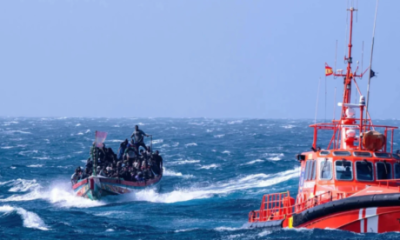
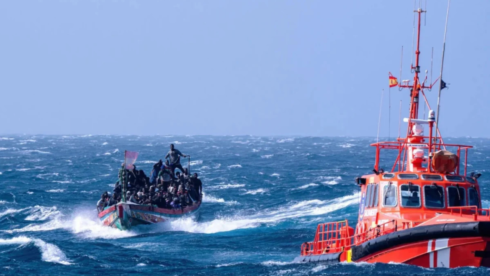
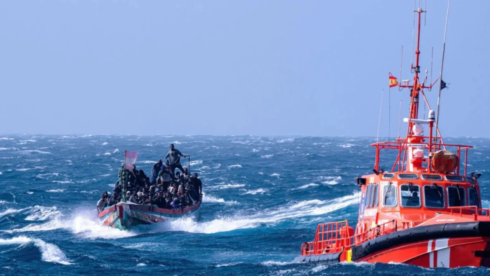
More than 2,000 people arrived on El Hierro in cayucos —the long wooden boats used by migrants heading for the Canary Islands from West Africa— in just 24 hours, while we were busy counting the crowds at campaign rallies, also in the thousands. A baby was born during the crossing and was four days old when it was treated on the island. Its mother had set out from Gambia. Of all the political voices heard that Tuesday, five days before this Sunday’s vote, only one spoke with his heart in his mouth.

It was Fernando Clavijo, of Coalición Canaria, the president of the Canary Islands, who was on Cadena SER radio that night: “That’s the reality we have to live with. Until you’ve stood at the end of the pier and watched them arrive exhausted, you can’t grasp it. It breaks your heart. I think it’s madness to use the politics of fear to try to scrape together a handful of votes. Vox brought down five regional governments over taking in two or three children in a country of fifty-odd million people. Then they beat their chests and call themselves practicing Catholics and Christians, but, as the Pope said, you have to practice through deeds.”

The Canary Islands president’s remarks were a slap of reality in a political debate that has veered away from the protection of human rights. That is the course the European Union has taken in applauding five member states’ decision to set up deportation centers for migrants in Rwanda. It is also the thinking behind Teresa Jiménez-Becerril’s reorganization of the Ombudsman’s Office as soon as she took over as acting ombudsman. The former PP member of the European Parliament has moved to fold the migration unit into a broader department that also covers Security and Justice. More than 400 civil society organizations have signed a manifesto demanding dedicated staff and resources to handle complaints from migrants.

Neither of those moves has taken up much space in a campaign in which immigration has been discussed at length, but from the perspective of how it affects Spaniards or how they perceive it. Whether it suits us that they come, whether they make us richer or poorer, whether we need them for care work, whether our cities are more or less safe with them around, and how many are still left to be removed from Ceuta.

Alberto Núñez Feijóo visited El Hierro and later promised to deploy the armed forces “when national security requires it.” He also explicitly backed the deportations to Rwanda, while his potential coalition partner, Santiago Abascal, promises “remigration” on the posters hanging from lampposts. Where they already share power, the PP and Vox are already cutting international development aid aimed at improving living conditions in countries of origin. For the first time in more than three decades, Aragón has completely eliminated its budget lines for international aid.

Many human beings depend on those decisions, which don’t appear among the country’s major concerns. After the Ceuta crisis, Daniel Innerarity warned in EL PAÍS: “Fear of the far right’s growth can lead us to fight it by accepting its description of the world.” Humanitarian organizations, meanwhile, pointed to the risk of society becoming desensitized to migrants’ vulnerability. Has the left mentioned the regularization process during this campaign? It has, but the government’s priority in the campaign has been to avoid stirring up the cocktail of recrimination and emotion unleashed by last July’s mass entry.

The positive case has been toned down during the election period, which is why former minister José Bono’s remarks, in which he set votes against dignity, resonated so strongly. No prepackaged message, video or podcast communicates better than the authenticity of words that haven’t been weighed in advance. Like those of the Socialist veteran, blurting out that what matters is “a person who falls down and is hungry.” Or those of the Canary Islands president, overwhelmed on the pier by the vulnerability of the men, women, and so many children who matter so little in public debate. “National priority”, Vox’s, campaign slogan, has taken over the migration narrative.

Sign up for our weekly newsletter to get more English-language news coverage from EL PAÍS USA Edition

Canary Islands

At Least 14 Migrants Found Dead On Boat Off El Hierro After Ten Days Adrift – Just Days After Record Arrivals Reach Canary Islands

Published

on

at-least-14-migrants-found-dead-on-boat-off-el-hierro-after-ten-days-adrift-–-just-days-after-record-arrivals-reach-canary-islands

Rescuers discovered the bodies on the stricken vessel around 63km south of the Canary Islands on Friday.Rescuers discovered the bodies on the stricken vessel with around 100 people on board around 63km south of the Canary Islands on Friday.

Continue Reading

%

Spain Sends Military Team To Canary Islands As Regional President Challenges Sánchez

Published

on

spain-sends-military-team-to-canary-islands-as-regional-president-challenges-sanchez

A member of Spain’s Military Emergency Unit on El Hierro. Archive photograph. Credit: UME

Fernando Clavijo says the migrant crisis is “anything but under control” as 120 emergency personnel are sent to El Hierro.

Spain is deploying members of its Military Emergency Unit (UME) to the Canary Islands after almost 3,000 people arrived on El Hierro over two days, putting pressure on the island’s health and reception services.

The operation includes 120 personnel and 25 vehicles and other resources, among them two ambulances. The medical team has three doctors, eight nurses and 15 medical technicians. The UME will help with triage and urgent care, and set up two advanced medical posts. The deployment is taking place throughout Thursday, with personnel drawn from the Canary Islands and mainland Spain.

The Canary Islands Government declared a level two emergency on Wednesday, allowing it to request support from the central government. EWN covered the emergency declaration and record arrivals in yesterday’s report on the migrant crisis.

Canary Islands president rejects Sánchez’s claim

The deployment comes amid a public disagreement between Prime Minister Pedro Sánchez and Fernando Clavijo, president of the Canary Islands.

Sánchez said the migrant situation was under control because Spain had been prepared for the rise in arrivals. Clavijo rejected that assessment, describing the situation on El Hierro as “anything but under control”.

Clavijo said that after three meetings between ministers and efforts with the European Union, there had been no results. He said the government was either not taking the situation seriously or had a serious problem with its foreign relations.

Clavijo has asked Madrid to keep the UME on El Hierro until the arrivals ease. The island has about 12,000 residents and has set up a field hospital to help cope with demand for medical care.

The Defence Ministry said the UME deployment could be expanded if the situation requires more personnel or equipment.

Continue Reading

%

Canaries Migrant Crisis At Emergency Level

Published

on

canaries-migrant-crisis-at-emergency-level

100s more migrants arrive in El Hierro. Credit: Salvamento Maritimo

Record arrivals overwhelm El Hierro as officials seek urgent support.

El Hierro in the Canaries has declared a Level Two emergency after a record influx of migrants overwhelmed services on the island, with more than 2,100 people rescued in a single day.

The Canary Islands Government activated its regional emergency plan at 3pm on Wednesday, November 25, citing exceptional health, social and security pressures caused by continued arrivals from West Africa.

The emergency follows Tuesday’s unprecedented arrivals. The previous daily high was set on November 14, when 1,580 people arrived across El Hierro, Gran Canaria and Tenerife. Tuesday’s arrivals included at least 203 women and 127 children; some boats had spent five to nine days at sea.

Fifteen cayucos brought around 2,100 people to El Hierro, according to emergency services. One person died during the crossing. Among those rescued was a four-day-old baby girl born at sea.

November has become the busiest month in the 32-year history of the Atlantic migration route, with more than 16,000 people reaching the islands, according to the regional government. The previous monthly record was 6,814 arrivals in November 2024.

Why are so many arriving now?

The massive surge has prompted questions about whether migrants are trying to reach Spain before a possible change of government, or believe they may benefit from the last days of the Sánchez government’s immigration policies.

The government’s proposed regularisation of undocumented migrants has become a major issue in the election campaign. Some political voices argue that a more welcoming approach could encourage arrivals. However, there is no evidence establishing that the current surge is being driven by people trying to arrive before a change of government.

Reasons for the journeys are varied. Many people come from countries facing poverty, instability or violence, including Senegal, Gambia, Mali and Guinea. Seasonal sea conditions can also make departures more likely in autumn. The crossing is still incredibly treacherous, and record arrivals do not mean the journey is safe.

Where are people being housed?

El Hierro, with a population of around 12,000, has become the main arrival point. Hundreds of people were still at the port of La Restinga on Wednesday after Tuesday’s rescues. The temporary reception centre and other accommodation were unable to cope with the volume.

Transfers to Tenerife and mainland Spain have been accelerated. Around 865 people who had arrived earlier left the island on Wednesday. The pressure is particularly acute for unaccompanied children: the regional government says more than 1,100 arrived in November, while thousands are already in its care.

What is the government proposing?

Madrid announced €15.18 million in additional funding earlier this month for more places in state-run centres and transfers between the islands and mainland Spain. A further €1 million was earmarked for Red Cross healthcare and first-response services, and an additional coastguard vessel was deployed.

The central government says it is also working with Senegal and Gambia to discourage dangerous departures. Sánchez said on Wednesday he hoped arrivals would fall in the coming days.

Clavijo has called for urgent European support and asked European Commission president Ursula von der Leyen for a meeting. He has also called for faster transfers of unaccompanied minors to other regions.

Is there a solution?

The island’s president, Alpidio Armas, has previously said more resources and faster transfers are needed, warning that more people are arriving than can be moved on.

The immediate challenge is to move people safely from El Hierro, increase reception capacity and provide enough staff for rescue and healthcare teams. Longer-term measures depend on cooperation with countries of origin and transit, as well as European support.

Will arrivals keep rising?

A further increase cannot be ruled out. Autumn often brings more favourable conditions for Atlantic crossings, and arrivals can change quickly with weather and departure patterns. But a continued rise is not certain; sea conditions can deteriorate rapidly as winter approaches.

The political debate may influence perceptions, but it is not possible to predict arrivals on that basis alone. The recent record figures show the scale of the pressure, not what will happen next.

Salvamento Marítimo under strain

Salvamento Marítimo crews have reported exhaustion and shifts lasting up to 18 hours. The agency says it has reinforced its operation around El Hierro with additional vessels and crews.

The human cost was illustrated by the baby born during the crossing. Clavijo said he had just been told about the four-day-old girl and described it as “the reality we have to live with”. He added that people cannot fully understand the situation until they have stood at the quay and seen how exhausted arrivals are. The mother and baby were reported to be in good health, although medical staff said the birth had been extremely difficult.

For El Hierro, the emergency declaration is an attempt to bring more help to an island whose reception and rescue systems are stretched. Whether new resources can match the pace of arrivals remains the central question.

Continue Reading

Trending

Copyright © 2017 Spanish Property & News