
Colombia
Colombia To Put Down 10 Of Pablo Escobar’s Hippos Under New Control Plan


Colombia’s hippo saga has gained a new chapter. On Wednesday, the Colombian Ministry of Environment and several regional environmental authorities announced that they will implement a management protocol that includes the chemical euthanasia of 10 hippos in the department of Antioquia over the next four months. The animals are located near populated areas and are considered a risk to local communities.
The announcement marks the first setback for Environment Minister Fabio Arjona, who upon taking office promised to create a sanctuary for the invasive species “similar to Jurassic Park.” “It’s cheaper to keep them than to kill them,” he told EL PAÍS at the time.
David Echeverri, head of biodiversity management at Cornare (the Regional Autonomous Corporation of the Negro and Nare River Basins), welcomed the decision despite the controversy surrounding the issue in Colombia. “Ethically and environmentally, it is the best measure. And it had to be taken sooner or later. Better now than to be forced into it after someone dies from an attack,” he said by phone. So far, at least three people have been injured in the Magdalena Medio area. One is now in a wheelchair. The other victims are fishermen who were attacked while working.
Colombia’s National Plan for the Prevention, Control and Management of the Common Hippopotamus (Hippopotamus amphibius) is built around four areas of action: population monitoring and research; control and management interventions; community engagement and institutional coordination; and environmental education.
The intervention measures include sterilization, relocation, confinement and chemical euthanasia. Although authorities carried out the controlled hunting of a hippo known as Pepe in 2009, this would be the first use of chemical euthanasia in four decades. Ever since Pablo Escobar brought four hippos to Colombia, three males and one female, for his Hacienda Nápoles estate, responsibility for managing the invasive population has been passed from one government to the next like a hot potato.
The operation will begin with a pilot phase costing about 500 million pesos ($150,000). A broader rollout over the following four months would require more than 8 billion pesos ($2.4 million), although funding for that phase has not yet been secured.
For Katherin Corrales Bravo, a biologist specializing in invasive-species management at Corpoboyacá, the announcement is excellent news, though she is not ready to celebrate just yet. “What is promised and what is done are two different things,” she said by phone. “We have heard governments say for many years that they will take charge. We’ll have to see… What I do know is that Cornare’s team is perfectly prepared to carry it out.”
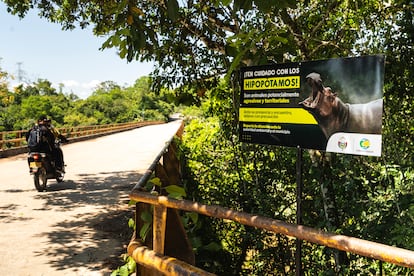
This regional environmental authority has been managing the species for 15 years. Since 2009, it has conducted population monitoring and tracking, confinement trials, 35 surgical procedures, and ongoing environmental education programs with local communities. These efforts have also included the sterilization of 58 hippos and the relocation of several individuals to zoos across Colombia.
The Ministry of Environment said it is also working with experts from the South African government to strengthen local capacities through training and knowledge transfer, “particularly in procedures for capturing and handling hippos in the water.”
Among the animals slated for euthanasia is the hippo at the center of a legal action filed in September by mothers in Puerto Nare, Antioquia. The animal appeared in late July in the river used daily by 23 students on their journey to a rural school, posing a risk to the children as well as to local fishermen and residents. For the community, the river is the main route to hospitals, funeral homes, markets and recreational areas.
The lawsuit was recently dismissed, according to Juber Martínez, the attorney representing the plaintiffs. He said the judge’s reasoning was that “we are not qualified to bring this legal action.”
News of the planned euthanasia of the 10 hippos was met in Puerto Nare with a mixture of relief and sorrow. “I know many residents are opposed to this measure, but there is a school, there are children… We have to act,” said the scientist, adding that it was a very difficult situation.
Also slated for euthanasia are the hippos that recently appeared in a viral video on social media. A week ago, footage showed four hippos narrowly avoiding being struck by a tractor-trailer on a highway at night in the municipality of Puerto Triunfo. Environmental authorities launched a search for the herd and urged motorists to reduce their speed. But residents affected by the growing hippo population are frustrated that the only measures taken so far have amounted to recommendations on how to coexist with an animal that kills an estimated 500 people a year in Africa.
Echeverri added that there are two other clusters of hippos high on the detailed priority list compiled jointly by his agency and the ministry.
Quickly and painlessly
The procedure is complex and painstaking. First, a multidisciplinary team will travel to the areas where the hippos are located to identify them, sedate them and then administer the lethal drug. “What we want is for it to happen as quickly as possible and without pain,” said Echeverri.
The hippo’s carcass, which would likely remain floating in the river, would then be removed with a crane and buried to prevent scavengers from being contaminated by the powerful drugs used in the procedure.
The biologist insists, however, that this is only the first phase of a long-term plan. “We will be able to say the problem is over when the sterilized hippos die of old age and the problematic ones are gone,” he said. “That will take years.”
Neither Echeverri nor the ministry rule out relocating other hippos to Vantara, a wildlife rescue center in Gujarat, India, as had been considered by the previous government.
Euthanasia has long been advocated by environmentalists in Colombia, who have spent decades studying the negative impact of these animals, which can weigh up to three tons, on ecosystems along the Magdalena River, the country’s main waterway. They point to effects ranging from the displacement of native species and soil compaction to the contamination of waterways with hippo waste.
“The decision to approve euthanasia is essential for conserving our ecosystems,” biologist Nataly Castelblanco of Biodiversos Colombia said several months ago.
Colombia’s hippos are currently reproducing at a rate around 4% higher than in their native range. The population is estimated at about 250 animals spread across roughly 770 square miles, an area larger than the city of Bogotá. A hippo was recently spotted in Barrancabermeja, more than 300 kilometers (186 miles) from Hacienda Nápoles. The Alexander von Humboldt Biological Resources Research Institute has warned that, without proper controls, the population could reach 1,000 animals by 2035.
Sign up for our weekly newsletter to get more English-language news coverage from EL PAÍS USA Edition










Colombia
A Week After The Brooklyn Building Collapse, One Question Unites Victims And Investigators: ‘What Exactly Happened There?’

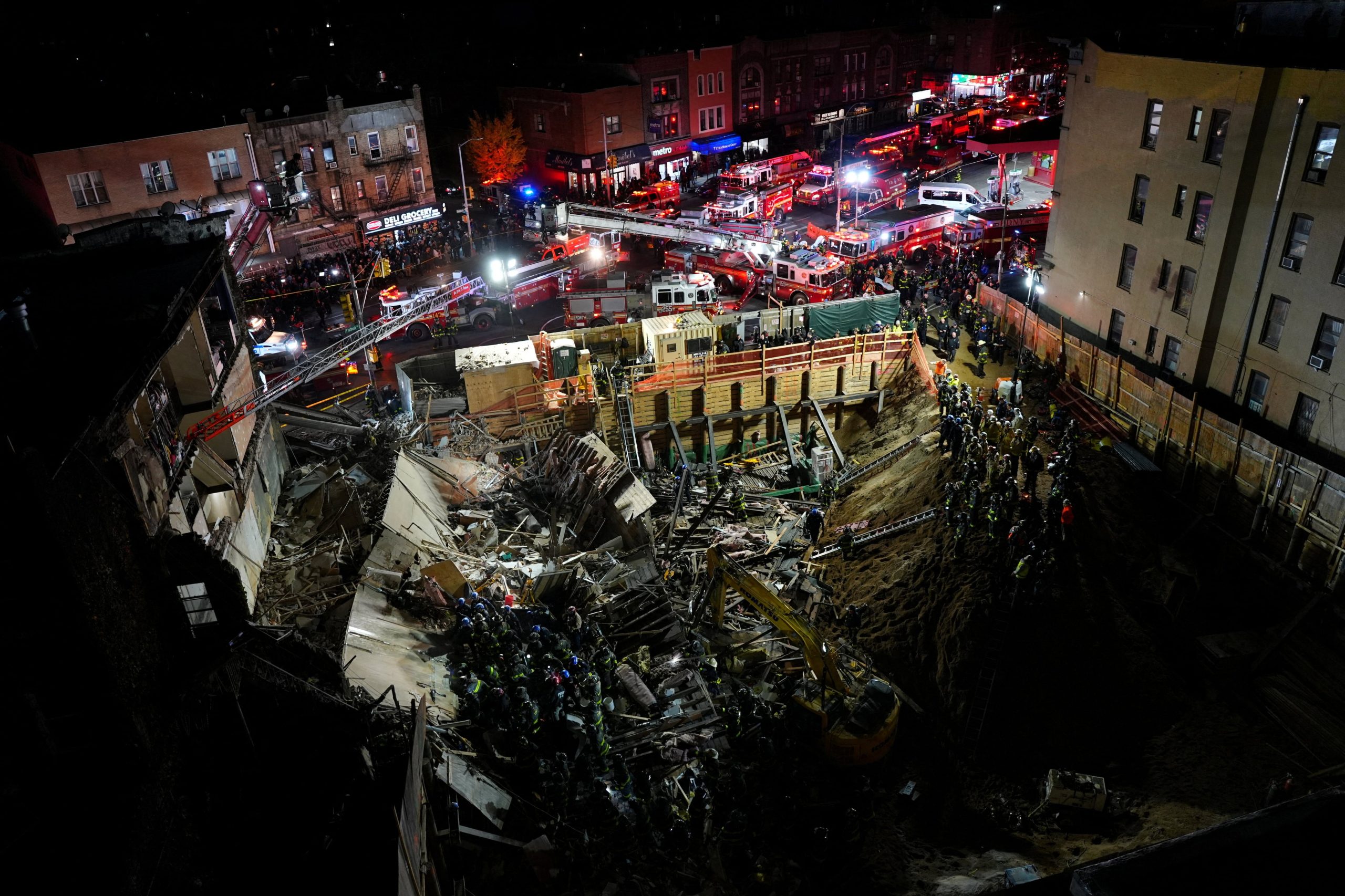
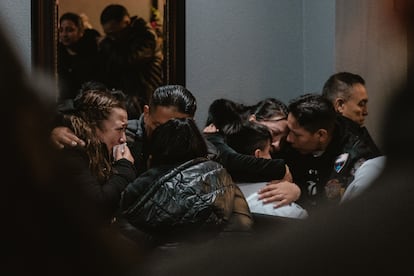
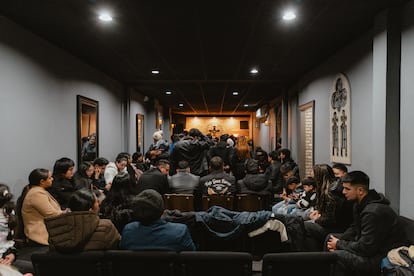
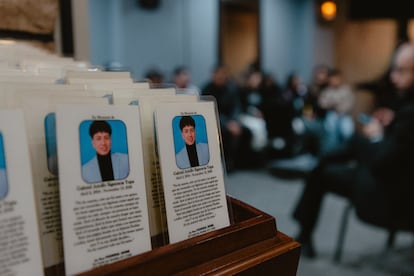
A Wednesday that changed everything; a collapsed building; eight families mourning their dead and a week in which Luis Siguencia has kept asking the same questions about the Brooklyn collapse that killed his son Gabriel: “What exactly happened there?” he says. “I see many comments saying that the construction had been halted and yet they were still working. Why? What caused that collapse?”
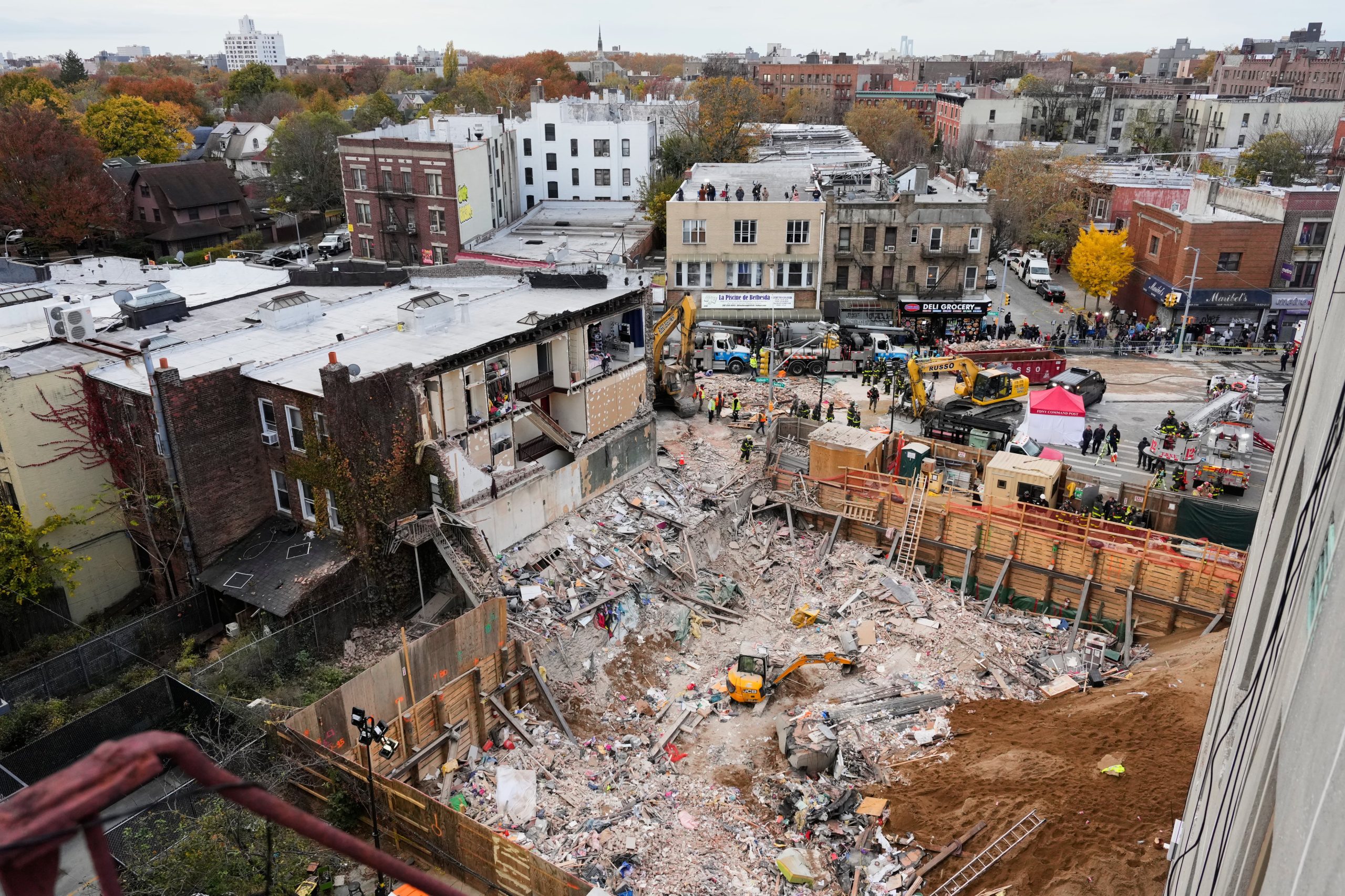
No authority, as of today, has approached Siguencia to brief him on the investigation led by the New York City Department of Buildings (DOB) into the collapse of the property at 1321 Flatbush Avenue. Two days earlier, Gabriel, a 22-year-old Ecuadorian, had begun working on the excavation of the adjacent lot, 2625 Bedford Avenue, before a wave of concrete fell on him, killing him and seven other migrant workers from Guatemala, Colombia, Ecuador and Guinea.
The tragedy has exposed several clashes in the city that is both the world’s most multicultural and one of its major financial centers: gentrification and rampant construction in neighborhoods such as Little Caribbean; residents’ complaints about rising rents; the vulnerability of construction workers, most of them immigrants; and the alleged tricks used by construction companies and building owners despite numerous complaints lodged with New York authorities.
What those affected want in the short term is clarity on several questions surrounding the disaster: What was the direct cause of the collapse? And when will an investigation shed light on the incident?
Ryan J. Degan, senior press officer at the DOB, told EL PAÍS that the investigation “is ongoing.” “We are working in close coordination with our law enforcement partners on their parallel investigations,” he told this newspaper. To assist the forensic probe, the city has hired an outside engineering firm to produce an independent investigative report, and inspections have begun on about 160 projects linked to six entities from the crew working on the excavations. For safety reasons, he said, the names of the six entities would not be disclosed.
“It’s too early in the investigation to determine the cause of the collapse,” Degan says, “but these inspections are an important part of our ongoing inquiry and are being carried out in the interest of public safety.”
The day after the tragedy, under torrential rain that interrupted search-and-rescue efforts, Mayor Zohran Mamdani arrived at the spot on Flatbush Avenue and vowed to carry out “a thorough investigation.” “That includes both the site work and the building that collapsed,” he said.
Experts consulted by this newspaper say the results of an investigation could come as soon as two weeks or take up to two months. Meanwhile, several details that have emerged focus attention on one man and a history of violations, neglect and lawbreaking: Robert Fischman, the owner of the lot where the construction workers were excavating that led to one of the deadliest incidents in New York’s construction sector.
A long list of complaints, fines and tenant displacements
In the days after the collapse, many neighbors gathered in disbelief outside a building that could have been any one of theirs. It was the typical building in this Brooklyn neighborhood: three stories, brick facade and tall glass windows, with a business on the ground floor.
More than once, according to Dominican resident Eneroliza Pérez, they felt the neighborhood’s streets shake because of the construction work that was underway. Fischman intended to erect on the adjacent lot a structure that would initially be three stories tall, though the owner later sought to expand it to nine stories with 64 residential units, according to information provided by the DOB.
At first, the project team filed an application and obtained approvals and permits to carry out underground work associated with the three-story project. In other words, they were authorized to perform earthmoving, excavation shoring and foundation work. What the DOB never approved was a permit to build nine stories.
“At the time of the collapse, the application had been returned by the DOB with objections,” Degan says, adding that as part of the ongoing investigation they are reviewing whether the work was being performed in accordance with the approved plans.
This was not the only construction going on in the neighborhood. In this area of Brooklyn, many new buildings have been erected recently, some unaffordable to longtime residents. “Small buildings are being torn down and replaced by larger ones,” says George M. Janes, an urban planner and planning consultant in New York. He says access to housing began to tighten about 20 years ago. “In many of these neighborhoods, rising housing costs and the lack of affordable housing are making these areas increasingly unaffordable for many lifelong residents.”
Last June, Fischman sent a letter to the residents of 1321 Flatbush to inform them that the noisy excavation would become part of the neighborhood’s soundtrack. What Flatbush residents did not know was that construction would go ahead despite the owner having violated the law on two occasions.
On March 20, 2026, the DOB issued a stop-work order at the excavation site. After its inspectors found that the demolition of the existing building was being carried out without protective structures or nets to shield neighboring properties, the DOB fined the owner $2,500. The fine, Degan says, was paid.
In April, a second fine followed. When inspectors visited the site on April 23, 2026, they found demolition work had resumed, violating the city order. The owner was fined $10,000 for another violation.
In May, the DOB says the stop-work order was fully lifted “after the project team corrected all conditions that had led to the violations.”
The following month, in June, neighbors received another notice from Fischman announcing the resumption of work. Among them were residents of the adjoining building owned by Olufemi Falade, a man who in 2006 told The Village Voice: “How can an owner repair, if the tenant does not pay the rent?”
At the time he faced 12 days in jail for refusing to fix about 1,800 violations in other buildings he owned — he then had about 16 properties scattered across the city. The news outlet reported that several of his properties lacked hardware or windows, and some walls were crumbling. Records from the New York City Department of Housing Preservation and Development show complaints about the building that collapsed a week ago, a nearly 100-year-old structure, including “unsafe electrical wiring” and missing smoke detectors.
Awaiting an official response
Last Wednesday, José Luis Caguana, a 22-year-old Ecuadorian and soccer fan, and Gabriel Siguencia arrived early at the site where they were earning $35 an hour, one of their co-workers who escaped the tragedy told this newspaper. The rest of the fatalities were residents of 1321 Flatbush, including two Colombian children who had not attended school that Wednesday as it was a holiday, Veterans Day.
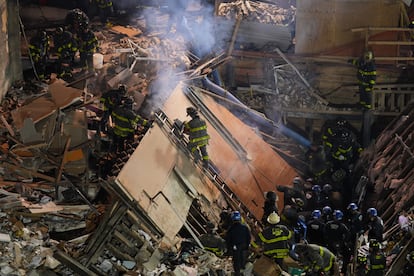
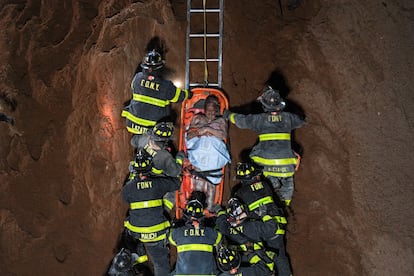
At 4.01 pm, the New York City Fire Department received the first emergency call. The building had collapsed. Neighbors say they only heard a roar, then a blinding cloud of dust and later the mountain of rubble on which firefighters worked for more than 24 continuous hours trying to save lives.
The day after the disaster, November 12, the DOB received an anonymous complaint asking it to investigate the excavation next to the collapsed building. “I am concerned that the subcontractor excavated too much soil along the adjacent foundation all at once,” the complaint said. It asked authorities to compare the city-approved plans with the work carried out on site. The plans contemplated excavating the soil at a 45-degree angle to a depth of approximately 4.5 meters.
“When you dig a deep hole, nearby buildings’ foundations can shift or become unstable. If the foundations become unstable, the whole building can collapse,” explains Anil K. Agrawal, professor and chair of the Department of Civil Engineering at The City College of New York.
Professor Agrawal says the impact of the excavation on the neighboring building should have been assessed, a common issue often overlooked because of insufficient attention to adjacent structures. When this type of excavation is carried out, he says, the soil around the foundations and the excavated area must be reinforced. “What we call shoring consists of creating an artificial wall to hold the ground in place. That way you ensure the soil does not shift and the foundations do not move. And that is something they did not do in this case.”
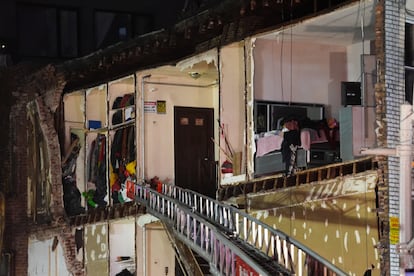
The engineer insists that any investigation must focus on the foundations. “They may show signs that the soil moved,” he says. He also believes that when soil samples are taken, they will be able to determine how sturdy it was and whether there was any risk of collapse, and even whether the project’s engineer or contractor had previously performed such borings and soil tests.
Meanwhile, all parties are waiting: families await answers though nothing will console them; displaced neighbors need a place to live. And many other residents have been left fearful about the condition of the buildings they live in. Since the day of the collapse, the DOB has received 149 complaints that, officials say, reported concerns about buildings shaking or vibrating, and some were related to new construction. Unless everything is made safe, New Yorkers will not sleep peacefully again amid the rumble of excavators or the sight of a cracked ceiling overhead.
Sign up for our weekly newsletter to get more English-language news coverage from EL PAÍS USA Edition
Abelardo de la Espriella
Colombia’s Peace Tribunal Chief Warns Government Cuts Could Trigger International Criminal Court Scrutiny

In Aeschylus’ Oresteia, Orestes kills his mother to avenge his father, whom his mother had murdered after he sacrificed their daughter. The Furies, goddesses of vengeance, pursue Orestes until Athena establishes a court to put him on trial, breaking the cycle of retribution.
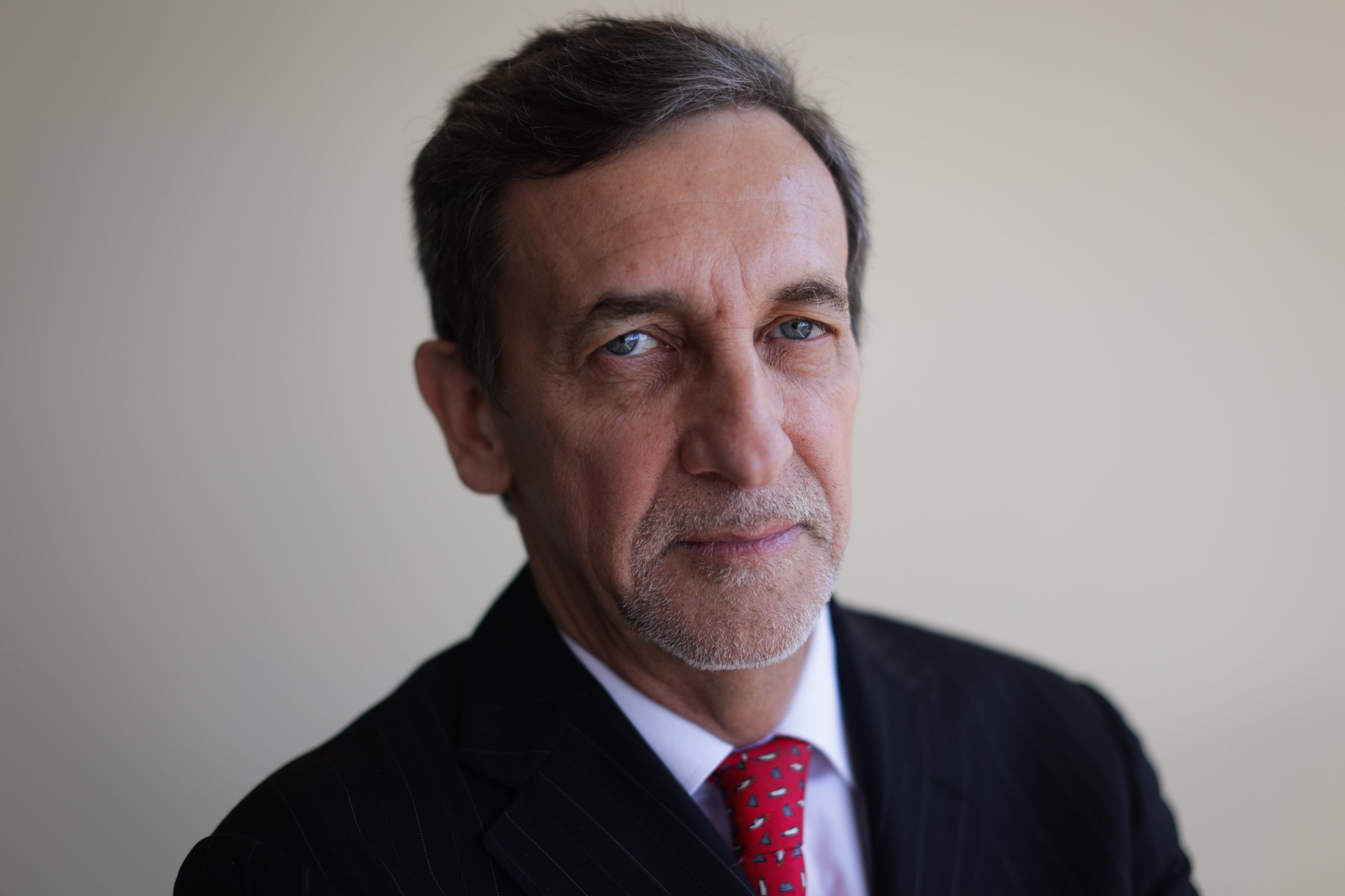
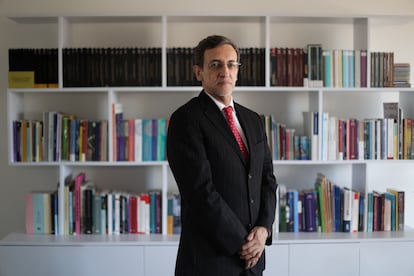
Last week, Danilo Rojas Betancourth, 65, chose this myth for his inaugural speech as president of Colombia’s Special Jurisdiction for Peace (JEP), the tribunal established under the 2016 peace agreement between the Colombian government and the Revolutionary Armed Forces of Colombia (FARC), the now-defunct guerrilla group. For him, this is the ultimate purpose of justice: to put an end to vengeance.
But he takes office at the worst possible moment for the institution. The government of Colombian President Abelardo de la Espriella has cut its budget by 170 billion pesos (around $52 million), forcing the JEP to leave its headquarters, move to remote working and scale back protection for victims, witnesses and judges. Meanwhile, a constitutional reform bill is making its way through Congress that would shut the tribunal down in 2028.
Who are the Furies today? The judge, a former president of Colombia’s Council of State, prefers not to name them. “I wish I knew who was behind it.”
Question. You have been chosen to lead a jurisdiction that the government has effectively marked for closure. Are you here to run the JEP or to manage its winding down?
Answer. Both. The JEP is already beginning to plan for its closure. It has resolved nearly 1,000 amnesty cases involving former guerrilla fighters and granted 1,070 decisions not to prosecute members of the military. By December 15, it will have issued its final indictments in the 11 major cases it is investigating. Next year, those indicted will decide whether or not to acknowledge responsibility. Those who do will face trials resulting in restorative sanctions. Those who do not will go to trial and could face prison sentences of up to 20 years.
Q. Can the JEP function with a budget cut of 170 billion pesos and 85% fewer contracts?
A. It is the most devastating blow the JEP has received in all these years. It forces us to undertake a complete restructuring. We will vacate these premises in March, with remote working becoming the norm and staff working on a rotating basis. We will have to scale back activities that were very important for victims. We have to change strategy.
Q. Did you expect such an aggressive assault?
A. No, of course not. But the JEP has a longstanding legitimacy problem, because the peace agreement lost the referendum. It was much like Brexit: it was close, but it lost. Since then, anything that happens at the JEP is accepted by half the country and resented by the other half.
Q. Is there an element of revenge in this offensive — in the budget cuts and the attempts to undermine the JEP’s legitimacy?
A. I don’t know whether revenge is the right word, but there has been a merciless ad hominem attack: the focus has been more on the person than on the arguments. My colleagues have been subjected to attacks that are false and malicious. The dignity of many people here has been undermined.
Q. Who is behind it?
A. I wish I knew. Some politicians have spoken out about it, but it’s very hard to know who might be behind it.
Q. The budget cuts affect security arrangements for the judges themselves, who are also targets of these attacks, as well as for victims, witnesses and those appearing before the JEP. How many people will lose their protection?
A. We are talking about almost 250 people whose security arrangements will have to be scaled back and reassessed. I don’t think they will be left without protection altogether; that would be very risky. I have repeatedly told the government that it must take responsibility for this.
Q. Almost 10 years on, there have been just two rulings. Was the JEP too ambitious?
A. I acknowledge that it was. In its effort to ensure that no one escaped justice, the JEP took on a broader remit. In my view, it could have been somewhat narrower. But when you reduce the number of people under investigation, you increase the scope for impunity. Our two rulings — on kidnapping and false positives [civilians killed by Colombian military personnel and falsely reported as guerrillas killed in combat] — cover an enormous number of incidents: the kidnapping ruling alone covers 21,000. It is not a ruling on a single case, but on thousands. There have also been decisions that are equivalent in substance to rulings, even if they are not formally called that: the 1,000 amnesties and the 1,070 decisions not to prosecute.
Q. With today’s perspective, what would you have done differently?
A. I would have opened only four cases: the FARC case, the security forces case, the case of civilians involved in the war and the case of state agents such as congresspeople, governors and mayors. Those appearing before the JEP and the victims would not have had to attend different cases, but just one. But the qualitative aspects are harder to measure. This process produces genuine reconciliation. Admitting responsibility is not easy. Doing so in front of a victim, in relation to serious harm inflicted on them, is immensely valuable.
Q. What do you say to those who believe that planting trees or painting a mural is not a punishment enough for crimes such as kidnapping and false positives?
A. The JEP did not invent these sanctions; they were established in the peace agreement. No state can bring every perpetrator of mass harm to justice, so a transitional arrangement has to be agreed: a small number are tried, and they answer for all the crimes. That is what could happen in Ukraine or Gaza when the time comes to establish accountability. Here, the decision was: no prison, but a sanction that restricts freedom and restores lives. What is sometimes so readily dismissed — a mural, a tree-planting project, a mine-clearance operation — is very transformative for the victim, because that is the kind of sanction they asked for.
Q. Do all victims see it that way?
A. No, and that is entirely understandable. There are victims who have every right to say: “What I want is for this person to rot in prison.”
Q. Some of your colleagues argue that the real aim of shortening the JEP’s mandate is to prevent the trials of the 29 military officers who refused to acknowledge their crimes, almost all of them generals. Do you share that view?
A. There is a group of generals who did not admit responsibility, and our small prosecution office has until March 14, 2028, to charge them. I would seriously doubt that this project seeks to obstruct that, because doing so would mean empowering the ordinary justice system and changing everything the peace agreement set out to achieve. And if charges could not be brought because the timeframe had been cut short, the International Criminal Court’s preliminary examination could be reopened. That is a risk.
Q. The JEP is constitutionally guaranteed to remain in place until 2033. If Congress passes the bill, will you take the matter to the Constitutional Court?
A. I would hope it would not have to reach the Constitutional Court, that Congress would stop the process. A law that shortens the timeframe and changes the court with jurisdiction over the cases is not consistent with the peace agreement. But if it passes, I am in favor of going to the Constitutional Court.
Q. And would you appeal to international bodies, even if that put a strain on relations with the government?
A. Scrutiny by the Office of the Prosecutor of the International Criminal Court will be unavoidable. The government of Iván Duque signed a cooperation agreement with the ICC prosecutor that expressly states that the JEP’s budget must not be affected and that its legal framework must not be changed. That is precisely what has been done in budgetary terms and what they are now seeking to do in legal terms.
Q. Anyone looking at Colombia today would see anything but the end of a war. Where are we now?
A. The FARC disappeared. There has not been a single attack by that guerrilla movement in 10 years. Dissident groups, deserters and criminal groups such as the Clan del Golfo remain, which have gained ground because the state failed to take control of those areas. It is a new war, but completely different from the one waged by the FARC, which did aspire to seize power.
Q. Will the government’s hard-line approach to bringing armed groups under its authority work?
A. I hope it works. But the bill on the submission of armed groups to justice draws heavily on the restorative justice system, which is our area of expertise. It does not provide for prison sentences behind bars, but rather detention in agricultural colonies, and it sets conditions requiring perpetrators to tell the truth and help locate the disappeared.
Q. Colombia’s ambassador to the United Nations, Mauricio Gaona, said the peace agreement is not a model for the world. Was it necessary to go that far?
A. Gaona was simply doing what his role requires, in line with the government. All the countries that intervened before were generous, including the United States. The discrepancy is glaring.
Q. Are you concerned that, when the JEP closes, its legacy may not be what you hoped for?
A. Over time, it will become clearer. It seems we may need to go through another experience for people to see how well we did things here. The victims were treated very well: not only did they take part in the process, but the psychosocial support provided to people who had suffered so much was also very important. And I am convinced that this model can be useful beyond Colombia. There are heads of state responsible for mass atrocities who will never go to prison. When they operate at that level, a way forward has to be found. And that way forward is: no prison, but they must accept responsibility. Accepting responsibility is not easy.
Sign up for our weekly newsletter to get more English-language news coverage from EL PAÍS USA Edition
Colombia
‘We Work Like Slaves In This Country And They Don’t Give Us Safety’: Anger And Grief After Brooklyn Building Collapse

Walter Sinche looks a little agitated as he arrives at the intersection of Bedford and Flatbush avenues. He is wearing a plaid shirt and a red poncho that shields him from the heavy downpour hitting Brooklyn on Thursday at noon. José Luis Caguana, 26, an Ecuadorian man like him, was one of his students in training courses at OSHA—the federal agency that oversees occupational safety and health standards—and is now one of the identified victims after the collapse on Wednesday of a residential building in the heart of Brooklyn.
The incident has placed the spotlight on construction practices in the city, and triggered both fear and anger among local residents of this largely immigrant community. Eight people, including two children ages nine and 10, died as a result of the sudden collapse, which took place as excavation work was going on at a construction site next door. Two of the victims were workers at the site, including Sinche’s former student, the 26-year-old José Luis Caguana Cosquillo.
Another 18 people sustained injuries, and one is in critical condition. Affected individuals include immigrants from Mexico, Colombia, Ecuador and Trinidad, said Mayor Zohran Mamdani, speaking at the site of the accident. The Colombian consulate in New York on Thursday confirmed that the two minors were Colombian nationals, as was one of the deceased adults. Another Colombian woman is on the list of injured victims, officials added.
By the time Sinche reached the scene, the mayor had already arrived and begun his briefing to a group of reporters. Sinche wanted to confront the mayor about his responsibility in the death of one of their own. “I wanted to tell him to do his job better,” he says, visibly upset. “We are the ones who put our bodies on the line. We work day after day like slaves in this country and they don’t give us safety.” But Sinche could not reach Mamdani. A police officer blocked his path and would not let him advance to where the mayor stood surrounded by reporters from the city’s major outlets.
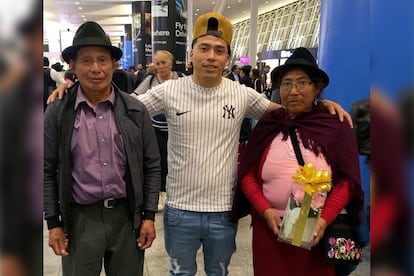
Caguana had arrived in the United States from Ambato, in Tungurahua province, Ecuador, about six years earlier. His wife, with whom he had a four-year-old son, is about to give birth. The child’s teachers at the Bushwick United Headstart center described Caguana as a “loving and devoted” father. “His love for his children was evident,” they said in a GoFundMe campaign to raise funds for the family.
Two years earlier, Caguana took a class with Sinche to start working in construction. Among everything Sinche teaches his students, there is one thing he insists on: “Demand safety,” he tells them. “And if they don’t give you safety, don’t work.”
But Wednesday’s accident goes beyond an individual worker’s responsibility, says the OSHA inspector. Building 1321 on Flatbush Avenue collapsed into a hole created by nearby construction and caused a side wall of the adjacent property to fall. That, Sinche says, is a responsibility that exceeds construction workers. “It’s not just that they didn’t give you a hard hat or gloves,” he says. “Whether a building collapses no longer depends on the worker, but on the authorities that oversee this kind of work. Therefore it is the responsibility of the Department of Buildings, the company owners and the supervisors. They are responsible; they should be jailed.”
On Thursday the entire area was filled with dozens of local residents stunned by an incident whose causes are still under investigation. The questions are piling up as time passes and new lines of inquiry open for the city: did the excavation weaken the building’s foundations or walls? Which company was responsible for the work? Had any warnings been issued that something like this could happen?
“Our lives are not cheap”
Flatbush residents’ anger was evident. Kamela Payne lives in the area and, if she had to sum up what has happened, she would put it this way: “I think our city has been sold, honestly,” she says. She believes the Department of Buildings, which is supposed to oversee this kind of construction, is not doing an appropriate job.
“I think some of these developers are putting economic pressure on some of these people and organizations,” Payne says. “Our lives are not cheap, and I consider this an act of criminality. These people didn’t stand a chance. They didn’t know they would wake up in the morning and have their entire building come down on them. That says a lot about New York City. A family can wake up and end up underground. This is not a developing country.”
“We have to investigate the Department of Buildings and make sure the people who must assume responsibility are held accountable,” adds Payne, who has lived in the neighborhood for more than three decades. “These people excavated under the foundations and caused other people’s deaths. That is a crime. This is not simply a mistake.”
A friend accompanying Payne is convinced that what is happening in this area and in much of New York is related to the displacement of Black residents. Two brand-new buildings stand near the collapsed structure. “They’re building apartments that we can’t afford, what they call affordable housing. It’s not affordable if a two-bedroom apartment costs $3,000 a month,” the woman says.
“It’s very sad, doubly so now that the Christmas holidays are approaching,” says Eneroliza Pérez, a Dominican woman who says the tragedy has dealt a blow to a community also known as Little Caribbean, where many Dominicans and Haitians live. Her family runs the deli directly across from the collapsed building, opposite where a crowd of people remains gathered, still stunned by such a tragedy in the heart of Brooklyn.
Sign up for our weekly newsletter to get more English-language news coverage from EL PAÍS USA Edition

Colombia To Put Down 10 Of Pablo Escobar’s Hippos Under New Control Plan

Spanish Cheese Finally Recognised Alongside Swiss And French At World Cheese Awards With Three Winning Varieties

Peter Thiel Expands Investments In Vaca Muerta’s Largest Oil Exporter


-

 New Developments3 weeks ago
Luxury Villas For Sale, Estepona – ProjectL1
-

 New Developments2 weeks ago
The San Roque Club – Townhouses For Sale
-
Age Concern Marbella - San Pedro3 weeks ago
Halloween lunch sells out as 51 join Marbella get-together
-

 New Developments3 weeks ago
How To Get A Tourist Rental Licence In Andalusia (Spain) – Step-By-Step Guide 2025
-

 %3 weeks ago
Spain Orders Replacement Of Eight Million Gas Meters: New Rules, Costs And Deadlines
-
Barcelona riots4 weeks ago
Looting and street violence hit Barcelona as El Corte Inglés customers are trapped
-

 New Developments4 weeks ago
Inside The Most LUXURIOUS Apartment Building In Spain!
-
countryside3 weeks ago
Rural revival: Five Almeria villages make moving inland easier and more enticing