Connect with us

America

Nearly Two Decades On Death Row In Texas: The Legal Fight To Save Melissa Lucio From Lethal Injection

Published

on

nearly-two-decades-on-death-row-in-texas:-the-legal-fight-to-save-melissa-lucio-from-lethal-injection

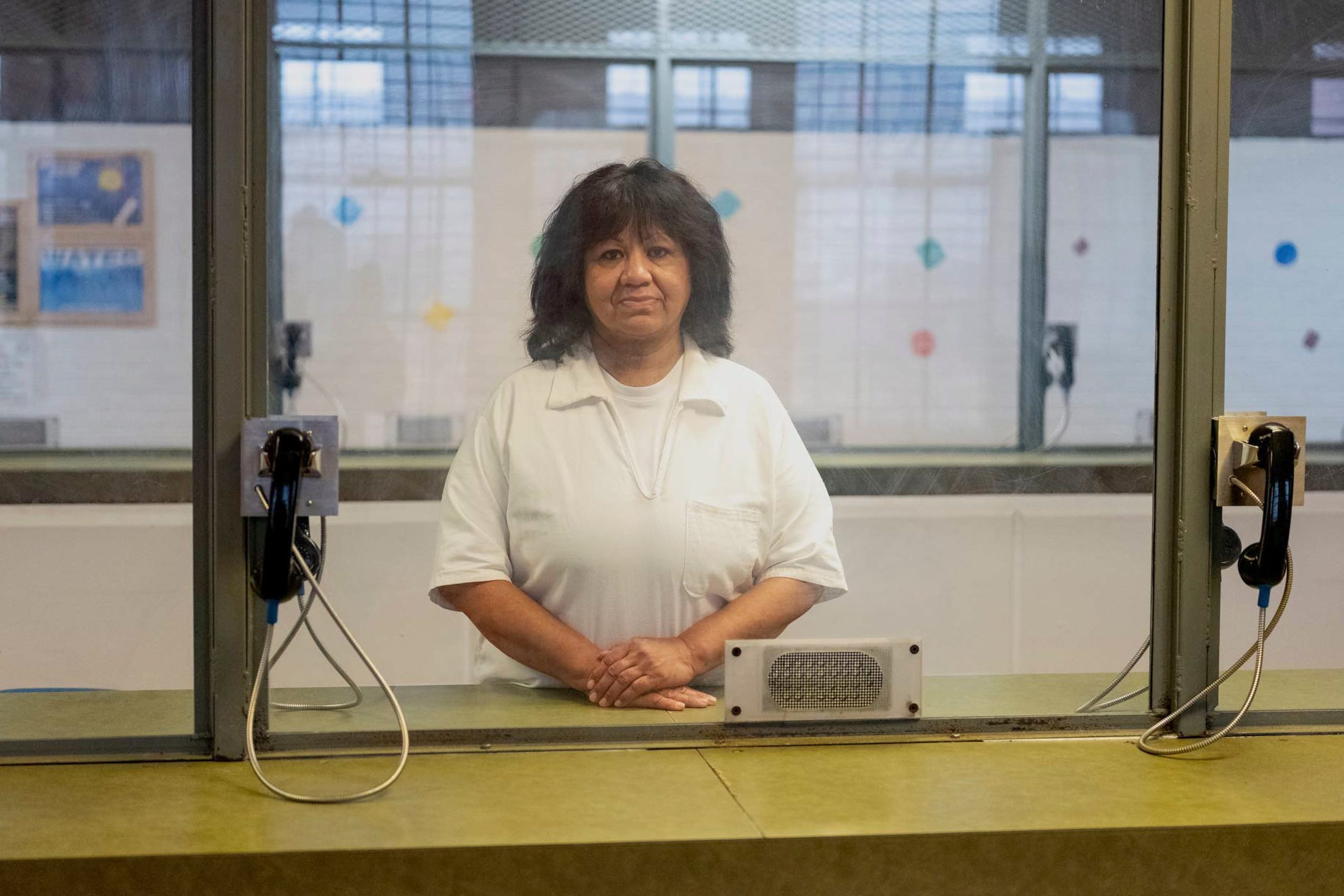
When attorney Vanessa Potkin learned about the botched execution of inmate Christa Pike, she worried that her client, Melissa Lucio, would hear what had happened in Tennessee and think about what might happen to her. The Latina has spent nearly 18 years on death row in a Texas prison trying to prove she is innocent of causing her two-year-old daughter’s death.

“Pike’s case shows how devastating the death penalty can be and how it can amount to torture,” Potkin, Lucio’s attorney and director of special litigation at the Innocence Project, which represents men and women wrongly sentenced to death in the United States, told EL PAÍS in a phone interview.

Pike, who was sentenced for a murder she committed at 18, survived two doses of the drug pentobarbital last week and is in a hospital in uncertain condition.

The incident has once again put execution by lethal injection under heavy scrutiny and increased the sense of urgency within Lucio’s defense team; she is 58. Potkin said their case “is very strong” and that they will pursue every option still available to stop the lethal injection against their client, the only woman of Hispanic origin sentenced to death in Texas.

“We act with urgency every day, because Melissa Lucio was jailed and today sits on death row for a crime that didn’t even occur. She is an innocent woman who should not be where she is.”

For 18 years, Lucio’s children have grown up separated from their mother and have been traumatized by each update about her case. In April 2022, they cried and prepared themselves mentally for her execution.

But just over 48 hours before she was due to be taken to the death chamber in Huntsville, the Texas Court of Criminal Appeals halted the procedure, saying that false testimony used at her trial may have led the jury to convict; that scientific evidence that was not presented could have led to a different verdict; that Lucio could be innocent; and that the State of Texas withheld evidence that might have helped her.

That day their tears turned to joy, because they felt their mother was closer to coming home. They even dreamed about the welcome-home party they would hold for her in their community, Potkin says.

Almost four and a half years later, a divided panel of the Texas Court of Criminal Appeals — the same court that stopped the execution in 2022 — rejected the ruling of a district judge who had recommended overturning her death sentence after concluding her constitutional rights were violated at trial.

With that unexpected decision, the family’s hope that Lucio would soon return home evaporated again. Potkin says it revived the trauma and emotional burden of confronting the very real possibility of an execution once more.

“Our hearts are broken and we are left speechless,” one of her sons, John Lucio, who was 17 when his mother was arrested, wrote in a statement on September 24. “The suffering of our family has gone on too long.”

The prosecution

Lucio was sentenced to death in 2008 over the death of her two-year-old daughter, Mariah. On February 15, 2007, the child fell down 14 stairs at the entrance of an apartment they were moving out of. Two days after that accident, the family was already living in a new home whose entry required climbing only three steps. Mariah had bruises but no other visible injuries.

Lucio considered taking her to the doctor that day: the child was congested, had slept excessively over the previous two days and did not want to eat. Tired from the move, she decided she would take her the next day. But the girl began to look pale and had difficulty breathing while napping. They called 911 and paramedics tried to resuscitate her. At the hospital she was pronounced dead on February 17.

Lucio told doctors about the fall, but in shock over her child’s death she did not say it had happened at the other house two days earlier. That led to a series of misunderstandings with police and a lengthy interrogation — experts have described it as “coercive” — during which officers repeatedly pressured her to admit she had assaulted her baby. She denied it more than 100 times.

Pressed, and after five hours of questioning, she told them: “I guess I did it.”

Those words were the only evidence the Cameron County district attorney used to build a charge that her lawyer did not counter with witnesses or specialists. Lucio ended up sentenced to death, while her husband, who was also detained, received a four-year prison term.

But since the trial ended nearly two decades ago, the legal team working with Lucio has gathered dozens of testimonies, evaluations from doctors in different specialties, and material evidence to show the child died from accidental causes. The evidence was so strong that the very judge who presided over her 2008 trial, some of the jurors, and the prosecutor agreed that key evidence had been suppressed that might have proven her innocence.

Now, with the reversal by the Texas Court of Criminal Appeals, her lawyer condemns that “we are seeing that that unfair treatment continues to this day.”

If executed, Lucio would be the first Latina to be put to death in Texas since 1863. If exonerated, she would be the first woman sentenced to death in the state to be cleared.

“Justice will prevail”

Potkin told EL PAÍS she will fight to prove Melissa Lucio’s innocence at every possible level. That includes returning to the federal district courts and even to the Supreme Court of the United States. For that reason, she believes no new execution date can be set for now.

“This is the first time federal courts will have the opportunity to evaluate the new evidence showing that Melissa Lucio’s trial was unconstitutional,” the attorney explains. “The new medical evidence obtained […] has determined that Mariah suffered a tragic accident: she fell down the stairs and experienced internal complications in the days that followed.”

As a result, she says, federal courts could overturn the conviction and order a new trial. But they could also affirm the death sentence: “Every day Melissa remains on death row is a day she faces the risk of being executed for a crime that never occurred.”

Potkin believes Lucio holds strong evidence to defend her innocence before any court. She does not know how long it will take to secure this mother’s freedom or whether she will be able to celebrate Christmas 2026 with her children, but, she says: “I do not lose hope that justice will prevail.”

Sign up for our weekly newsletter to get more English-language news coverage from EL PAÍS USA Edition

America

The Christa Pike Case And The Ethical Dilemma Of Saving Someone The State Is Trying To Kill

Published

on

Christa Pike, 50, has been hospitalized for almost a week after receiving two injections that allegedly contained lethal pentobarbital. On Tuesday, her lawyers said she had regained consciousness and speech, though her prognosis remains uncertain. The state of Tennessee had attempted to execute her for the 1995 murder of a fellow student, but Pike survived and was taken to hospital. If she stabilizes and is discharged, the state could send her back to death row and try to execute her again.

There is still no official account of what happened last Wednesday afternoon when the execution was briefly halted before the Supreme Court authorized it hours later, but experts say the pentobarbital may have leaked into the tissues around the vein, causing injuries that authorities have not yet confirmed. Because of what occurred during the failed execution, and the medical care required to save her life, Pike’s case raises ethical dilemmas about the obligations of the doctors and caregivers treating her and about the state’s responsibility for her condition.

Dr. Arthur Caplan, a bioethics expert and emeritus professor of medicine at New York University, says there is “no place for doctors, nurses, or any health worker in executions.” “That violates their oath not to cause harm. An execution is not intended to benefit the person,” he adds.

Caplan argues that even when a doctor’s presence at an execution is presented as a way to reduce suffering, there is a boundary between punishment and medicine. “Doctors have no role in executions. Even when someone says, ‘Well, if better-prepared doctors had been present, this execution wouldn’t have gone wrong’ — you don’t need doctors, you need better-trained executioners,” he says.

“Some argue that in parts of the world doctors help terminally ill people end their lives. But remember that is meant to relieve the suffering of someone who is dying. The patient is the focus. An execution is something the judicial system seeks to carry out,” Caplan explains.

Pike was sentenced to death 30 years ago for the murder of Colleen Slemmer, a 19-year-old fellow student, when Pike was 18. On September 30, after last-minute appeals that delayed the execution for several hours, she was given two injections of pentobarbital and, because she remained alive, was taken to a Nashville hospital. Over the weekend, her lawyers said she was unconscious and on a ventilator.

Caplan says the question of who legally represents a person who cannot communicate is fundamental. If there is no designated decision-maker to represent and defend her interests, a court must appoint someone. “I don’t think it should be the state of Tennessee, the prison warden, or any official involved in the execution attempt” who decides what care she should receive, he argues.

“Another question is who is in charge of her care. Doctors, absent other instructions, will try to improve her condition. But she may have a mother or other relative who wants to intervene and say, ‘I don’t want that. Let her die. She will be left with disabilities and I don’t think she would want to live like that,’” the expert adds.

Stephen Ferrell, one of Pike’s defense lawyers, said Pike signed a power of attorney naming someone else to make her medical decisions, according to The Associated Press.

The dilemma has precedents in cases of inmates with mental illnesses who do not understand they will be executed, Caplan notes. “Doctors have encountered situations where psychiatrists and psychologists treat someone on death row who has severe schizophrenia or many other mental health issues, and some have refused to restore that person’s competence to be executed so they cannot be put to death,” he explains.

Until the extent of Pike’s injuries — both physical and cognitive — after the failed execution is clear, it will not be known whether the defense will raise this kind of argument. It is also not yet known what steps the state of Tennessee will take in Pike’s case.

“Lending the prestige of medicine to execution”

The American Medical Association has declared it ethically incompatible for a physician to participate in a legally authorized execution because the profession is “dedicated to preserving life when there is hope of doing so.”

Caplan says the presence of healthcare personnel amounts to “lending the prestige of medicine to the execution,” giving the impression that “it is more humane because it is supervised by doctors.”

However, the presence of doctors does not by itself guarantee humane treatment. “We know that throughout history there have been doctors who participated in torture. The presence of doctors does not make things better,” he says.

Dr. Joel Zivot, an anesthesiologist and critical care physician who advised Pike’s lawyers, wrote in an essay in The New York Times over the weekend that authorities have “tried to make executions appear like medicine,” with stretchers, intravenous lines and cardiac monitors, but that it is a “sinister impersonation of the medical profession” without consent or therapeutic purpose.

The Tennessee Department of Correction has said that all protocol steps were followed.

“We have laws, judges and courts so society does not descend to the level of brutality of its criminals,” Caplan adds. “We try to set punishments that have a rationale and objectives, such as rehabilitation, deterrence — preventing others from doing what she did — or, in some cases, retribution, that you will pay for what you have done. But we also try to remain, so to speak, civilized and mindful of the ethical need for punishment not to reproduce the same cruelty as that of the criminals.” Pike’s case shows that this is not always achieved.

Sign up for our weekly newsletter to get more English-language news coverage from EL PAÍS USA Edition

Continue Reading

Amazon Prime Video

Los Emmy Se Mudan Con Amazon: Los Premios De La Academia De Televisión Firman Un Acuerdo Con Prime Video


Published

on

los-emmy-se-mudan-con-amazon:-los-premios-de-la-academia-de-television-firman-un-acuerdo-con-prime-video

Un nuevo cambio vuelve a agitar el panorama televisivo estadounidense. Los premios Emmy, celebrados hace apenas tres semanas, tendrán nuevo hogar a partir del año que viene. La entrega de los galardones de la Academia de Televisión de Estados Unidos dejan la televisión convencional y podrán verse a partir de septiembre de 2027 en Prime Video, la plataforma de streaming de Amazon.

Seguir leyendo

Continue Reading

Alaska

The Most Relevant Initiatives That Will Appear On The Ballots In November’s Midterm Elections

Published

on

the-most-relevant-initiatives-that-will-appear-on-the-ballots-in-november’s-midterm-elections

The U.S. midterm elections will not only determine who will occupy the Congressional seats and governorships up for grabs in November. In several states, voters will also find ballot measures seeking to amend laws, approve tax changes, or add new provisions to state constitutions.

These measures allow certain public policy decisions to be put directly to voters, either through initiatives introduced by state legislatures or through citizen-led processes. From voting rules to taxes, housing, immigration, and reproductive rights, these are some of the most relevant initiatives that voters will consider in the midterms.

California: Voter ID and taxes on the wealthy

California will vote on 14 ballot measures. Five were placed on the ballot by the legislature, while nine came from citizen initiatives.

The most contested is Proposition 39, which would require voters to present an official ID to vote in person and provide the last four digits of one of those IDs on mail-in ballots. The initiative would also provide free identification cards and require annual reports on the percentage of voters with verified citizenship in each county. The state currently requires identification and a Social Security number to register to vote, but not at the polling place. The measure is opposed by the American Civil Liberties Union (ACLU), Common Cause, the League of Women Voters, and the California Democratic Party.

The other major battle is over taxes. Proposition 3 would make permanent the tax on high incomes approved in 2012 and extended in 2016, with 89% of the revenue going to public schools and 11% to community colleges. Proposition 40, better known as the billionaires’ tax proposal, would impose a one-time tax of up to 5% on people with assets exceeding $1 billion.

Housing is another major area. Proposition 1 would authorize a bond for affordable and veterans’ housing, costing state coffers between $500 million and $600 million annually for about 25 years, according to the Legislative Analyst’s Office. Proposition 37 would create loans for middle-income buyers of newly built homes, while Proposition 45 would expedite environmental reviews for housing, water, transportation, and clean energy projects.

Florida: ‘Save Our Homes’

In Florida, voters will decide on three amendments, all proposed by the legislature, which require 60% of the vote to pass.

One of them, known as Save Our Homes, is the most controversial. It seeks to substantially increase tax exemptions for primary residences and halve the annual cap on increases in the assessed value of nonresidential properties. It is controversial because, while supporters say it would provide much-needed, significant economic relief in response to inflation, critics and public safety agencies warn that the measure would create a severe shortfall in local budgets, putting funding for essential public services such as police, fire departments, and education at risk.

Immigration enters the ballot box

The American Immigration Council, an organization that advocates for immigrants’ rights, is tracking nine state measures affecting these communities. Most concern who can vote.

Arkansas, Kansas, South Dakota and West Virginia will put amendments to a referendum specifying that only citizens may vote; Alaska and Arizona are considering similar initiatives, while Arizona’s would also require identification and ban foreign contributions to political campaigns. There are recent precedents: in 2024, eight states approved measures of this kind. Supporters present them as a matter of common sense; opponents point out that federal law already prohibits noncitizens from voting and that, according to available data, such cases are extremely rare.

Another major measure is Colorado’s Amendment 81, which would require local police to notify the Department of Homeland Security, within 72 hours, when a person who is unlawfully in the country or whose immigration status cannot be determined is charged with certain crimes. Opponents argue that it would apply to people who have been charged but not convicted and could even affect someone with a prior felony who is charged with a minor offense, such as a traffic violation.

Idaho, meanwhile, will vote on an amendment to establish English as the official language in its Constitution. If approved, and unless required by federal law, English would be the only language used in the state’s public proceedings and documents, affecting Spanish-speaking communities.

Other initiatives

In Missouri, Amendment 3 proposes an almost total ban on abortion, with exceptions for rape, incest, and medical emergencies, and would enshrine in the state Constitution a ban on gender-affirming care for minors. It will be the first time voters decide whether to repeal an abortion right they themselves approved at the ballot box. The state will also hold a referendum on the congressional map, although the state Supreme Court ordered the 2022 map to be used in these elections.

Virginia will vote on reproductive freedom, the removal of the ban on same-sex marriage, and the restoration of voting rights after completing a sentence. Nevada, meanwhile, will vote again on its abortion amendment, which would establish abortion as a fundamental right.

Sign up for our weekly newsletter to get more English-language news coverage from EL PAÍS USA Edition

Continue Reading

Trending

Copyright © 2017 Spanish Property & News