Connect with us

%

New EU Deal To Open Doors For Young Brits

Published

on

new-eu-deal-to-open-doors-for-young-brits

Young Brits welcome back in Europe. Credit: Pacorpi – Shutterstock

A new agreement between Britain and Brussels could allow up to 100,000 young Britons to live, work or study in EU countries for up to three years, with Spain among the potential destinations.

Young British people could find it easier to spend time living and working in Spain under a new agreement reached between the UK and European Union on Friday, November 20.

The deal, announced following a summit in Brussels, includes a Youth Experience Scheme which would allow up to 100,000 young people from each side to spend up to three years in the other territory.

Participants would be able to take up employment, study, volunteer, work as au pairs or simply travel, giving younger Britons opportunities that disappeared when freedom of movement ended following Brexit.

However, the scheme will not be available immediately. Both sides intend to put the agreement into effect no later than 2028, with opportunities expected to be available by January 2030 at the latest.

What could the new scheme mean for Spain?

Spain could prove an attractive destination for young Brits hoping to experience life abroad, learn Spanish or find temporary employment.

Before Brexit, British citizens could move to Spain and other EU countries without needing a visa to take up work. That changed when the Brexit transition period ended on December 31, 2020.

Since then, Britons wanting to live in Spain for longer than 90 days have generally needed to qualify for an appropriate visa or residency route. The UK Government’s guidance on entering and staying in Spain explains the current requirements.

For younger people considering a move, our guide to how young British citizens can legally live and work in Spain provides further background on the options available under existing rules.

The proposed scheme would provide a new route for younger people, although participation will be subject to agreed conditions and immigration procedures. Importantly, the agreement is not a return to freedom of movement. The number of participants will be capped, and the scheme will be time-limited.

Erasmus+ also returns for British students

Another important development is Britain’s return to the EU’s Erasmus+ programme in 2027. The scheme supports educational exchanges, training and opportunities for students and staff across schools, universities, vocational education, adult education, youth and sport.

Its return should make it easier for British educational institutions and their European counterparts to organise exchanges and placements.

The EU and UK have also agreed to continue discussions over university tuition fees, with the hope of reaching an agreement within six months. European students studying in Britain currently face higher international fees than domestic students.

‘Brexit Reset’ does not mean a return to the EU, just yet

The agreements announced in Brussels also cover food trade and carbon emissions, with the plan to reduce paperwork and costs for businesses trading between Britain and Europe. However, the British government has made clear that the arrangements do not involve rejoining the European Union, the single market or the customs union.

For British people already living in Spain, the new agreements do not automatically change their existing residency rights or healthcare arrangements.  Instead, the biggest potential change is for a younger generation who could once again have the opportunity to experience life in Spain and elsewhere in Europe without having to navigate the same restrictions introduced after Brexit.

%

Cuban Family’s 7-Border Journey To Salobreña

Published

on

cuban-family’s-7-border-journey-to-salobrena

Antony and Odaimy’s place on Salobreña sea front. Credit: ETFB

A Cuban family’s journey to Spain has ended with a new life and a sandwich business in Salobreña, on Granada’s Costa Tropical.

Antony, his partner Odaimy and her son Víctor left Cuba in 2021, hoping to settle in Russia. Instead, they crossed seven borders during a three-month journey to Spain in southern Spain. Cuban independent outlet elTOQUE interviewed the family about their journey.

From Cuba to Russia – then onwards

They sold their home in Havana to fund their departure. Russia was their first destination, but language and cultural barriers made settling there difficult, so they decided to not stop moving until they found the fit for them.

They travelled onwards to Serbia, then tried to cross into Croatia. Their first attempt ended when armed soldiers intercepted them and sent them back. On their second try, they walked almost 20 kilometres through uninhabited fields carrying their luggage.

The route continued through Croatia, Slovenia, Italy and France. The family were detained in Croatia and Slovenia, and feared deportation back to Cuba. In Italy, a relative helped with money for food and bus tickets. Odaimy said the thought of her son kept her going. “I would look at my son and tell myself that, above all, I owed him that: freedom.”

A new beginning on the Costa Tropical

After entering Spain, the family passed through Barcelona, Valencia and Murcia before deciding on settling in Salobreña, as the coast reminded them so much of home.

They found work in the food industry and built relationships in town. At the start of 2026, Antony and Odaimy opened a business selling Cuban sandwiches. “We’ve met some wonderful people, and we owe them a great deal,” Antony said. “Among other things, we owe it to them that we now have our own business.”

Odaimy says she is happy with the life they have built. Her son, now 26, has started his own life in Spain, and she has become a grandmother. Antony still worries about his parents and relatives in Cuba. “I have to go back even if I don’t want to,” he said.

Read the original elTOQUE report for the family’s full account. Their sandwich bar can be found on the corner of Paseo Marítimo and Calle Oleaje, Salobreña.

Continue Reading

%

Which Firewood Should You Buy In Spain?

Published

on

which-firewood-should-you-buy-in-spain?

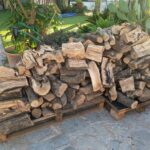
Encina, olive or almond? Falling night-time temperatures mean many expats are lighting their fireplaces again, but choosing the right firewood can make a real difference to heating costs.

As temperatures start dropping after sunset, households across Spain are preparing to light their fireplaces and wood-burning stoves again. For expats who are used to buying logs at home, however, choosing firewood in Spain can be a little confusing.

Spanish suppliers sell several different varieties, often using the local names rather than English descriptions. Prices and burning characteristics also vary, meaning that buying the cheapest wood does not necessarily mean getting the best value.

Knowing the difference between encina, olivo, almendro and other commonly available woods can help homeowners get more heat from their money this winter.

Which Spanish firewood gives the best heat?

Some varieties burn considerably longer than others. Hardwoods are generally the better choice for maintaining a fire, while lighter woods are useful for getting it started.

Here are some of the main varieties available from Spanish firewood suppliers:

Spanish name English name Burning characteristics
Encina Holm oak Dense, burns slowly and produces lasting embers
Olivo Olive High heat output and long-lasting embers
Almendro Almond Good heat and relatively long burning time
Roble Oak Good for maintaining a steady fire
Fresno Ash Good flames and useful general-purpose firewood
Pino Pine Lights easily but burns quickly
Eucalipto Eucalyptus Produces plenty of heat when properly dried

Encina is often considered one of the best all-round choices for domestic fireplaces. Olive and almond are particularly popular in southern Spain, where they are readily available in many areas.

According to the Spanish Association of Manufacturers of Stoves, Fireplaces and Solid Fuel Cookers (AEFECC), hardwoods such as encina, olive and almond generally offer better heat output and longer burning times than softer varieties.

Your fireplace type matters when choosing logs

Not every fireplace works in the same way, so the type of appliance in your home should influence your purchase.

  • Open fireplaces (chimeneas abiertas): Encina and olive are good choices because they produce lasting embers. Use smaller, easily ignited pieces to start the fire.

  • Glass-fronted fireplaces (chimeneas insertables or cassettes): Encina, oak and olive are suitable choices for steady heating.

  • Freestanding wood-burning stoves (estufas de leña): Dense hardwoods such as encina, almond and oak are excellent for maintaining warmth.

  • Wood-burning cookers (cocinas de leña): Choose logs cut to the size specified by the manufacturer, with almond and encina among the options worth considering.

Always check the appliance manufacturer’s instructions before buying, particularly if you have a specialist stove or a water-heating fireplace.

Dry firewood is more important than expensive firewood

Regardless of the variety, moisture content is one of the biggest factors affecting how well logs burn. Spanish government guidance recommends a moisture content of between 10 and 20 per cent for traditional firewood. Wet logs are harder to light, produce less useful heat and create more smoke and deposits inside chimneys and flues. A cheap moisture meter can help buyers check their purchase. Split a log and test the newly exposed inner surface rather than the outside.

Other signs of properly dried wood include:

  • Cracks appearing at the ends of the logs.

  • A lighter weight than recently cut timber.

  • A hollow sound when two logs are knocked together.

  • No obvious dampness or musty smell.

Homeowners can read the Spanish government’s guide to good firewood-burning practices for further advice.

Should you buy firewood by weight or volume?

Another question worth asking before ordering is how the supplier measures the wood. AEFECC generally recommends buying by volume rather than weight because moisture can make logs considerably heavier without providing any extra heating value. However, buyers should clarify whether the quoted cubic metre is stacked or loose, as the amount of actual wood can differ.

Its guide to choosing and buying firewood in Spain explains the differences between varieties, prices and purchasing methods.

One final reminder: Have chimneys and flues checked and cleaned as recommended, never burn painted or chemically treated timber, and always follow the manufacturer’s instructions for your particular fireplace.

With the right logs and properly dried firewood, homeowners can enjoy a warmer winter without wasting money on fuel that produces more smoke than heat.

For readers looking at other ways to heat their properties, Euro Weekly News has also published guides to keeping a Spanish house warm during winter and why Spanish homes can feel colder indoors than outside.

Continue Reading

%

Deadly Feline Disease Outbreak In Mallorca

Published

on

deadly-feline-disease-outbreak-in-mallorca

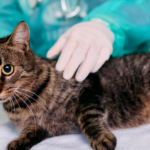
A highly contagious feline disease has claimed the lives of five cats in Mallorca, with nine others hospitalised or requiring hospital treatment, raising concerns about the dangers facing unvaccinated animals.

The outbreak of feline panleukopenia has affected a colony of approximately 40 cats in Manacor, where two volunteer carers are desperately trying to protect the remaining animals.

With veterinary bills already exceeding €5,000, the pair have launched an urgent fundraising appeal to help cover treatment costs.

The disease is particularly dangerous for unvaccinated cats and can spread through contaminated environments, making prevention and vaccination especially important.

Five cats die as virus strikes Manacor colony

According to a report published by Última Hora on Saturday, November 21, the outbreak has devastated a colony cared for by two local residents, Vanessa and Henryk.

The pair have spent two years rescuing abandoned and stray cats, personally financing their food, veterinary care and sterilisation.

During that time, they have rescued more than 50 animals and paid for over 30 sterilisation procedures, alongside veterinary expenses exceeding €6,100.

Their goal was to have the entire colony sterilised and vaccinated before the end of 2026.

However, the virus struck before they could complete the programme.

According to the report, 14 cats have required hospital treatment. Five subsequently died, while nine others remain hospitalised or have needed admission to veterinary clinics.

Treatment has involved facilities including Hospital Canis in Palma, clinics in Son Servera and Mivet in Manacor.

What is feline panleukopenia?

Feline panleukopenia is a serious viral infection caused by feline parvovirus.

Sometimes referred to as feline distemper, the disease is highly contagious among cats and can be particularly dangerous for kittens and animals that have not been vaccinated.

The virus affects rapidly dividing cells, including those in the intestines and bone marrow.

Symptoms can include vomiting, diarrhoea, fever, loss of appetite, lethargy and dehydration.

Severe infections can be fatal, particularly when animals do not receive prompt veterinary treatment.

Another concern is the virus’s ability to survive in the environment.

The carers told Última Hora that it can remain infectious for up to a year and may spread through contaminated surfaces, footwear and vehicle wheels.

This means direct contact with an infected cat is not always necessary for transmission.

Could indoor cats be at risk?

Although the reported outbreak is confined to a colony in Manacor, the case highlights the importance of vaccination for domestic cats.

Feline panleukopenia can potentially affect indoor cats if contaminated material is carried into the home.

However, there is currently no confirmed evidence in the original report that the outbreak has spread beyond the affected colony.

Vaccination is considered a key preventive measure against the disease, including for cats that do not regularly go outdoors.

Owners unsure about their pet’s vaccination status should contact their veterinarian for advice.

Anyone noticing symptoms such as persistent vomiting, diarrhoea, unusual lethargy or refusal to eat should seek veterinary assistance promptly.

Suspected infected animals should be kept away from other cats while professional advice is obtained.

Carers fight to protect surviving animals

Vanessa and Henryk have introduced measures to reduce the risk of further infections.

According to Última Hora, they are isolating cats displaying symptoms, carrying out rapid tests when infection is suspected and disinfecting feeding areas using bleach-based cleaning procedures.

They have also obtained limited supplies of Feliserin, an antibody serum, through an animal welfare association.

The carers hope to vaccinate the remaining healthy cats once veterinarians advise that it is appropriate.

Despite these efforts, the financial burden has become increasingly difficult to manage.

Veterinary admissions reportedly cost between €200 and €1,200 per animal, depending on the treatment required and length of stay.

The carers estimate that the total cost of the outbreak could eventually reach between €8,000 and €10,000.

Fundraising appeal launched to save cats

With veterinary expenses already exceeding €5,000, Vanessa and Henryk have launched a GoFundMe campaign to help finance treatment.

The pair are private carers rather than members of an animal welfare organisation and say they have invested their savings in rescuing and caring for the colony.

Their fundraising page includes updates about the affected animals and veterinary invoices.

They have also expressed concern about the support available for community cat colonies, calling for more effective implementation of capture, sterilisation and return programmes, known in Spain as CER.

These concerns reflect the carers’ position; the original report does not include a response from Manacor Town Hall.

For now, their priority remains the welfare of the surviving cats.

The case serves as a reminder of the potentially devastating consequences of feline panleukopenia, particularly among vulnerable and unvaccinated animals.

For Mallorca’s cat owners, the practical message is straightforward: check vaccination records, recognise possible symptoms and seek veterinary advice promptly if an animal becomes unwell.

Continue Reading

Trending

Copyright © 2017 Spanish Property & News