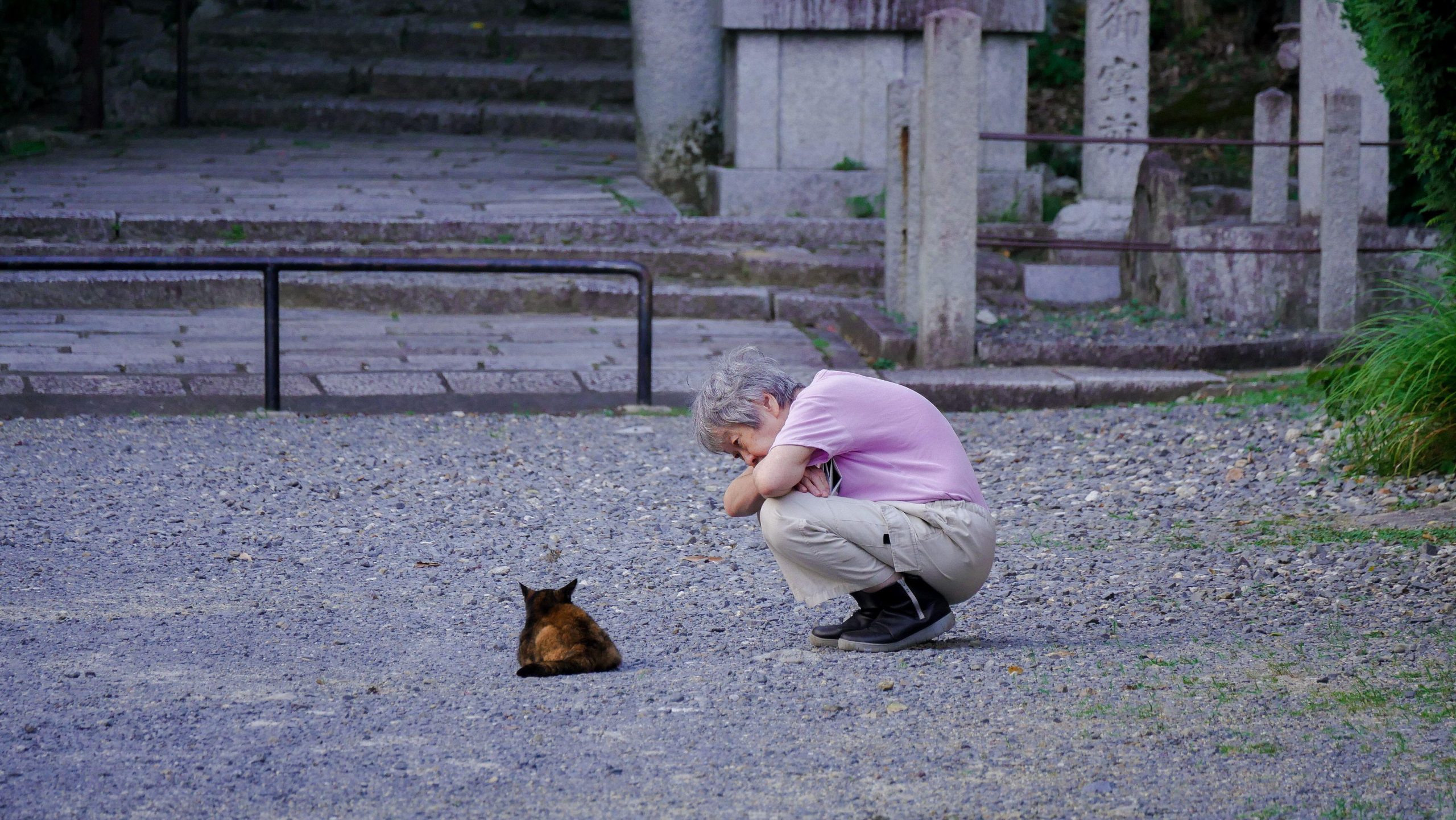
The affection that Japanese people feel for cats translates into spending that, this year, will reach 2.9 trillion yen (approximately $16 billion), a figure almost equal to the economic impact of the 2025 Osaka World Expo. But this amount doesn’t include the hidden side of the cat economy: the care of homeless felines.
Compiling statistics on Japanese pets has been a priority since the beginning of the 21st century, when the number of cats and dogs began to surpass the child population. In 2025, Japan had 8.8 million cats and 6.8 million dogs — a total of 15.6 million pets — exceeding the 13.6 million children under the age of 15 by two million, according to figures from the Japan Pet Food Association and the Statistics Bureau of Japan.
Since 2015, the magnitude of the cat economy has been calculated by Katsuhiro Miyamoto, professor emeritus at Kansai University and author of a term that’s now commonplace in Japanese news: “Nekonomics,” a combination of neko (“cat” in Japanese) and economics. This innovative calculation includes direct spending on food, veterinary services and vaccinations. It also includes cat cafés, video games and other audiovisual products, as well as excursions to 14 islands where cats are abundant.
The forecast for this year is close to three trillion yen, around the same amount that the 2025 Osaka World Expo — the six-month-long event that brought delegates and industry leaders from 158 countries and regions to Japan — is projected to contribute to the economy.
However, Naomi Furukawa, director of Chiyoda Nyan to Naru Café, an NGO located in Tokyo’s Chiyoda district, tells EL PAÍS that “we don’t see a single penny of those figures.” In just over 1,000 square feet, the shelter-café houses 49 cats who have been rescued from the streets, or were abandoned by their owners.
“While the profits from Nekonomics benefit those who trade on the image of cats, rescue organizations — such as ours — depend on donations and public subsidies that are almost never enough,” the shelter’s director laments.
The central Chiyoda district is home to Japan’s Imperial Palace. However, despite bustling with people during the day and being the headquarters of large corporations, it’s the least-populated district in Tokyo, with fewer than 70,000 residents.
In 2011, Chiyoda became the first district in Japan to completely eliminate the killing of stray or abandoned cats, which — until the end of the 1990s — was the most common method for controlling the overpopulation of these animals. For the current management of stray cats, the district’s administration uses the trap-neuter-return (TNR) method.
Longevity
The Chiyoda district also spends around 150,000 yen (about $900) per animal for the mandatory veterinary examination of cats whose owners have died and who must be taken to live with other animals in a shelter. Like the Japanese human population — which has one of the highest life expectancies in the world — domestic Japanese cats live longer than cats in other countries. Many of those left without their owners suffer from chronic illnesses that increase the cost of their care.
“The cost of veterinary care per cat amounts to about 200,000 yen [$1,200], and we often have to cover the costs ourselves,” Furukawa adds. She explains that stray cats are no longer the most pressing problem. “Today, the problem is the increase in the number of cats abandoned [or left behind] by elderly people, who move into nursing homes or pass away,” she adds.
Her NGO also organizes adoption events, which have only moderate success due to the preference for kittens. However, she recounts that the neighborhood’s most influential residents — the family of Emperor Naruhito and Empress Masako — have twice accepted stray cats rescued by her NGO into their palace.
“When public figures adopt mixed-breed cats from shelters instead of buying them from pet shops, it helps normalize the adoption of rescued animals,” Furukawa concludes.
Translated by Avik Jain Chatlani.
Sign up for our weekly newsletter to get more English-language news coverage from EL PAÍS USA Edition