
%
Night In White: Nerja Celebrates The Coming Of Summer On The Streets














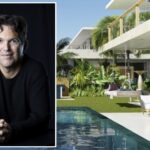
Lorenz Nenning. Credit: LN
From the moment Lorenz Nenning first set foot in Marbella as a wide-eyed child in 1980, something profound took hold of him. The golden light spilling across the Mediterranean, the dramatic embrace of the Sierra Blanca, and the effortless elegance of life where mountains meet sea awakened a passion that has never faded. Today, that same passion burns brighter than ever.
As the driving force behind Citadelle Consulting & Co., Nenning has transformed his childhood love for Marbella into a sophisticated cross-border enterprise that combines Swiss precision with Andalusian soul. For him, Marbella is far more than a market, it is a way of life, a source of daily inspiration, and the place he still describes, with quiet intensity, as “the most beautiful corner of Europe.”
Euro Weekly News sat down with Lorenz Nenning to discover more about this deep-seated love for this part of the Costa del Sol that has driven his career.
You’ve known Marbella and the Costa del Sol since 1980, when you were just a child visiting with your parents. What was it, do you think, that first prompted this lifelong passion for this region, and how has it evolved into building a cross-border business between Switzerland and Spain?
The light, the landscape, the effortless elegance of life
“My first memories of Marbella are from around 1980, when my parents brought me here as a child. The light, the landscape, the effortless elegance of life between the mountains and the sea — it made an impression that never really left. Growing up in Switzerland, where precision and structure are part of the culture, I always carried that contrast with me: the Swiss discipline on one side, the Andalucian warmth and beauty on the other.
Over time, what began as a personal affinity became a professional conviction. Switzerland and the Costa del Sol are not as different as they might seem. Both attract discerning international families who value quality of life, privacy, and long-term security. My cross-border structure between Switzerland and Spain was a natural evolution: I bring the financial rigour, banking expertise, and structured investment philosophy of my Swiss background and apply it to one of Europe’s most compelling real estate markets. For high-net-worth individuals, that combination is genuinely rare.”
Nature, particularly the landscape of the Marbella surrounds, appears an integral part of the designs you deal with. Was this part of the original allure of your relationship with southern Spain? And would you say it has created an instinct in you for matching client to property?
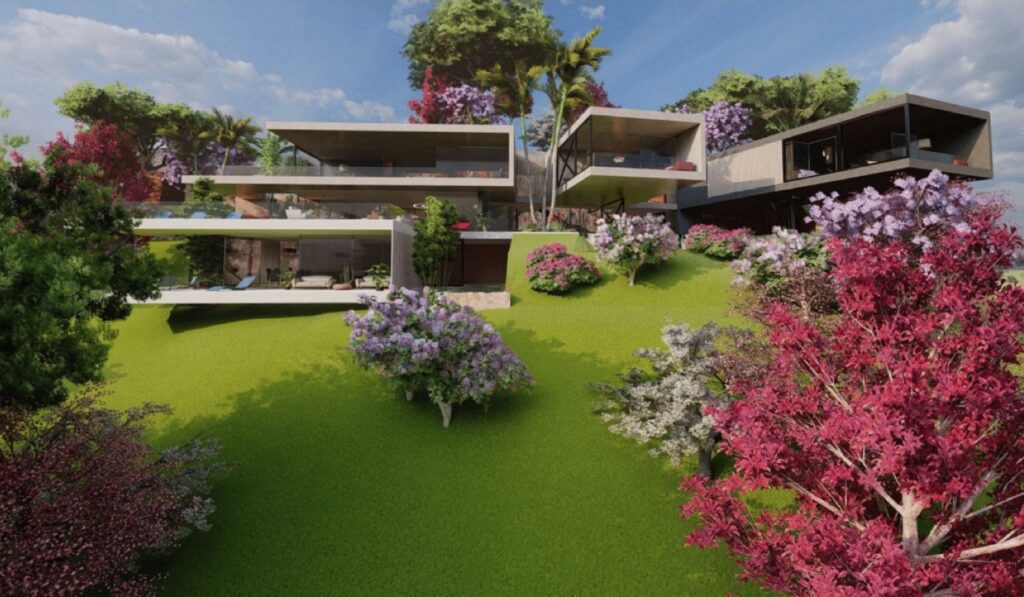
Credit: CC&Co
The physical drama of the Andalucia coastline
“Absolutely. What first captivated me about this region was not just the lifestyle. It was the physical drama of the place. The way the Sierra Blanca frames the coastline, the pine forests descending toward the sea, the microclimate that makes this corner of Andalucia unlike anywhere else in Europe. These are not backdrops; they are the architecture. Any project that ignores that relationship between built space and natural landscape is, in my view, already failing its client.
That sensibility does translate into an instinct for matching people to places. Over the years I have come to understand that a client drawn to La Zagaleta is not the same person as a client who wants to be in the hills above Estepona, even if their budgets are identical. The landscape speaks to something deeply personal: a vision of how they want to live, what they want to see when they wake up. My job is to understand that before they have fully articulated it themselves.”
Unlike traditional real estate agents, you describe your role as a “creator and developer of bespoke properties.” Can you walk us through how you help the most demanding clients design and realise truly unique homes tailored to their individual lifestyles and needs?
Synergy of investment and home
“The distinction matters enormously to me, and it is one I learned early on. When I started in private banking at Wegelin & Co. roughly 25 years ago, the minimum to open an account was five million Swiss francs, so every client was, by definition, a high-net-worth individual. What struck me, however, was a paradox: these were extraordinarily intelligent, financially sophisticated people, yet almost none of them had ever applied that same rigour to how they actually lived. They had optimised their portfolios to the last basis point, but they were living in homes that were, essentially, compromises.
The moment a client first experiences a property that has been genuinely created around their life, their routines, their family, the way they like to start a morning or end an evening, the reaction is always the same. They cannot believe how many years they spent settling for less. That moment of realisation, that happiness and gratitude, is something I find more personally rewarding than delivering an outstanding investment return. And I have delivered both.
Each residence is a response to its setting and its owner
That is the philosophy behind everything we do. A traditional agent presents what exists. I begin with the client, who they are, how their family lives, what their daily rituals are, what privacy means to them, how they entertain. Only once I understand their world do I think about property. In practice, this means guiding a client through the entire journey: from identifying the right plot, through architectural concept and planning, to construction and interior realisation. Our La Paloma 10 project is a good example, with ten villas where each residence is a distinct response to its setting and its owner, not a repeated formula.”
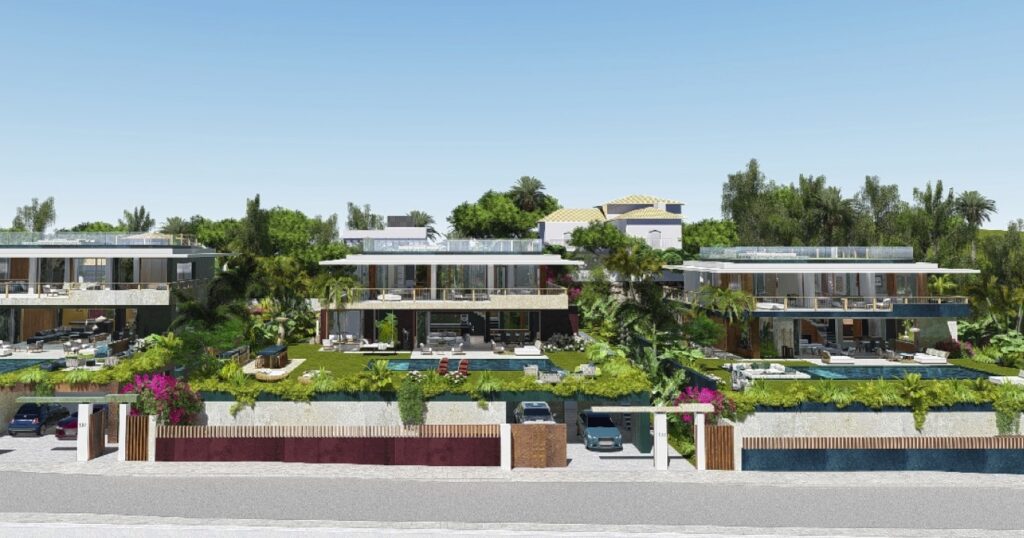
Credit: CC & Co
Your background in private banking clearly informs your investment philosophy. What makes a real estate project on the Costa del Sol not only profitable but also the safest bet for high-net-worth investors?
“My years in private banking taught me that the best investments combine genuine scarcity with structural demand, and the Costa del Sol has both. You cannot replicate the climate, the infrastructure, the international community, or the proximity to major European capitals. What has changed is the sophistication of the buyers: today’s HNWI investor is not simply acquiring a beautiful property, they are structuring a multi-jurisdictional asset with real fiscal and succession implications.
“For a high-net-worth family, the real estate itself is only part of the equation”
That is where my background genuinely differentiates what we offer. I help investors understand the full picture: tax efficiency, holding structures, exit strategy, currency considerations for non-euro investors, and the interplay between residency options, lump-sum tax solutions in Switzerland, and Spanish fiscal frameworks. For a high-net-worth family, the real estate itself is only part of the equation. The most secure investment is one where the legal, tax, and financial architecture is as well-constructed as the property itself.”
You’ve successfully delivered everything from soft refurbishments to building luxury projects from scratch. Could you share an example of a recent project that best illustrates your service and the kind of client it was created for?
“Our current portfolio says it best: active projects in La Paloma in Manilva, Almenara Golf in Sotogrande, La Zagaleta in Benahavis, Madrid, and Brazil. Some are one-of-a-kind architectural statements; others are structured purely as investments, but even those deliver something exceptional, because our standards never change.
La Paloma is a good illustration of the opportunity that still exists on the Costa del Sol when you know where to look. While attention concentrates on the Golden Mile and peak Marbella, Manilva is a consolidated, well-connected location where prices have been rising strongly and where, in our view, the growth trajectory over the next five years will outperform more saturated prime markets. In La Paloma we are currently building villas from €1.4 million upwards (La Paloma 10), while our other projects in the area exceed €5 million but remain significantly below €10 million. This shows that, even with a more accessible budget, you can still acquire a truly unique and prime villa — provided you search well and find the right partner. Delivering a genuine “wow” property at this price point nowadays requires real skill and market knowledge.
The syndicated, vertically integrated model
The investment side operates through what I call a syndicated, vertically integrated model. We source off-market opportunities at below-market value, then bring our full in-house capability to bear: design and technical architects, construction specialists, international tax experts, and marketing professionals. Our investor clients own the asset directly, not units in a fund, not a financial product with layers of fees and distance from the underlying. They own real property, in exceptional locations, with our team maximising every dimension of value. We always have skin in the game ourselves, which tells you more about our conviction in these projects than any brochure could.
Brazil deserves a separate mention, because it genuinely excites me. The macroeconomic and geopolitical case is compelling: strong foreign capital inflows, a currency that gives European and dollar-based investors a structural entry advantage, and coastal markets where international demand is growing faster than supply can respond. Our projects there are exclusively frontline beach. And in Brazil, that means something very specific. There is a finite amount of first-line oceanfront land in the country’s finest locations, and almost none of it is being developed to European luxury standards. I lived through what Marbella looked like in the late 1970s, the potential was visible but unrealised, the land was accessible, and those who moved early made exceptional long-term returns. Brazil’s finest beachfront locations feel exactly like that moment. We are at the right place, at the right time, with the right product.”
With your expertise in lump-sum tax solutions, family office services, and premium real estate, what advice would you give to international investors and families considering the Costa del Sol in 2026 as their next home, forever home, or investment destination in today’s changing market?
The window of opportunity in this market is real
“The window of opportunity in this market is real but not indefinite. Prime land in the most sought-after areas, La Zagaleta, Sotogrande, the Golden Mile, is increasingly constrained, and the calibre of international demand shows no sign of softening. For families considering this as a forever home: do not wait for perfect timing, because the right property in the right location is always rare, and this coastline continues to attract a calibre of international buyer that sustains values through every cycle.
For investors, 2026 presents a compelling entry point, with strong yields, robust capital appreciation in the luxury segment, and a fiscal environment that, properly navigated, is highly favourable. My advice in both cases is the same: work with people who understand both worlds — the market on the ground, and the financial and tax architecture that protects and multiplies your capital. That intersection is exactly where we operate. We are not agents. We are investors, project managers, and creators, and we only take on projects we believe in enough to back with our own capital.”
Mr. Nenning, living between Spain, Switzerland and Brazil sounds like a very busy life. Do you still attend clients personally?
“What drives me is not the transaction but the outcome”
“Always! And I would not have it any other way. What drives me is not the transaction but the outcome: a family standing in a home built around their life, or an investor seeing a return that genuinely surprises them. That never gets old.
In practice, I no longer personally handle showings, as we have specialists for that. But everything that matters most, I am directly involved in: every land acquisition, the formation of every project team, and every investor relationship. We deliberately keep our investor client base small. These are not clients managed at arm’s length, they are partners, and I treat them as such.
In concrete terms: for families looking to create or acquire their dream home, we work from a minimum budget of €3 million. For investors participating in our syndicated projects, entry starts at €250,000, giving access to the same off-market opportunities, the same team, and the same premium assets that would typically require far larger tickets elsewhere. The scale differs; the care and commitment are always identical, because ultimately, what we build carries our name.”
As the interview ends, Lorenz Nenning’s voice softens with unmistakable affection when he speaks of Marbella. For him, this is not simply a place of business, it is the landscape that first stole his heart more than four decades ago and has guided every decision since. Whether he is sourcing a hidden plot in the hills above Benahavis, designing a villa that perfectly frames the sunset over the sea, or simply walking the golden coastline at dawn, his passion remains as fresh and fervent as it was in 1980. In Marbella, Lorenz Nenning has found his true home, and through his work, he continues to help others discover theirs.

Baltics On Alert Over Ukrainian Drones And Russian Electronic Warfare
Italian tradition meets Costa Blanca sourcing at exclusive gastronomic finale
Don’t miss your flight. 19 Million cars expected on UK roads for May bank holiday


-
 Competiciones3 weeks ago
E
-
blackout April 20252 weeks ago
Insurance company Mapfre decides to pay out €14 million compensation for 2025 blackout
-
Costa del Sol3 weeks ago
Why home care is the new gold standard for living well in Spain
-
 Foreign demand2 weeks ago
Who Bought Where In The Second Half Of 2025?
-
Bullfighter injured4 weeks ago
Second serious injury in Spain’s La Maestranza bullring reignites controversy
-
 %4 weeks ago
Gibraltar Sees Surge In Residency Applications After Border Agreement
-
 %4 weeks ago
Portugal Confirms High-Speed Rail Link
-
Animal protection law4 weeks ago
Spain moves to redefine legal pets as draft law raises wider welfare concerns