Connect with us

%

OCU Warns Of Rising Fruit And Vegetable Prices In Spain To Hit Shoppers

Published

on

ocu-warns-of-rising-fruit-and-vegetable-prices-in-spain-to-hit-shoppers

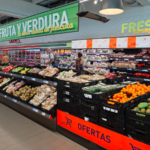
The rise in fruit and vegetable prices may be most noticeable in day-to-day shopping. Photo credit: Marco Gallo/Shutterstock

Fruit and vegetable prices in Spain rose by just over three per cent in April, according to new data from the Organización de Consumidores y Usuarios (OCU). The increase contrasts with a largely stable overall shopping basket, which saw only a minimal monthly change.

The OCU reported that fresh produce prices increased by 3.22 per cent during April. This follows a sharper rise in March, when fruit and vegetable costs climbed by 5.78 per cent. The figures point to continued upward pressure on the price of fresh food, even as other grocery items remain steady.

Fresh produce continues to outpace wider food costs

The latest figures show that while the total cost of a typical basket of goods rose by only 0.08 per cent in April, fruit and vegetables were a clear exception. This suggests that households may feel the impact most when buying fresh items rather than packaged or long-life products. According to the OCU, increases in production costs are one of the main factors behind the rise. Fertiliser prices, which are influenced by wider energy and supply pressures, have contributed to higher costs for growers.

These increases are then passed along the supply chain to retailers and, ultimately, to consumers. Weather conditions can also affect supply and pricing, particularly for fresh produce that depends on seasonal harvests. When availability is reduced, prices tend to rise.

What the increase means for residents

For residents in Spain, the rise in fruit and vegetable prices may be most noticeable in day-to-day shopping. Fresh produce is a regular part of most diets, and even small increases can add up over time. Households that rely heavily on fresh ingredients may find their weekly food spending increasing, even if overall inflation appears stable.

This can be particularly relevant for families, as well as for those who prioritise fresh and minimally processed food. At the same time, the relatively small increase in the overall basket suggests that not all food categories are affected equally. This means that changes in shopping habits can help offset some of the impact.

Ways to manage the cost of fresh produce

One of the most effective ways to reduce spending on fruit and vegetables is to buy seasonal produce. Items that are in season are generally more abundant, which helps keep prices lower. Seasonal produce is also more likely to be locally sourced, reducing transport and storage costs. Shopping at local markets can also make a difference. Many towns and cities across Spain have regular produce markets where fruit and vegetables are sold directly by growers or smaller distributors. Prices in these markets are often lower than in larger supermarkets, particularly for fresh and seasonal items.

Buying from local farmers or cooperatives is another option. In some areas, residents can purchase produce directly from agricultural producers, either at farm shops or through weekly delivery schemes. This can provide access to fresh goods at competitive prices while supporting local agriculture. Planning meals in advance can also help limit waste and reduce unnecessary spending. By choosing recipes based on what is in season or on offer, households can make better use of what they buy and avoid throwing food away.

A continuing development to watch

The increase recorded in April does not stand alone, as it follows a notable rise in March. While price movements can vary from month to month, the recent pattern suggests that fresh produce costs are under pressure. The OCU continues to monitor food prices through its regular basket analysis, providing an indication of how different categories are changing over time.

For consumers, this information can help explain why certain items are becoming more expensive, even when overall inflation remains low. For now, residents in Spain may need to pay closer attention to where and how they shop for fruit and vegetables. Choosing seasonal products, exploring local markets, and adjusting purchasing habits are practical steps that can help manage costs as prices fluctuate.

%

Hand Grenade Explosion In Malmo, Sweden

Published

on

hand-grenade-explosion-in-malmo,-sweden

Controlled explosion on streets of Mälmo. Credit: Viral video on X

Panic gripped Malmö city centre, Sweden, this Friday, May 1, as a live hand grenade was discovered lying in a public outdoor space. Authorities acted rapidly, cordoning off five streets and issuing what they call a “VMA”, or public emergency alert similar to text message alerts, to make sure residents stayed away from windows and balconies. National bomb disposal experts arrived shortly after midday to assess the lethality of the device.

BREAKING:

A hand grenade was found on a busy street in central Malmö, Sweden this afternoon.

A controlled explosion was just carried out on the scene by the authorities 🇸🇪 pic.twitter.com/K79JgYJPWy

— Visegrád 24 (@visegrad24) May 1, 2026

A controlled detonation followed two hours later, with the squad successfully neutralising the threat. Police spokesperson Filip Annas confirmed that preliminary assessments identify the object as a live grenade. Technical investigators remain on-site to determine the intended target and the origin of the weapon. Witnesses reported a heavy police presence near local shops and restaurants, though most cordons have now been lifted. No injuries were reported during the operation.

Why is Sweden facing an explosives crisis?

Criminal networks across Sweden increasingly utilise hand grenades and improvised explosive devices (IEDs) to settle gang disputes. Malmö, in particular, has seen a massive rise in such incidents over recent years, often linked to the illegal arms trade flowing through Europe. These military-grade weapons are frequently smuggled into the country, providing gangs with cheap and terrifying tools for intimidation.

National statistics suggest that Sweden experiences a higher frequency of bombings than almost any other country not currently at war. Government officials are struggling to curb the trend, which sees explosives detonated in residential hallways and public squares. This latest event in Malmö is typical of the volatility within Swedish urban centres. Arguments have been made that until the supply of illegal weaponry is choked off at the borders, the risk of civilian casualties remains a constant worry for the Swedish public. Police continue to investigate this latest incident without any specific suspects currently in custody.

Explosive culture

As of May 1, 2026, the country has already experienced a notable amount of explosive events:

  • Average Rate: Following the trend set in early 2025, where the country saw 27 bombings in the first 27 days, incidents in 2026 have continued to occur at a frequent pace, often averaging nearly one every day or two. Bombings have got to the point in Sweden where explosions are not always mentioned at the top of the news.
  • Comparison to 2025: Last year (2025) was one of the most violent on record, with nearly 200 bombings (reaching up to 317 total “blasts” according to some police data metrics).
  • Explosive centres: Stockholm and Malmö are still the most frequent locations for these incidents. The discovery in Malmö today is part of a persistent wave of violence involving both hand grenades and IEDs.

Continue Reading

%

Velez-Malaga Joins Malaga Transport Network

Published

on

velez-malaga-joins-malaga-transport-network

Buses now cheaper between Velez-Malaga and the city. Credit: PorMiPueblo Velez

Residents in Velez-Malaga can now access cheaper travel across the region following the town’s official entry into the Malaga Metropolitan Transport Consortium this May 1. This integration simplifies commutes to Malaga city and surrounding areas while providing big financial relief for frequent passengers.

Huge savings for daily commuters

Commuters travelling between Velez-Malaga and Malaga city will now see fares drop to just 95 cents per journey. Young people under the age of 30 can enjoy even lower rates, with the price fixed at 76 cents. Those heading to Rincon de la Victoria will pay only 71 cents, or 57 cents for youth card holders, such as students.

Switching between different modes of transport, such as buses, the metro, or suburban trains, costs a mere 39 cents within specific time limits. Estimates suggest that regular users, such as commuters, could save over €1,500 every year, a figure that rises to €1,600 for younger residents. Roughly 33,000 people in the local area are expected to benefit from these reduced costs.

Where to buy and top up the Green Card

Twelve authorised sales points across the town now stock the new “Green Card”. These locations are distributed to ensure easy access for residents in various neighbourhoods.

In Velez-Malaga itself, five tobacconists (estancos) provide the service: Avenida Vivar Téllez 81, Calle Aldeodato Altamirano 19, Calle Cristo 58, Calle Reñidero 5, and Pasaje Juan Sebastián Elcano 8C.

Torre del Mar residents can visit four specific sites: Calle San Andrés (Edificio Neptuno 78), Calle Las Yucas 3, Calle Enmedio 24, and Calle del Río 7.

Additional points are available at Carretera de Almería 138 in Benajarafe, Avenida de Andalucía 101 in Caleta de Velez, and Barriada de Lagos 87 in Lagos.

Cards cost between €1.50 and €2.00 to start off with. Credit can then be added in increments of €5, €10, €20, or €30. The system calculates fares based on “jumps” between zones, automatically applying discounts of up to €1.55 depending on the distance travelled.

Continue Reading

%

Why Finland Has Dropped In The World Press Freedom Rankings

Published

on

why-finland-has-dropped-in-the-world-press-freedom-rankings

Finland has slipped to sixth place in the latest global press freedom ranking, raising concerns about the media environment Credit: Shutterstock/Frame Stock Footage

Finland has fallen to sixth place in the latest global press freedom ranking, marking a notable shift for a country long considered one of the world’s strongest defenders of independent journalism. The drop, highlighted in the annual index published by Reporters Without Borders, reflects growing concerns about the media environment, including legal pressure on journalists and changes in how public debate is conducted.

While Finland remains among the top-performing countries globally, the shift has drawn attention across Europe, particularly as press freedom becomes an increasingly discussed issue in democratic societies.

What is behind Finland’s drop in the rankings?

According to the latest report, Finland’s fall is not linked to a single event, but rather to a combination of factors that have gradually affected the media landscape. One of the main concerns is the rise in legal challenges faced by journalists. Even when such cases do not result in convictions, they can create a chilling effect, discouraging investigative reporting and increasing caution in newsrooms.

The report also points to broader changes in the public sphere, including a more polarised debate environment and increased pressure on media professionals. These trends are not unique to Finland but are part of a wider European pattern affecting press freedom rankings. Despite this, Finland continues to score highly in areas such as transparency, institutional trust and access to information, which help maintain its overall strong position.

A shift within a stable system

Although a drop in ranking may appear significant, experts stress that Finland’s media system remains robust. The country still benefits from strong legal protections, an independent judiciary and well-established journalistic standards.

Rather than signalling a crisis, the change is being interpreted as a reflection of evolving challenges in modern media environments. Issues such as online harassment, legal disputes and shifting public expectations are increasingly shaping how journalism operates. Across Europe, several traditionally high-ranking countries have experienced similar movements in recent years, suggesting that press freedom is becoming more dynamic and sensitive to emerging pressures.

How does this affect expats in Finland?

For international residents living and working in Finland, the impact of this shift is likely to be subtle rather than immediate. Finland remains a country with a high level of access to reliable information, strong public broadcasters and a diverse media landscape. For expats, this means that day-to-day access to news, public services information and political developments continues to function effectively.

However, the broader trend is still relevant. A changing media environment can influence how information is presented, debated and consumed, particularly in a country where many expats rely on English-language reporting or translated content to stay informed.

For those working in sectors such as media, communications or public affairs, the discussion may also signal evolving professional conditions, including greater scrutiny and changing expectations around reporting.

A wider European context

Finland’s ranking shift comes at a time when press freedom is under increasing attention across the European Union. Several countries have faced criticism over media independence, ownership concentration and legal frameworks affecting journalists. In this context, even small changes in high-ranking countries tend to attract attention, as they reflect broader structural trends rather than isolated issues.

What happens next for Finland’s media landscape

Looking ahead, the focus is likely to remain on how Finland adapts to these evolving pressures while maintaining its strong institutional foundations. Authorities, media organisations and civil society groups are expected to continue monitoring the situation closely, with an emphasis on protecting journalistic independence and ensuring that legal frameworks support rather than hinder reporting.

For now, Finland remains among the global leaders in press freedom. The recent shift in ranking serves as a reminder that even well-established systems must continuously adapt to new challenges in the modern media environment.

Continue Reading

Trending

Copyright © 2017 Spanish Property & News