Connect with us

%

Orihuela Exhibition Honours Poetry

Published

on

orihuela-exhibition-honours-poetry

Preserving poetry in Orihuela. Credit: Ayuntamiento de Orihuela.

Behind some of Spain’s most celebrated poetry stands a woman whose determination helped preserve it for future generations. A new exhibition in Orihuela pays tribute to Josefina Manresa, wife of the poet Miguel Hernandez, and the woman who safeguarded his poems, letters, photographs and personal belongings following his imprisonment and death.

Orihuela exhibition celebrates Josefina Manresa’s life

Entitled Josefina Manresa: The Woman Who Kept the Words, the exhibition runs until February 28, 2027, at the Miguel Hernandez Cultural Foundation in Orihuela.

Through original photographs, family mementoes and personal history, visitors can discover Josefina’s life, from her childhood and youth in Orihuela to the difficult years following her husband’s imprisonment and death.

The exhibition places Josefina at the centre of the story, recognising her role in protecting the personal and literary legacy of one of Spain’s best-known poets.

Her determination to preserve these materials helped ensure that future generations could continue to discover Miguel Hernandez’s work and the personal history behind it.

Family photographs and personal belongings tell her story

Among the exhibits are photographs kept for decades in metal biscuit tins, including family moments with her grandchildren and her involvement in tributes to the poet.

These personal photographs offer visitors a glimpse into Josefina’s life beyond her connection to Miguel Hernandez, showing the family memories she carefully preserved over the years.

A cradle displayed alongside Hernandez’s famous poem Nanas de la cebolla (Onion Lullabies) provides a particularly moving reminder of the couple’s family life.

Visitors can also take home a copy of the poem.

The exhibition brings together these intimate objects and photographs to tell a story of family, loss and the preservation of memories.

Discover the woman behind Miguel Hernandez’s legacy

The exhibition also features newly researched family history and subtle sewing-pattern illustrations on its display panels, reflecting Josefina’s work as a seamstress.

These details help visitors understand more about her own experiences and the life she led while safeguarding her husband’s writings and belongings.

The exhibition can be visited at the Miguel Hernandez Exhibition Hall, Miguel Hernandez Cultural Foundation, Orihuela, until February 28, 2027.

%

Sedella Cash Machine Returns

Published

on

sedella-cash-machine-returns

Rare cash machine installed next to town hall. Credit: Ayto

New installation of ever rarer cash machine offers relief as rural banking services and access to bank notes disappear.

Sedella is set to get round-the-clock access to cash, with a new ATM installed beside the town hall and due to start operating in the coming days.

The machine is intended to spare residents a long journey outside the village for everyday banking, particularly those who do not drive. Sedella council says it will publish instructions and a list of supported transactions once the service is ready.

Withdrawal fees have not yet been confirmed. Under Spanish banking rules, customers must be informed of any ATM withdrawal charges in Spain before authorising a transaction, with the option to cancel.

New cash machine brings relief to inland Axarquia

The installation comes as cash access has become a pressing issue in smaller Axarquia communities. Cajamar’s withdrawal of permanent banking services has affected El Borge, Iznate and Totalán, while Comares has also faced changes to its banking provision, although it has secured an agreement for a 24-hour ATM. Mobile banking units offer some help, but visit on set days and hours. That can be difficult for older people and anyone without a car.

Sedella’s new machine will be available 24 hours a day once it opens, according to the council’s announcement. The authority has not yet released the operator’s fee schedule.

Wider push to restore village cash services

The Junta de Andalucia opened a €300,000 rural ATM funding scheme to help councils install and maintain ATMs in eligible communities with more than 500 residents and no bank branch or cash machine. The 2026 scheme’s application deadline was October 31.

A provincial ATM installation programme helped fund machines in Arenas, Canillas de Albaida, Cutar and Macharaviaya, as part of efforts to improve rural access to cash. Read EWN’s earlier report on efforts to bring cash machines to inland Axarquia villages.

Sedella’s installation is welcome news, but several villages still depend on limited mobile services or must travel elsewhere to withdraw money.

Residents should wait for Sedella council’s operating notice before relying on the new machine.

Continue Reading

%

Could Homes In Spain Soon Regulate Their Own Temperatures Without Heating Or Air Conditioning?

Published

on

could-homes-in-spain-soon-regulate-their-own-temperatures-without-heating-or-air-conditioning?

The design also uses carefully positioned windows, insulation and automated ventilation panels. Photo credit: Volker Vornehm/Shutterstock

Keeping a home comfortable in Spain can be an expensive balancing act. Summer temperatures can turn bedrooms into ovens, while winter brings freezing nights that make poorly insulated houses difficult to heat. With energy bills adding to household costs, a building designed to maintain a comfortable temperature without relying on conventional heating or air conditioning raises an interesting question: could homes be built to stay comfortable naturally, whatever the season?

A new residential development in Lyon has put that idea into practice, using the building itself to regulate indoor temperatures rather than depending on radiators and air-conditioning units. Its design aims to keep homes between 20°C and 26°C throughout the year, with the structure doing much of the work.

How can a building regulate its own temperature?

The concept is based on thermal inertia, using substantial building materials to absorb heat and release it gradually. Thick walls help slow the movement of heat between indoors and outdoors. In summer, they can delay the arrival of outside heat; in winter, they help retain warmth rather than allowing it to escape quickly.

The design also uses carefully positioned windows, insulation and automated ventilation panels. Sensors monitor indoor conditions and the weather outside, adjusting ventilation when fresh air is needed. Sunlight can contribute warmth during colder months, while shading and controlled airflow help limit overheating in summer.

Could it work in Spain?

A building designed to cope with the weather in Lyon would not necessarily perform in the same way in Sevilla, Madrid or Málaga. Spain’s climate varies enormously, and a home needs to be designed around the conditions it actually faces. In coastal areas, keeping direct sunlight out and making use of cooler night air can be crucial during summer. Inland, the problem is more complicated. Madrid can experience temperatures above 40°C in summer, followed by freezing winter nights.

Walls that store heat can help during cold spells, but without adequate shading and ventilation they can also retain unwanted warmth when temperatures soar. That is why insulation alone is not enough. Window placement, external shutters, roof protection and the ability to ventilate a property safely at night all influence how comfortable it will be.

Would it mean lower energy bills?

The developer estimates that the building could reduce energy consumption for heating and cooling by 73 per cent compared with a conventional new development. That is a projected saving rather than a figure established through years of independent monitoring. Nor is the building entirely without conventional heating: auxiliary radiators are installed for exceptional circumstances, including extreme weather and periods when apartments have been left empty. 

The idea is not that Spanish households could immediately get rid of their air conditioning or radiators. It is that better-designed homes could need to use them far less. Better insulation, external shading, airtight construction and night-time ventilation can all help reduce the strain on cooling and heating systems, whether in a new build or an existing property.

The cost of making these improvements is another consideration. Thick walls, high-performance glazing and carefully designed ventilation are easier to incorporate during construction than to retrofit into an older home. But with summer heat becoming increasingly difficult to manage and winter heating still expensive, building homes that work with the local climate rather than constantly fighting it could make a real difference to household energy use.

Continue Reading

%

Knights Of Malta Mystery As 400-Year-Old Wine Bottles Are Unearthed Beneath French Castle

Published

on

knights-of-malta-mystery-as-400-year-old-wine-bottles-are-unearthed-beneath-french-castle

Digging approximately 50 centimetres down revealed the bottles. Photo credit:Omaly Darcia/Shutterstock

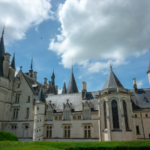
A kitchen renovation has turned into an unexpected historical discovery at a French castle, where workers uncovered 12 wine bottles buried beneath the floor for several centuries. One has survived completely full, despite spending an estimated 300 to 400 years underground, and is now being prepared for auction. The discovery was made at Château de la Noé-Sèche, in Le Fœil, Brittany, on November 12, while owners Hélène and Michel de Grave were renovating an old storeroom to create a new kitchen.

After removing the floor tiles, they found loose earth beneath the surface. Digging approximately 50 centimetres down revealed the bottles, which had been hidden beneath the building for generations. The find included seven empty bottles, four containing some remaining wine and one that was still completely full and sealed. For the owners, what began as a building project suddenly became a link to the castle’s distant past. The property has a particularly interesting history, having served as a commandery of the Knights of Malta for approximately 200 years.

Could the wine date back to the Knights of Malta?

The bottles have been examined by auctioneer Karl Benz, based in Plérin, who identified traditional hand-blown glassmaking techniques that helped establish their likely age. The shape and construction of the glass, including the bases, suggest they date from the late 17th or early 18th century. This places them at approximately 300 to 400 years old, although the precise date has not been scientifically established.

According to the Côtes-d’Armor tourism authority, Château de la Noë-Sèche became a commandery of the Knights of Malta in 1605. The castle’s connection to the Knights has raised the possibility that the bottles were buried during their occupation. They may have been hidden for safekeeping or to preserve their contents, but nobody knows exactly why they ended up beneath the floor. The surviving bottle is particularly intriguing because its contents have remained inside despite centuries underground. However, there has been no confirmed scientific analysis of the wine, so its original variety, condition and drinkability remain unknown.

One bottle will go under the hammer

The owners have decided to keep 11 of the bottles at the property, where they can be preserved and displayed as part of the castle’s history. The remaining full bottle will be offered for sale through Benz, who has been tasked with organising the auction. Its potential value has not yet been established, and no auction date or estimate has been announced. Much will depend on the assessment of its age, provenance and the condition of its contents.

The discovery also offers a glimpse into the history of the building itself. Château de la Noé-Sèche was once associated with the Knights of Malta, a Catholic religious and military order that maintained commanderies across Europe. These properties served as centres of administration and managed land and resources belonging to the order.

Whether the bottles were hidden by members of the order or by later occupants remains unanswered. Their location beneath the former kitchen suggests they were deliberately concealed rather than simply abandoned, although there is no evidence establishing who buried them or for what reason. For now, the owners have an unusual addition to their renovation project: 11 centuries-old bottles to preserve and one potentially valuable piece of history heading to auction. The contents of that final bottle may have remained untouched for hundreds of years, but whether the wine has survived in drinkable condition is another question entirely.

Continue Reading

Trending

Copyright © 2017 Spanish Property & News