Connect with us

%

Orihuela Tardeada Festival Returns

Published

on

orihuela-tardeada-festival-returns

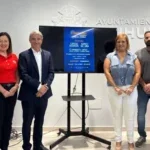
Presentation of the Tardeada indie music festival as it returns to Orihuela. Credit: Ayuntamiento de Orihuela.

Orihuela’s Tardeada indie music festival returns for its second edition on Friday, September 18 and Saturday, September 19 at the Los Huertos fairground.

Following a debut in 2025 that attracted more than 12,000 people during the main festival days, organisers are expanding the event with two stages, food and social areas, and a line-up combining established performers with emerging and local talent.

Crystal Fighters headline two-day indie festival

International band Crystal Fighters heads this year’s line-up, with a wide selection of Spanish artists also appearing across the two days.

Alvaro de Luna, Xoel Lopez, Zahara Rave, Funambulista, Karavana, Samurai and Amatria are among those scheduled to perform, alongside Juanca DJ Set Supersubmarina.

Local and emerging artists will also be given space on the programme, while the introduction of two stages will allow organisers to expand the amount of live music available during the festival.

Tardeada is being held at the Los Huertos fairground as part of Orihuela’s September celebrations for the Virgen de Monserrate.

Friday admission will be completely free

One of the most significant changes for the second edition is free admission on Friday, September 18.

The arrangement will allow anyone to visit the festival site and enjoy that day’s programme without having to purchase a ticket.

Organisers are also expanding the facilities around the music itself, with dedicated food and social areas intended to make Tardeada a wider two-day festival experience.

Orihuela Town Hall hopes the event can establish itself as a regular fixture in the city’s September calendar following the response to its inaugural edition.

First Tardeada attracted more than 12,000 people

More than 12,000 people attended during the main days of the first Tardeada festival in 2025.

The council said the event also brought wider benefits to Orihuela, with increased activity reported among hotels, restaurants and other local businesses.

Organisers estimated that approximately €2.1 million in economic activity was generated around the 2025 festival.

%

50,000 Brits Caught Up In Huge Passport Scare. Did You Hand Over Your ID In Spain?

Published

on

50,000-brits-caught-up-in-huge-passport-scare.-did-you-hand-over-your-id-in-spain?

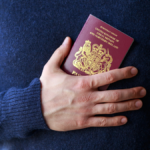
More than 50,000 British nationals were reportedly listed in records caught up in the cannabis club identity-document security scare. Credit: Max_555 / Shutterstock

If you have ever handed over your passport to join a cannabis club in Spain, you may want to pay attention to this.

More than 50,000 British nationals and around 12,000 Irish passport holders appear in records caught up in a huge security scare after almost one million passport and identity document scans were reportedly left accessible online.

A security researcher investigating the system identified 50,113 British nationals in the database, while fresh reporting by The Journal revealed that around 12,000 Irish passports were also among the records potentially exposed.

For anyone who remembers handing over their passport at one of these clubs, the obvious question is: was yours among them?

Why Spain is at the heart of the passport scare

Cannabis social clubs are particularly common in Spain, with estimates cited by The Journal putting their number at between 1,000 and 2,000 nationwide.

Unlike Amsterdam-style coffee shops, they generally operate as private associations. Prospective members may therefore be asked to register and prove their identity and age, sometimes by handing over a passport or another form of identification.

Some clubs used membership technology supplied by Cannabis Club Systems (CCS), an Irish-registered company formerly known as Nefos Solutions. Reception staff could upload customers’ identity documents to the system for verification, creating an enormous central collection of personal information.

Security researcher Sammy Azdoufal says the affected system contained 985,841 identity-document scans, including passports, identity cards and driving licences. His published account of the investigation lists 50,113 member records with British nationality.

However, not every British or Irish document necessarily came from a club in Spain. The researcher says the software was used by 377 clubs across Spain, the UK, Ireland, South Africa and elsewhere, although many were based in Spain.

How were the passports exposed?

According to the researcher, identity-document images were stored at predictable web addresses that did not require a login, password or security token. Anyone who understood the address pattern could potentially view the documents using an ordinary web browser.

That does not establish that criminals downloaded or misused the files. CCS disputes descriptions of the incident as a confirmed public data leak, saying it has found no verified evidence that personal information was extracted, published or distributed. Its investigation into the historical extent of any unauthorised access remains ongoing. The company says the reported vulnerabilities have been fixed and that the previously identified access points are no longer publicly accessible.

The Journal reported that Ireland’s Data Protection Commission is engaging with the Irish-registered company. The regulator has not made any finding of wrongdoing.

Spain has already warned about copying IDs

The case echoes something Spanish authorities have already been warning consumers about. As Euro Weekly News previously reported, businesses retaining complete copies of passports or identity cards can create risks that people may not consider when handing them over.

Spain’s Data Protection Agency says that, as a general rule, a complete copy of an identity document is not necessary simply to verify someone’s identity when entering a contract. However, it notes that sector-specific laws, including anti-money-laundering rules, can require copies in some circumstances.

One worrying aspect of the exposure is that passport details falling in to the wrong hands can make identity fraud and targeted scams considerably more convincing. Whilst another obviously sensitive element in this case is that the documents were connected to cannabis club memberships, potentially linking identifiable individuals with membership of a cannabis association.

Cybersecurity specialist Brian Honan told The Journal that such information could be exploited for scams or blackmail if it fell into the wrong hands.

Should British or Irish passport holders do anything?

There has been no reported blanket instruction telling affected British or Irish citizens to replace otherwise valid passports. Anyone who believes they may be affected should contact the club or CCS through official contact details rather than following links in unexpected messages. The UK’s National Cyber Security Centre advises people concerned about a data breach to remain alert for suspicious communications and check their accounts for unauthorised activity.

Be particularly cautious about unexpected emails, calls or messages containing genuine personal information. Never provide banking details, passwords or security codes simply because the person contacting you appears to know who you are.

If a physical passport has actually been lost or stolen, British citizens should use the government’s official lost or stolen passport service, while Irish citizens in Spain can follow the Embassy of Ireland’s guidance.

But for people whose passport is still safely sitting at home, the concern is different. 50,113 British nationals. Around 12,000 Irish passports. Almost one million identity document scans.

If you remember handing your passport across the reception desk at a cannabis club, you may now be wondering the same thing: Was yours one of them?

Continue Reading

%

Three Murcia Restaurants Shortlisted For Prestigious National Award

Published

on

three-murcia-restaurants-shortlisted-for-prestigious-national-award

Three Murcia restaurants are shortlisted for prestigious national culinary awards. Photo Credit: @barrapomelo / Instagram

Three new establishments in the Region of Murcia have been shortlisted for prestigious culinary awards, continuing to solidify the region as one of Spain’s premier culinary destinations. The three impressive restaurants, Pepe Juan Barra, Barra Pomelo, and La Macetúa, were recognised for the 2025 TheFork Awards, a national competition that celebrates the very best of the recent additions to Spain’s vibrant gastronomy scene, and shines a spotlight on innovation in the kitchens across the country.

The three shortlisted eateries and their concepts: standout restaurants in a standout city

The first of the establishments, Pepe Juan Barra, was born in the historic centre of Murcia, on Trapería Street. The concept of the restaurant is to “recover the spirit of the bars of yesteryear and bring it to our land, taking special care of the product and the cuisine,” according to the official TheFork website. A collaboration between Juan Guillamón and Pepe Morales, two chefs from Murcia with different backgrounds but a shared understanding of gastronomy, the owners have created “a welcoming, informal place […] where enjoying the atmosphere is just as important as eating well.”

The next restaurant, Barra Pomelo, is a contemporary gastronomic bar, based on the demonstration and tasting of seasonal products, which are cooked without fire: cured, marinated, pickled, ceviche-style, tempered and seasoned. TheFork describes it as a “close and precise experience, where the product, the technique and the balance of flavour are the true protagonists.”

Finally, the third of Murcia’s shortlisted entries, La Macetúa, endeavours to “revive the authentic Murcian bar, showcase local products, and, above all, support nearby producers who offer high-quality products and are committed to their community.”

National recognition, hand-chosen by Michelin-starred chefs

The restaurants were chosen by an elite jury of 56 Michelin-starred chefs, from a total of 41 shortlisted establishments from 20 different Spanish provinces and regions. Murcia’s impressive offering showcases the draw and creativity of its culinary scene, with one of the highest numbers of nominees overall, behind only Catalonia, with nine nominees; the Valencian Community, with six; and Madrid, with five.

This year’s selection also showcased other, emerging culinary destinations, with first-time shortlisted entries from regions like Asturias and Extremadura.

The public gets a say: how to vote for the winner of the 2025 TheFork Awards

Now that the experts have made their decisions, the selection process for the 2025 TheFork Awards will now turn to the public. Foodies across Spain will be able to cast their votes on the official TheFork website until the deadline, Sunday, October 11. The establishment that receives the highest number of public votes will win the People’s Choice Award for 2025, which last year was won by The Library, a combined wine boutique, gastropub, and private club in Madrid.

For locals and visitors in southeastern Spain, the national recognition of Pepe Juan Barra, Barra Pomelo, and La Macetúa is an excellent excuse to explore Murcia’s dynamic dining culture firsthand. These three standout eateries have not only made their local owners and patrons proud by being shortlisted for such a prestigious award, but also represent a thriving regional dining scene that is increasingly capturing national attention and praise.

Continue Reading

%

Estepona Museum Seagrass Meadow

Published

on

estepona-museum-seagrass-meadow

Fancy exploring the Mediterranean seabed without booking a diving lesson? Estepona is putting the finishing touches to a museum makeover that will bring you exactly that.

New immersive room recreates the underwater world

Estepona’s Museum of the Sea, housed inside the old bullring, is completing a full renovation that adds a chamber built to recreate a posidonia meadow, the underwater grasslands, also called Neptune grass, that covers stretches of Mediterranean seabed. Screens and interactive resources will let visitors step into the scene, learning how these marine plants support biodiversity, keep coastal waters clear and shield beaches from erosion.

Celebrating fishing and the sea

Three large display cabinets will now house pieces from the Lopez Mateo Collection, rated among Spain’s finest gatherings of navigation and fishing instruments. Bulkier items have been moved to a more spacious area, making exhibits easier to view and the visitor route easier to follow. New large-format panels covering fishing, marine conservation, riverside carpentry, the canning trade and local traditions add further details for your enjoyment. Three short films, screened on a monitor, focus on the Alboran Sea’s biodiversity, traditional boat-building and the festival of the Virgen del Carmen, patron saint of sailors and fishermen.

Estepona’s coastline shelters one of only four posidonia populations found in Malaga province, making its protection a real local priority. These meadows act as nurseries for countless of mini species, lock away carbon and help keep the coast intact, just some of the reasons conservationists rank them among the Mediterranean’s most valuable habitats.

Museum of the Sea first opened in November 2025, built around fisherman and collector Miguel Lopez Mateo’s haul of navigation instruments, nineteenth-century diving gear and fishing tackle. This latest overhaul pushes it further, turning a visit into a journey through Estepona’s maritime past, present and environmental future. Fore more information you can visit the Estepona Town Hall website.

Continue Reading
Advertisement
Advertisement

Spanish Real Estate Agents

Tags

Trending

Copyright © 2017 Spanish Property & News