
Cartagena
Over 50 migrants more land on Cartagena coast in broad daylight just three days after previous boat arrival

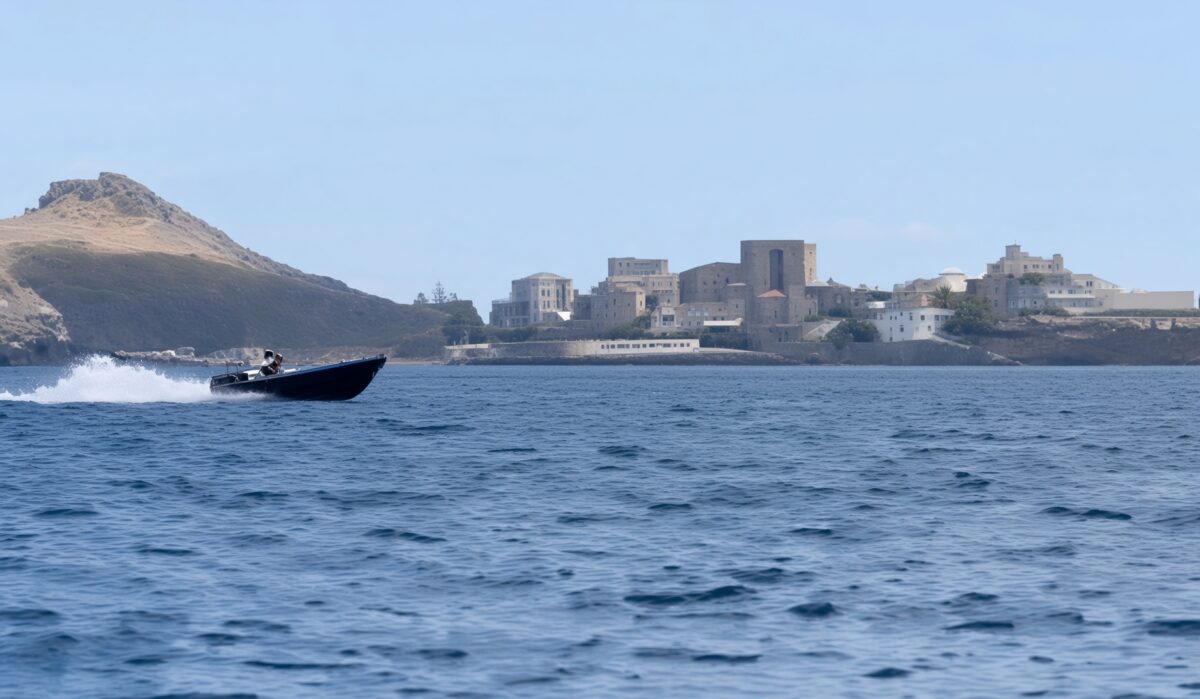
Another narco-style speedboat delivers 50 migrants to Spanish shores.
Credit: La7 X video (enhanced)
Holidaymakers at Cala Reona got an unexpected shock this Saturday, August 22, when a group of more than 50 people came down the hillside after a rubber dinghy reached the nearby Cala Dorada, near Cabo de Palos and the Mar Menor.
Witnesses said the new arrivals looked Algerian and had come ashore from the inflatable boat that first touched land at Cala Dorada. They then walked down the slope on foot towards Cala Reona, where bathers spotted them and raised the alert. Guardia Civil officers, already tipped off about the landing, moved in quickly to find and collect the group. Most were taken to the local barracks, though some were still thought to be in the surrounding hills according to those on the ground.
Footage from the scene shows the boat rapidly heading back out to sea once the passengers were dropped off. Three people stayed on board, faces covered with balaclavas.
Indignante e inadmisible.
Siguen llegando lanchas con inmigrantes ilegales a la #RegiónDeMurcia, ante la pasividad absoluta del Ministerio y la Delegación del Gobierno.
Exigimos un refuerzo urgente de la vigilancia y el control de nuestras costas.
Hay que parar ya este… https://t.co/yeugWe3AEi
— Fernando López Miras (@LopezMirasF) August 22, 2026
More than 110 arrivals in just three days
This Saturday’s landing comes barely three days after another boat reached Cala del Barco on Wednesday. That earlier boat carried 62 people, also believed to be Algerian, including 15 minors. With Saturday’s group of over 50, the Cartagena coastline has seen more than 110 migrants come ashore in two separate episodes inside three days.
Local reports say the rubber dinghy left the migrants and turned straight back out to sea, matching the pattern seen earlier in the week when the larger powered boat dropped its passengers and sped away. The type of inflatable speedboats used on each occasion being identical in type to those used by so-called ‘narco-trafficers’ to deliver drugs packages to the south Spanish coast.
Guardia Civil response at Cala Reona
On this occasion, Guardia Civil officers are said to have focused on rounding up those who had come ashore and making sure anyone still in the hills was located. Most of the Saturday arrivals were moved to the barracks for processing. Details on exact numbers, health checks or next steps had not been released at the time of writing, but standard practice sees people transferred for identification, often via Cartagena’s temporary centre for foreigners.
Region of Murcia president Fernando Lopez Miras has already called the latest landing “indignant and unacceptable” and pressed for stronger coastal checks, pointing to what he described as a lack of action from central government. He described the vessel as a large, organised craft with four outboard motors and nearly 1,000 horsepower, “not a wooden cayuco.” He asked how such an expensive, powerful boat could reach Spanish shores undetected and without interception, criticising the lack of control by central government authorities.
But, why are they coming, and why now?
The answer may not be as simple as poverty. German broadcaster DW has examined the motivations of young Moroccans and Algerians who continually risk their lives to reach Spain, finding a job and a lack of Instagrammable prospects among the factors driving them towards Europe.
French newspaper Le Monde has painted a more complicated picture. Its reporters interviewed young people who were not necessarily destitute, with some working, studying or supporting families, but who nevertheless felt trapped by low wages, expensive housing and limited opportunities, looking at a move to Spain as relatively easy, while following an untrue dream not unlike stereotypical Hollywood-stardom seekers in the 1960s.
For some, it seems, Europe represents more than getting a job. It represents the possibility that life might actually move forwards. That is an important distinction because it suggests that the people making these journeys are not necessarily being driven by starvation. Some appear to be making a calculation about their future. And what they believe about that future is crucial.
Earlier in August, Swiss newspaper Blick interviewed young Tunisians and Moroccans who expressed an attitude towards Europe that is difficult to reconcile with the idea that every migrant is simply fleeing desperate poverty. A 17-year-old Tunisian hairdressing apprentice, identified as Wajdi, reportedly told the newspaper that European prisons were “luxurious” and that, “if he could not find work, he could steal or deal drugs”. Another young Moroccan reportedly described deportation detention in Switzerland as being like a summer holiday.
These are extraordinary statements, as they suggest that, for at least some young men, the calculation has gone beyond the traditional idea of seeking work and building a better life.
A smuggler can promise an easy journey. A rumour can claim that Spain is unable to return people who arrive. European governments can announce new migration measures, regularisation programmes or arrangements for migrants already in Spanish territory.
North African governments can tighten or loosen border controls, as has been seen in the case of Morocco many times. Political disputes can suddenly change the pressure at Spain’s external borders. All of these things can become part of the same message. But who starts the rumour?
Uncomfortable possibility of political manipulation
Morocco has previously been accused of using migration pressure as a diplomatic weapon, most notably during the 2021 Ceuta crisis. European reporting surrounding the latest events has again raised questions about whether political considerations played a role in the movement towards the Spanish territory. There is a difference between a government deliberately encouraging migration and authorities losing control of a situation that is being driven by economic frustration, social media and organised crime.
There is also a difference between a government exploiting migration pressure and actually creating the desire to migrate in the first place. Yet the history of the region means the political question cannot simply be dismissed.
Again, today, there were no authorities to stop the people-smuggling into Spanish territory by boat at sea.





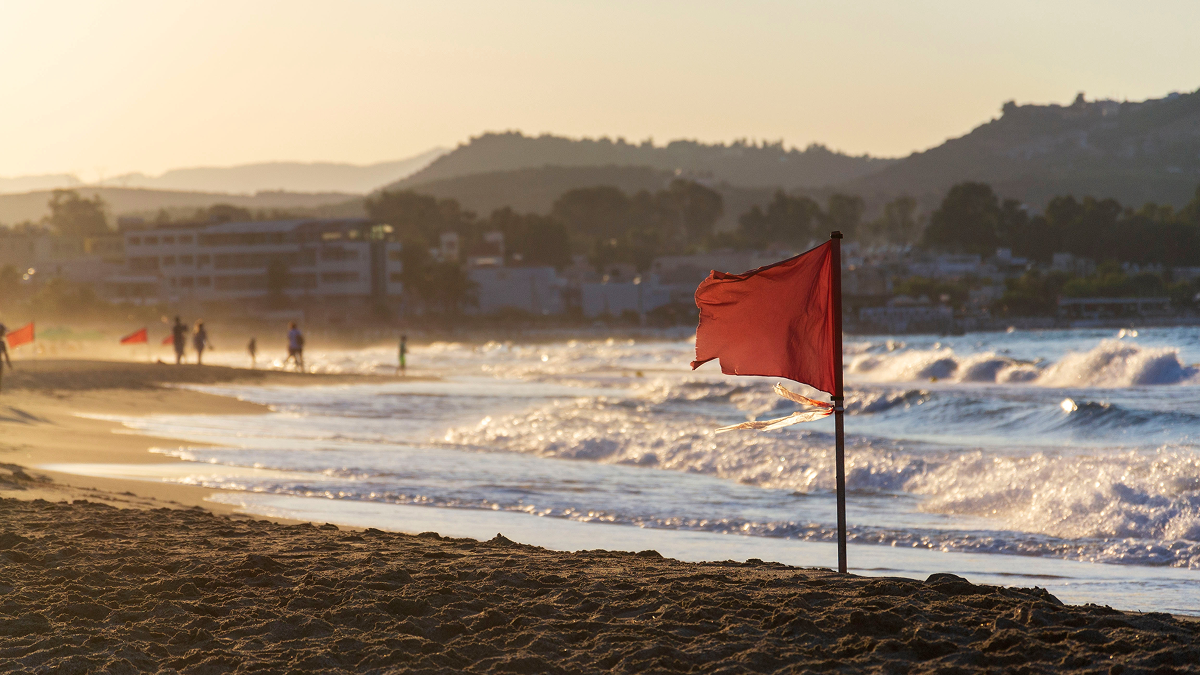
Ignoring a red flag on a Spanish beach can prove a costly mistake. Credit: josefkubes / Shutterstock
More than 20 people had to be rescued around La Manga and Cabo de Palos in a single afternoon, several after wading past red flags marking dangerous currents. When lifeguards told some to leave, they refused, a decision that can carry a fine of up to €1,500 under Cartagena’s beach rules.
Rescues ranged from 25 metres to 300 metres offshore
Cartagena’s Municipal Civil Protection Service pulled 17 people from the water at Galúa and Entremares beaches in La Manga on Sunday August 16, after they swam past red flags marking zones with dangerous currents. The council said both beaches were flying an overall yellow flag, but lifeguards had roped off specific sections with red flags because of the currents.
The Entremares rescues happened between 25 and 60 metres from the shore and involved people aged between nine and 56. At Galúa, two 23-year-olds were also brought in from around 40 metres out.
Paddle boarders were swept far beyond their depth at two other beaches
Two more call-outs on the same afternoon involved paddle boarders who had drifted roughly 300 metres from the coast and couldn’t get back on their own. At Cala del Barco, three people aged 23 and 25 needed a rescue boat sent out from Entremares. A near-identical situation played out at Cala Reona, where a 30-year-old and a 31-year-old were brought in the same way.
Between the swimmers and the paddle boarders, Protección Civil intervened to help 22 people over the course of the afternoon, one of its busiest single shifts of the summer so far.
What Cartagena’s flag colours mean for swimmers
Cartagena’s beach ordinance sets out three flag colours. Green means swimming is allowed, while yellow means swimming is allowed with caution, under-12s aren’t allowed in the water without an adult present, and bans inflatables, armbands and floats beyond 50 metres from shore. A red flag bans swimming outright.
Why swimming in a red flag zone counts as a serious offence
Under the same ordinance, anyone who ignores a red flag and refuses to leave the water when a lifeguard tells them to can be reported to the police. Bathing in a red flag zone is classed as a “grave”, or serious, offence, punishable by a fine of up to €1,500, more than double the €750 ceiling for lesser breaches such as pitching a tent on the sand or lighting a fire on the beach.
Local Police were called in after bathers refused to leave the water
Lifeguards said some swimmers on Sunday would not get out of the water when asked, forcing them to call the Policía Local to help clear the marked zones. Álvaro Valdés, Cartagena’s councillor for coastal affairs, said a moment of recklessness can end in tragedy, and stressed that lifeguards’ own safety could not be put at risk to protect bathers who ignore the warnings.
Protección Civil runs its lifeguard and rescue service on Cartagena’s beaches throughout the bathing season, which lasts until September 15, with the flag system being its main tool for keeping swimmers away from stretches of water where currents make it too dangerous. La Manga and Cabo de Palos, both popular with expat residents and holidaymakers in the Murcia region, see some of the heaviest lifeguard call-outs on the Costa Cálida during peak summer weekends.
Drivers face disruptions as Almuñecar hosts La Vuelta stage start
Huge €3.7 billion transformation set to change supermarkets across Spain
Over 50 migrants more land on Cartagena coast in broad daylight just three days after previous boat arrival


-
Altea2 weeks ago
Fireworks disaster at Costa Blanca spectacular leaves 27 injured in Altea
-

 Bogotá2 weeks ago
Última Hora Del Terremoto En Colombia, En Directo | Al Menos 132 Muertos Y 570 Heridos Por El Seísmo De Magnitud 7,4
-

 800 metros lisos1 week ago
Attaoui Saca Un Bronce En 800m De La Casi Nada
-

 New Developments2 weeks ago
Stylish 3-Bedroom Apartment With Panoramic Sea Views – Benalmádena
-
Latest2 weeks ago
Ceuta Leader Wants Detention Centre As Spain’s Migrant Crisis Deepens
-
aragon wildfire1 week ago
Flames force Spanish troops to evacuate 1,000-year-old kings’ bones from burning monastery
-
Latest1 week ago
EU Curbs On ‘forever Chemicals’ In Food Packaging Kick In
-
Latest2 weeks ago
Record-Breaking Flamingo Colony Sees 600 Chicks Ringed At Spain’s Fuente De Piedra Lagoon