
Donald Trump
Pilgrims Under The Bombs On Their Way To Iraq

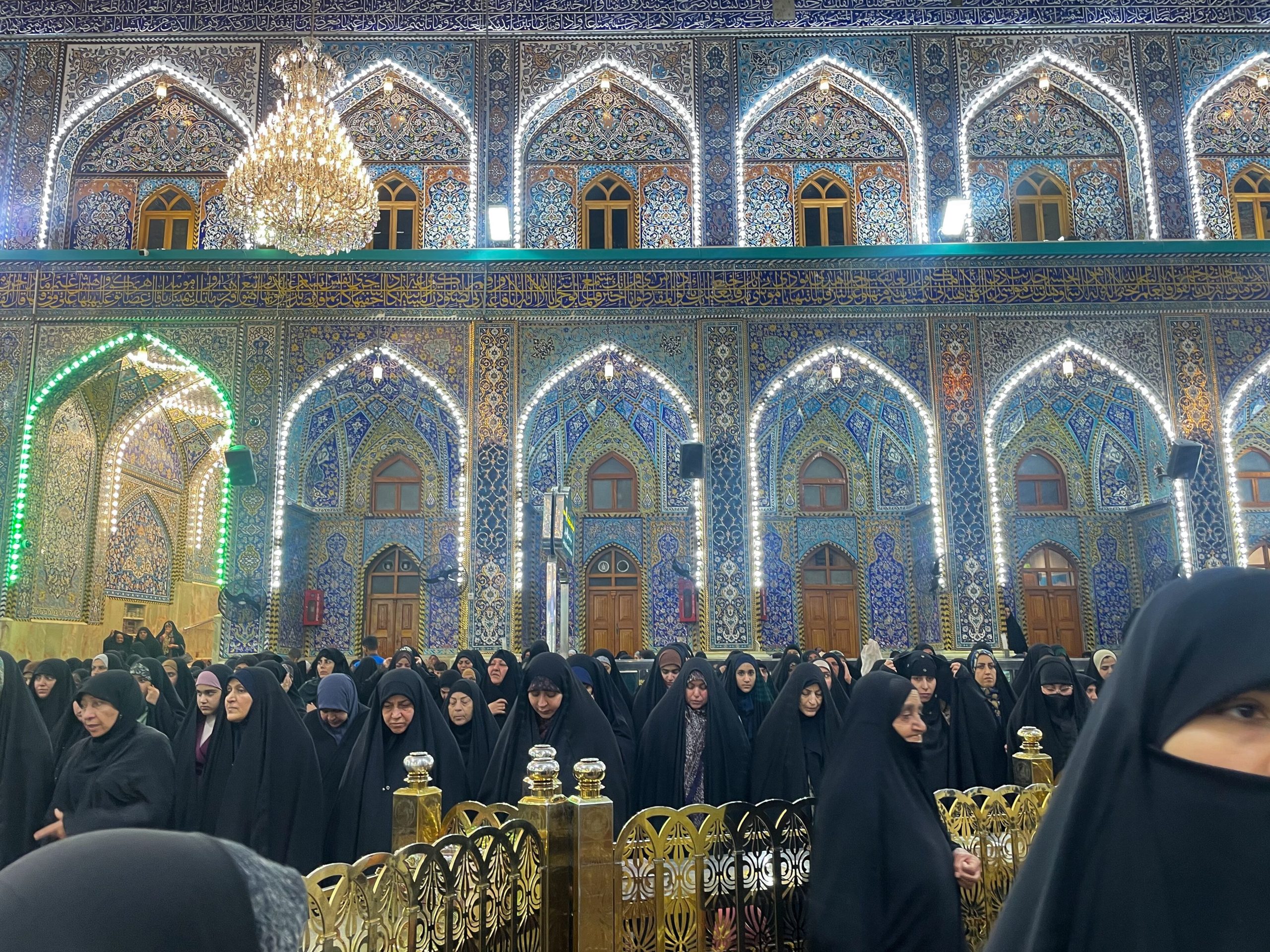
It’s hard to breathe with dozens of bodies pressing in from all sides. The easiest thing to do is to let yourself be carried along by a dense black wave of abayas and chadors. It’s the older women who move forward with the most determination, through the security lines, where the guards conduct thorough pat-downs and searches of bags. The elderly women also set the pace, chanting religious slogans that the rest join in with. They walk barefoot in the mausoleum in the Iraqi city of Karbala toward the tomb of Imam Hussein, son of the fourth caliph Ali — cousin and son-in-law of the Prophet Muhammad — who died in battle in that city in 680, the founding date of the Shia schism of Islam, the branch practiced by between 10% and 15% of the world’s two billion Muslims, according to the Pew Research Center. More than 20 million worshippers visit this pantheon annually, the world’s leading Shia pilgrimage destination. But the war that the United States and Israel launched against Iran in Febrauary has impacted this formidable flow of people.
Despite the inevitable bottleneck that forms in the area restricted to women in order to pray and touch Hussein’s tomb, the vast complex is experiencing its lowest number of visitors, with the conflict in the neighboring country knocking on Iraq’s doorstep and its airspace closed by crossfire from missiles and drones.
“From Iran?” one of the women asks two others who are conversing in Farsi. The pilgrims nod. The youngest, extremely pale, looks ill.
When asked about their journey, the older woman mimes flying planes and falling bombs with her hands. In this line, everyone is showing solidarity with their Iranian sisters.

Cameras are prohibited, and although taking photos is also forbidden, cell phones peek out from the sleeves of abayas to capture memories of the imposing architecture, fabulous carpets, and crystal chandeliers hanging from the ceilings. The two Iranian women have come from Tehran for three days, which means two days of travel by road, each journey taking 15 hours, leaving them one day to pray at a shrine that never closes. It is precisely in difficult times, when the distance between life and death seems to narrow with each missile strike, that the faithful yearn most for spiritual peace. But few Iranians dare to defy the bombs to pray in this sacred place, where they are greeted with posters bearing the face of the former Iranian Supreme Leader, Ali Khamenei, assassinated in a U.S.-Israeli airstrike.
From tens of thousands to dozens
“Before, they used to come by the tens of thousands. This square was overflowing. But now you only see dozens,” laments Abu Mohamed, a man in his seventies, who for decades has run a stall outside the mausoleum selling nuts and sweets by weight. The vendor says his customers believe the government won’t be able to pay civil servants’ salaries next month because “with the blockade of the Strait of Hormuz, they haven’t been able to sell the oil.”
Iraq’s state revenues depend 90% on hydrocarbon sales, which totaled $86 billion last year in a country that ranks fifth in the world in terms of oil reserves. Since the start of the war, crude oil exports have plummeted by 70%.
The impact of these pilgrimages transcends the spiritual. Religious tourism generates around $6 billion in revenue annually, making it one of Iraq’s most important economic sectors. Although, unlike the Hajj — the pilgrimage to Mecca in Saudi Arabia — many services here are offered free of charge by volunteers, the arrival of pilgrims generates more than 60% of local employment in Karbala and the neighboring holy city of Najaf — home to the tomb of Ali, the fourth caliph — with tens of thousands of people working in hotels, transportation, restaurants, and souvenir shops.
“People used to come here from all over the world: Indians, Pakistanis, Lebanese… but now only Iraqis and the occasional Iranian come,” explains Abu Mohamed. While only Iran, Iraq, Bahrain, and Azerbaijan have a Shia majority, Pakistan, India, and Lebanon are home to significant Shia communities.
A few meters from the checkpoint, Fatime’s polite smile can’t quite mask her exhaustion as she carries her youngest child in her arms. She has come from Qom, Iran’s holy city south of Tehran, with her husband and two other children. They passed through the Iranian crossing at Mehran, a point in the middle of the shared border that stretches 1,400 kilometers (870 miles) between the two countries. When asked about the situation in his country, Fatime’s husband, a teacher, admits that the war could drag on, but he believes the Islamic Republic will ultimately win because “it’s on the right side.” At that point, he predicts, his country “will emerge stronger.”
Above the teacher’s head hangs a banner bearing three faces: in the center, Hassan Nasrallah, the deceased leader of Hezbollah; on either side, Qassem Soleimani, former head of an elite unit of the Revolutionary Guard, and Abu Mahdi al-Muhandis, who led pro-Iranian militias in Iraq. All three were killed in attacks by the U.S. or Israel.

The three were adherents of the Iranian school in Qom, which also attracts millions of visitors each year and stands as one of the main Shia religious centers. That city played a key role by becoming a focal point of the 1979 Iranian Revolution, from where Ayatollah Ruhollah Khomeini worked to overthrow the Shah and establish a theocratic system.
“My husband and I disagree,” admits a smiling Mansura, in her thirties. She’s also from Qom, but arrived in Karbala three weeks ago in search of an internet connection. Her husband, Mohamad, is a computer engineer and works for an Irish company. They crossed the border three days after the first attacks and only have one week left on the one-month visa they received at the Mehran border crossing. Mansura disagrees with the Iranian regime, which, she says, has led to many arguments during their 13 years of marriage.

She explains that he is more aligned with the social and religious project inherited from Khomeini. Mohamad smiles and nods. She supports the various waves of popular demonstrations — in 2009, 2022, and in the months leading up to the Israeli-American offensive — as well as women’s rights. “But just because I want change doesn’t mean I want it to come from the U.S. and Israel,” she clarifies, her smile now twisted. “We all know that Trump doesn’t care about the fate of the Iranians and that he only wants our oil. And that Israel only wants to dominate the region.”
Choosing the lesser evil is the same stance that Iraqis outside the Kurdish region usually defend: criticism against their own government, which they accuse of harboring pro-Iranian militias in their territory, is set aside to close ranks with the state, which has openly opposed the attack against Iran.
Sign up for our weekly newsletter to get more English-language news coverage from EL PAÍS USA Edition







Donald Trump
Una Nueva Dimisión Por El Caso Del Exministro Británico Mandelson, Vinculado A Epstein, Acorrala A Starmer


Ruedan cabezas en el Gobierno británico, en un desesperado intento por evitar que el caso Mandelson se lleve por delante al primer ministro, Keir Starmer. La noticia, revelada el jueves por el diario The Guardian, de que el Ministerio de Asuntos Exteriores ignoró en enero de 2025 el veto de los servicios de seguridad internos al nombramiento como embajador en Estados Unidos del exministro laborista Peter Mandelson, vinculado al caso Epstein, ha forzado la dimisión en las últimas horas del alto funcionario jefe del departamento, el secretario permanente Olly Robins.
The Guardian publicó en la jornada del jueves la exclusiva de que el Departamento de Escrutinio de Seguridad del Reino Unido (UKSV, en sus siglas en inglés), el organismo independiente que examina exhaustivamente el historial personal de candidatos a un cargo público, había vetado la designación de Mandelson, que aun así siguió adelante.
El histórico político de centroizquierda, fundador junto con Tony Blair y Gordon Brown del exitoso Nuevo Laborismo, ha provocado la crisis más grave del actual Gobierno británico, al revelarse su complicidad con el multimillonario pederasta estadounidense Jeffrey Epstein.
A medida que los documentos revelados por el Departamento de Justicia de Estados Unidos sacaron a la luz los manejos entre Mandelson y Epstein, en los que se señalaba que el exministro filtró al financiero información confidencial del Gobierno británico, Starmer intentó desesperadamente poner un dique entre su propia carrera política y el hombre al que se empeñó en situar como principal diplomático en el Washington de Donald Trump.
Conocido como el príncipe de las tinieblas por su habilidad para moverse en los entresijos del poder, Mandelson parecía el político apropiado para seducir al volátil presidente estadounidense.
Su nombramiento acabó siendo un fiasco, que derivó en una cadena de dimisiones internas en Downing Street. Morgan McSweeney, el jefe de Gabinete de Starmer y el asesor que le acompañó en su victoria electoral, fue señalado como el principal responsable del empeño en nombrar embajador a su amigo y mentor Mandelson. A su dimisión a principios de febrero siguió a continuación la del principal responsable de comunicaciones del Gobierno, Tim Allan.

La policía británica llegó a detener en su propio domicilio a Mandelson y le interrogó en comisaria durante varias horas. Permanece investigado por un delito de conducta inapropiada en el desempeño de un cargo público.
Pero Starmer, que pidió perdón en repetidas ocasiones para frenar una revuelta interna en el Partido Laborista, ha asegurado en todo momento que el proceso de escrutinio de seguridad de Mandelson había dado luz verde al nombramiento. El Gobierno se comprometió incluso, forzado por una votación parlamentaria a la que se sumaron diputados laboristas, a hacer públicos todos los documentos referentes a ese proceso de escrutinio.
Había quedado demostrado que el primer ministro británico fue advertido de las dudas que suscitaba la relación de Mandelson con Epstein, pero en ningún momento, hasta este jueves, se supo que los servicios internos de seguridad habían vetado expresamente el nombramiento del exministro como embajador, y que alguien había optado por seguir adelante con la decisión.
Starmer, de visita oficial este viernes en París, donde copreside junto al presidente francés, Emmanuel Macron, una cumbre para impulsar la reapertura del estrecho de Ormuz, se ha declarado “furioso” al saber que el nombramiento de Mandelson había sido vetado, y ni él ni sus ministros —según su versión de lo sucedido― fueron advertidos. “Es completamente inaceptable que un primer ministro que está llevando a cabo un nombramiento no sea advertido de que el escrutinio de seguridad del designado ha resultado negativo”, ha dicho el primer ministro, que ha descrito la actuación de los funcionarios de Exteriores como “abrumadora” e “imperdonable”.
El enigma Robbins
Oliver Olly Robbins llevaba apenas dos semanas en el cargo de secretario permanente del Ministerio de Exteriores cuando llegó a la mesa de su despacho el nombramiento de Mandelson. Es un alto funcionario de prestigio, que estuvo durante dos años al frente de las negociaciones del Brexit con la UE. Resulta todo un misterio entender por qué se jugó de un modo tan temerario su reputación y prestigio profesional, para impulsar un nombramiento en cuya decisión no había participado. A no ser, y esa es la principal sospecha que acosa a Starmer, que la presión política desde arriba hubiera sido muy fuerte.
El primer ministro ha escenificado, desde que estalló la noticia del veto, una aparente irritación por lo sucedido que ha derivado en el cese fulminante de Robbins. El entorno de Starmer insiste en que nunca supo que el UKSV había dictado la no idoneidad del nombramiento de Mandelson, y que por eso siguió adelante la decisión.
“Dio inmediatamente instrucciones para que se esclarecieran los hechos sobre el modo en que se acabó concediendo luz verde al nombramiento, para informar cuanto antes a la Cámara de los Comunes”, ha explicado un portavoz de Starmer, quien comparecerá el próximo lunes en esa misma Cámara para dar la cara sobre este asunto. La oposición en bloque ha comenzado a exigir la dimisión del primer ministro, al que acusa de haber engañado al Parlamento desde un primer momento.
“Es completamente ridículo pensar que el primer ministro, que en su día fue el fiscal general de este país, no preguntara cuestiones básicas, no insistiera en comprobar él mismo el proceso de escrutinio. No es posible”, ha dicho a la BBC la líder del Partido Conservador, Kemi Badenoch. “Creo que todo esto demuestra una capacidad de juicio [de Starmer] catastróficamente pobre”, ha denunciado el líder del Partido Liberal Demócrata, Ed Davey, que ha señalado cómo el nombramiento de Mandelson “puso en riesgo la seguridad nacional”. “Todas las pruebas señalan que Starmer engañó a la ciudadanía”, ha dicho Davey.
El entorno del primer ministro ya ha anunciado que no piensa tirar la toalla, pero los próximos días, quizá las próximas horas, serán cruciales para comprobar hasta qué punto permanecen prietas las filas del grupo parlamentario que respalda al Gobierno. El 7 de mayo se celebrarán elecciones municipales en Inglaterra y autonómicas en Gales y Escocia. Todos los sondeos apuntan a un hundimiento estrepitoso del laborismo.
La mayoría de los críticos y rivales de Starmer han enterrado el hacha de guerra hasta comprobar la magnitud de ese desastre anunciado. Las nuevas revelaciones sobre el torpe manejo del primer ministro del asunto Mandelson complican mucho más su futuro político inmediato.


S

British Couple’s Juice Empire In Spain Steals Spotlight On UK Television

S


-

 New Developments2 weeks ago
Luxury Villas For Sale, Estepona – ProjectL1
-

 New Developments4 weeks ago
How To Get A Tourist Rental Licence In Andalusia (Spain) – Step-By-Step Guide 2025
-

 New Developments2 weeks ago
Stylish 3-Bedroom Apartment With Panoramic Sea Views – Benalmádena
-

 Uncategorized4 weeks ago
Max Verstappen left laughing after Nurburgring triumph
-

 %2 weeks ago
Poland Disconnects Utilities At Russian Consulate That Moscow Refuses To Hand Over
-

 Uncategorized4 weeks ago
Max Verstappen team-mate sheds light on Nurburgring mistake
-

 Uncategorized3 weeks ago
Lewis Hamilton goes from Karate Kid to Samurai Warrior with Kill Bill guru
-

 %4 weeks ago
Torrevieja Spring Concert Brings Classical Music And Community Spirit