U.S. President Donald Trump has once again shared a map on which the American flag covers not only the United States, but also many other countries, including Canada, Cuba, Greenland, and Mexico. The message is clear: in today’s world, where might makes right and geopolitical power runs roughshod over shared rules, territorial revisionism is back on the table.
Once the guardian of territorial integrity, the U.S. has become an anti-status-quo power, actively destroying a pillar of the post-war global order: belief in the inviolability of international borders. Trump is particularly fixated on Greenland, an autonomous territory of NATO member Denmark, insisting (without evidence) that if the U.S. does not take it over, China or Russia will. He has gone so far as to raise the specter of a military invasion.
Trump has also mused about annexing Canada. Saying that the border is nothing more than an “artificially drawn line” is not a throwaway comment, but a statement of his territorial aspirations. From directing the US Board on Geographic Names to refer to the Gulf of Mexico as the “Gulf of America” to changing Lake Ontario to “Lake America,” he has repeatedly indicated his expansionist ambitions.
To be sure, Trump’s maneuvers have so far not translated into new U.S. territories, and, when it comes to a country like Canada, they will do nothing to erode sovereignty or territorial integrity. But they have normalized the language of territorial revisionism, while advancing Trump’s efforts to bend geopolitics to his will. His threats to “take back” the Panama Canal — by force, if necessary — impelled Panama to agree to limit China’s position in the area and authorize an increased U.S. military presence.
Trump’s territorial threats have also facilitated an outrageous resource grab. After deploying troops to Venezuela and capturing its president, Nicolás Maduro, Trump repeatedly indicated that the U.S. would “run” the country and floated the idea of it becoming the 51st US state. The leader the U.S. left in charge — Maduro’s vice president, Delcy Rodríguez — has now agreed to a deal that gives the U.S. control over more than 65 billion barrels of Venezuela’s oil reserves.
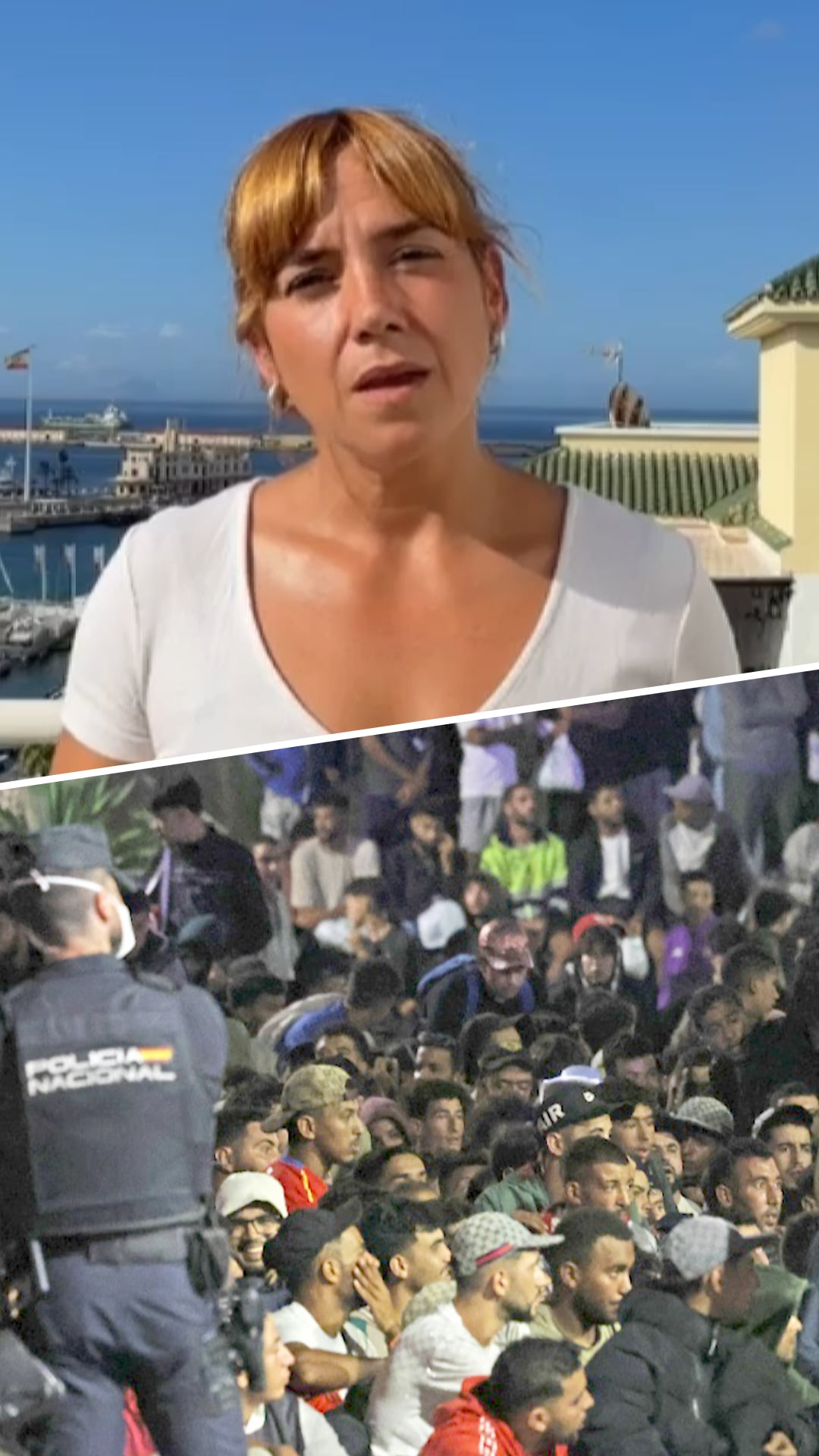
Other countries are taking note. Argentina’s right-wing president, Javier Milei, a Trump ally, recently revived the country’s dormant dispute with the United Kingdom over the Falkland Islands, strengthening Argentina’s naval presence in the area. And Ceuta, a Spanish exclave on the coast of Morocco, faced a border crisis under Trump’s watch.
While Ceuta and nearby Melilla have been Spanish sovereign possessions for centuries, Morocco claims both. Nonetheless, Morocco had largely accepted the status quo, partly because the U.S. enforced it. In 2002, when Morocco placed a small contingent on the tiny uninhabited island of Perejil, a few miles from Ceuta, Spain launched a military operation to remove it, before U.S. mediation prevented the conflict from escalating.
But Morocco understands that Trump does not share his predecessors’ commitment to the territorial status quo. During his first term, he officially recognized Moroccan sovereignty over another disputed territory: the Western Sahara, a former Spanish colony that Morocco annexed in 1975, only to become embroiled in a battle for control with the indigenous Sahrawi people.
Recognition of Moroccan sovereignty was not wrong: the United Nations’ effort to secure Western Sahara’s independence is simply not feasible. But Trump’s unilateral approach sent the wrong signal to a country eager to stake its territorial claims elsewhere. Trump’s behavior after returning to the White House in 2025 reinforced that signal.
Last April, the U.S. House Appropriations Committee released a report that described Ceuta and Melilla as Spanish-administered territories “located in Moroccan territory” and called on Secretary of State Marco Rubio to bring the parties into negotiations over their “future status.” Morocco was further emboldened by America’s estrangement from Spain, driven by Socialist Prime Minister Pedro Sánchez’s willingness to challenge Trump (not least on the Iran war).
Beyond reiterating claims to Ceuta and Melilla, Moroccan authorities did nothing last month to stop tens of thousands of young Moroccans from crossing into Ceuta (they returned to Morocco shortly after). While the details of how that surge came about are unclear, connivance by Moroccan agents is a distinct possibility. In any case, Trump rejoiced at Spain’s failure to protect its borders, and there is reason to think that his administration might consider reframing the Ceuta issue as an open territorial dispute.
The impact of Trump’s embrace of territorial revisionism extends further. If the U.S. can claim territory on the basis of vague “national-security” justifications, China can do likewise in Taiwan, in the Japan-administered Senkaku Islands, and across the South China Sea. And Russia can do it in Ukraine. In fact, the Trump administration’s “peace plan” for Ukraine would have the country hand over territory that Russia does not even control.
Perhaps no country is taking greater advantage of Trump’s disregard for territorial integrity than Israel. In his first term, Trump unilaterally recognized Israel’s sovereignty over the Syrian Golan Heights. In his second, he has treated Israel’s continued encroachment on Syrian lands, not to mention Turkey’s expansion into northern Syria, as the new normal. The same goes for Israel’s presence in Southern Lebanon, which was affirmed in a Rubio-mediated memorandum of understanding.
Trump’s 20-point peace plan for Gaza notwithstanding, there are no signs that the U.S. administration will challenge Israel’s new “forward defense” security doctrine, which shifts military operations into so-called buffer zones beyond its borders. Israeli Prime Minister Benjamin Netanyahu surely cannot believe his luck.
Sign up for our weekly newsletter to get more English-language news coverage from EL PAÍS USA Edition


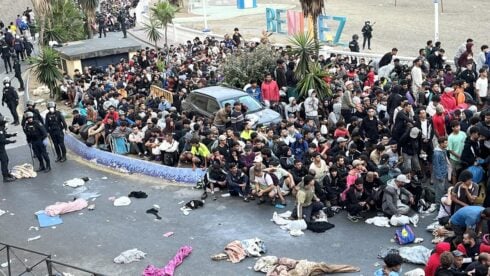
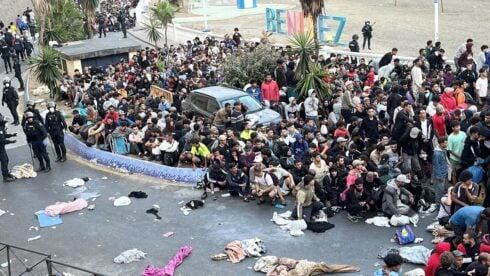 FOOTAGE shows hundreds of migrants surging through the port promenade after police began moving them from their makeshift camps on Friday.












 Uncategorized2 weeks ago
 Energy efficiency & certificates1 week ago
 Andalucia2 weeks ago