Connect with us

China

Power Of Siberia-2, The Gas Pipeline The Kremlin Craves And That Brings Xi And Putin Together

Published

on

power-of-siberia-2,-the-gas-pipeline-the-kremlin-craves-and-that-brings-xi-and-putin-together

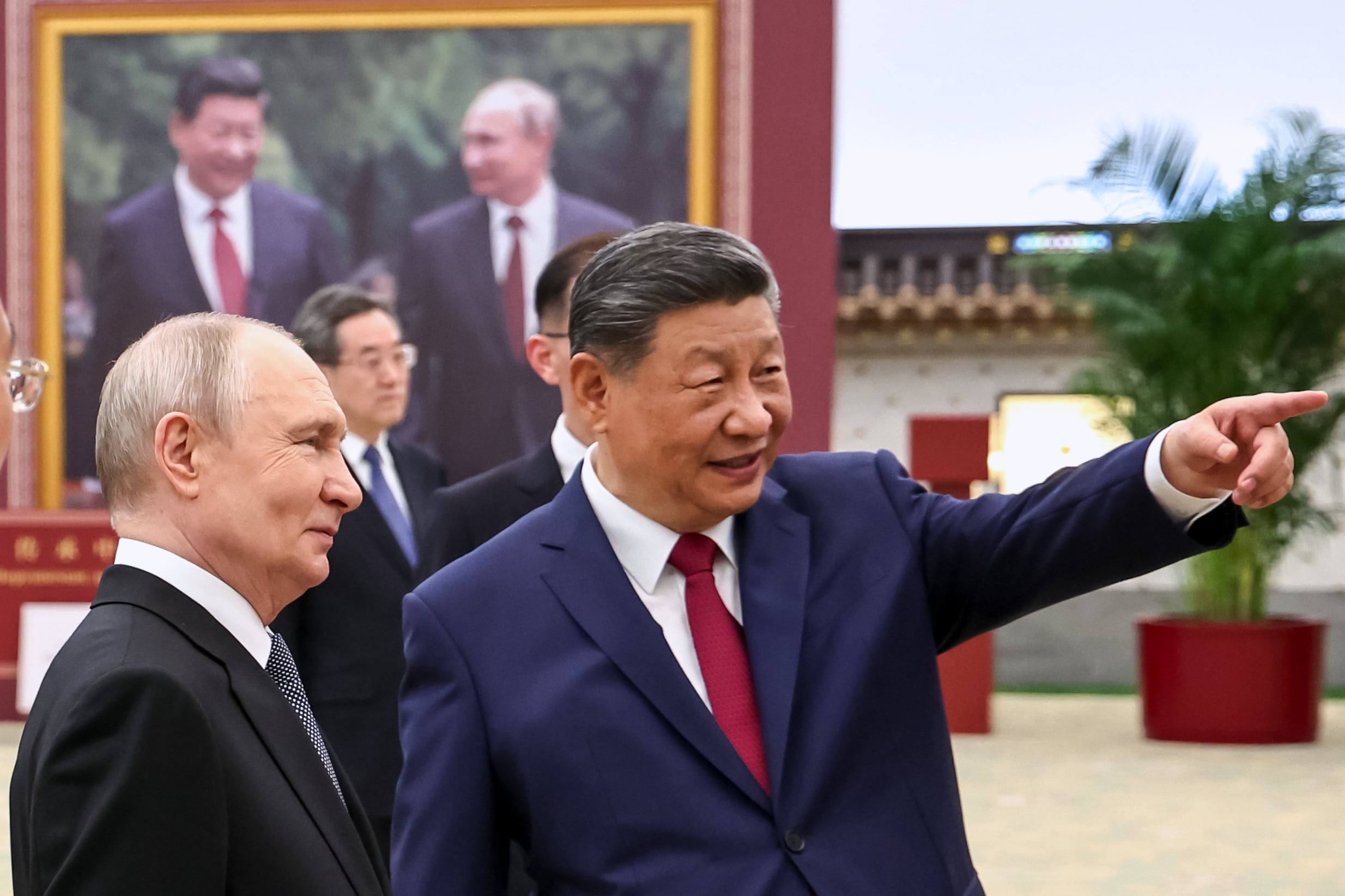
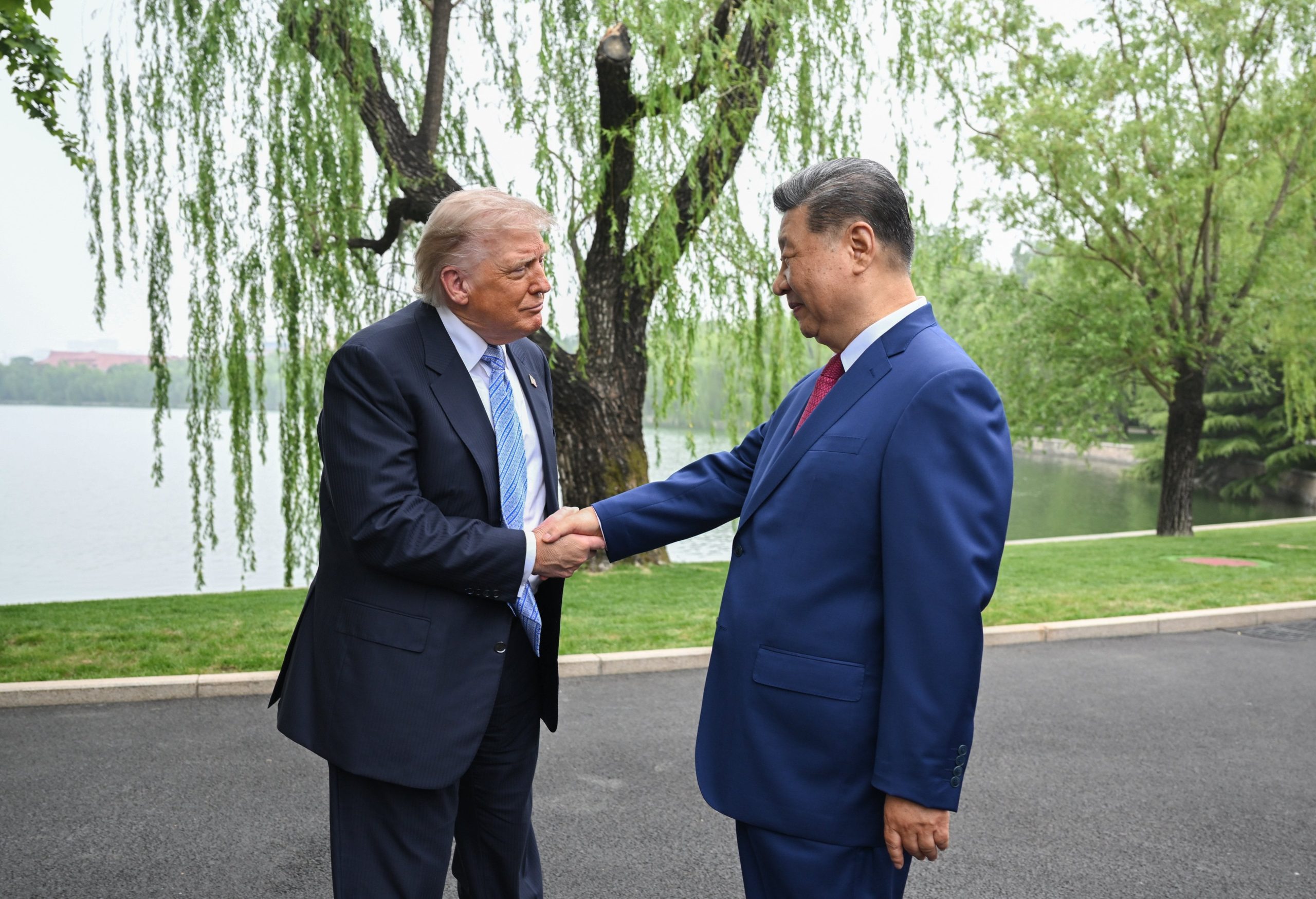
Poised to become the king of pipelines, with a total route of more than 2,600 kilometers (1,615 miles), Power of Siberia-2 is set to change two things forever: global natural gas flows and the already solid alliance between China and Russia. A few loose ends remain before it becomes reality, but after Tuesday’s meeting between Xi Jinping and Vladimir Putin, the road appears paved for the pipeline that will link the Yamal Peninsula ― one of the world’s largest gas fields ― with Beijing and Shanghai to come to fruition.

The promise that comes with the soaring name Power of Siberia-2 is twofold. For China, it offers a way to lower its future bill by supplying one-eighth of its domestic needs for a fuel key to its industry and reducing its need to turn to the highly contested global liquefied natural gas market (LNG, which is shipped by tanker). For Russia, which faces a domestic economic situation that is anything but reassuring, it is the only viable outlet to move the volumes it used to sell to the European Union before the invasion of Ukraine.

What it is. The project’s aim is to connect Russia’s main gas extraction point, deep inside the Arctic Circle, with some of China’s main economic hubs. In short, it will complement Power of Siberia-1, active since 2019 and already carrying 38 billion cubic meters (bcm) of gas a year — the equivalent of the demand of a country like Spain. When ready, its bigger sibling will be able to transport nearly 50 bcm, almost as much as Italy consumes in a year. Together, the two pipelines will cover one-fifth of China’s demand.

The idea for Power of Siberia-2 goes back two decades, when another official visit by Putin to Beijing ― he has made 25, by one count ― planted the project’s first seed. After years of dormancy, the stigma attached to Russian gas in the West following the invasion of Ukraine ― the EU has banned overland deliveries ― accelerated plans. Moscow needs new routes to export its vast fossil fuel reserves, the cornerstone of its economy, before it is too late.

Although both sides are interested, the party with the greatest stake in seeing the project completed is the Kremlin. In particular, the state gas giant Gazprom, which has for years been feeling firsthand the collapse of sales to Europe. Urgency is on its side.

Where it stands. After Tuesday’s summit between Xi and Putin, Kremlin spokesman Dmitry Peskov announced a “shared understanding on the main parameters of Power of Siberia-2: the route and how it will be built.” Some “details,” he conceded, remain unresolved, and the timeline for carrying it out has not been set. But from his words — and despite Chinese authorities opting not to comment — progress can be inferred.

The route ― which will cross almost all of northeastern Mongolia before entering Chinese territory ― has already been decided. Its cost, however, remains uncertain, though the most conservative estimates place it above $11.5 billion. And rising.

In September last year, Putin said the system that will determine the fuel’s future price had been finalised: it will, he said, be a formula similar to the one that once governed flows sent to the EU via the ill-fated Nord Stream pipeline, until it was hit by sabotage. Those prices were rock-bottom compared with what is paid today for LNG, the main and almost sole crutch the EU has been able to rely on to weather the crisis. Nevertheless, given the growing imbalance of bargaining power, China will likely have more room to push the gas price down.

Why now. The timing is most propitious. Russia, with the European route closed sine die, urgently needs foreign currency in exchange for one of its most coveted commodities. For China, the recent closure of the Strait of Hormuz has deprived it of two of its main suppliers (Qatar and the United Arab Emirates), making diversification more important than ever.

Economically — although in the early years of operation the cost of pipeline deliveries is higher — over the long term gas delivered by pipeline is typically noticeably cheaper than gas transported by ship. With an estimated lifespan of about 30 years, both countries will have ample time to extract value from it before natural gas fades. The research center of the Chinese energy giant CNPC projects an average demand increase of 5% through 2030.

What it means for the rest of the world. In the short term, nothing: China itself estimates that once both parties give final approval, construction will last at least five years. Another near-five-year period will then pass before it can operate at full capacity.

In the long run, however, it will represent a major twist in global energy flows. By receiving more gas from Russia, China will be much less pressured to turn to the competitive global LNG market — supplied in large part by the United States since the Strait of Hormuz was closed — freeing up space so that the EU, Japan, or India, to name the most obvious cases, can satisfy their import demand.

Sign up for our weekly newsletter to get more English-language news coverage from EL PAÍS USA Edition

Asia

Yuk Hui, Philosopher: ‘Tech Companies Want To Exploit Us And Control Us Every Second’

Published

on

yuk-hui,-philosopher:-‘tech-companies-want-to-exploit-us-and-control-us-every-second’

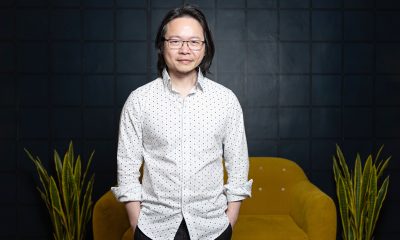
Hong Kong-born philosopher Yuk Hui was on track to become a computer engineer, but artificial intelligence led him to question consciousness, ethics, and our relationship with technology, ultimately prompting him to study philosophy in London.

In his book Machine and Sovereignty: For a Planetary Thinking, the professor at Erasmus University Rotterdam proposes technodiversity — an openness to traditions beyond the Western — as a response to an increasingly homogeneous world with ever-more-powerful corporations. In Post-Europe, Hui warns against nationalist and exclusionary ideologies, and in Kant Machine, he uses Kant’s ideas to explore the limits of AI.

We spoke with him during a visit to Madrid in late April, where he gave a talk at the Contemporánea Condeduque cultural center alongside journalist Marta Peirano. He doesn’t give his age, but when we ask whether he expected today’s rise of artificial intelligence back when he began studying philosophy, he jokes that he’s not that old: “There was already quite a bit of research on AI and neural networks.”

What has changed most, he says, is the business model behind the technology: “Most of these companies are, first and foremost, financial companies. Only after that are they tech companies.” This model, he argues, is less a threat to our jobs than a force reshaping entire economies and creating new kinds of work — like the rise of delivery‑app labor.

Question. This kind of work is worse for workers.

Answer. Not only that, but your life becomes tied to an algorithm. For example, the estimated delivery time within a three-kilometer [1.9-mile] radius decreases every year. The algorithm scores, manages the route, and penalizes. Many people thought that with these jobs, at least you’d have a flexible schedule. But that’s not true. I think the question of technology and work has less to do with unemployment and more to do with tech companies that want to exploit us and control us every second.

Q. So what can we do? Can we regulate technology?

A. Regulating or deregulating is a false dilemma because it means we’ve already accepted the starting point. We need to find a different path. And that path is technodiversity. We have to think, for example, about what technology could facilitate the work of local communities or about different social networks. I’m not saying that regulation isn’t important, but it’s not enough. We need to develop alternatives and guide innovation in other directions.

Q. In Post-Europe, you speak of a post-European Europe. What does that mean?

A. The term comes from the Czech philosopher Jan Patočka. It refers to the fact that, after the Second World War, Europe ceased to be a world power. But this doesn’t mean that Europe should rearm itself to regain its dominance. That would be preparing us for another catastrophe. We live in a post-European reality. Everyone, including those in Asia, is post-European because we have all been affected by European modernity. If we go to Tokyo or Seoul, we see more European than Asian elements, and we can’t renounce that. We need to think about what to do next, and the answer isn’t to retreat into the nation-state and expel immigrants, but to develop policies capable of addressing local problems that cannot be solved from a global perspective: unemployment, crime, community building…

Q. You also speak of facilitating the individuation of thought.

A. I start from the concept of individuation by the philosopher Gilbert Simondon. We are not finished individuals; we are always in process. For example, one day we read a book, and it transforms our life. Another day, we meet someone who becomes a friend, or we meet someone else and start a family. There are tensions that grow until the structure can no longer bear it and transforms. I wanted to explore this idea further by stating that tensions in thought are precisely the condition for thought to occur.

Q. How have you personally experienced these tensions? You’re from Hong Kong, but you’ve studied European, Chinese, and Japanese philosophy…

A. When I was growing up, Chinese philosophy seemed outdated, like it belonged to the past, to the empire. That puzzled me… I try to rethink the relationship between all these philosophies, and that means I also live in tension, because we all carry different cultural resources. I learned the Chinese classics, I went to study in the U.K., in France, in Germany… and those are my resources. They are within me; perhaps in some ways, they don’t speak to each other, but they coexist. I am their bearer. And, of course, they create tensions. I have to facilitate this individuation, which is my own individuation as a philosopher.

Q. Is this cultural mix a way of moving towards the planetary thinking you propose in Machine and Sovereignty?

A. When we talk about the planetary, we tend to think in terms of ever-larger scales: from the polis to the state, from there to large international spaces like the European Union, and then to the idea of ​​a world government. But I don’t think that’s the solution; that’s just a continuation of modernity, the pretension of dominating everything. Planetary thinking boils down to a very complex question: how can we develop coexistence among humans and also with non-humans? This implies returning to the Earth and thinking about diversity in three areas: biodiversity, noodiversity — from the Greek nous, thought — and technodiversity. These three areas are not separate; they are interconnected. Humans cannot remain on the sidelines of biodiversity; we live in nature and are part of nature.

Q. What do you think about nostalgia in politics?

A. If by the politics of nostalgia we mean living in the glory of the past — for example, the glory of Spanish colonization or the glory of Western dominance — I think it’s a dangerous idea. If we think like that, we will repeat the catastrophes of history. We live in a different situation than in the past, and it’s very dangerous to return to those earlier times: we are now very close to the debates that preceded the Second World War.

Q. Is a Third World War possible?

A. Look at how many countries are preparing for war: if we don’t want it, why are we militarizing ourselves? In this, I’m closer to Kant and his idea of ​​perpetual peace. Another world war would be a catastrophe. We are at a critical moment to think about the future of the planet, and we need to resist these ideologies that are regaining strength.

Sign up for our weekly newsletter to get more English-language news coverage from EL PAÍS USA Edition

Continue Reading

Accidentes

E

Published

on

e

Please enable JS and disable any ad blocker

Continue Reading

Ataque contra Irán

E

Published

on

e

Please enable JS and disable any ad blocker

Continue Reading

Trending

Copyright © 2017 Spanish Property & News