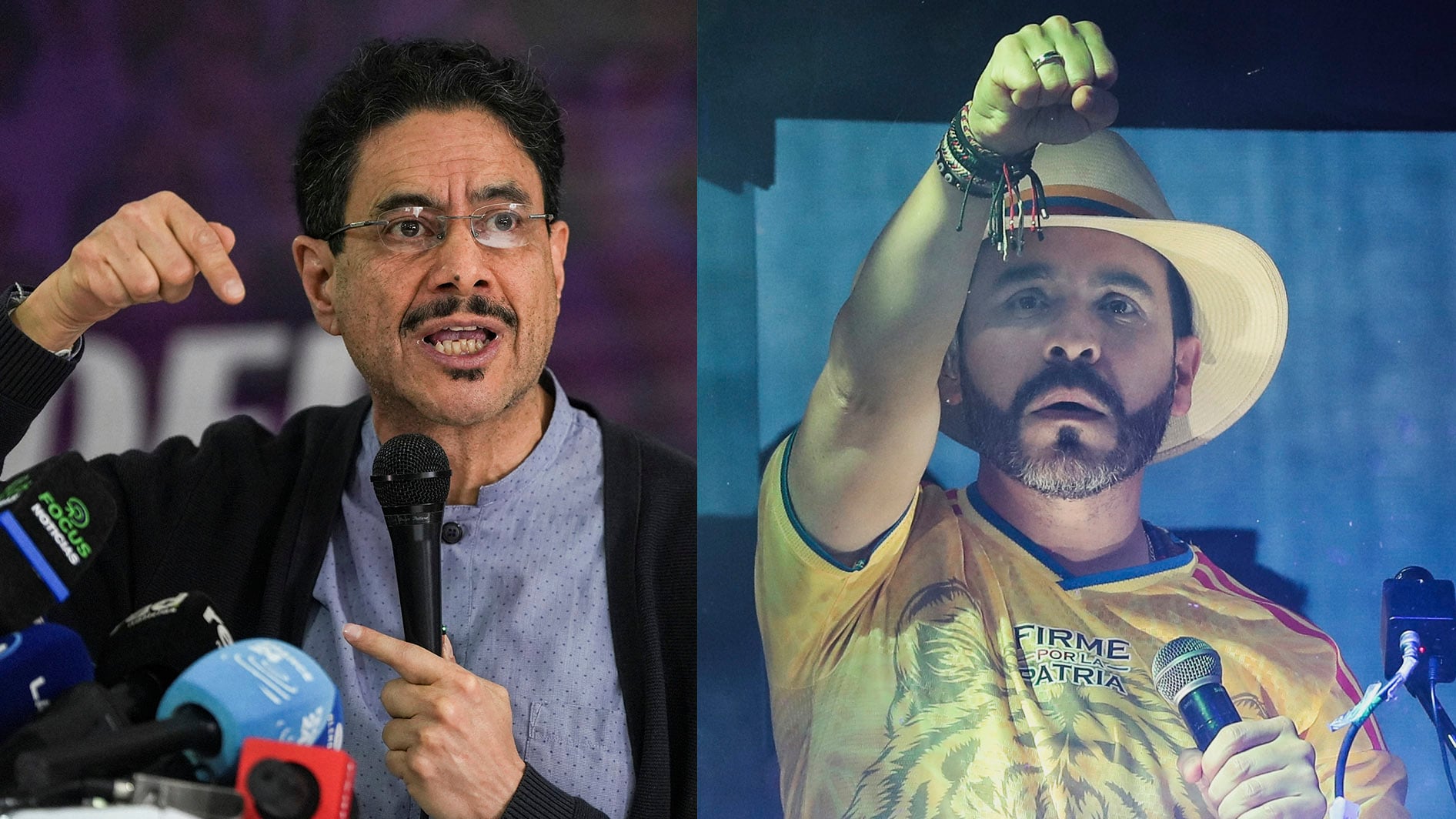
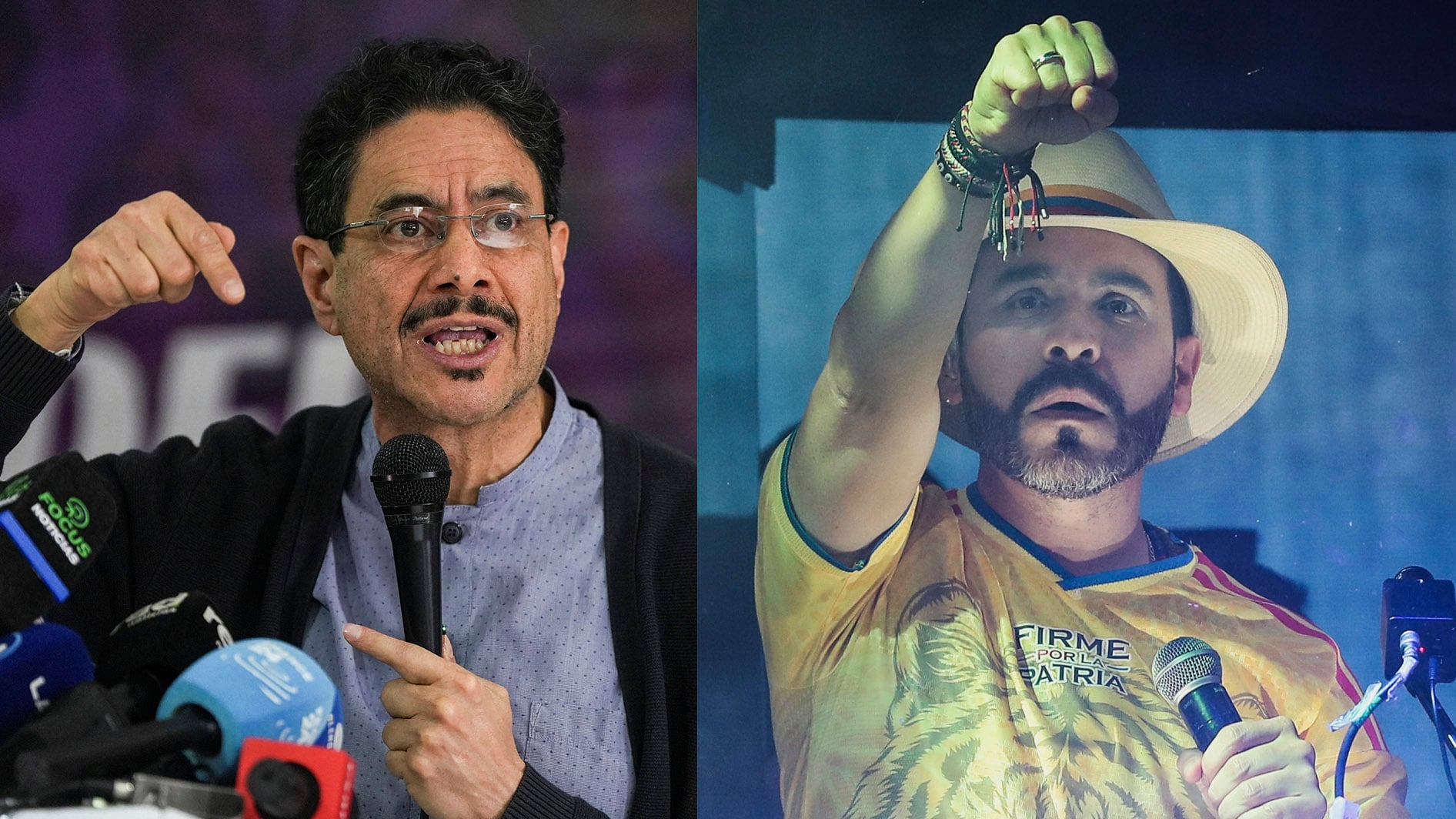
The far-right campaign team of Abelardo de la Espriella is worried about Colombians who left the country to support the national team at the World Cup. There are about 80,000 adults who, they calculate, could affect the vote flow in the second round of the presidential election on June 21, says a senior source in the campaign that currently leads the polls having won the first round three weeks ago. Meanwhile, Iván Cepeda’s campaign is fighting for votes at all costs, since they still consider victory possible despite the average of recent polls giving De la Espriella an 80% chance of winning.
“Let’s not get complacent!” former senator Mauricio Gómez Amín, the far-right candidate’s campaign chief, said Thursday. “We’re doing well in the polls, but this isn’t won by polls.” If on Monday, June 1, after the first round of voting, De la Espriella’s campaign appeared triumphant and Cepeda’s looked defeated, the culmination of the three weeks leading up to the runoff has left both sides with a different sensation: the race is much tighter than the polls suggest.
Polls — which, by law, could only be published through last weekend — showed the far-right candidate as the frontrunner, and prediction markets reinforce that view. However, the mood on the campaign trail is different.
The margin the far-right candidate achieved in the first round — just under three percentage points, or 632,222 votes — does not seem that comfortable. About three million voters who had backed other candidates, and more than 400,000 who left their ballot blank, could swing to either ticket. Also in play is a possible uptick in turnout between rounds, similar to the 1.2 million voters who appeared in the 2022 runoff, tipping the balance in favor of Gustavo Petro’s election as the country’s first leftist president in contemporary history.
Within De la Espriella’s team there is confidence, but also fear that a premature sense of victory could demobilize overconfident supporters.
Voting from overseas, which began last Monday and went in De la Espriella’s favor in the first round, provided an early warning. Leszli Kálli, a former right-wing Senate candidate who supports the far-right contender, cited Atlanta consulate figures: the Tuesday before the runoff, De la Espriella received 3% fewer votes than the Tuesday before the first round. “No triumphalism. Vote en masse,” she wrote on X.
The candidate sent a similar message Wednesday about diaspora voters: “We need to redouble our efforts to increase that vote,” he said in a video on his social networks. The general idea is that complacency could affect the outcome. Concern about 80,000 people abroad who might have voted for the far-right candidate shows how pressured they feel.
On the opposing side there is not a shred of triumphalism, only anxiety about achieving significant growth, which they still see as possible. If in the immediate days after the first round Cepeda’s campaign appeared paralyzed and lost — partly while resolving differences with Petro — in recent days there has been renewed energy. The senator has embraced a more digital campaign, strengthened his digital team and begun appearing in social media videos designed to present him as less solemn and more relatable. It’s late, but his circle still believes it’s not over.
A person familiar with the campaign’s strategy says digital indicators had risen substantially leading into the weekend. On TikTok, a social network that was crucial to De la Espriella’s successful digital strategy, Cepeda was virtually nonexistent. He has now managed to get reactions, likes, and reposts that can rival the far-right candidate’s.
Beyond those specific figures and the campaign changes, grassroots activists have sought to generate enthusiasm and hope. Students, artists, and social movements have taken the initiative themselves — an effort that began with the support of the “kpopers,” fans of South Korean pop who boosted Cepeda’s digital presence and has since grown through other spontaneous expressions.
Hope, in any case, does not lie in the digital world but in remote rural paths, in isolated Indigenous settlements, among young people and all those who did not vote in the first round because they lacked resources, fuel, or shoes to reach voting centers, or were demotivated to do so. Also in a more moderate, centrist vote that, while not trusting Cepeda, refuses to vote for De la Espriella.
The left-wing senator is well aware of the consequences of getting carried away by triumphalism after the setback of a first round in which he was expected to win, and he has been forced to make a sudden about-face. Cepeda has clearly distanced himself from Petro, especially when — after a few days of hesitation — he explicitly acknowledged the results of the first round, something the president did not do. He has also managed to influence Petro and succeeded in getting him to formally suspend the collection of signatures for a Constituent Assembly, a move that has sparked fears among undecided voters or those leaning more toward the center.
In contrast, the far-right candidate continued doing what he’s always done: running a campaign with impeccable logistics and very clear messages on social media. He also managed to retain the right to wear the Colombian national team jersey during the World Cup, after winning several legal battles to that end. He further strengthened his strategy of securing international support. Before the first round, the highlight was a video call with Ecuador’s president, Daniel Noboa, during which he announced the end of tariffs on Colombia. Over the past three weeks, De la Espriella has secured the public endorsement of Donald Trump and Argentina’s Javier Milei.
With no official data reflecting the gap over the past week, a source from the far-right campaign notes that, while they have data showing a six-percentage-point lead — between 1.5 million and two million votes — they believe the margin is likely smaller. On both sides, the campaigns have been urging their supporters to turn out to vote, while also seeking to attract undecided voters, those who typically abstain, and centrist voters by tweaking their policy platforms to make them more moderate. The highly charged atmosphere — marked by mutual accusations of vote-buying, warnings of fraud, and mutual disparagement — reflects how the two campaigns feel the election remains very close at the 11th hour.
Sign up for our weekly newsletter to get more English-language news coverage from EL PAÍS USA Edition





















 %1 week ago
 california2 weeks ago
 Casa Real2 weeks ago