
Housing access / crisis / affordability
Radical Housing Decrees Return As Housing Becomes Election Battleground

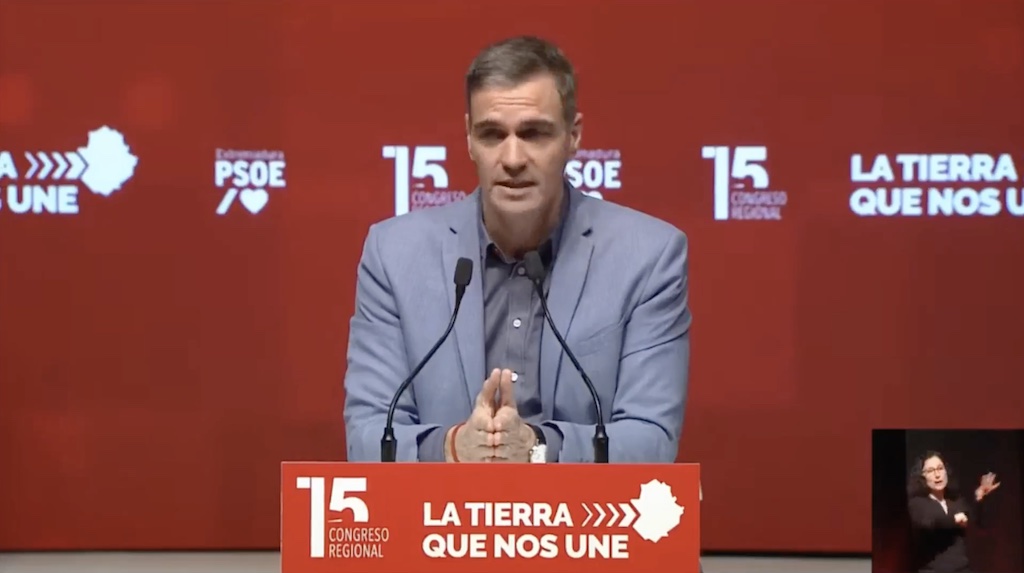
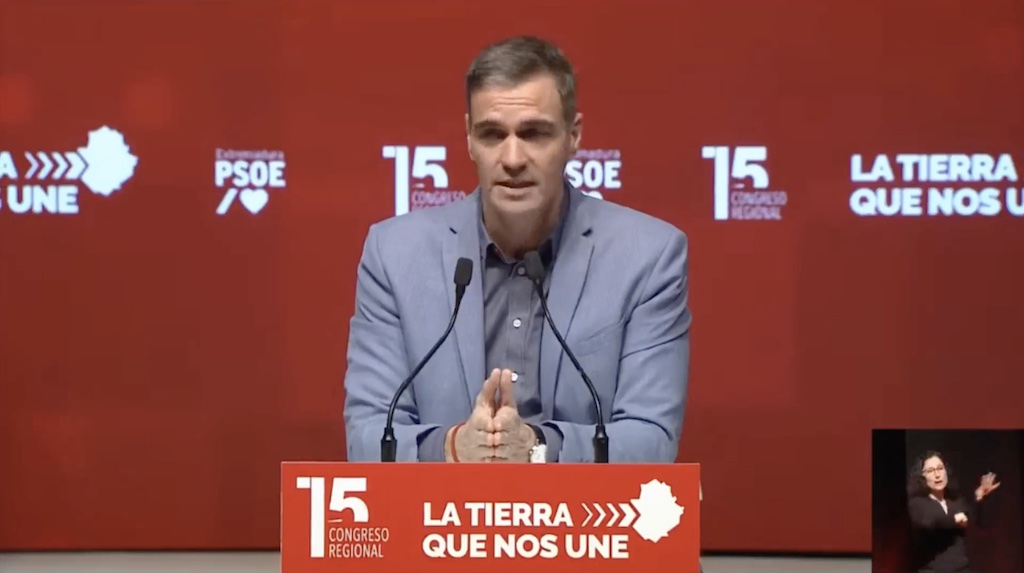
Spain’s controversial housing decrees are back, and Prime Minister Pedro Sánchez has called a snap general election for 29 November, gambling that public anger over housing will save his government.
Just three days after Parliament rejected the government’s two emergency housing decrees on Friday 2 October, Sánchez announced a snap general election. His government then promptly reintroduced revised versions of the same decrees, taking advantage of parliamentary procedures that could allow them to survive despite having been rejected by the full Congress.
As I argued in my previous article (linked above), the decrees appeared to be as much about political positioning as housing policy. Events since then have only strengthened that impression.
Housing becomes the election battleground
Sánchez has been Prime Minister for eight years, during which Spain’s housing crisis has steadily worsened, as is clear from this house price chart showing when he came to power and when he introduced his Housing Law (Ley de Vivienda) of 2023, after which house prices really took off.

With corruption scandals, controversy over events in Ceuta and unfavourable opinion polls threatening his political survival, the eviction of 87-year-old Maricarmen from her long-term home in Madrid provided an opportunity to change the political conversation.
Her death in hospital on 7 October has made the issue even more emotionally charged, with demonstrations and accusations against the property investors and political parties held responsible for her eviction.
Sánchez now appears determined to fight the election on housing, but not on his government’s record or the underlying causes of the crisis. Instead, he wants to frame it as a simple moral choice between ordinary people, whom he claims to defend, and property speculators or “vulture funds”, supposedly protected by his political opponents. This tweet by his Housing Minister Isabel Rodríguez sums it up nicely. “Either with the people, or with the vultures” she says.
O con la gente, o con los buitres.
Por la vivienda, la sanidad, la educación… por tu Estado del Bienestar. Vamos a las urnas para seguir avanzando con más fuerza. https://t.co/g3RZlAgjFL
— Isabel Rodríguez García (@isabelrguez) October 5, 2026
The two decrees fit neatly into this narrative. Drafted under pressure from his coalition partners on the hard left and militant tenants’ unions, they would significantly strengthen tenants’ rights at the expense of landlords, especially the second decree, which would make it much harder or more expensive to recover possession at the end of a rental contract.
Their rejection by Parliament gave Sánchez the opportunity to accuse his opponents of siding with “speculators” against vulnerable tenants. Whether he deliberately engineered that defeat is impossible to prove, but the political advantage is obvious. He can now try to energise his base, attract voters from parties further to the left and shift attention away from his government’s record.
It is a clever political gamble, but one that reduces a complex housing crisis to a simplistic contest between good and evil, with little room for serious debate about what might actually work.
The decrees return, and uncertainty grows
The government has reintroduced both decrees, including extended eviction protections, tighter restrictions on landlords and investors, and automatic renewal of residential tenancies with substantial fines for landlords who refuse to renew without an accepted reason.
The first decree came into force on 8 October, whilst the second is scheduled to take effect on 15 November. Both still require approval by the Permanent Deputation, the smaller parliamentary body that operates whilst Congress is dissolved. The first might now pass despite having been rejected by the full Parliament, though the second remains less likely to survive. The manoeuvre has prompted accusations of constitutional fraud.
Opinion polls currently point towards a victory for the PP and Vox, but Sánchez is gambling that his housing campaign will change the result. If the opposition wins, it may reverse the surviving decrees. If Sánchez stays in power, further intervention in the rental market looks likely.
Either way, Spain now faces an extended period of uncertainty over housing policy until after the election and the formation of a new government. Landlords, investors and developers have good reason to put decisions on hold until they know which rules they will be operating under. The truth is that, right now, nobody really knows what the rules are or will be, and that includes a measure to introduce VAT on holiday-lettings (more on that another day). That can only make the housing situation worse in the meantime.
More homes, less political theatre
Whoever wins the election, Spain’s housing crisis will not be solved overnight. It will take at least five years, probably longer, of sustained reform to increase supply where people want to live. That means freeing up land, simplifying planning and building regulations, making better use of urban space, investing in transport and utility infrastructure, and deregulating the rental market to encourage private landlords to supply and maintain more homes.
Such reforms require political courage, investor confidence and patience, none of which offers the immediate electoral rewards of rent freezes, eviction bans or restrictions on investors. It is doubtful that any political bloc has the policies or determination to deliver what is needed against resistance from entrenched interests. Even a more market-friendly government might achieve little more than modest improvements.
If the current Socialist and hard-left coalition remains in power, however, I fear the outlook will be considerably worse. Its policies risk further discouraging private investment and shrinking the quantity and quality of rental housing. Sitting tenants would enjoy greater protection, but those looking for somewhere to live would face an increasingly difficult market.
And as the shortage persists and public frustration grows, the temptation to blame convenient scapegoats will only increase. Property investors, foreign buyers and second-home owners are obvious targets, even though penalising them will do little to address the underlying shortage.
With housing now an election battleground, political theatre looks set to take precedence over practical solutions. Whoever wins, Spain faces years of difficult reform at best, or more policies that make the problem worse at worst.
Are you thinking of selling your property in Spain?
Whether you are thinking of selling or simply want to understand the market around one of your most valuable assets, an SPI personalised market report gives you unique, expert insight into your local market segment and what it means for you, so you can make informed decisions. Fill in this form to find out more.









Housing access / crisis / affordability
Radical Housing Decrees Defeated As Snap Election Talk Grows


Spain’s government rushed two emergency housing decrees into law early week, only for Parliament to reject both on Friday. Their fleeting existence says more about the politics surrounding Spain’s housing crisis than about serious attempts to solve it.
On Tuesday 29 September the Spanish government approved two emergency royal decree-laws on housing. By Friday 2 October both had been rejected by Congress and ceased to have effect. Their brief existence — scarcely more than a day in force — looks more like an exercise in political positioning than durable housing policy.
The ‘Maricarmen’ trigger
The catalyst was the eviction of María del Carmen Abascal, known as Maricarmen, an 87-year-old woman with a 50% disability from a flat in Madrid’s affluent Retiro district. She had lived there since 1956 under a Franco-era rent-controlled “renta antigua” contract originally signed by her father.
After successive family transfers of the tenancy, the 1994 Urban Leases Act limited the second transfer — hers, following her mother’s death in 2005 — to two years except in cases of disability of at least 65%. The courts ultimately confirmed that her protected tenancy had expired. She nevertheless remained in the property paying roughly €500 a month, far below market rents in the area, while successive owners sought to recover possession.
In 2018 she was given the opportunity to buy the flat for €247,000 under her statutory right of first refusal but could not afford to do so. The property was subsequently acquired by its current owner and, after years of litigation and several postponed attempts, the courts eventually allowed the eviction to proceed. The human story was uncomfortable, but the legal position was clear: the owner was entitled to recover possession.
The image of an elderly woman being removed from her home of 70 years inevitably generated intense media coverage in Spain and abroad. Much of the international reporting reduced a complicated legal history to the more compelling story of a vulnerable pensioner being evicted by property investors. For the government and parties to its left, the timing could hardly have been more politically useful.
The proposed legislation was quickly christened the “Maricarmen decrees” and presented as urgent protection to ensure that “another Maricarmen does not happen”.
What the decrees would have done
The measures were deliberately split into two packages. The first, broader decree extended the anti-eviction “social shield” for qualifying “vulnerable” households without alternative accommodation (pretty much every household facing eviction) until the end of 2030. It also allowed two-year extensions for certain rental contracts expiring before the end of 2028, restricted specified property acquisitions by investment companies, tightened the regulation of seasonal and room rentals, and introduced various fiscal measures and incentives.
There were also some measures aimed at increasing access to housing, including reduced VAT on public and protected housing construction and a proposed state-backed interest-free loan scheme to help first-time buyers finance deposits.
The second decree was much more controversial. It would have introduced automatic renewal of habitual residential tenancies after the normal statutory period, making it substantially harder or more expensive in many circumstances for landlords to recover possession simply because a contract had reached its end. It did not literally create lifetime tenancies, as some reports suggested, but it would have moved a significant part of the rental market much closer towards indefinite occupation.
Splitting the legislation was an obvious parliamentary tactic. The government knew the second decree would be particularly difficult to get past more centrist parliamentary allies, so separating it offered a better chance of saving the broader first package.
It failed. The first decree was defeated by 178 votes to 172, with the PP, Vox, Junts and UPN voting against. The second lost by 184 to 166, with the PNV (Basque nationalists) and Coalición Canaria also joining the opposition. Junts, a centre-right Catalan nationalist party (now being called fascists) that has repeatedly opposed similar interventions in the rental market, rejected both. Its decision was denounced by parties on the left, but it was hardly an unpredictable position.
Spain’s real housing problem
Behind all this political theatre lies a very real housing crisis, but one that is highly concentrated geographically.
There is no general shortage of homes across Spain. Large parts of the depopulated interior have more housing than they know what to do with. The acute shortages are in Madrid, Barcelona, other major cities and provincial capitals, and some coastal areas where population and employment are growing fastest.
The Bank of Spain estimates that the cumulative gap between new households and new housing completed between 2021 and 2025 was around 700,000 to 750,000 homes. In the most pressurised rental markets, dozens and sometimes scores of prospective tenants can compete for every property advertised. I wouldn’t be surprised if, in Barcelona, there are more than 100 prospective tenants for every long-term flat that becomes available.
That is fundamentally a supply-and-demand problem. Rapid population growth, including immigration, has added substantially to demand, whilst planning constraints, bureaucracy, construction costs, shortages of suitable land and years of inadequate building have prevented supply from keeping pace.
The current Socialist-led government has been in office since 2018, during which time the shortage has become progressively worse. Its response has increasingly concentrated on regulating the existing housing stock and shifting protection towards sitting-tenants rather than making it substantially easier and more attractive to create new homes.
There is a legitimate argument for protecting tenants, but protecting the tenant already occupying a flat does nothing for the many people competing to rent the next one. If increasing regulation persuades some landlords to sell, leave properties empty or switch away from conventional long-term letting, those looking for somewhere to live are left competing for an even smaller pool.
The defeated decrees contained some supply-side measures, but their political centre of gravity was unmistakably further regulation of landlords, investors and existing rental contracts. They would not have come close to filling Spain’s housing deficit.
Politics over policy
It cannot be proved that the government introduced the decrees expecting them to fail. But it certainly knew parliamentary support was uncertain, particularly given the previous positions of Junts and other parties on property rights and rental regulation.
The Maricarmen affair nevertheless presented an exceptional political opportunity. Here was an elderly woman being evicted from the home she had occupied since childhood, a property investor on the other side, wall-to-wall media attention and widespread public frustration over housing costs.
The government could rapidly introduce measures under the banner of protecting ordinary people from speculators and “vulture funds”, whilst forcing its opponents to vote them down. Defeat itself could then become part of the political message: we tried to protect tenants; they stopped us. Fascists!
The episode also arrived when the government was struggling with other political difficulties, including events in Ceuta and accumulated scandals. Whether it forms part of preparations for a snap general election remains speculation, though the possibility is now being openly discussed in the Spanish press. At the very least, the Maricarmen affair gave the governing coalition an opportunity to change the political conversation and put housing — an issue on which public frustration is intense — centre stage.
The message for property owners and investors
It would be an exaggeration to say that they abolished private property rights, even temporarily. Landlords retained important rights under both texts and ordinary second homes were not threatened with confiscation.
The more serious concern is what the episode says about regulatory risk. Significant changes affecting evictions, rental contracts, landlords and residential investment were introduced almost overnight under emergency powers, only to disappear again when Parliament rejected them little more than a day later.
For anyone considering putting capital into Spanish housing for long-term rental, that matters. Property is an illiquid investment made with a time horizon measured in decades. Investors need reasonable confidence about the rules under which they will be allowed to rent, recover and eventually sell their property.
The political forces behind these measures have not gone away, and some of the proposals could return through normal parliamentary legislation if there is no early election. Calls from parts of the left for even greater intervention in privately owned housing, including second homes (confiscation), only add to the uncertainty.
That does not mean foreign owners should rush for the exit. But anyone thinking of investing in Spanish residential property to become a landlord would be wise to price political and regulatory risk considerably higher than before. Existing owners considering whether to keep, rent or sell should also keep a close eye on where housing policy goes next.
Spain undoubtedly has a serious housing problem. But repeatedly rewriting the rules governing the existing stock does not create another home. Until policy concentrates much more seriously on increasing supply where people actually want to live, Spain risks protecting an ever-smaller number of sitting tenants whilst making it progressively harder for everyone else to find somewhere to live.
Thinking of selling?
For existing owners, none of this is a reason to panic, but it is a reason to think about where Spanish housing policy might be heading. Property rights, particularly in the rental market, are becoming increasingly politicised, some parties on the radical left are advocating much more aggressive intervention in privately owned and second homes, and the Prime Minister himself has proposed using a tax of up to 100% of the purchase price to deter non-EU non-residents — including British buyers — from buying homes in Spain.
If you own a property in Spain that you might sell in the next few years, this changing political and regulatory backdrop is another factor to weigh up when deciding whether to sell sooner rather than later. If you are starting to think along those lines, get in touch to find out how I can help you understand your options and plan the sale properly before you make any decisions.
Are you thinking of selling your property in Spain?
Whether you are thinking of selling or simply want to understand the market around one of your most valuable assets, an SPI personalised market report gives you unique, expert insight into your local market segment and what it means for you, so you can make informed decisions. Fill in this form to find out more.
Housing access / crisis / affordability
Barcelona’s Mayor Collboni Makes Common Cause With New York’s Mamdani


Barcelona’s Socialist mayor has returned from New York with plans for an international alliance against housing “speculation” – and even municipal grocery shops inspired by New York. Given Barcelona’s record on housing, a little scepticism seems appropriate.
Barcelona mayor Jaume Collboni has been in New York rubbing shoulders with fellow big-city mayors at the Urban20 summit, where housing affordability, climate change and migration were high on the agenda.
His big idea is to build a global alliance of cities to tackle housing problems by confronting what he describes as global actors such as speculative investment funds and tourist-rental platforms. New York, Toronto and Mexico City are already involved, with the first working meeting planned for Barcelona in November.
Barcelona’s awkward housing record
There is an irony here. Barcelona has overwhelmingly been governed by the left since the restoration of democracy after Franco. If housing policies have failed, they were left-wing policies.
Socialist mayors ran the city continuously from 1979 to 2011. Centre-right nationalist Xavier Trias governed from 2011 to 2015, followed by eight years of hard-left Barcelona en Comú under Ada Colau, before Socialist Jaume Collboni took over in 2023. Trias is the only mayor outside those two leftist political camps during the last 47 years.
And when was housing most affordable during recent decades? Broadly speaking, during the four-year Trias interlude, when house prices and rents were around their post-crash lows. Of course, that was largely thanks to Spain’s great property bust rather than the brilliance of Trias, but the timing is nevertheless awkward for the idea that more intervention from the left is the obvious answer.
Two very different diagnoses

The Barcelona City Hall account of Collboni’s New York speech makes the ideological divide particularly clear.
Collboni argues that Barcelona is “changing the rules of the housing market” to turn housing into a constitutional and human right rather than a financial asset. He identifies insufficient regulation and protection, speculative investment funds and tourist-rental platforms among the forces driving residents out of the city.
There is another diagnosis: Barcelona simply does not have enough housing for the number of people who want to live there. And everything the left – who control Barcelona, Catalonia, and Spain – does, makes it worse. Thanks to their policies, the quantity and quality of homes for rent in the city is in a downward spiral.
Even a recent report published by Barcelona’s own Economic and Social Council identifies the collapse in housing construction since the 2008 crisis as one factor behind the imbalance between supply and demand, whilst noting that household formation and the use of existing homes also matter.
That distinction is important. If insufficient regulation and speculation are fundamentally responsible, more regulation makes sense. If inadequate supply is the underlying problem, policies that discourage investment, landlords and the creation of additional homes risk making matters worse.
Barcelona nevertheless presents its interventions as examples for other cities. Collboni highlighted rent controls, which he says have reduced rents by 5%, and the planned extinction of more than 10,000 tourist-flat licences from 2028, which City Hall expects to return those properties to residential use.
To be fair, the council is also building public housing. Projects include 1,151 protected homes scheduled across 19 developments and much larger schemes planned for subsequent years (whilst private house building has collapsed to zero). But Barcelona’s housing shortage has been decades in the making and the central question remains whether the city is creating enough additional homes, quickly enough, to accommodate demand.
From housing to groceries
Collboni has also returned from New York enthused by another interventionist idea: affordable shops selling basic goods, with a Barcelona pilot planned for the La Marina district in 2027 and inspired partly by New York mayor Zohran Mamdani’s plans for city-owned grocery stores.
The theory is attractive enough: use municipal involvement to reduce the cost of essentials. The obvious risk is that subsidised shops compete with existing neighbourhood retailers who have to pay commercial rents, wages and taxes without City Hall standing behind them. Barcelona could end up spending public money competing with precisely the small local businesses politicians usually claim to cherish.
It is a relatively minor initiative, but it fits the broader philosophy rather neatly: faced with high prices, intervene in the market rather than asking first why supply is constrained and what could be done to increase it.
The international solution
Collboni goes further still. He argues that solving housing problems is necessary to restore confidence in democracy and counter political extremism, and wants mayors around the world to share policies and act collectively against global housing actors.
International cooperation between cities might be useful. But there is also something faintly depressing about mayors of cities suffering severe housing-affordability problems gathering internationally to present their own policies as models for others.
Barcelona has had left-wing mayors for 43 of the last 47 years. Whatever one thinks of their intentions, housing has become progressively harder for many residents to access. New York and other major cities face their own severe affordability problems.
Perhaps their mayors really will discover the answer by swapping ideas at international conferences. But Barcelona residents might reasonably prefer something less glamorous: more homes.
Until supply catches up with demand, no amount of talk about speculation, global alliances, the “right to stay” or changing the rules of the market is going to make Barcelona’s fundamental housing shortage disappear. Indeed, under Collboni in Barcelona, and Mamdani in New York, it will only get worse.

Maricarmen Y Las Elecciones Del 29-N, En Directo | Sánchez Se Compromete En Un Mitin En Sevilla A “reforzar Y Mantener” Los Decretos De Vivienda

Ryanair Adds New Barcelona Route This Winter

Radical Housing Decrees Return As Housing Becomes Election Battleground


-

 Uncategorized2 weeks ago
F1 Bahrain Grand Prix will be live and FREE on TV this weekend
-
Latest1 week ago
Spain’s Government Dealt Huge Blow As MPs Reject Housing Crisis Laws
-
Latest1 week ago
Why You Can’t Donate Blood In Spain If You Don’t Speak Spanish
-

 Housing access / crisis / affordability1 week ago
Radical Housing Decrees Defeated As Snap Election Talk Grows
-
 Foreign demand2 weeks ago
Market Snapshot: German Market In Q2 2026
-
Blackout preparedness1 week ago
Brussels takes action against Spain over failure to update blackout plan
-

 Uncategorized1 week ago
Lewis Hamilton F1 wish could come true as stunning plans for new track revealed
-

 Uncategorized2 weeks ago
Red Bull F1 chief shares important Isack Hadjar injury update after Baku return