
ElPais
Riding Electric Scooters Multiplies The Risk Of Serious Injuries Compared With Cycling Or Motorcycling



Barcelona
Naomi Lautier: The Pure Talent Of A 14-Year-Old Creator Living Between Autism And The Art World

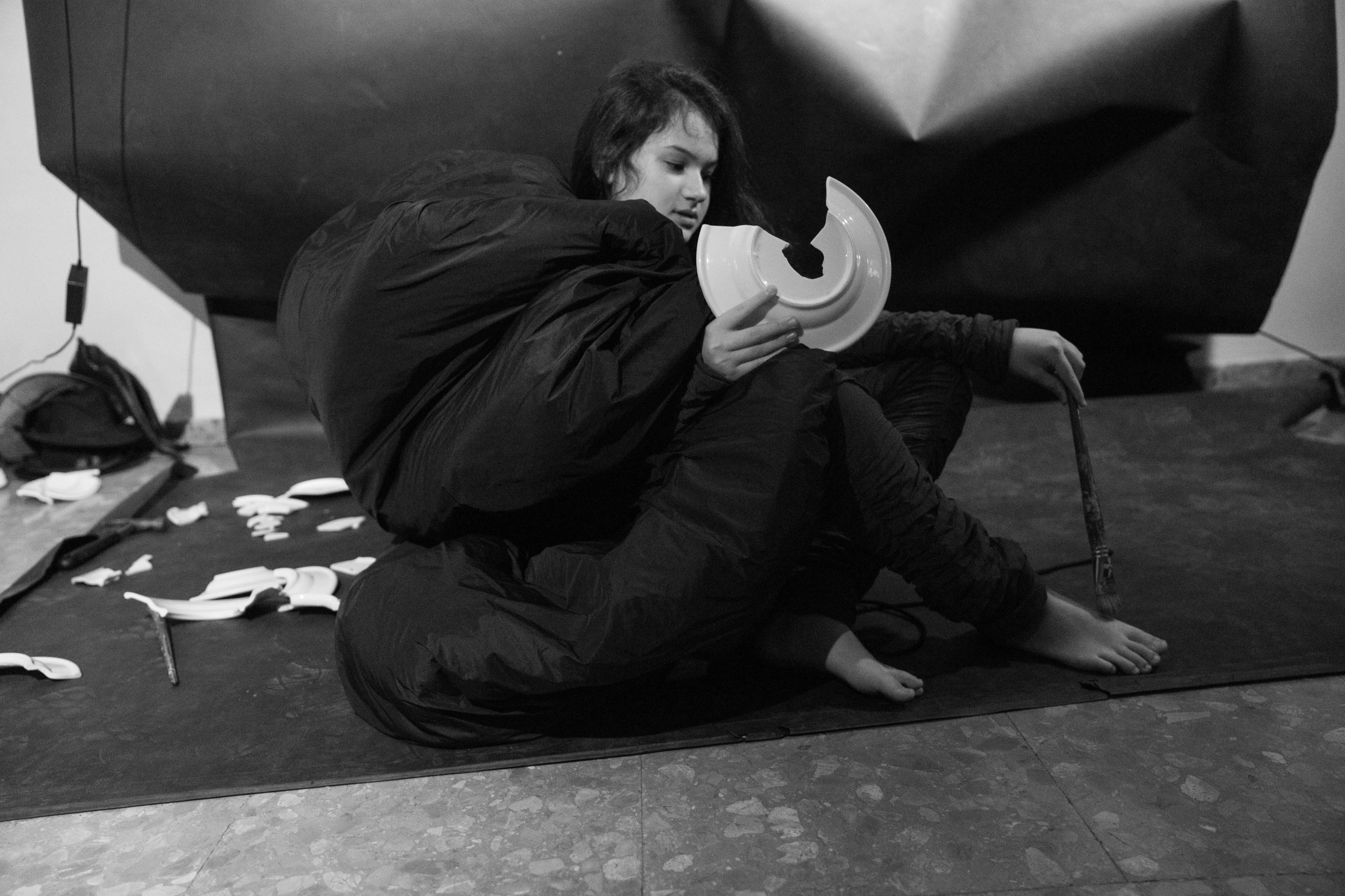
Naomi Lautier is 14 years old. Born in 2011 in Paris, she paints as if the world were speaking to her in its own language. There isn’t a single learned gesture in her work, nor any desire to fit into recognizable traditions. Her art springs from elsewhere: it has a direct, almost physical connection with what she sees, what she feels and what she needs to express.
Naomi is on the autism spectrum, but that hasn’t stopped her from making her mark on the art world. This year she’s been participating in a group exhibition at Espacio 123, in Barcelona. And she’ll soon be embarking on a journey that will take her to a dozen solo exhibitions across the globe. The art world is about to discover Naomi Lautier.
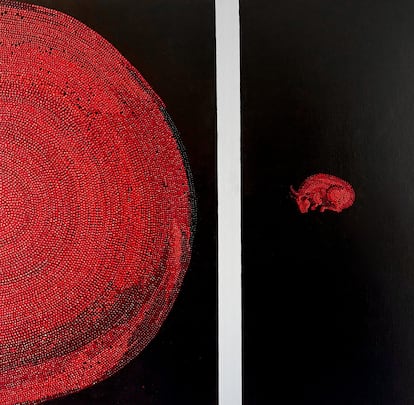
“It all started with the flowerpot incident,” her parents Joel and Alissa Lautier recall with a smile. They were living in a town near Barcelona (they now live in Málaga, where Naomi attends school; they chatted with EL PAÍS in perfect Spanish) when Naomi started painting on a flowerpot in their rental home. Then, she moved on to painting the wooden fence. And then…
“Then, it became clear that, if we didn’t find canvases urgently, the next exhibition would be the walls of the house,” Alissa laughs. That domestic scene marked a turning point. “It was no longer a game. [She had] an attentive, almost investigative gaze,” they explain.
Since then, painting has ceased to be an activity and has instead become a necessity: it’s through art that Naomi connects with the world. And her parents have given her all the space possible to develop as an artist. Joel and Alissa have learned to accompany this process without interfering. “We don’t reconcile it, we adapt,” they explain, when speaking about her condition on the autism spectrum. “Autism doesn’t interfere with her childhood. [Rather], it makes it different: more subtle, more focused, sometimes more fragile… but, at the same time, surprisingly profound,” Joel maintains. In their daily lives, this translates into constant attention being paid to their daughter’s internal rhythms: she lives with a level of sensitivity that doesn’t allow for haste. “Where others simply look, she observes. Where others pass by, she stays. And we believe that’s reflected in her art.”
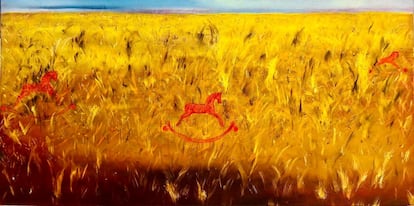
Naomi works in series, repeating motifs that evolve over time: complex forms made up of colored dots, bubbles, fruits, animals. “There’s an inherent logic to [her process] that isn’t obvious,” her parents explain. The animals rats, roosters, hobbyhorses — reappear as symbols that are charged with emotion: “They aren’t just images. They carry an inner state,” Alissa notes. “For her, color is an event: a flash, a tension, an energy that arises in the moment,” Joel adds. “There’s something both very childlike and very adult in what she does… like a memory that doesn’t fade.”
Naomi and her art are not professional. She doesn’t have a gallery representing her. And, until now, everything has been thanks to word of mouth and her mother’s modest initiative. But now she’ll be embarking on an international tour that includes stops in Málaga, Copenhagen, Barcelona, Dubai , Pisa, as well as several cities in Kazakhstan and Kyrgyzstan. These will be the first public exhibitions of a unique artist, whose beginnings can be traced back to her family and a series of fortuitous and essential collaborations.
Art as therapy
Naomi has never had drawing or painting lessons (she doesn’t even let her parents into her room to see how she paints). However, before she found a means of expressing her language on the canvas, there was a key space in her development: Anna Andreu’s art therapy workshop in Premià de Dalt (Barcelona). She arrived there at age 10, during a difficult moment. “It was the first time that she had been separated from her mother,” Andreu recalls, on the terrace of a local café. “She barely spoke Spanish; she shouted a lot.”
In that context, the work didn’t begin with paint, but with the tactile. “What interested her at first was salt dough. She [wanted] to knead it; she used kilos and kilos of flour,” Andreu laughs. She understood that Naomi’s access to the creative world came through the body: “We made cookies, things that could be eaten… at first, she painted with chocolate.” The workshop, where Naomi spent a couple of years, until the family moved to Málaga, functioned as an open laboratory.
“She had complete freedom to experiment,” Andreu explains. She recalls that Naomi then began painting on dough, on paper… on any available surface. “She had her OCD tendencies and she needed to touch everything. Once, she even ate one of her own creations! But beyond that anecdote, I think an emotional evolution began: she started socializing with other children for the first time.”
The art therapist remembers moments of great intensity: “The only time she cried was when a child took away her yellow paint. I thought that crying is the most human thing we have.” The relationship between them was profound: “She was my student, my patient… she taught me so much. I learned to listen without intervening, to not try to cure [her]. To be silent.”
Today, seeing Naomi’s progress, Andreu doesn’t hide her emotion: “It’s a privilege to have had her by my side and to see what she does now.” Today, Naomi no longer shouts: her personality is very different. She goes to school with a learning support assistant and her classmates are delighted with her.
A leap and recognition
Institutional recognition came almost unexpectedly. “It all happened by chance,” Naomi’s parents note. Curator Natalia Shustova discovered her work in a domestic setting: “Not in a gallery, but at home; we were introduced to her by mutual friends.” Her reaction was immediate: these paintings had to be shown to the public. The first piece Shustova saw “was an octopus, almost [resembling something] from an early Dalí period. But there were many of her paintings around the house.”
The curator felt the urgency to bring Naomi’s work to an exhibition space, although not without initial resistance from her parents, due to the child’s age. “We had to organize something,” Shustova recalls. In 2023, she proposed taking Naomi’s paintings to a charity auction linked to the Ronald McDonald House Charities. There, one of her pieces was sold for the first time.
Since then, this art expert has closely followed an evolution that she describes in almost organic terms: “She works in series, each one deeper than the last, as if she were climbing a ladder.” For Shustova, Naomi’s painting isn’t a medium, but a language in and of itself: “She hardly speaks; it’s with her brush that she communicates with the world.” And, in that communication, Shustova recognizes an uncommon technical skill and a “highly refined” sensitivity to color, which seems to develop at its own pace. At the same time, she insists on not reducing her interpretation to a diagnosis: “I don’t want her to be treated as disabled; it’s precisely her way of being in the world that allows her to convey what she conveys.”
This mark of quality hasn’t only been bestowed by Shustova: thanks to social media, many institutions and personalities have praised or expressed interest in Naomi’s work, from the director of the Barcelona Museum of Contemporary Art (MACBA) to the prestigious American art critic Jerry Saltz, as well as Spanish artists like Javier de Juan.
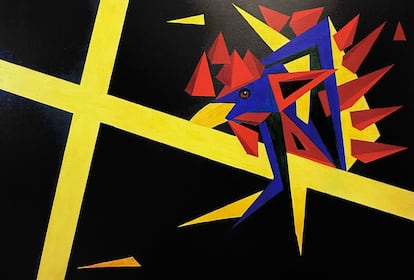
José María Luna, now the cultural director of the Unicaja Foundation in Málaga, first met Joel Lautier when he was in charge of several museums in the city. The truth is, Naomi’s parents have their own unique story: Alissa is half-Russian and half-Ukrainian. Joel, half-French and half-Japanese, is a chess grandmaster who was a candidate for the world title in 1994 (he defeated Garry Kasparov on several occasions). Luna met Joel at a Málaga chess tournament.
After seeing Naomi’s work, Luna offered them a space in the Russian Museum of Málaga. “She didn’t have formal training, but she did have enormous technical skill and, above all, her own unique vision,” Luna recalls. “She has to grow as a person and as an artist, of course; she still has a way to go. But her ability to construct a universe and convey it is incredible.” Luna shifts the focus from recognition to a more essential dimension: “The most important thing, really, is that this helps Naomi grow as a person.”
Partners behind the camera
Naomi isn’t just a painter: her exhibitions will also feature art installations, collages and videos. This evolution has been closely observed by a friend, with whom Naomi has developed the most recent stage of her art: Eugene Hrotchuk, a 37-year-old Ukrainian photographer who arrived in Spain 20 years ago. Their meeting was by chance.
“One day, her mother came to see some paintings I had [displayed] on the street and said to me, ‘Naomi is also an artist,’” Hrotchuk recalls. From there, the relationship grew organically: “When I saw her work for the first time, I was incredibly surprised. I couldn’t imagine that a 14-year-old girl could create something so meaningful.” Together, they’ve worked in photography and video. “At the heart of our work is always the artistic idea of a performance, in which Naomi acts as the performer. My role in this process isn’t to reinterpret or modify her, but rather to attentively enter that space and try to translate her language into photography, without disrupting its internal logic.”
From this collaboration (and friendship), several series have emerged, such as a black-and-white one that portrays Naomi as Mickey Mouse. “Naomi, as an artist, doesn’t possess the usual filters through which we perceive the world. Perhaps this has to do with her autistic perception, which is completely different: purer, more direct, born from within, without trying to please anyone,” Hrotchuk observes, astutely. “She conveys the world with a very particular honesty and sensitivity, as if she were capturing what’s happening in the air and transferring it to the canvas. That purity and intensity ensure that her work leaves no one feeling indifferent.”
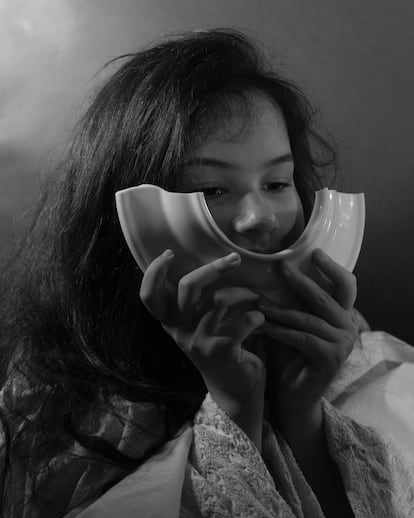

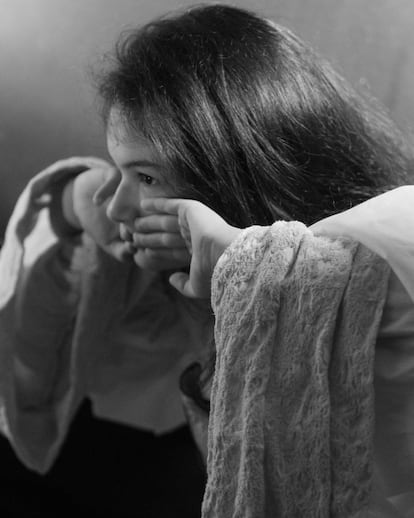
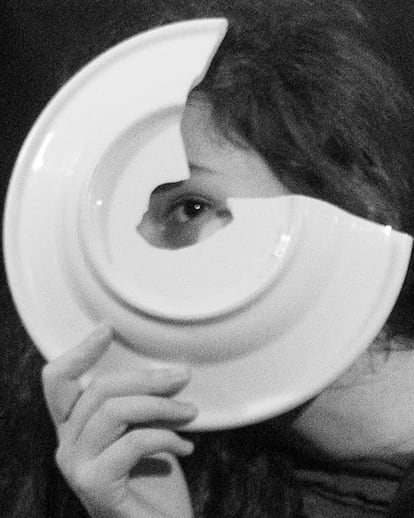
That purity is, in the end, what Naomi’s parents value most: “When we saw her first exhibition, we felt like we were seeing her world in its entirety for the first time. And we understood: this is just the beginning.”
“For any artist,” they emphasize, “with or without autism, it’s important to be heard and understood.”
Naomi’s unique voice is ready to be shared around the world, on a journey that perhaps has an even more important dimension than the artistic one: “What’s truly important isn’t so much that she finds a place in the art world,” José María Luna concludes, “but that she finds a place in life.” Painting and art — as an obsession, as a home, as a permanent center of gravity — can offer solace. “If success comes — if, in a few decades, we’re talking about her as an important figure — well, that’s wonderful,” Luna points out. “But what’s truly important is understanding that she’s happy doing this.” Perhaps therein lies the key to everything: in that quiet and stubborn happiness, in that need to create without asking permission, Naomi has already found what is essential, long before the world sets its eyes on her.
Sign up for our weekly newsletter to get more English-language news coverage from EL PAÍS USA Edition

ChatGPT
From Mamdani’s Veto To Enthusiasm In Estonia: Schools Around The World Are Grappling With The Use Of AI

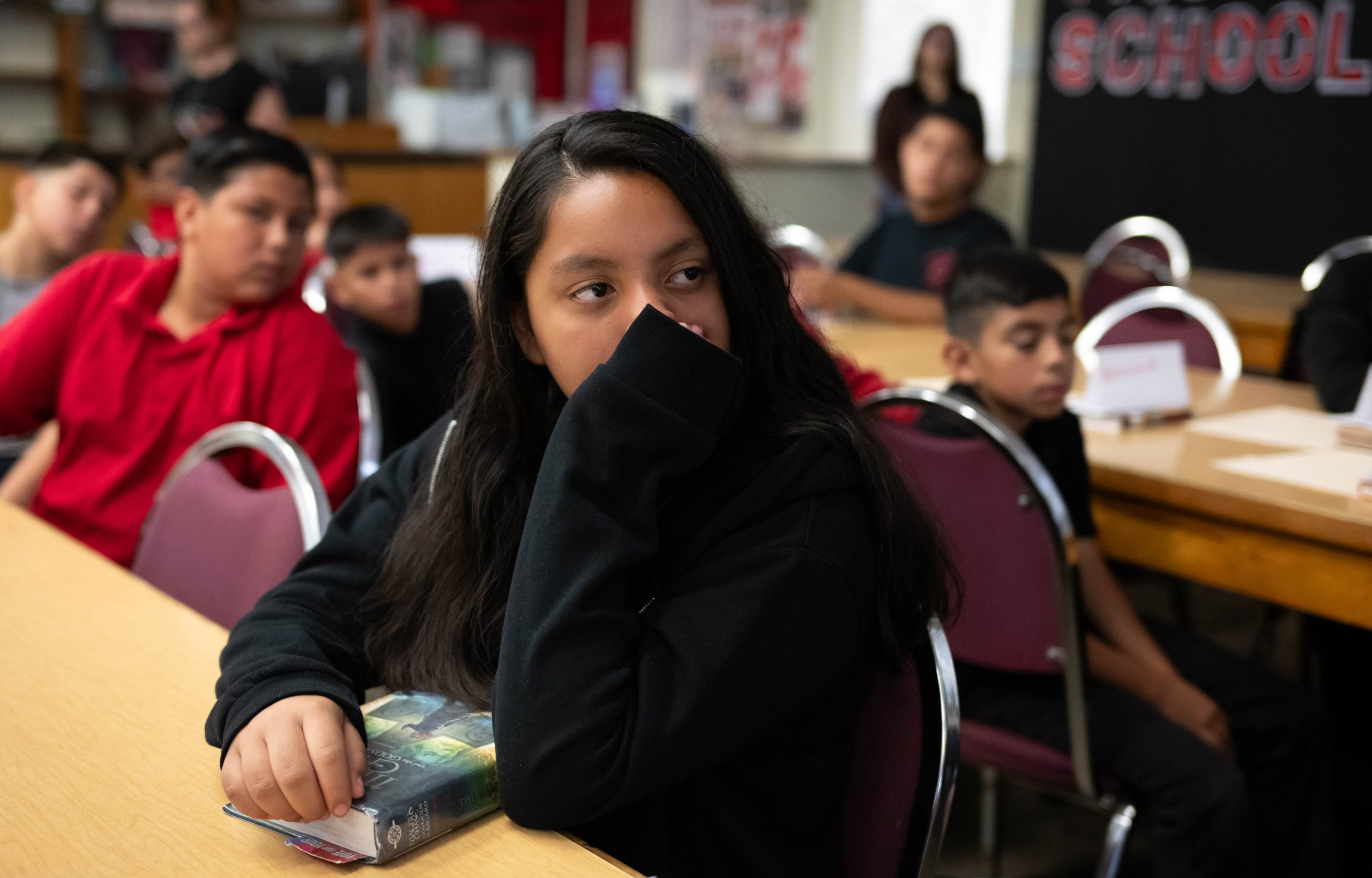
Sandra Martinez Roe, a mother in Los Angeles, hopes that her son will never use artificial intelligence (AI) in school. “I’m not going to let my children be guinea pigs,” she tells EL PAÍS over the phone. The city’s school board granted her wish, at least temporarily, a couple of weeks ago: the Los Angeles Unified School District (LAUSD) has banned AI from public classrooms this school year.
Martinez Roe is a member of Schools Beyond Screens, a parent group that fights against certain technologies in schools. She attended the board meeting where the decision was made. “We went into the meeting prepared, with our demands, some research and a list of experts,” she explains. “When it ended, they had turned off all the AI tools for all grades and age groups. It was a surprise and a huge victory for us,” she sighs.
Similarly, one of the most striking measures implemented in recent days, this one by New York City Mayor Zohran Mamdani, has been to “prioritize student safety and real, human instruction” by imposing “the most expansive student-facing AI moratorium in the nation,” according to city officials.
“The tech industry wants us to believe that A.I.-powered early education is not only inevitable, but necessary. We do not see it that way,” Mamdani stated.
In contrast to this AI blackout in New York and Los Angeles, however, Estonia — the top-ranked European country and third in the world in the Programme for International Student Assessment (PISA) standings — is turning it on. For a year now, it has been providing 16-year-old students with an adapted version of ChatGPT, OpenAI’s chatbot, which offers students guidance rather than simply answering their questions.
Estonian Education Minister Kristina Kallas emphasized this distinction via video call: “I don’t think banning AI will prevent young people from using it. AI use will just be more clandestine and more hidden from adult view, but they’ll still try to use it.”
The Baltic country is deploying this specialized model, developed in collaboration with OpenAI, because it believes that “general-purpose AI isn’t designed to learn,” the minister warns. She describes the ministry’s tool as a “Socratic” kind of GPT (generative pre-trained transformer) that helps students “develop their critical thinking skills and [boost] cognitive growth.”
Kallas emphasizes that her office hasn’t received a single complaint from any Estonian family about implementing the adapted model. The only complaint she’s heard came from her own son and for a different reason. The minister recounts: “My son had started 11th grade when the tool was introduced last year. I asked him, ‘How’s it going?’ And he said, ‘It’s really annoying, because [the program] doesn’t give me any answers.’”
Kallas asserts that this is only the first step. “We need to redesign the learning process, recognizing that students are already using AI at home when they’re doing their homework,” she points out. “They understand the technology much better than the teachers.”
Still, the Estonian government doesn’t plan on allowing AI to be used by students under the age of 16, a policy it shares, in one form or another, with New York City (which is prohibiting the use of the technology for children 14 and under), Norway and China. However, they’re still training teachers regarding how to navigate AI when it comes to elementary and middle-school students. “These are the ages when we need to develop self-directed learners. Teachers know that a 12-year-old is using AI for homework… so we have to design the assignment in such a way that students are forced to think and learn,” Kallas explains.
The minister believes that this is “the greatest challenge facing humanity.” She continues: “[AI] is a technology that doesn’t force us to think; it makes us dependent on machines. Everything happens very quickly in an education system. And, if we don’t act, all of thinking and memory will be outsourced.” This may sound apocalyptic, but Kallas says that she’s working to prevent an educational collapse. “A [blanket ban] is an option, but banning the tools doesn’t make them disappear. The risk is even greater: that learning in schools will become obsolete,” she points out.
Her own logic isn’t so far removed from that of Los Angeles. The city will review the ban, which affects some 380,000 students, at the end of the 2026-2027 school year, according to a spokesperson for the LAUSD. “Our policy is to restrict student access to generative AI platforms while the district reviews instructional use and safeguards,” the spokesperson clarified, in a statement sent to EL PAÍS.
A total ban
Even though New York is the first city in the United States to issue a total ban on AI in classrooms, it’s not the first major step that its education department has taken when it comes to this issue. The Big Apple actually banned student and teacher access to ChatGPT back in January of 2023, shortly after the chatbot’s launch. The technology had raised concerns in the educational sector, due to the ease with which students could use it to cheat on exams. However, the city reversed the measure in May of that same year, in order to “embrace [ChatGPT’s] potential” – a quote from then-New York City Chancellor of Education David Banks, who wrote an opinion piece that month to explain the change in policy.
If you put New York City and Los Angeles on one side of a spectrum, while placing Estonia on the other end, it’s clear that most educational systems worldwide currently fall somewhere in between, without such specific policies. This is according to Mark West, a researcher at the United Nations Educational, Scientific and Cultural Organization (UNESCO). One exception is the United Arab Emirates (UAE), which designates AI as a mandatory subject, starting in preschool. From the age of four, students in the UAE learn to compare machines to humans, taking their first steps when it comes to using AI applications. Meanwhile, those between the ages of 10 and 14 years must learn how to design artificial intelligence systems.
“At first glance, they seem like two opposite poles, but that’s not the case,” West emphasizes. “If you look more closely, the UAE and Estonia actually teach students about AI. We believe that’s important and urgent. But relying on AI for learning is an entirely different matter.”
Spain already relies on it. According to the PISA report published this past September 8, in the developed world, students from Malta and Spain use AI the most for studying. But the five OECD countries where students use it the least for schoolwork achieve better scores on the tests.
The Spanish Ministry of Education has established general rules for the use of AI in schools, but emphasizes in a response to EL PAÍS that education policy rests with regional governments. A guide published on September 8 by the National Institute of Educational Technologies and Teacher Training (INTEF) states that “AI literacy is now a necessary dimension of students’ comprehensive education.” Currently, Catalonia is the only region of Spain that recommends prohibiting the unsupervised use of AI in classrooms, specifically for children under the age of 14.
Schools worldwide are facing this technology without knowing where it will lead their students, at a time when two key figures in the rise of AI — Dario Amodei and Sam Altman — are proposing that the pace of these models’ development be slowed down. Meanwhile, UNESCO is proposing both safeguarding and accelerating the deployment of AI: “We must ensure that these tools help education and children… and that they’re safe,” West emphasizes.
Sign up for our weekly newsletter to get more English-language news coverage from EL PAÍS USA Edition

Estos Clips Son El Truco Definitivo Para Que El Relleno Nórdico No Se Mueva Dentro De La Funda
A mysterious map in a 1599 Bible points towards the location of the lost Garden of Eden
Petrol thieves in Spain see their getaway go spectacularly wrong


-
Latest2 weeks ago
The Vocabulary You Need To Understand The Spanish Citizenship Process
-

 Alex Saab2 weeks ago
Maduro Ally Alex Saab Pleads Guilty In US Money-Laundering Case
-

 New Developments2 weeks ago
How To Get A Tourist Rental Licence In Andalusia (Spain) – Step-By-Step Guide 2025
-

 Uncategorized2 weeks ago
‘Lewis will never trust Charles again’ – F1 journalist issues shocking Ferrari statement – GPFans.com
-

 %2 weeks ago
Benahavis Wildfire Stabilised: 300 Hectares Burnt
-
 Arganzuela1 week ago
Detenido Un Hombre Por La Muerte De Una Mujer De 47 Años En El Distrito De Arganzuela De Madrid
-
 Coaching2 weeks ago
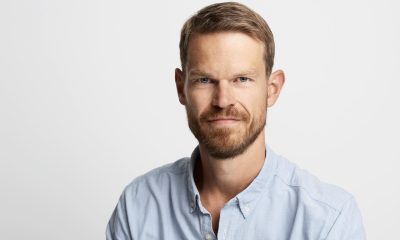
Svend Brinkmann, Psychologist: ‘If You Place Conditions On Forgiveness, Love Or Freedom, You Have Already Destroyed Them’
-
Best airlines1 week ago
Spanish airline Vueling named Europe’s best low-cost carrier for 2026