Connect with us

%

Rincon Tapas Trail Returns

Published

on

rincon-tapas-trail-returns

Sample each tapa and decide the winner. Credit: Ayto

Food lovers will have ten days to sample their way around Rincón de la Victoria when the town’s Ruta de la Tapa returns from Friday, November 13, to Sunday, November 22.

In its sixth year, the event brings together 31 bars and restaurants across La Cala del Moral, Rincon de la Victoria, Torre de Benagalbon and Benagalbon.

Each venue will prepare a tapa specially for the occasion, with every dish priced at €4 including a drink. Customers can choose a draught beer, soft drink or water. Participating premises will display a special sign.

Discover cuisine from Rincon

Organised by Rincon de la Victoria Council’s Tourism Department, the route encourages people to discover local bars and restaurants in the area.

A digital guide linked to Google Maps will help visitors find the venues and plan their route. According to the organisers, the guide has recorded 383,018 visits across the six editions.

Customers can also enter a draw for a share of the €1,000 prize fund. Visitors can collect a ‘tapaporte’ from any participating restaurant or the Municipal Tourist Office. To qualify, they must obtain stamps from four different establishments in at least two of the four local areas, vote for their favourite restaurant and submit the completed passport by November 22.

Which bar has the best tapas?

Five winners will each receive a voucher booklet worth €200. Each booklet contains four €50 vouchers, which must be used at four different participating restaurants by February 28, 2027. Completed passports can be deposited at participating venues or the Tourist Office.

€2,700 will go to the restaurants judged best. A public vote will also decide the public favourite. Full details, including the participating restaurants, their tapas and the competition rules, are available at turismoenrincon.es/ruta-de-la-tapa.

With 31 stops and a set price for food and drink, the route gives residents and visitors a chance to try local specialities without committing to a full meal.

%

Struggling With Spain’s Food Prices? This Supermarket Chain Was Built To Help Families Save

Published

on

struggling-with-spain’s-food-prices?-this-supermarket-chain-was-built-to-help-families-save

Its stores include specialist counters for butchery, fish and delicatessen products. Photo credits: Marco Gallo/Shutterstock

With food bills continuing to put pressure on household budgets, finding a supermarket where the weekly shop costs a little less can make a real difference. One Spanish chain has built its business around that very idea, and its origins go back to the financial crisis that left thousands of families struggling after the collapse of the property boom. Cash Fresh was launched in Sevilla in 2013, when Spain was still dealing with the fallout from the property crash.

Rather than trying to compete with upmarket supermarkets, the chain focused on keeping prices down and giving families a more affordable way to fill their shopping baskets. More than a decade later, it has grown into a recognised name in Andalucía and Extremadura, with more than 100 stores and a place among the cheapest supermarket chains in Spain.

A supermarket shaped by the crisis

The timing of its launch reflected the pressure on household budgets. Spain was still dealing with the consequences of the property bubble bursting and the financial crisis that followed. Unemployment had soared, many families had less money to spend and shoppers were paying closer attention to the cost of everyday essentials. Cash Fresh was developed by Grupo MAS, an Andalucian food retailer, with a model built around affordable everyday shopping.

It combines a conventional supermarket with elements of the cash-and-carry format, offering groceries alongside fresh food departments. Its stores include specialist counters for butchery, fish, delicatessen products, fruit and vegetables, and bakery goods. The idea is to offer customers fresh produce and help from staff while keeping prices competitive, rather than relying on a discount-warehouse format alone. 

How cheap is it?

The latest supermarket comparison from the consumer organisation OCU, published in September 2026, gives Cash Fresh a price index of 107. The cheapest chain in the study, Supermercados Dani, is the benchmark at 100. Cash Fresh’s basket therefore costs around 7 per cent more than the cheapest chain’s. That still places it among the lower-priced supermarket chains in the country, although it is not Spain’s cheapest.

OCU’s study compared 101,520 prices from 690 supermarkets and online stores, using a basket of 244 food, household and personal-care products. The organisation estimates that choosing the cheapest rather than the most expensive supermarket can save shoppers an average of €1,310 a year. The potential saving varies depending on where people live and which stores are available locally. 

A business built around the weekly shop

Cash Fresh’s expansion shows that the demand for value has lasted well beyond the crisis years in which it began. Its appeal is straightforward: shoppers can buy everyday groceries and fresh food in one place while keeping an eye on the bill.

More than a decade after opening its first store in Sevilla, the chain remains built around the same promise that helped it find its place in the market: making the weekly shop more affordable. That focus has helped it establish itself across two regions of southern Spain.

Continue Reading

%

Spain Hit By Yet Another Train Derailment As Madrid Railway Line Is Shut

Published

on

spain-hit-by-yet-another-train-derailment-as-madrid-railway-line-is-shut

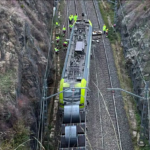
Renfe arranged replacement buses between El Escorial and Robledo de Chavela. Photo credit: @revol_es on X

It seems Spain still hasn’t had its fair share of train accidents, with another derailment adding to an already alarming year for the country’s railway network. Just when passengers might have hoped the worst was behind them, a freight locomotive has come off the tracks in Madrid, leaving its driver injured and forcing travellers between Madrid and Ávila to abandon their normal train journeys.

The latest incident happened in the early hours of Sunday, November 15, near Zarzalejo, between Robledo de Chavela and Zarzalejo.  Although no passengers were aboard the freight train, the derailment has caused disruption to regional rail services, with replacement buses being put in place. It comes just weeks after the deadly accident in Urda, Toledo, and January’s disaster in Adamuz, Córdoba, which together claimed 115 lives. The latest derailment was not a passenger train accident, and there is currently no evidence linking its cause to either of those tragedies. 

Landslide suspected after heavy rain

The train belonged to freight operator Captrain and was travelling along the conventional Madrid-Hendaya railway line when the locomotive left the tracks at around 3:39am. Initial information points to a movement of earth following heavy rainfall in recent days.

A section of the embankment may have collapsed as the train passed, although investigators are still assessing the condition of the railway and the circumstances surrounding the derailment. The train consisted of 17 wagons carrying electrical coils. According to reports, only the locomotive was affected. The driver, a 33-year-old man and the only person aboard, suffered back pain and was taken by emergency services to Puerta de Hierro Hospital in Majadahonda. His injuries were described as minor and his condition was not considered serious. 

Passengers forced onto replacement buses

The derailment led to the suspension of rail traffic between Robledo de Chavela and Zarzalejo, affecting Media Distancia services connecting Madrid and Ávila, as well as services using the affected section of the line. Renfe arranged replacement buses between El Escorial and Robledo de Chavela, with an intermediate stop in Zarzalejo, to help passengers complete their journeys.

By 03:00pm, the derailed locomotive had been put back on the tracks, but trains were still unable to pass through the affected section. Adif technicians continued inspecting the infrastructure to establish whether the track had suffered damage. No confirmed time for the resumption of normal services had been announced, leaving passengers advised to check for updates before travelling. 

Another blow for Spain’s railway network

The derailment comes at a particularly difficult time for Spain’s railways, with the fatal accidents at Adamuz and Urda prompting renewed demands from railway workers for improved safety measures. A nationwide Renfe workers’ strike is scheduled for 17 November, with unions calling for greater guarantees over railway safety following the recent tragedies.

The Madrid incident had far less serious consequences, but the interruption has added another problem for passengers already facing uncertainty across parts of the country’s rail network. For those travelling between Madrid and Ávila, their main concern now is getting to their destination while the affected stretch remains closed

Continue Reading

%

Mijas Considers 4 Proposals For Abandoned Horse Course

Published

on

mijas-considers-4-proposals-for-abandoned-horse-course

In hippodrome heyday. Credit: LSFB

Mijas could be looking at a new future for its former Costa del Sol racecourse, more than 14 years after the last regular horse races were held there. The town hall is considering at least four proposals to give the 380,000-square-metre complex a new lease of life, although what the projects involve has not yet been made public.

The possibility of bringing horse racing back has not been ruled out, but there is no guarantee that the venue will return to its original purpose. The council is looking at ways to make better use of the extensive grounds, with equestrian activities, sport and leisure all featuring in its vision for the future.

The latest developments follow a lengthy legal and financial process which saw the council regain full ownership of the original racecourse land. In December 2025, councillors unanimously agreed to dissolve Recursos Turísticos de Mijas SA, the company established to manage the facility, and appoint a liquidator.

The Mijas Town Hall announcement confirmed that the original 380,000-square-metre plot had returned to full municipal ownership.

From international racing to years of decline

Opened in June 1999, the Hipódromo Costa del Sol was an ambitious attempt to attract international visitors during the quieter winter tourism season.

The project was particularly aimed at British and Nordic visitors, with horse racing offering an attraction when many northern European courses were closed because of the weather.

Its early success was impressive. Around 15,000 spectators attended the Gran Premio Día de Andalucía in March 2001, with visitors reportedly arriving on charter flights to watch the racing. The venue also hosted major music performances, including Elton John, Lenny Kravitz and Rod Stewart, as organisers looked for ways to generate income beyond race days.

However, disagreements over funding, administrative restrictions and mounting debts eventually brought the racing operation to an end. The last regular racing season was in 2012. Financial difficulties continued, and the management company entered insolvency proceedings in May 2018.

What happens to the racecourse now?

Although much of the complex has suffered from years of neglect, it would be wrong to suggest that the entire site has closed. Parts of the grounds are heavily overgrown, and substantial work would be needed to bring the facilities up to modern standards and meet current legal and safety requirements.

However, the stables remain open and are regularly used, particularly by local equestrian associations. Other activities, including equine therapy, the municipal gym, an athletics track and the Samuel Oliva show-jumping school, have also continued.

The town hall’s announcement on the ownership change confirmed that these existing activities would continue.

Mayor Ana Mata has reiterated her intention to return the complex to sporting and leisure use. Following the publication of former mayor Antonio Maldonado’s book about the rise and fall of the racecourse, she also confirmed that the council was examining proposals from interested businesses.

There is currently no confirmed redevelopment timetable, no preferred operator has been announced and the contents of the four proposals remain unknown.

For now, the future of one of the Costa del Sol’s most ambitious sporting projects is still an open question. Whether Mijas eventually hears the thunder of racehorses again, or finds a different use for the extensive site, remains to be seen.

The municipality now has the opportunity to find a sustainable future for a facility that once attracted thousands of visitors but has spent years waiting for its next chapter.

Continue Reading

Trending

Copyright © 2017 Spanish Property & News