
Bus System
Safer streets in Spain? New bus system aims to prevent pedestrian accidents

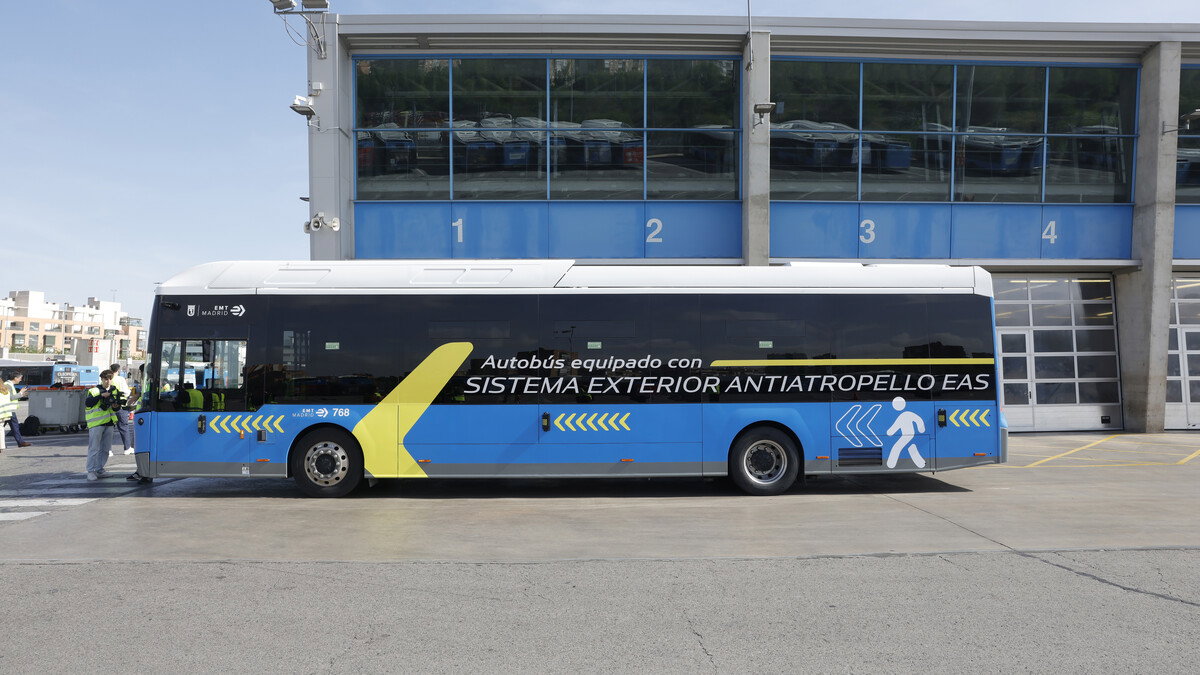
A Madrid city bus fitted with a new safety system that detects pedestrians and alerts drivers in real time
Credit: EMT Madrid
It is something most people only notice after a close call. A pedestrian steps off the pavement, a cyclist appears in a blind spot, or a vehicle brakes too late at a busy crossing. In Spain’s cities, where traffic, scooters, and foot traffic mix constantly, those moments are part of everyday life.
Now, a new bus safety system being tested could help prevent them before they happen. The pilot was rolled out on April 25, 2026, in Madrid, where buses operated by Empresa Municipal de Transportes de Madrid are now being equipped with the technology. The system is currently being used on vehicles running along the capital’s dedicated bus lanes, known as “carriles bus”, where buses share space with dense traffic and frequent pedestrian crossings.
How does the new ‘anti-runover’ bus system work?
The system uses a combination of sensors and cameras to monitor the area around the bus. It can identify pedestrians, cyclists, and other vehicles nearby, particularly in blind spots or low-visibility situations. If a potential collision is detected, the driver receives an immediate alert. In some cases, external signals can also warn pedestrians or nearby road users that a bus is approaching or that a risky situation is developing. This type of technology is already present in some modern cars, but applying it to buses is a significant step. Public transport vehicles operate in complex urban environments, often stopping frequently and interacting with large numbers of people.
Why this matters for everyday life
Pedestrian accidents remain a concern across Spain, especially in busy urban areas. Crossings, bus stops, and narrow streets can quickly become high-risk zones, particularly during peak hours.
For expats, and tourists, this system could provide an extra layer of safety. Anyone navigating unfamiliar streets or adjusting to local traffic habits knows how unpredictable city movement can feel. By supporting drivers and increasing awareness around the vehicle, the system aims to reduce those sudden, high-risk moments.
A pilot that could expand across Spain
For now, the system is limited to a pilot programme in Madrid, where it is being tested under real traffic conditions. The focus is on areas with high pedestrian activity and heavy bus traffic. If the results are positive, the technology could be rolled out more widely, both within the capital and in other cities across Spain. That possibility makes the trial particularly relevant. Rather than being a one-off initiative, it could become part of a broader push to improve road safety nationwide.
A small change with real impact
Most people will not notice the system at first. The buses look the same, and the technology works quietly in the background. But if it performs as expected, the impact could be meaningful. Fewer near misses, smoother interactions between road users, and ultimately fewer accidents. In cities where space is shared by so many, even a small improvement in awareness can go a long way.










Bull Breeder Dies After Savage Goring In Spanish Festival

S
Hansik in La Cala De Mijas, a modern Korean feast

Luxury Villas For Sale, Estepona – ProjectL1

Stylish 3-Bedroom Apartment With Panoramic Sea Views – Benalmádena
Brussels warns Spain that migrants regularised under controversial scheme will be deported back to Spain if they try to move to other EU countries


-
 New Developments3 weeks ago
Luxury Villas For Sale, Estepona – ProjectL1
-
 New Developments3 weeks ago
Stylish 3-Bedroom Apartment With Panoramic Sea Views – Benalmádena
-
eu response to spain migration policy3 weeks ago
Brussels warns Spain that migrants regularised under controversial scheme will be deported back to Spain if they try to move to other EU countries
-

 %3 weeks ago
Poland Disconnects Utilities At Russian Consulate That Moscow Refuses To Hand Over
-

 Uncategorized4 weeks ago
How Lewis Hamilton spent break with A-list star
-
Costa Calida3 weeks ago
Murcia unveils monument marking 175th anniversary of Burial of the Sardine
-
Costa del Sol2 weeks ago
Easter on the Costa del Sol: a time of renewal
-

 Uncategorized4 weeks ago
Kelly Piquet