Connect with us

%

Rare Flamingo Stops Traffic In Almuñecar

Published

on

rare-flamingo-stops-traffic-in-almunecar

Flamingo pays a visit to Almuñecar. Credit: @alvaromrtn__ Inst

Beachgoers on a quiet Saturday morning in Almuñecar got more than they bargained for when a striking pink visitor dropped in for a paddle.

Around 11am one morning in July, with a stiff breeze keeping numbers down on Cotobro beach, a large bird with unmistakable rosy plumage flew in and touched down right on the shoreline. Everyone on the beach stopped what they were doing, phones out, as the greater flamingo (Phoenicopterus roseus) spent a few minutes near the waves before lifting off again and heading on its way.

Young local Alvaro Martin was among those who caught the moment on camera. “Everyone stopped to look and film it,” he said. The bird’s appearance caused quite a stir on a stretch of coast better known for its dark sand and pebble beaches than for wetland wildlife. Footage shared under the Instagram handle @alvaromrtn__ quickly circulated among those who missed the live show.

Not an everyday sight on the Costa Tropical

Greater flamingos are among Spain’s most eye-catching water birds, famous for their long legs, curved bills and that vivid pink colour that comes from the crustaceans and algae in their diet. They prefer shallow saline lagoons and coastal wetlands rather than open Mediterranean beaches. Records for Granada province show them mainly as passing birds, especially young ones moving after the breeding season, so a touchdown right on Cotobro beach is genuinely unusual.

Spain’s main strongholds lie further west or inland. Fuente de Piedra lagoon near Antequera in Malaga province holds the largest breeding colony on the Iberian Peninsula and one of the most important in the whole Mediterranean. Doñana National Park and other Andalusian wetlands also regularly host big numbers. Occasional strays do turn up along the Granada coast, but they rarely hang around for long.

Where to go if you want a proper flamingo fix

Anyone hoping for more than a fleeting glimpse has plenty of options within easy reach of Almuñecar. Fuente de Piedra, roughly an hour’s drive inland, will be the star attraction, with thousands of birds present in good years and excellent viewing hides and trails. Guided tours operate in season, and early mornings or evenings give the best light and activity. Doñana, a bit further afield towards Huelva and Seville, offers another classic wetland experience packed with flamingos and dozens of other species.

Closer to home, keep an eye on quieter stretches of the Costa Tropical and any temporary flooded areas after heavy rain. Birders often check eBird or local WhatsApp groups for the latest reports.

This Cotobro visitor was just passing through, but it gave a lucky few a memorable close-up of one of Europe’s most elegant birds right on their local beach. Next time the wind drops and the tide is right, it might be worth scanning the horizon a little more carefully.

%

Murcian Firefighters Are Bringing Vital Drinking Water To Earthquake Survivors In Venezuela

Published

on

murcian-firefighters-are-bringing-vital-drinking-water-to-earthquake-survivors-in-venezuela

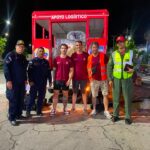
Spanish firefighters supply clean drinking water to earthquake survivors abroad. Photo Credit: @bomberosporbomberos / Instagram

A nonprofit organisation based in Murcia, Bomberos por Bomberos (Firefighters for Firefighters), has launched a critical humanitarian operation in Venezuela, delivering safe drinking water to populations severely impacted by the devastating recent earthquakes. As the organisation’s first international mission, the dedicated team has successfully completed complex technical installations to link a water well to a specialised purification unit located at the Caribe fire station in the Venezuelan city of La Guaira.

Local nonprofit’s first international mission delivers vital water supplies

This water treatment plant, a compact, high-capacity unit funded by the Universidad Católica San Antonio de Murcia (UCAM), can process up to 3,000 litres of clean drinking water every hour. The team constructed PVC pipelines to carry unpurified water from the well directly into the filtration system and out to an accessible distribution hub.

Bomberos por Bomberos is also coordinating tanker trucks equipped with large holding tanks to transport clean water directly into camps and remote settlements, where vulnerable local people are currently taking shelter.

Dedicated mobile distribution teams tackling a growing health crisis

Access to uncontaminated drinking water across the regions affected by the earthquakes has become critically scarce. Humanitarian workers warn that the deficit will worsen as other relief organisations phase out bottled water distributions in temporary camps. Without access to safe supplies, many desperate residents have turned to untreated well water, sparking widespread gastrointestinal illnesses and health complications.

Community awareness drives demand at local fire station

Local creators and Venezuelan social media channels have actively spread news about the new purification plant, driving a steady increase in daily demand at the Caribe fire station. With this effort, Bomberos por Bomberos continues to expand its logistics footprint to keep pace with the growing need for clean, fresh water.

Working tirelessly to provide water for displaced people, the Murcian firefighters are playing an essential role in stabilising public health and supporting vulnerable families through this devastating crisis. It is just one of the ways Murcian emergency responders and nonprofit organisations are working to spread humanitarian aid in light of the earthquake disaster in Venezuela.

Continue Reading

%

Could The Rock Become A New Gateway Into Schengen?

Published

on

could-the-rock-become-a-new-gateway-into-schengen?

Spain has spent the past few weeks dealing with intense pressure on its borders, while just across the water, a very different border has been dramatically opened up.

Gibraltar’s land frontier with Spain disappeared on July 15 under the new UK-EU agreement, moving Schengen immigration controls to the Rock’s airport and port. For British expats living on the Costa del Sol, that should mean easier journeys into Gibraltar. Yet Spanish security officers are warning that quicker crossings must not come at the cost of proper border controls.

The timing is particularly interesting. Spain has recently faced a major migration crisis in Ceuta, where tens of thousands of people crossed from Morocco, putting enormous pressure on Spanish authorities, and the events in Ceuta have put border security firmly back in the spotlight. That makes one question increasingly relevant: could Gibraltar’s new system create opportunities for people trying to reach the Schengen area illegally?

Guardia Civil warns that security cannot be sacrificed

Olaya Salardon, communications secretary of the Asociación Unificada de la Guardia Civil, has warned that officers need much greater clarity about how the new Gibraltar arrangements will work. “Our concern is not the fence itself, but that security does not become a bargaining chip,” she said. Spanish officers want (and still don’t have) clear information about responsibilities, protocols and which authorities will take charge of particular border and security operations.

That matters because the old physical frontier has not simply disappeared without replacement. Schengen controls have moved to Gibraltar’s airport and port, where Spanish officials and Frontex are involved under the new arrangements.

Salardon has warned that any gaps in security could benefit organised criminal groups rather than ordinary citizens. For British expats who regularly travel between Spain and Gibraltar, that concern is not just theoretical. A border that is quicker to cross is only an improvement if travellers can also have confidence in the system protecting it.

Gibraltar says it must not become a back door into Schengen

Gibraltar’s Chief Minister Fabian Picardo has also addressed the issue directly. He has argued that the Rock should not be regarded simply as a convenient gateway into the Schengen area. “There has to be an economic relationship with Gibraltar, you have to contribute to Gibraltar loyally,” Picardo said, while also stressing that Gibraltar should not be seen “simply as a door to enter the Schengen area more easily”.

His comments take on added relevance after the recent events in Ceuta. Spanish authorities were faced with a huge influx of people arriving from Morocco, leading to a major security operation and agreements on returning migrants. The episode demonstrated just how quickly pressure can build around Spain’s external borders.

Gibraltar is a completely different situation, and there is no suggestion that the Ceuta events are linked to the Rock. However, both cases underline why control of Europe’s external borders remains such a sensitive issue.

What does this mean for British expats?

For British residents in Spain, the most visible change is likely to be much easier movement by road. Cars travelling between La Linea and Gibraltar no longer face the old routine land-border checks, removing one of the biggest frustrations for commuters, shoppers and visitors. Brexit rules have not, however, disappeared.

British citizens are still subject to the relevant Schengen entry requirements when entering the Schengen area unless they benefit from specific residence or other rights. The new Gibraltar arrangement does not turn a British passport into an EU passport or restore general freedom of movement. That distinction could become increasingly important as people get used to the new border.

Security is not the only issue British expats will notice. Gibraltar has introduced a new Transaction Tax as part of the customs arrangements linked to the treaty. The standard rate started at 15 per cent, with more changes due under the agreed timetable. Gibraltar’s government has also had to correct claims that the new tax automatically means shop prices will rise by 15 per cent.

Officials say the tax is based on the value of goods when imported or produced rather than simply being added to the final price paid by customers. Tobacco, alcohol and fuel are also covered by new arrangements intended to reduce tax differences with Spain and tackle smuggling. For expats who regularly cross the border to shop or fill the car, those changes could eventually be just as noticeable as the disappearance of the old frontier.

The fence has gone: Now the system faces its first real test

Gibraltar’s new border is supposed to make life easier for thousands of people who cross between the Rock and Spain every day. Yet the real test will be whether faster movement can be delivered while maintaining effective immigration, customs and criminal controls.

The Guardia Civil wants reassurance that security will not be sacrificed. Picardo insists Gibraltar should not become an easy gateway into Schengen. Spain’s recent experience in Ceuta shows why those questions matter.

Continue Reading

%

Fifty Prizes Worth €4,216 For SOS Canya

Published

on

fifty-prizes-worth-e4,216-for-sos-canya

Ten euros doesn’t buy much these days. Here, though, that small note could hand one lucky winner a €4,216 haul of prizes and, at the same time, help dogs in need

A single winning number, fifty ways to celebrate

Fundacion Canya SOS has launched its Grand Charity Raffle, but this is no ordinary raffle. Buy a €10 ticket, and if your number is the one drawn, you don’t walk away with a single item — you take home every one of the fifty prizes on offer. Only one ticket number wins, but that winner scoops the lot. Donated by local businesses and individuals across the area, the haul ranges from dog grooming vouchers and pet photography sessions to spa days, restaurant dinners, whale-watching trips, paragliding flights and gift cards from well-known shops. Winners will be decided by matching the last three digits of the official ONCE lottery coupon drawn on September 20, the same day the foundation hosts its first-ever Canya Festival.

Why the Los Barrios shelter needs urgent help now

Behind the glossy prize list sits an urgent appeal. Rescue teams describe this summer as one of the toughest on record, with dogs arriving in growing numbers, many sick, injured or just dumped by owners who can no longer cope. Eight puppies from Jimena were recently discovered tied up inside boxes, left exposed to soaring heat, while eleven dogs were brought in during a single day alone. Over the past year, more than 850 abandoned dogs have passed through the charity’s care, and over 200 currently depend on foster homes and the pound for food, medicine and daily attention.

How to buy a ticket

Tickets are sold at several points across the region, including the charity shop in Puerto de la Duquesa, Protectora Canya in Los Barrios, Discos Grammy in Algeciras, Tienda Cachalot in Tarifa and BigMat El Motor in Pueblo Nuevo de Guadiaro. . Anyone abroad or unable to visit in person can still take part remotely via Bizum, Revolut or PayPal, though organisers ask that buyers send a message beforehand to arrange payment details.

Where does the money go

Every ticket sold goes directly towards vet bills, vaccinations, surgeries and basic care for rescued dogs waiting for a second chance. Expats in the area have long supported SOS Canya’s work rehoming animals to new families in the UK, Germany and Finland, and this draw offers a low-cost, high-reward way to keep that lifeline running through a particularly difficult season.

Continue Reading
Advertisement
Advertisement

Spanish Real Estate Agents

Tags

Trending

Copyright © 2017 Spanish Property & News