
European News
Spain faces potato price uncertainty as France loses nearly a quarter of its crop


Farmers still have to cover the costs involved in growing the crop even when fewer potatoes are produced. Photo credit: PHILIPPE MONTIGNY / Shutterstock.com
The humble potato could become more expensive this autumn after France’s extreme summer weather wiped out almost a quarter of its expected crop, with the fallout potentially reaching supermarkets and farmers across Europe. French growers are forecasting a 23 per cent drop in production, equivalent to around two million tonnes fewer potatoes than last year.
The scale of the loss could put pressure on European supplies at a time when farmers are already dealing with increasingly difficult growing conditions. For Spanish potato producers, however, France’s losses could bring an unexpected change after a year of low prices caused by abundant European supplies.
France’s crop takes a huge hit
Five periods of extreme heat combined with an exceptional lack of water have left French potato fields badly affected. The National Union of Potato Producers (UNPT) expects the average yield for table potatoes to fall to 37.4 tonnes per hectare, compared with 43.5 tonnes in 2025. That would make 2026 one of France’s worst potato-growing years in more than three decades, with the yield only beaten for severity by the drought-hit 2022 season.
The reduction is particularly serious because French growers had already planted less land this year following a difficult 2025 season marked by oversupply and weak prices. Potato acreage across the main north-west European producing countries had also been cut substantially. Now farmers are dealing with a smaller planted area and much lower yields.
Heat has damaged more than the harvest
The weather has affected the potatoes themselves, not simply the final quantity, extreme temperatures and dry soil can restrict tuber development, leaving potatoes smaller and affecting their suitability for particular markets. That creates problems for growers supplying food processors, which buy potatoes according to specific size and quality requirements.
Some farmers could therefore find themselves unable to deliver the quantities agreed in their contracts. The UNPT wants contracted volumes to be adjusted to reflect what growers can actually produce, rather than leaving farmers facing additional costs because the weather has reduced their harvest.
€400 million in losses
The financial consequences are already being counted, the UNPT estimates that French potato growers could suffer at least €400 million in losses as a result of the failed harvest and is calling for exceptional support.
Farmers still have to cover the costs involved in growing the crop even when fewer potatoes are produced, while those supplying processors face the added difficulty of meeting contracts. The organisation has warned that growers should not be left to carry the economic consequences of the extreme weather alone.
A summer the potatoes could not withstand
France’s potato crisis comes after an extraordinary run of weather. The country endured repeated heatwaves and severe water shortages, with July particularly brutal for agriculture. The prolonged combination of heat and dry conditions has affected crops across France, with potato producers among those now seeing the consequences in their fields.
The problem is not isolated to France either, potato-growing areas across north-western Europe have been dealing with reduced planting and worsening drought conditions, while EU crop monitoring has forecast potato yields across the bloc at 6 per cent below the five-year average. France, Belgium, Germany and the Netherlands also form part of Europe’s major potato-producing belt, if several major producers harvest less at the same time, there are fewer alternative supplies available when buyers start looking for potatoes.
Spain could benefit
Spanish growers entered this season from a very different position, abundant European production last year contributed to weak potato prices, leaving farmers struggling with a market where supply was plentiful. France’s expected 23 per cent fall could change that balance.
A tighter European supply could increase demand for potatoes from other producing countries, including Spain, potentially giving Spanish growers some relief from the low prices that have affected them. It is too early to predict how much Spanish prices could rise. The final French harvest has not yet been collected, and production elsewhere will determine how much potato is actually available. But France’s projected loss is large enough to alter the European market.
What happens next
The 23 per cent figure is still a forecast, and the final size of the French crop will only become clear as harvesting progresses. For growers, the immediate priority is getting what remains of the crop out of the ground and establishing how much can actually be sold.
For consumers, the important question will be whether the reduced French supply is absorbed elsewhere in Europe or eventually feeds through into tighter availability and higher prices. After a year when European farmers were struggling with too many potatoes and prices that were too low, France is now heading into an autumn with the opposite problem. The fields will determine just how serious that shortage becomes










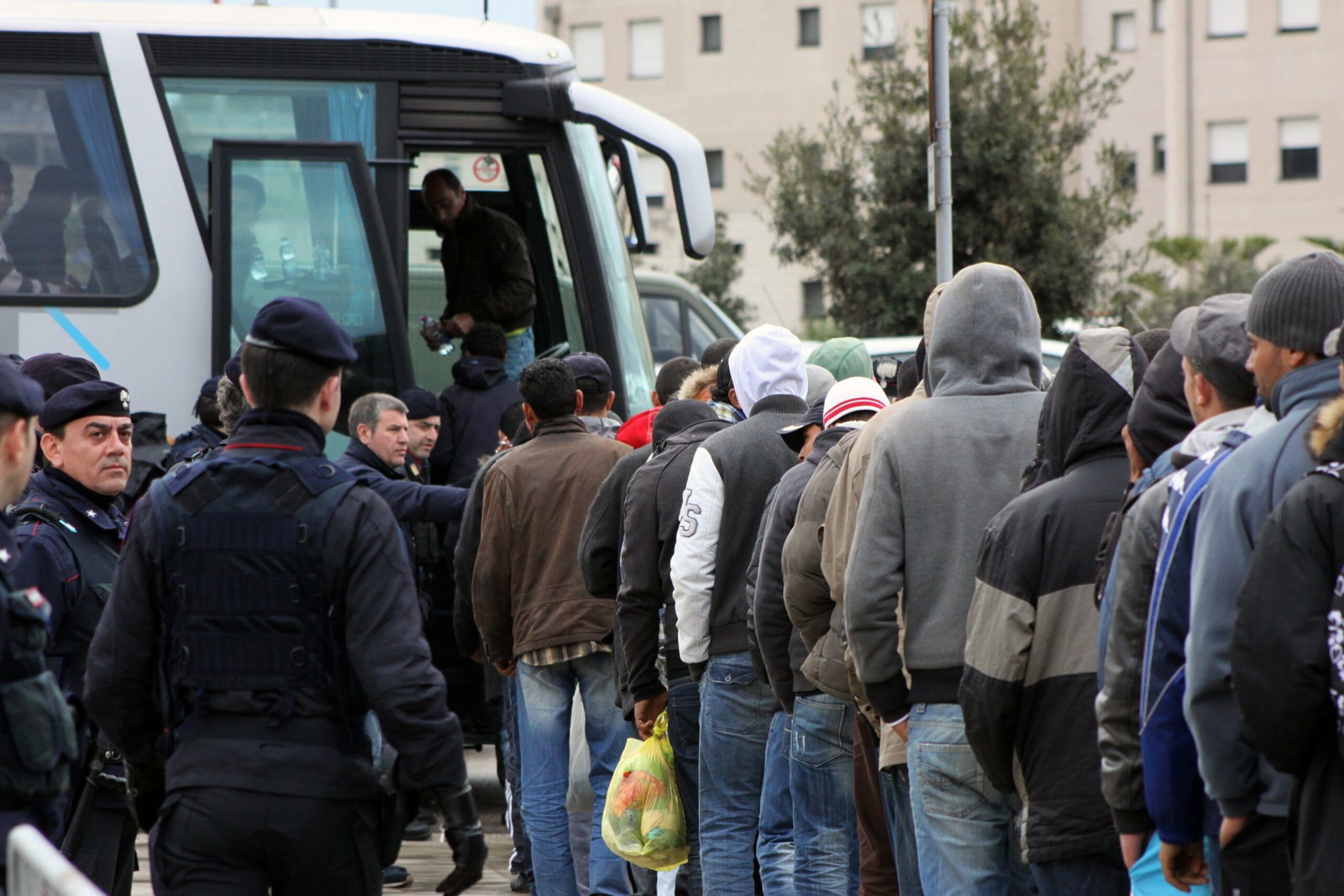
The crisis has also triggered strong disputes between Spain and Italy. Photo credit: Massimo Todaro/Shutterstock
A new European migration row could leave Italy facing thousands of requests to take migrants back, while Spain has refused to join the countries preparing to send asylum seekers back to the country where they first entered the EU. Sweden has now confirmed that it intends to apply the new EU migration rules and return migrants to Italy when Rome is responsible for their asylum applications.
Germany, Switzerland, Austria and Finland have already announced similar plans, putting Italy under growing pressure to accept people who travelled onwards after arriving there. Spain, however, is taking a different approach.
Madrid says it wants cases involving these so-called Dublin transfers to be dealt with through the EU’s solidarity mechanisms rather than through individual countries carrying out bilateral returns. For Spain, the dispute comes at a particularly sensitive moment, with migration already creating serious tensions between EU countries following the mass arrivals in Ceuta.
Italy faces a migrant return problem
The scale of the potential problem for Italy is considerable. Eurostat figures cited by Euronews show that 109,427 transfer requests were sent to Italy between 2023 and 2025. The requests concern migrants who entered the EU through Italy before travelling to another member state and applying for asylum there.
Under the European system, responsibility for an asylum application can fall on the country where the person first entered the bloc. That means countries further north can seek to transfer asylum seekers back to Italy rather than processing their applications themselves. The new EU Migration and Asylum Pact, which came into force on June 12, has brought the issue back into focus. Sweden says it intends to follow the new rules and expects every member state to fulfil its obligations, explicitly including Italy.
Sweden joins growing European push
Sweden is the latest country to announce that it plans to use the system. It follows Germany, Switzerland, Austria and Finland, which have also moved towards returning migrants to Italy. Austria has already said that four people have been transferred to Italy since the new pact came into force.
The moves represent a significant change from the situation that developed after Italy suspended Dublin transfers at the end of 2022. Rome cited a lack of space in its reception system when it stopped accepting incoming transfers. The issue has now returned to the centre of the European migration debate as other governments argue that Italy must resume its responsibilities under the new rules.
Spain refuses to follow
Spain has been explicitly identified as one of the countries refusing to join the push. Sources at the Interior Ministry told ANSA that Madrid favours handling Dublin transfers through the European solidarity mechanisms established under the migration pact and related EU legislation. The Government’s position is that countries should not resort to isolated bilateral expulsions or restrictions.
France has taken a similar position for now, although its reasons are linked partly to its current cooperation with Italy on reducing migration flows from Tunisia and Libya. That leaves a growing divide between European countries that want to send asylum seekers back to Italy and those that want the issue handled through broader EU arrangements.
Why Spain’s position is important
The disagreement is particularly relevant to Spain because the country is already dealing with the consequences of a major migration crisis of its own. Hundreds of migrants remain in difficult conditions in Ceuta following the mass crossings from Morocco at the end of July. The crisis has also triggered wider disputes between Spain and Italy.
Italy introduced temporary border checks affecting people arriving from Spain after the Ceuta crisis, while Madrid subsequently introduced its own checks on travellers arriving from Italy. The European migration argument is therefore unfolding alongside an already strained relationship between the two countries. Spain is now refusing to adopt the same approach as Sweden, Germany, Austria, Switzerland and Finland, even as pressure builds on Rome to accept more transfers.
What happens to migrants caught in the dispute?
The central issue is what happens when several countries disagree over who should take responsibility for an asylum seeker. A migrant may enter Europe through Italy, travel onwards to another country and apply for asylum there. That second country can then seek to transfer the person back to Italy.
But if Italy refuses to accept the transfer, the process can become stuck. That is precisely the situation Europe is now trying to resolve. The European Commission has noted that Italy rejected 12 transfers between June 12 and July 7, according to reporting cited by Euronews. The new pact is intended to prevent member states from simply refusing transfers when they are responsible for receiving them.
A new test for Europe’s migration policy
The dispute is exposing a problem at the heart of the EU’s new migration system. Countries on Europe’s external borders, including Italy and Spain, deal with large numbers of people arriving from outside the bloc. Countries further north then have to decide whether those migrants should remain where they applied for asylum or be returned to the country responsible for their entry. The new pact was supposed to create a clearer system for sharing that responsibility.
Instead, the first weeks of its operation are already producing disagreements between member states. For Spain, the Government’s decision to reject bilateral returns means it is backing an EU-wide solution rather than joining the northern European push against Italy. For Rome, meanwhile, the pressure is increasing as more governments prepare to send migrants back.
And for the EU, the question is becoming increasingly difficult to avoid: if one country refuses to take migrants back, who ultimately becomes responsible for them?


Díaz-Canel Afirma Que El Diálogo Con Estados Unidos Está “estancado”

British Woman Stranded In Spain After UK EVisa System Fails To Recognise Her
The revamped Paseo hosts Almería’s Feria for the first time since its €11.2m transformation

Attaoui Saca Un Bronce En 800m De La Casi Nada
Flames force Spanish troops to evacuate 1,000-year-old kings’ bones from burning monastery

Última Hora Del Terremoto En Colombia, En Directo | Al Menos 132 Muertos Y 570 Heridos Por El Seísmo De Magnitud 7,4


-
 800 metros lisos2 weeks ago
Attaoui Saca Un Bronce En 800m De La Casi Nada
-
aragon wildfire1 week ago
Flames force Spanish troops to evacuate 1,000-year-old kings’ bones from burning monastery
-
 Bogotá2 weeks ago
Última Hora Del Terremoto En Colombia, En Directo | Al Menos 132 Muertos Y 570 Heridos Por El Seísmo De Magnitud 7,4
-
Mallorca2 weeks ago
Qatar Royal Family’s £300m ‘Palace in the Sky’ lands in Mallorca ahead of historic eclipse
-
Latest2 weeks ago
EU Curbs On ‘forever Chemicals’ In Food Packaging Kick In
-
Benalmadena pueblo2 weeks ago
Five days that turn Benalmadena pueblo into a giant street party and everyone’s invited
-

 ElPais2 weeks ago
The Total Eclipse In Spain, In Pictures
-
Costa del Sol1 week ago
Motril Port closing in on record cruise year with 47,000 summer passengers