Connect with us

%

Brits Are Officially Spain’s Number One Holidaymakers

Published

on

brits-are-officially-spain’s-number-one-holidaymakers

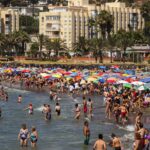
Holidaymakers in Benalmadena, Spain. Credit: Vlas Telino studio – Shutterstock

Britain is still the biggest force behind Spain’s international tourism industry, with more than 11.5 million British visitors arriving during the first seven months of 2026.

New figures from Spain’s National Statistics Institute (INE) show that the UK was comfortably Spain’s largest overseas tourism market between January and July, leaving the French and Germans well behind.

Spain welcomed more than 58.1 million international tourists during the period, up 4.6 per cent on the same time last year. British arrivals also increased by 4.6 per cent, reaching more than 11 and a half million. France supplied just over 7.2 million visitors, while Germany accounted for almost 6.9 million. German arrivals actually fell by 0.5 per cent during the period.

Britain still Spain’s biggest tourism market

July provided another strong showing for British tourism, with almost 2.2 million UK residents visiting Spain. British arrivals rose by 5.6 per cent compared with July 2025, reaching over two million. France followed with 1.86 million visitors, while Germany recorded 1.21 million.

Spain received 11.54 million international tourists in July alone, an annual increase of 4.6 per cent.
Those numbers are important because Britain’s contribution goes well beyond the number of people passing through Spanish airports. British visitors are also responsible for a huge share of accommodation demand.

Hotel figures from the INE show that UK travellers accounted for 25.8 per cent of all overnight stays by non-residents in Spanish hotels during July. Germany was a distant second with 14.5 per cent.

Brits fill Spanish hotels and holiday apartments

Holiday apartments tell a similar story. British travellers accounted for 30.1 per cent of all overnight stays by non-residents in Spanish tourist apartments during July, making the UK the biggest foreign market in that sector too.

Spain’s hotel industry recorded more than 44.8 million overnight stays during July, with stays by international visitors rising by 1.1 per cent year-on-year. Hotel occupancy reached 71.1 per cent of available places, while the average price per occupied room climbed to €156.90.

Those figures help explain why the British market remains so important to hotels, apartment owners, restaurants, bars, attractions and other businesses that depend on international visitors.

Spain’s cash register: are holidaymakers really spending less? No

Visitor numbers are only part of the story, and a common grumble is that holidaymakers are spending less these days. Not so. International tourists spent a whopping €18 billion in Spain during July, according to the INE’s latest expenditure figures. That was up 10.9 per cent more than in July 2025. Average spending per visitor reached €1,579, up 5.9 per cent, while average daily spending climbed 3.7 per cent to €218.

Accommodation was the biggest individual category, taking 19.8 per cent of international tourist spending. Package holidays accounted for another 19.3 per cent, while international transport outside package holidays represented 19.2 per cent.

Spain’s tourism economy therefore enters the second half of 2026 with British visitors still very much at its heart.

Why the Brits love Spain so much

Spain’s relationship with British tourism is hardly new, but the latest figures show that the connection is not only strong, but growing. Turespaña reported earlier this year that more than 19 million UK visitors travelled to Spain in 2025, while its latest market study continues to describe Britain as Spain’s leading international source market. Demand from the Brits also goes far beyond the traditional summer beach holiday. More and more holidaymakers are travelling during spring and autumn, helping spread tourism demand beyond the busiest July and August period.

For Spain’s tourism industry, that is excellent news. A market that supplies millions of visitors, fills a quarter of foreign hotel nights and accounts for almost a third of non-resident apartment stays remains a powerful economic engine.

For British holidaymakers, meanwhile, the figures suggest that the familiar route to Spain is showing little sign of losing its appeal. More than 11.5 million arrivals in seven months tell their own story: when it comes to foreign tourism in Spain, Britain is still number one.

%

Caught Sock-Handed

Published

on

caught-sock-handed

Guardia Civil discovered one of the suspects had come prepared for fingerprints, covering his hands with socks Credit: Facebook

It was supposed to be a straightforward break-in, but two alleged burglars in Spain appear to have taken an unusual approach to avoiding detection.

The pair were caught hiding behind the bar of a hospitality business in Campo de Criptana, in Ciudad Real province, after allegedly breaking into the premises during the night.

And when Guardia Civil officers arrived, they discovered one of the suspects had apparently come prepared for fingerprints, covering his hands with socks.

Hiding behind the bar

Police were alerted after reports that two people had entered the establishment. When officers arrived, they found that the glass in the entrance door had been smashed.

Inside, the two suspects were allegedly crouched behind the bar, where they were found with bags containing products from the premises.

Officers also discovered several mobile phones, cash and a large screwdriver.

The bizarre detail quickly stood out: one of the suspects had pulled socks over his hands in an apparent attempt to prevent leaving fingerprints at the scene.

The plan falls apart

Despite the apparent attempt to conceal fingerprints, the pair were caught inside the premises before they could make their escape.

The Guardia Civil said the arrests were connected to two separate offences involving forced entry in Campo de Criptana.

Both suspects were subsequently handed over to the court in Alcázar de San Juan. The court ordered that both be remanded in custody.

A very unusual crime scene

Using clothing to try to avoid leaving fingerprints is hardly a foolproof plan, particularly when suspects are discovered hiding inside the premises they are accused of breaking into.

In this case, officers appear to have arrived while the alleged burglars were still inside, finding them behind the bar alongside items believed to have been taken from the business.

For the two alleged burglars, the attempt to keep their fingerprints off the scene ended with both being arrested and sent to prison pending the next stage of the legal proceedings.

Continue Reading

%

Business Owners In Murcia Can Claim Up To €10k For Hiring Staff Under New Grant Scheme

Published

on

business-owners-in-murcia-can-claim-up-to-e10k-for-hiring-staff-under-new-grant-scheme

Murcia launches grants up to €10,000 for hiring permanent staff. Photo Credit: KOBU Agency / Unsplash

Taking on a first employee or expanding a team is one of the most daunting steps for a small business. To ease this financial burden, the Regional Government of Murcia has introduced a new funding initiative designed to help business owners and self-employed individuals, or autónomos, as they are known in Spain, obtain permanent staffing.

Financial support for hiring permanent staff

A new regional scheme, Subsidies to Promote Permanent Employment in the Region of Murcia, offers direct financial incentives to local businesses, sole traders, and legal entities taking on workers on open-ended contracts.

Tailored grant payouts and bonus incentives

The grant amounts are based on contract hours and the specific background of the individual being hired. For instance, offering a full-time permanent contract to a long-term unemployed individual yields a baseline grant of €6,000. This payout increases to €8,000 if the new hire is over the age of 52, while hiring a female victim of gender-based violence attracts a grant of up to €9,350.

To promote inclusivity and economic growth in rural areas, the initiative also incentivises hiring individuals under the age of 30, individuals receiving the Minimum Living Income, people at risk of social exclusion, and workers in municipalities with fewer than 10,000 residents. In most categories, recruiting a female employee adds an automatic 10 per cent bonus to the grant.

Extra funding for first-time employers

Furthermore, sole traders taking the plunge to hire their very first employee, or those making their first hire after a full year without staff, can claim an extra incentive of up to €2,000. Combined with the grants, total funding per business can reach up to €10,000.

Business owners, act fast: How to apply before funds run out

In order to benefit from these grants, business owners must act quickly following recruitment of the new hires. Applications must be sent electronically through the Region of Murcia’s official website, sede.carm.es, using a digital certificate within one month of registering the employee with Social Security or finalising their permanent contract.

Because grants are distributed on a strict first-come, first-served basis rather than a competitive points system, eligible business owners across Murcia are encouraged to apply promptly before the budget is exhausted. This scheme will make it significantly easier for small businesses and self-employed people to obtain stable and permanent local talent.

Continue Reading

%

OCU Tests 91 Supermarket Coffees In Spain And Exposes The Worst

Published

on

ocu-tests-91-supermarket-coffees-in-spain-and-exposes-the-worst

The average sugar content across the products examined was 7.6g per 100ml. Photo credit: Tupungato/Shutterstock

There is something extremely comforting about grabbing a cold coffee to go from the supermarket fridge. Coffee, milk, perhaps a little sugar and creme, a quick caffeine hit on the way to work, the beach or wherever the day takes you. Except many of those bottles and cartons are not quite as simple as they look.

Spain’s consumer organisation OCU has examined 91 ready-to-drink coffees sold in supermarkets, and found that just six qualified as a good choice on its Healthy Scale. Another 49 were rated acceptable, while 36 were classed as a poor choice. Not one achieved the organisation’s highest rating.The biggest problems were sugar, additives and increasingly complicated ingredient lists hiding behind labels that can make a chilled coffee look like little more than a convenient café con leche.

The sugar hiding in your cold coffee

The average sugar content across the products examined was 7.6g per 100ml, but some drinks contained considerably more. A typical 230ml or 250ml bottle can therefore contain far more sugar than the number on the front of the label might initially suggest. Cappuccino-style products were among the biggest offenders, averaging around 9% sugar, while flavoured coffees were also among the least healthy options. Caramel, vanilla and other sweet flavours often come with extra ingredients designed to counter the bitterness of coffee and create a creamier taste.

OCU advises shoppers to avoid ready-to-drink coffees containing more than 8g of sugar per 100ml. That means the difference between two apparently similar bottles on the same supermarket shelf can be substantial, particularly when the entire container is usually consumed in one go rather than being treated as several servings.

The coffees OCU rated worst

Of the 91 coffees examined, 36 were classified as a poor choice, with macchiato and cappuccino varieties performing particularly badly. Macchiato coffees dominated the bottom of the rankings, accounting for six of the 11 lowest scores in the entire study. These products generally combined more sugar and calories with longer, more heavily processed ingredient lists.

Cappuccino was the category with the highest average sugar content, while flavoured coffees containing caramel, vanilla or hazelnut also tended to perform poorly. OCU found that these sweeter options often contained more sugar, flavourings and additives than simpler coffee-based drinks.

Shoppers looking for a quick way to identify the less healthy options should pay particular attention to the label. OCU advises avoiding drinks with more than 8g of sugar per 100ml and those containing two or more additives, specifically highlighting E-339, E-340, E-950 and E-955 among the ingredients it does not recommend.

Some contain up to five additives

Sugar was not the only issue, only around one in five of the coffees examined were free from additives. The rest frequently contained ingredients including stabilisers, thickeners, flavourings and acidity regulators, with some products containing as many as five different additives.

The study found that certain types of coffee were consistently more heavily processed than others. Protein and lactose-free coffees often contained three or more additives, while vegan versions also relied on gums and hydrocolloids to recreate the texture normally provided by milk.

Cappuccino, macchiato and flavoured varieties generally performed less well because their recipes tended to be more complicated, combining sugar, creaminess-enhancing ingredients and flavourings. By contrast, espresso-style products usually had simpler compositions and fewer additives.

The four coffees singled out for their composition

Four products were specifically highlighted for having the best compositions in the study:

  • Kaiku Caffè Solo Largo Sin Azúcar — 77 points 
  • Kaiku Caffè Latte Sin Azúcares Añadidos — 77 points 
  • Kaiku Caffè Latte Descafeinado — 76 points 
  • Kaiku Caffè Latte Protein Coffee Doble Cero — 73 points 

The highest-scoring product, Kaiku Caffè Solo Largo Sin Azúcar, contains just water and Arabica coffee and has no added sugar or additives. The wider study also found that Kaiku and Nescafé products generally used fewer additives than many competitors, although the exact nutritional profile still varies from product to product.

Espresso can pack a serious caffeine hit

There was another surprise in the results: the amount of caffeine varied dramatically. Only 44 of the 91 products actually stated their caffeine content on the label. Among those that did, the average was 35mg per 100ml, ranging from 20mg to 80mg. Espresso-style drinks contained the highest amounts. A standard 250ml container provided around 130mg of caffeine on average, while one product reached 200mg per container, shockingly this is more than some energy drinks!

So the next time you reach into the supermarket fridge for what looks like a quick take away cold coffee, the label may be worth a second look. The simplest option may not have the flashiest packaging or the most tempting flavour, but according to the latest analysis, it is far more likely to actually resemble a coffee rather than a sugary, heavily processed drink with caffeine added.

Continue Reading

Trending

Copyright © 2017 Spanish Property & News